Pasta salad can be bland and forgettable when the dressing never reaches the noodles, but this Mediterranean version has enough briny, tangy, and salty punch to hold its own after chilling. The olives, feta, artichokes, and sun-dried tomatoes don’t just add color; they build layers of flavor that keep every bite interesting, even straight from the fridge.
The trick is in the balance. A simple lemon-herb dressing coats the pasta without drowning it, and a short rest in the refrigerator gives the noodles time to absorb the sharpness from the lemon and garlic. Rinsing the pasta cold stops the cooking fast, which keeps the texture pleasantly firm instead of soft and heavy.
Below, I’ll walk through the small details that make a pasta salad taste bright instead of dull, plus a few swaps that still keep the Mediterranean feel intact. If you’ve ever had a pasta salad turn dry or one-note after sitting, this version fixes that.
I let it chill for two hours like the recipe said, and the pasta soaked up the lemon dressing without getting soggy. The feta stayed chunky and the olives gave it the perfect salty bite.
Save this Mediterranean Pasta Salad for the make-ahead side that stays bright, briny, and full of texture after chilling.
The Key to Pasta Salad That Still Tastes Good After Chilling
The biggest mistake with pasta salad is treating the dressing like a last-minute garnish. Cold pasta tightens up as it sits, and if the dressing is too timid, the whole bowl tastes flat by the time it hits the table. This version leans on lemon juice, olive oil, garlic, and oregano so the pasta has enough flavor to carry through a long chill.
Another thing that matters here is texture. You want pasta that’s cooked through but still has a little bite, because the fridge will firm it up further. If you overcook it, the salad turns soft and the dressing just sits on the surface instead of clinging to the noodles.
- Penne pasta — The ridges help catch the dressing and bits of feta. Short shapes like rotini or farfalle also work, but penne holds up well and mixes cleanly with the chopped vegetables.
- Kalamata olives — They bring the briny backbone that makes this taste Mediterranean instead of just pasta with vegetables. Skip the cheapest black olives here; they don’t give the same salty depth.
- Feta cheese — Use a block if you can and crumble it yourself. Pre-crumbled feta is fine, but block feta stays creamier and tastes a little brighter.
- Sun-dried tomatoes — These give concentrated sweetness and chew. If yours are packed in oil, drain them well so they don’t make the salad greasy.
What Each Ingredient Is Doing in the Bowl
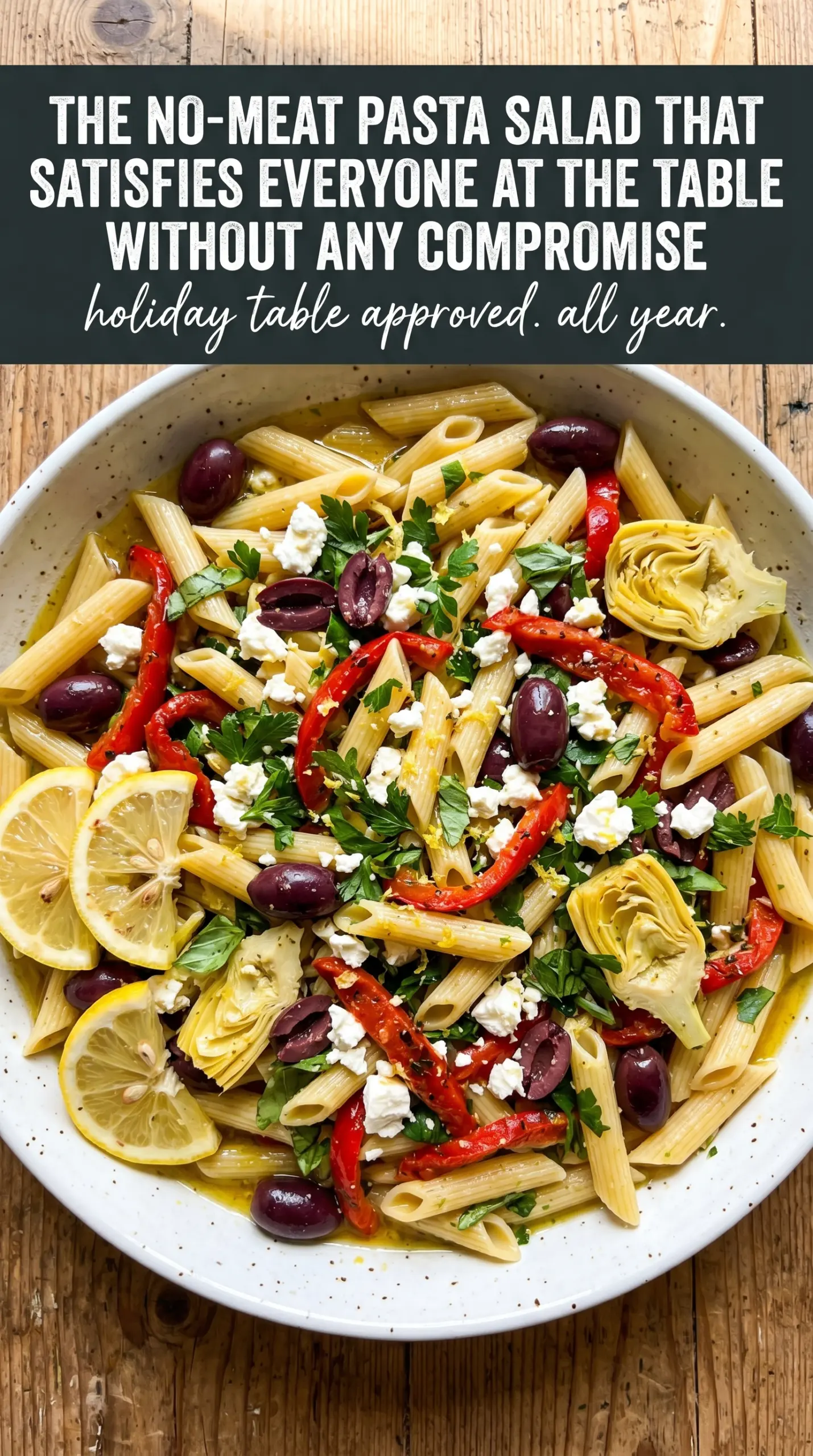
The dressing ingredients matter more than they look on paper. Olive oil carries the lemon and garlic across the pasta, while oregano gives the salad that familiar Greek-style note without needing a long ingredient list. Fresh parsley goes in at the end for a clean finish, not just decoration.
Red onion brings sharpness, but it needs the rest time to mellow. If you want a softer bite, soak the diced onion in cold water for 10 minutes, then drain it well. Cherry tomatoes and artichokes add freshness and body, but they also release a little moisture, which is why this salad benefits from a chill instead of being served immediately.
- Olive oil — Use a decent one, because it’s one of the main flavors here. You don’t need the most expensive bottle, but a flat, flavorless oil will make the dressing dull.
- Lemon juice — Fresh juice is worth it. Bottled lemon juice tastes harsher and loses the clean brightness that keeps this salad lively.
- Garlic — Mince it finely so it blends into the dressing instead of hitting with raw chunks. If you want a gentler garlic note, grate it on a microplane.
- Artichoke hearts — Marinated or plain both work, but drain them well. Wet artichokes dilute the dressing and soften the pasta faster.
How to Build the Salad So It Stays Bright, Not Watery
Cook the Pasta a Little Firmer Than Usual
Boil the penne until it’s just past al dente, then drain and rinse it under cold water right away. That stops the cooking and removes surface starch that can make the salad gluey. If the pasta goes into the bowl warm, it will soften the feta and wilt the tomatoes before the dressing has a chance to settle in.
Whisk the Dressing Until It Looks Emulsified
When you whisk the olive oil, lemon juice, garlic, oregano, salt, and pepper, the mixture should look slightly thickened and unified, not separated into oil and lemon. That helps the dressing coat the pasta more evenly. If the garlic tastes too sharp right away, let the dressing sit for a few minutes before tossing it with the salad.
Toss Gently, Then Let Time Do the Work
Add the olives, tomatoes, artichokes, sun-dried tomatoes, red onion, and feta after the pasta has cooled. Toss with a light hand so the feta stays in pieces instead of disappearing into the dressing. The two-hour chill is not optional if you want the best texture; it gives the pasta time to absorb flavor without turning mushy. Keep a little extra parsley for the top just before serving so the salad looks fresh.
Three Ways to Make This Pasta Salad Fit Your Table
Make it dairy-free without losing the salty bite
Leave out the feta and add a handful of chopped roasted red peppers or extra olives for more contrast. You’ll lose the creamy, tangy pockets from the cheese, but the salad still tastes complete if the dressing is bold enough.
Swap in gluten-free pasta that holds its shape
Use a sturdy gluten-free penne and cook it just until tender, since many gluten-free pastas soften as they sit. Rinsing it well after cooking helps keep the surface from getting sticky, which matters a lot once the dressing goes in.
Turn it into a fuller meal with chickpeas
Add one drained and rinsed can of chickpeas for more protein and a little extra chew. They fit naturally with the olives and lemon, and they help the salad eat more like a main dish without changing the core flavor.
Storage and Reheating
- Refrigerator: Store covered for up to 4 days. The pasta will absorb more dressing as it sits, so the salad may look a little drier on day two.
- Freezer: I don’t recommend freezing this one. The tomatoes, feta, and pasta all suffer after thawing, and the texture gets watery.
- Reheating: This salad is best served cold or at cool room temperature. If it has been in the fridge, let it sit out for 15 to 20 minutes and add a small drizzle of olive oil or a squeeze of lemon before serving to wake it back up.
Answers to the Questions Worth Asking
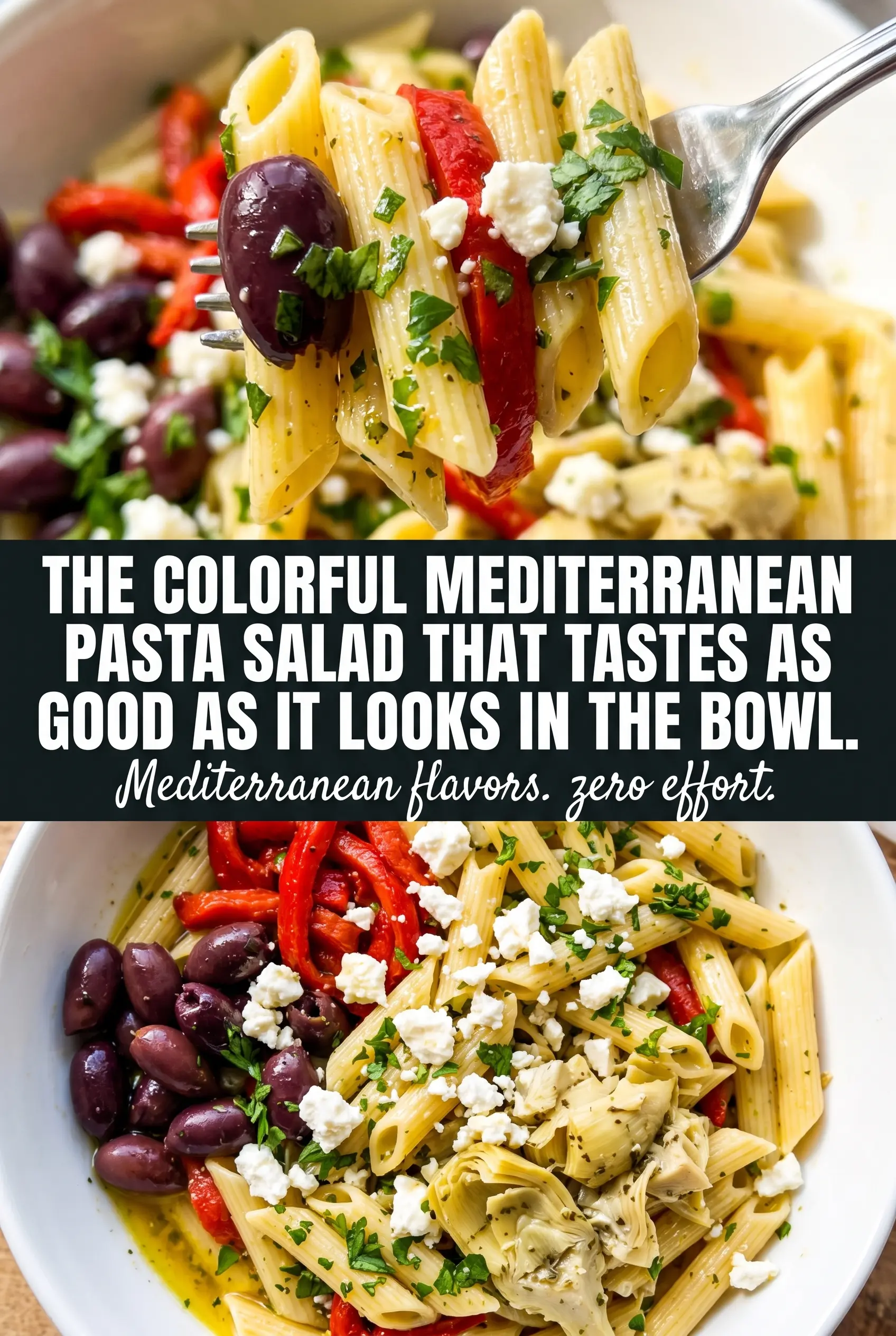
Mediterranean Pasta Salad
Ingredients
Equipment
Method
- Cook penne pasta according to package directions until al dente, then drain and rinse with cold water to cool it quickly.
- Whisk olive oil, lemon juice, minced garlic, dried oregano, salt, and pepper until the dressing looks evenly combined and glossy.
- Combine pasta, Kalamata olives, cherry tomatoes, artichoke hearts, sun-dried tomatoes, red onion, and feta in a large bowl so the mix is evenly distributed.
- Pour the lemon-herb dressing over the salad and toss gently until every piece is lightly coated.
- Refrigerate the salad for at least 2 hours to let the flavors meld and the dressing cling to the pasta.
- Garnish with fresh parsley right before serving for a fresh herb pop on top.