Greek pasta salad earns its place in the rotation because it stays bright, sturdy, and satisfying even after a long chill in the fridge. The pasta soaks up the lemon-oregano dressing without turning mushy, the cucumbers stay crisp, and the feta brings little salty pockets that keep every bite interesting. It eats like a meal-sized side, but it still feels fresh enough to sit next to grilled chicken, roasted lamb, or a pile of pita on a warm day.
The part that makes this version work is balance. A good Greek pasta salad needs enough acid to wake up the pasta, enough olive oil to round out the sharp edges, and just enough salt from the feta and olives to make the vegetables taste bigger than they are. Rinsing the pasta after cooking keeps it from clumping and stops it from soaking up all the dressing before the salad has time to chill. That rest matters. The flavors settle in and the pasta drinks in the dressing instead of just sitting on top of it.
Below, I’m walking through the ingredient choices that matter most, the small technique details that keep the salad from going bland or watery, and a few smart ways to adapt it depending on what you have on hand.
I let it chill for two hours like the recipe said, and the dressing soaked into the pasta without making it soggy. The feta on top at the end kept every bite creamy and salty instead of disappearing into the bowl.
Love the lemon-oregano bite and salty feta in this Greek pasta salad? Save it to Pinterest for an easy make-ahead side that gets better after chilling.
The Reason This Pasta Stays Bright Instead of Heavy
The mistake most pasta salads make is loading up the dressing, then serving them immediately while the pasta is still warm and thirsty. That gives you a dry salad by the time the bowl hits the table, or a slick one if you overcompensate with too much oil. This Greek pasta salad works because the dressing is assertive enough to flavor the pasta after it chills, but it still tastes clean instead of greasy.
Rinsing the pasta under cold water does two important things here: it stops the cooking fast, and it strips off enough surface starch that the salad stays loose instead of turning gummy. The other key move is waiting to add some of the feta until the end. Feta melts just enough in the chilled salad to season everything around it, but a final sprinkle on top keeps that sharp, crumbly texture intact.
- Pasta shape — Penne or rotini both hold onto the dressing in the ridges and curves. Long, slick noodles don’t work as well because the vegetables slide off and the dressing pools at the bottom of the bowl.
- Feta — Buy a block and crumble it yourself if you can. Pre-crumbled feta is drier and often less tangy, so it doesn’t melt into the salad with the same creamy-salty effect.
- Olive oil — Use a good one here. Since the dressing is built on just a few ingredients, the oil flavor comes through clearly and helps carry the oregano and lemon.
- Red onion — Slice it thin so it gives the salad bite without overpowering everything. If raw onion is too sharp for you, soak the slices in cold water for 10 minutes, then drain well.
Building the Dressing So It Clings After Chilling
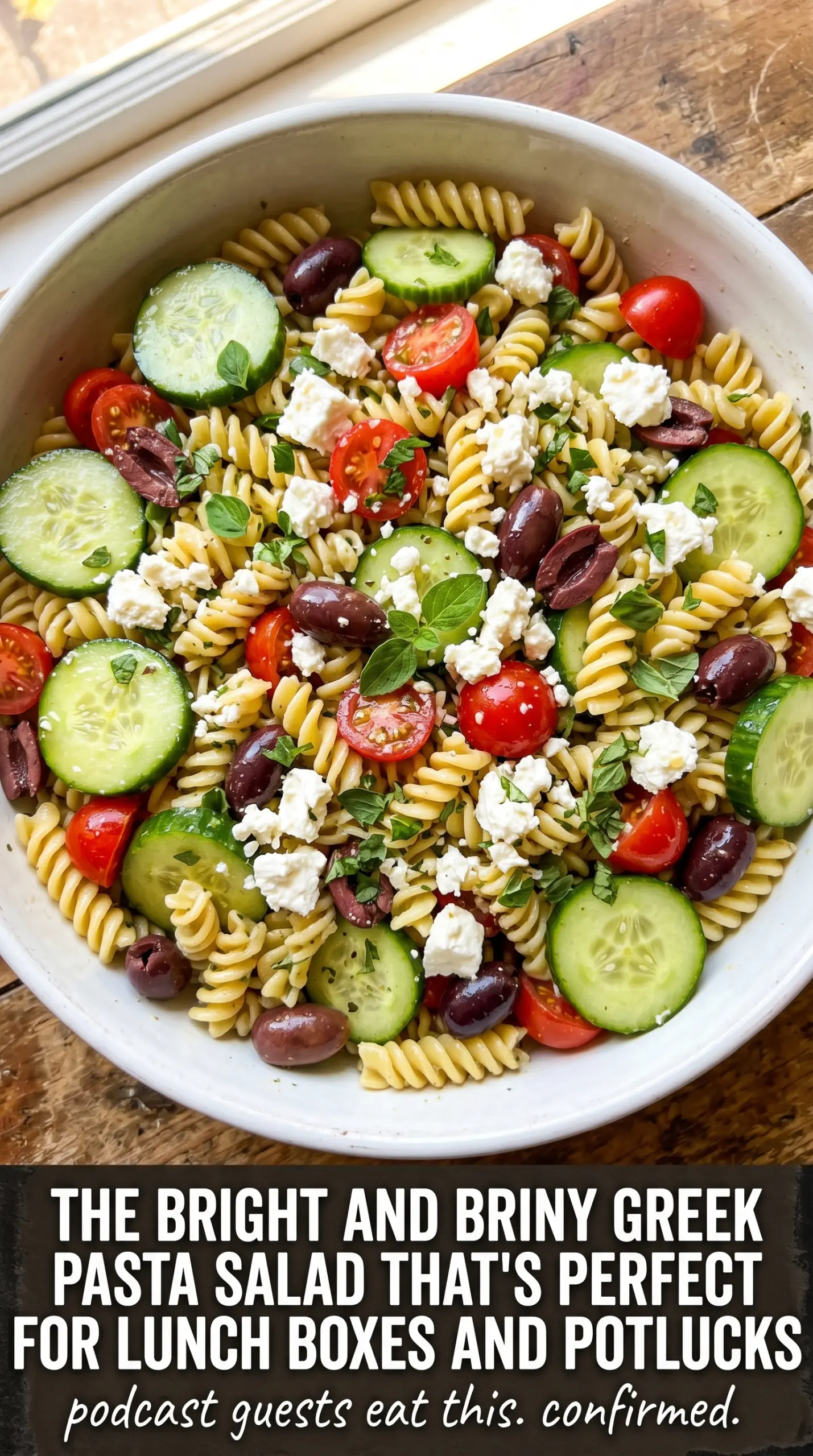
Olive oil is the base that carries everything. You don’t need anything fancy, but this is one of those salads where a flat-tasting oil shows up immediately, so use one you’d happily eat on bread. Lemon juice and red wine vinegar work together instead of competing; the lemon gives freshness while the vinegar keeps the dressing sharp after the salad has chilled. Garlic should be minced fine so it disperses through the dressing instead of hitting in harsh little chunks.
Fresh oregano brings the Greek character, and dried oregano is the best substitute if fresh isn’t available. Use less dried than fresh because it blooms strongly as it sits in the dressing. The tomatoes and cucumber don’t need perfect produce, but they do need to be cut to roughly the same size as the pasta so each forkful feels balanced instead of uneven.
How to Keep the Vegetables Crisp
Add the tomatoes, cucumber, olives, and onion after the pasta has cooled completely. If the pasta is still warm, it softens the vegetables and pulls extra moisture out of the cucumber, which waters down the dressing. Salt the salad only after the dressing goes in so you can judge whether the feta and olives have already done enough seasoning.
Make It Gluten-Free Without Losing the Structure
Use a sturdy gluten-free short pasta and cook it just to al dente, then rinse it well and chill it before tossing. Gluten-free pasta can get fragile if it sits in hot water too long, so pull it early rather than late. The salad still works because the dressing and vegetables do the heavy lifting, not the pasta itself.
Turn It Into a Heartier Main Dish
Add chickpeas, grilled chicken, or shrimp once the salad is chilled. Chickpeas keep it vegetarian and soak up the dressing beautifully, while chicken or shrimp make it substantial enough for dinner. Add extra lemon at the end if you bulk it up, since the added protein mutes the brightness a little.
Storage and Reheating
- Refrigerator: Keeps well for 3 to 4 days. The vegetables soften a bit, but the flavor gets even better by day two.
- Freezer: Don’t freeze it. The cucumbers and tomatoes turn watery and the feta loses its texture.
- Reheating: Serve it cold or let it sit at room temperature for 15 to 20 minutes. Heating the salad breaks down the vegetables and dulls the lemon dressing.
Answers to the Questions Worth Asking
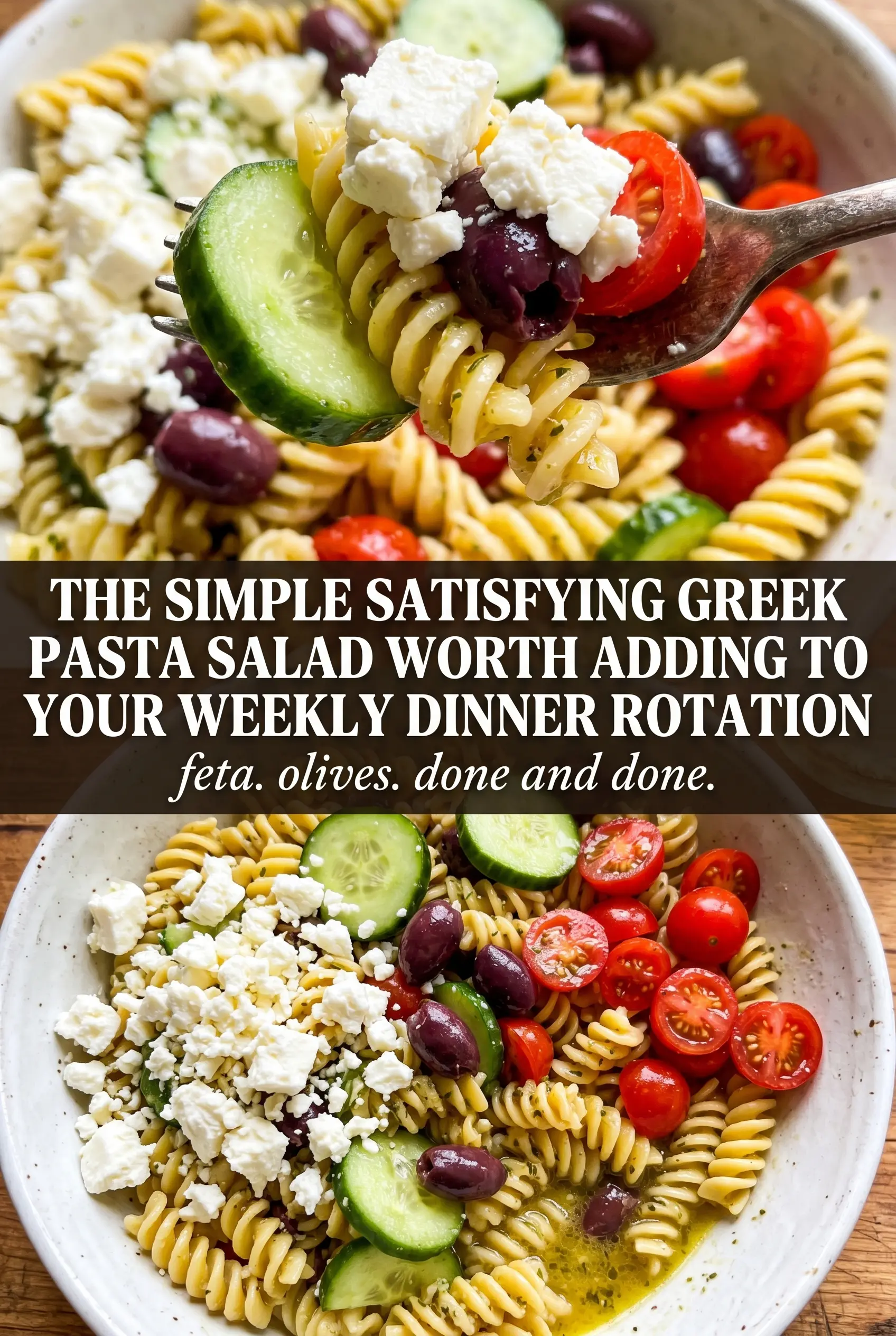
Greek Pasta Salad
Ingredients
Equipment
Method
- Cook the penne or rotini pasta according to package directions, then drain.
- Rinse the pasta with cold water to cool it quickly and prevent sticking.
- Whisk olive oil, lemon juice, red wine vinegar, minced garlic, oregano, salt, and pepper until the dressing looks cohesive.
- Add pasta, halved cherry tomatoes, diced cucumber, halved Kalamata olives, and thinly sliced red onion to a large bowl.
- Crumble in most of the feta and reserve the rest for serving.
- Pour the lemon-oregano dressing over the salad and toss gently until everything is coated.
- Refrigerate the salad for at least 2 hours to let the flavors meld.
- Top with the remaining feta right before serving.