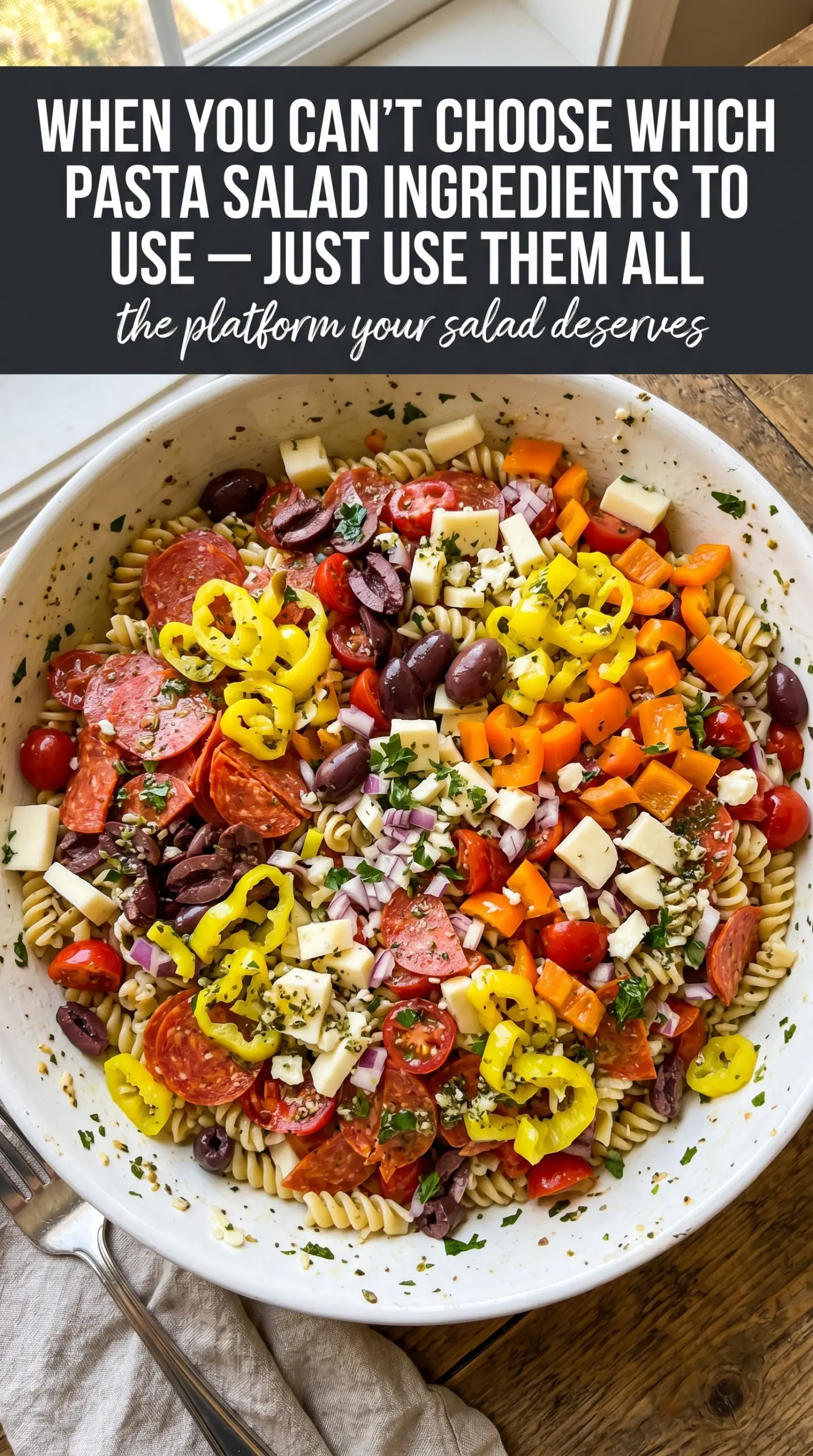
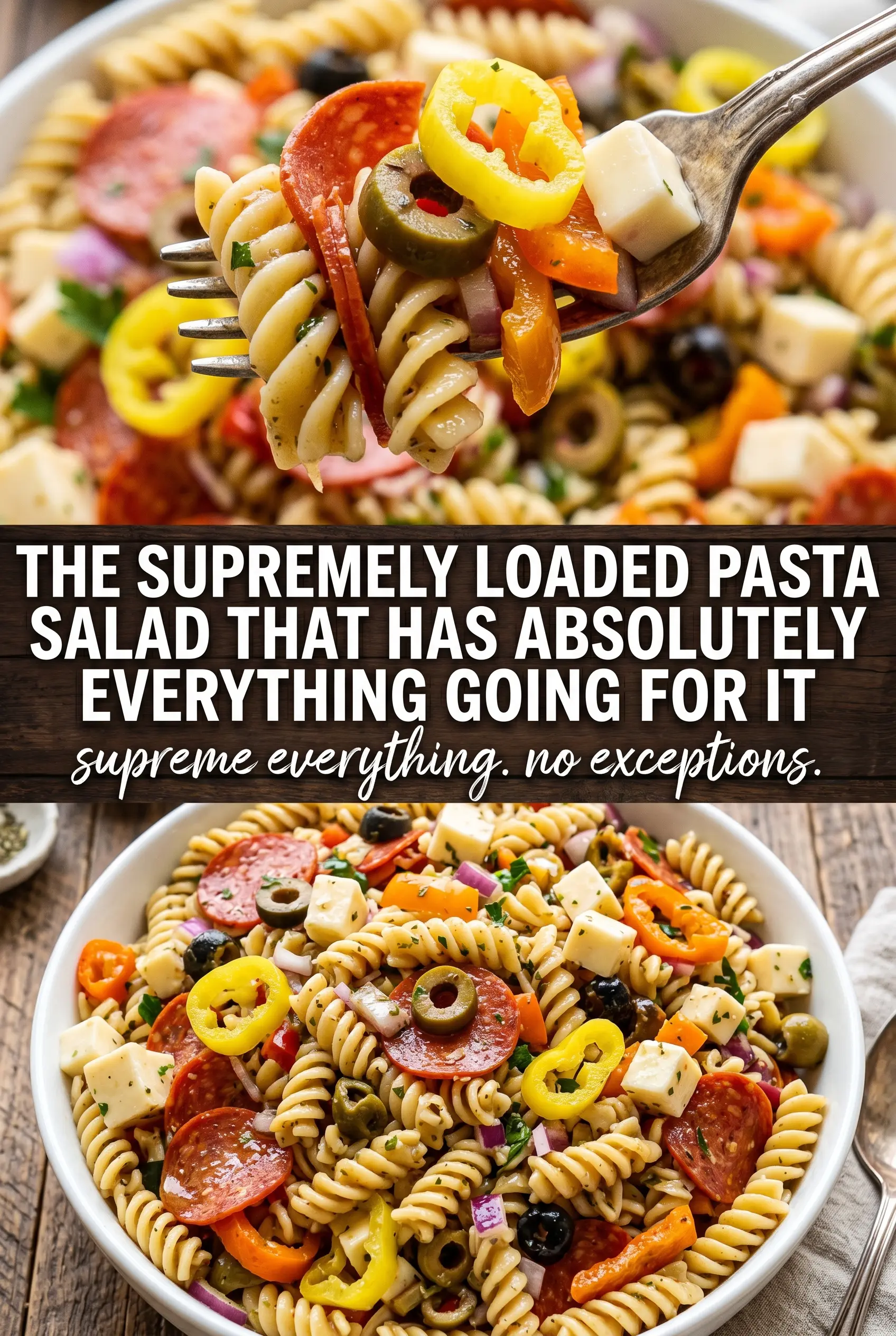
Supreme pasta salad earns its place on the table because every bite has a little contrast: chewy pasta, salty salami and pepperoni, cool cucumber, juicy tomatoes, and enough creamy dressing to tie it all together without turning heavy. It’s the kind of side dish that disappears fast at cookouts, potlucks, and weeknight dinners because it eats like a full meal but still feels bright and fresh.
The trick is balancing abundance with restraint. The pasta gets rinsed cold so it stops cooking and stays springy, then the dressing goes in while everything is still a little bare so the noodles can soak up flavor as it chills. A short rest is not optional here. That chill time is what pulls the whole salad together and keeps the dressing from tasting sharp or thin.
Below, I’ll show you the ingredient choices that matter, the moment when this salad goes from good to fully loaded, and the one storage note that keeps leftovers from drying out.
The pasta stayed chewy after chilling, and the dressing soaked into everything without making it soggy. I kept sneaking forkfuls straight from the fridge.
Like this loaded supreme pasta salad? Save it to Pinterest for potlucks, cookouts, and make-ahead sides that taste even better after chilling.
The Dressing Needs a Head Start, Not a Rescue
The biggest mistake with pasta salad is waiting until the end to think about seasoning. Cold pasta dulls flavor, and once the salad is chilled, everything tastes a little quieter than it did in the bowl. That’s why this version leans on a dressing that can coat the noodles early and then settle in as it rests.
The other thing that matters is texture balance. Rotini traps dressing in its curls, while salami, pepperoni, and mozzarella give you enough weight to keep the salad from feeling watery. If the vegetables are cut too small, they vanish. If they’re cut too large, the salad turns clumsy. The sweet spot is bite-size pieces that still read as distinct.
- Rinsed pasta — This stops the cooking fast and washes off excess starch, which keeps the salad from getting gummy. Let it drain well before adding anything else, or the dressing will slide right off.
- Tri-color rotini — Rotini holds the dressing better than smooth pasta. The tricolor version is mostly about looks, but the shape is what carries the salad.
- Italian dressing — Bottled dressing works fine here because it already has acid, oil, and seasoning in balance. A thick, creamy dressing changes the whole dish and makes it heavier.
- Parmesan — This adds a salty, savory edge that bottled dressing alone can’t give you. Grated Parmesan blends in better than shredded, which can clump in the cold salad.
What Each Ingredient Is Actually Doing in Well-Timed Dressing
- Dressing made ahead (at least 30 minutes before) — The dressing should sit and let the flavors meld. Fresh dressing tastes sharp and disjointed.
- Oil and acid balanced and integrated — The oil and acid should feel combined, not separated. Time helps them become one cohesive dressing.
- Seasonings fully dissolved in the liquid — Salt and spices need time to dissolve and distribute. Making the dressing ahead ensures even seasoning.
- Herbs infusing their flavor — Fresh herbs release more flavor as they sit in the acid and oil. Waiting allows the dressing to taste more herbaceous and complex.
- Garlic becoming mellow — Raw garlic in fresh dressing tastes sharp. After sitting for a bit, it becomes mellow and integrated into the whole dressing.
- Flavors melding together — Individual flavors need time to come together into one cohesive taste. A head start prevents the salad from tasting like separate ingredients.
- Dressing ready to coat perfectly — A rested dressing coats the pasta more evenly. It’s already integrated, so it distributes flavor throughout instead of sitting in pools.
- Toss pasta with ready dressing — When the pasta is cool and the dressing is ready, they come together instantly. The pasta absorbs perfectly seasoned dressing.
The Order That Keeps the Salad Crisp
Cooking and Cooling the Pasta
Cook the rotini just to al dente so it still has a little bite after chilling. Drain it well, then rinse under cold water until the noodles are no longer steaming. If you skip the rinse, the pasta keeps cooking and the salad turns soft by the next hour. Let it sit in the colander for a minute so the extra water doesn’t thin the dressing.
Building the Loaded Bowl
Add the pasta to a large bowl with the salami, pepperoni, mozzarella, tomatoes, cucumber, olives, bell pepper, and red onion. This is where the salad starts to look full and generous, so use a bowl with plenty of room for tossing. If the cucumber or tomatoes are overly wet, pat them dry first; otherwise they water down the dressing and leave the bottom of the bowl loose.
Coating and Chilling
Pour in the Italian dressing, Parmesan, and Italian seasoning, then toss until every curl of pasta is coated. Season with salt and pepper only after everything is mixed, since the meats, cheese, and dressing already bring plenty of salt. Chill for at least 2 hours, and toss once or twice while it rests so the dressing settles evenly instead of pooling underneath.
Finishing Before Serving
Right before serving, taste again and add a splash more dressing if the pasta has absorbed too much. Pasta salad often looks fully dressed when it’s mixed, then dries out a bit as it sits. A small final drizzle wakes it back up without making it soupy.
How to Adapt Supreme Pasta Salad for Different Tables
Make It Gluten-Free Without Losing the Structure
Use a sturdy gluten-free rotini made from corn or rice. Cook it just until tender and rinse it well, because gluten-free pasta can go soft faster than wheat pasta once it chills. The rest of the salad stays the same, and the meats and dressing carry the flavor.
Turn It Into a Vegetarian Pasta Salad
Skip the salami and pepperoni and add extra mozzarella, roasted red peppers, and chopped artichoke hearts. You lose some of the smoky, salty punch, so a pinch more Parmesan and an extra spoonful of dressing help fill that gap. The result is lighter but still packed and satisfying.
Use a Creamier Dressing for a Softer Finish
If you want the salad to taste richer, replace half the Italian dressing with a creamy Italian-style dressing. That gives you a thicker coating and a more substantial texture, but it also mutes the sharp vinegar bite. I like this version for parties where the pasta salad sits out a little longer.
Storage and Reheating
- Refrigerator: Store covered for up to 4 days. The pasta will absorb more dressing as it sits, so expect it to tighten up a bit.
- Freezer: Don’t freeze this salad. The cucumbers, tomatoes, and dressing lose their texture after thawing.
- Reheating: Serve it cold or at cool room temperature. If it looks dry after chilling, stir in a spoonful or two of dressing instead of trying to warm it up.
Questions I Get Asked About This Recipe
Supreme Pasta Salad
Ingredients
Equipment
Method
- Cook the tri-color rotini pasta according to package directions, then drain and rinse with cold water to stop the cooking.
- Combine the pasta, salami, pepperoni, mozzarella, cherry tomatoes, cucumber, black olives, green bell pepper, and red onion in a large bowl and toss gently to mix.
- Add the Italian dressing, Parmesan cheese, and Italian seasoning, then toss until everything is evenly coated with a creamy dressing.
- Season with salt and pepper to taste and toss again so the flavors distribute throughout the salad.
- Refrigerate for at least 2 hours, tossing occasionally so the dressing absorbs and the salad stays cohesive.
- Before serving, check the texture and add more dressing if needed, then toss and serve chilled.