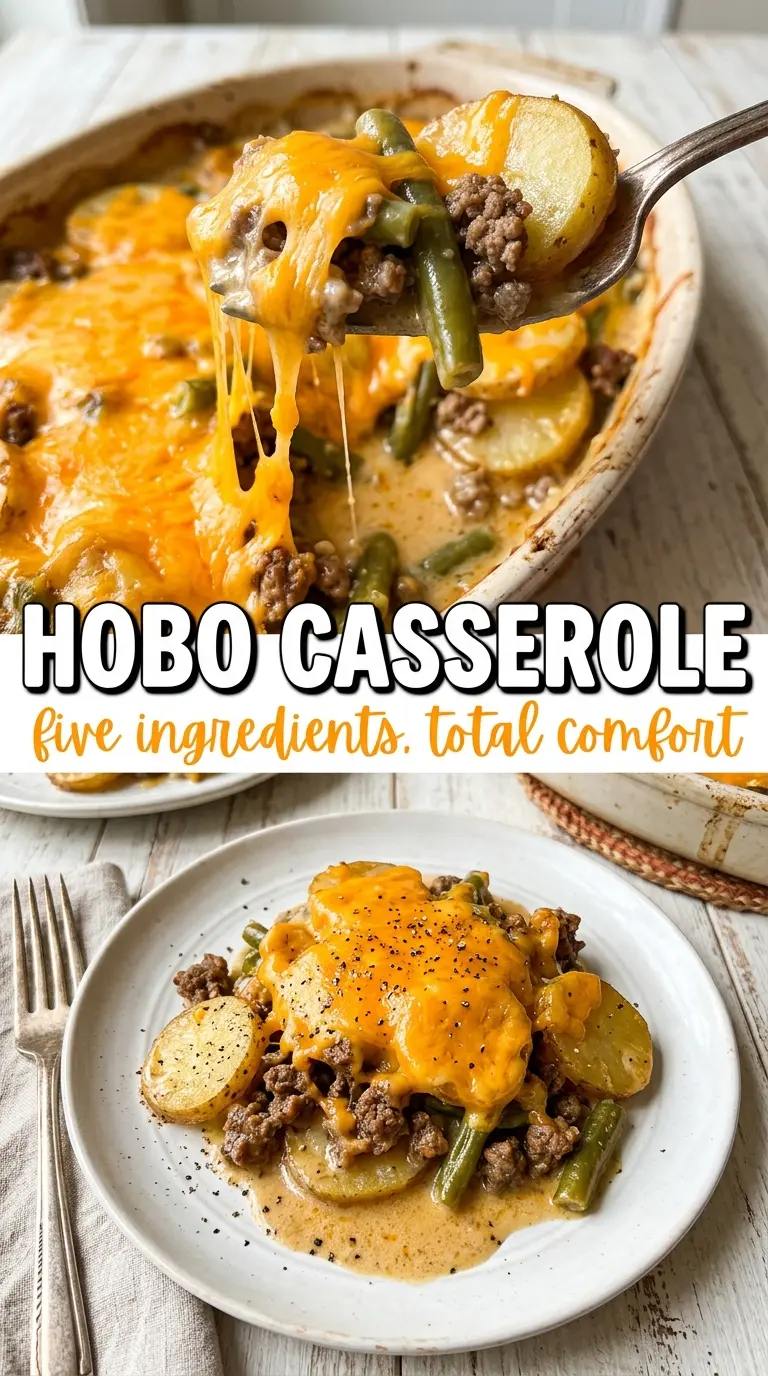
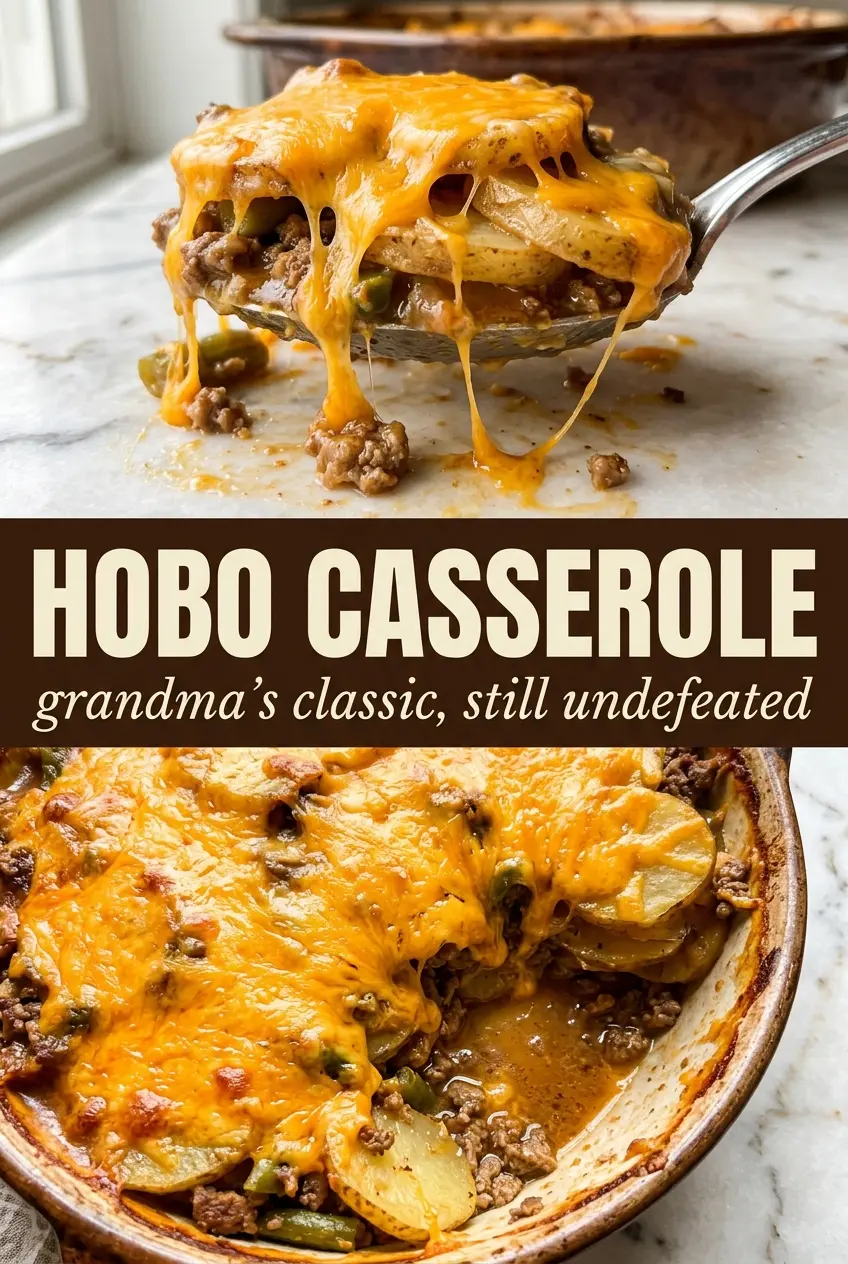
Hobo casserole comes out of the oven with the kind of comfort people remember: tender potato layers, savory ground beef, and a creamy sauce that settles into every bite. The cheddar on top turns golden and stretchy, while the potatoes underneath stay soft enough to cut with a spoon but still hold their shape. It’s the sort of bake that fills the kitchen with a smell that gets everyone drifting toward the table before you’ve even set the pan down.
What makes this version work is the way the potatoes are sliced thin and layered with the beef mixture, so they steam and absorb flavor instead of staying stiff or undercooked. The mushroom soup, sour cream, and broth make a sauce that’s rich without being heavy, and the foil cover gives the potatoes the head start they need before the cheese goes on. That two-stage bake is what keeps the top from burning while the center finishes properly.
Below, I’ll walk through the one detail that matters most for even cooking, plus a few smart swaps if you need to stretch the ingredients or change up the cheese. If you’ve ever had a potato casserole come out dry in the middle, this method fixes that.
The potatoes turned out perfectly tender and the sauce soaked right into the layers without getting watery. I used the full 40 minutes covered and the cheese browned up beautifully after the foil came off.
Save this hobo casserole for a cheesy potato bake with layered beef, creamy mushroom sauce, and a golden cheddar top.
The Layering Trick That Keeps the Potatoes Tender
The biggest mistake with a potato-and-beef casserole is stacking the potatoes too thick or leaving them in large slices. Then the top cooks before the center has a chance to soften. Thin, even slices give the heat a clear path through the dish, and alternating the potatoes with the beef and sauce helps every layer pick up moisture.
Covering the dish for the first stretch of baking matters just as much. That trapped steam is what finishes the potatoes without drying out the beef, and it keeps the sauce from reducing too early. Once the potatoes are tender, the foil comes off so the cheese can brown instead of steaming pale on top.
What Each Ingredient Is Actually Doing in This Recipe
- Primary ingredient (the star) — Quality matters most. Choose the best you can find.
- Cooking medium (oil, butter, or broth) — This carries flavors and prevents dryness.
- Seasonings (salt, pepper, spices, herbs) — Layer flavors so nothing overpowers. Build depth gradually.
- Aromatics (garlic, onion, herbs) — Cook with fat to bloom flavors. Become the foundation.
- Supporting ingredients — Complement the main ingredient without overpowering it.
- Sauce or liquid (if applicable) — Brings flavors together. Balance richness with acid.
- Acid (lemon, vinegar, wine, or other) — Brightens and prevents flat-tasting results.
- Final finish (garnish, glaze, or sauce) — Prevents one-dimensional taste and adds visual appeal.
What the Creamy Mushroom Sauce Is Doing Here
- Cream of mushroom soup — This is the base that gives the casserole body and that classic old-school comfort flavor. A good brand matters more than an expensive one; what matters most is that it mixes smoothly and doesn’t taste overly salty.
- Sour cream — It adds tang and keeps the sauce from tasting flat. Greek yogurt can work in a pinch, but it’s a little sharper and can thin out more if it gets too hot.
- Beef broth — This loosens the soup enough to spoon between the layers without making the casserole stodgy. Use a low-sodium broth if your soup is already seasoned heavily.
- Sharp cheddar — Sharp cheese gives you more flavor than mild cheddar, especially over a creamy base. Shred it yourself if you can; pre-shredded cheese melts less smoothly because of the anti-caking coating.
- Russet potatoes — Russets soften beautifully here and give you that soft, scoopable texture in the finished bake. Waxy potatoes hold their shape more firmly, which can make the casserole feel firmer and less comforting.
Building the Bake So Everything Cooks at the Same Pace
Brown the Beef First
Cook the ground beef with the diced onion until the meat loses its raw pink color and the onion turns soft and translucent. Drain off the excess fat after browning, or the casserole can end up greasy at the bottom. Add the garlic for the last minute only, because it burns fast once the pan is already hot.
Mix the Sauce Until It’s Smooth
Stir the soup, sour cream, broth, and seasonings together until the mixture looks even and pourable. If it seems too thick, the potatoes won’t get coated properly and the center can bake up dry. The sauce should slide off a spoon in a thick ribbon, not sit in a stiff mound.
Layer for Even Heat
Start with half the potatoes, then half the beef, then half the sauce, and repeat. This order helps the potatoes catch moisture from both the meat and the creamy mixture instead of sitting in one dry block. Press the layers down lightly with the back of a spoon so there aren’t big air pockets that can slow cooking.
Finish With Cheese After the Potatoes Are Tender
Bake covered until a knife slips through the potatoes without resistance, then remove the foil and add the cheddar. If you add the cheese too early, it can turn oily and overbrowned before the center is done. The last uncovered bake is just long enough for the top to bubble and turn golden at the edges.
How to Adapt Hobo Casserole Without Losing the Comfort Factor
Make it gluten-free
Use a certified gluten-free cream of mushroom soup and check that your beef broth is gluten-free too. The texture stays the same, since the starch from the potatoes does most of the thickening once everything bakes together.
Swap the cheese for a milder finish
Mozzarella melts smoothly if you want a softer top, but it won’t give you the same sharp bite as cheddar. Colby Jack is the middle ground: creamy, melty, and still flavorful enough to stand up to the beef.
Use ground turkey instead of beef
Ground turkey works well, but it needs the onion, garlic, and smoked paprika to keep the flavor from turning bland. Add a little extra salt and use the full amount of broth so the lean meat doesn’t make the casserole dry.
Storage and Reheating
- Refrigerator: Store covered for up to 4 days. The potatoes soften a little more as it sits, but the flavor gets deeper.
- Freezer: It freezes well after baking. Cool completely, wrap tightly, and freeze for up to 2 months; thaw in the refrigerator before reheating so the center warms evenly.
- Reheating: Reheat covered in a 350°F oven until hot throughout. The mistake people make is blasting it uncovered in the microwave, which dries the potatoes and makes the cheese rubbery.
Questions I Get Asked About This Recipe
Hobo Casserole
Ingredients
Equipment
Method
- Preheat oven to 375°F and grease a 9x13 baking dish. Have the dish ready so you can start layering right away.
- Brown ground beef with diced onion in a skillet over medium heat, and drain the fat. Keep cooking just until the beef loses its pink color.
- Add minced garlic and cook 1 more minute. Stir until fragrant, but don’t let it brown.
- Mix cream of mushroom soup, sour cream, beef broth, garlic powder, onion powder, smoked paprika, salt and black pepper in a bowl until smooth. The mixture should look creamy with no lumps.
- Layer half the sliced russet potatoes in the bottom of the dish. Spread them into an even layer so they cook through.
- Top with half the cooked beef mixture. Distribute it across the potatoes for even flavor.
- Spoon on half the soup mixture. Cover the beef and potatoes lightly so sauce reaches the edges.
- Repeat the layers with the remaining potatoes, beef, and soup mixture. Press gently so the layers settle.
- Cover tightly with foil and bake for 40 minutes at 375°F until potatoes are tender. Look for soft, easily pierced potatoes under the foil.
- Remove the foil and top with shredded sharp cheddar cheese. Spread it in an even blanket so it melts thoroughly.
- Bake uncovered for 15 more minutes at 375°F until the cheese is golden and bubbly. The edges should look set while the center bubbles actively.