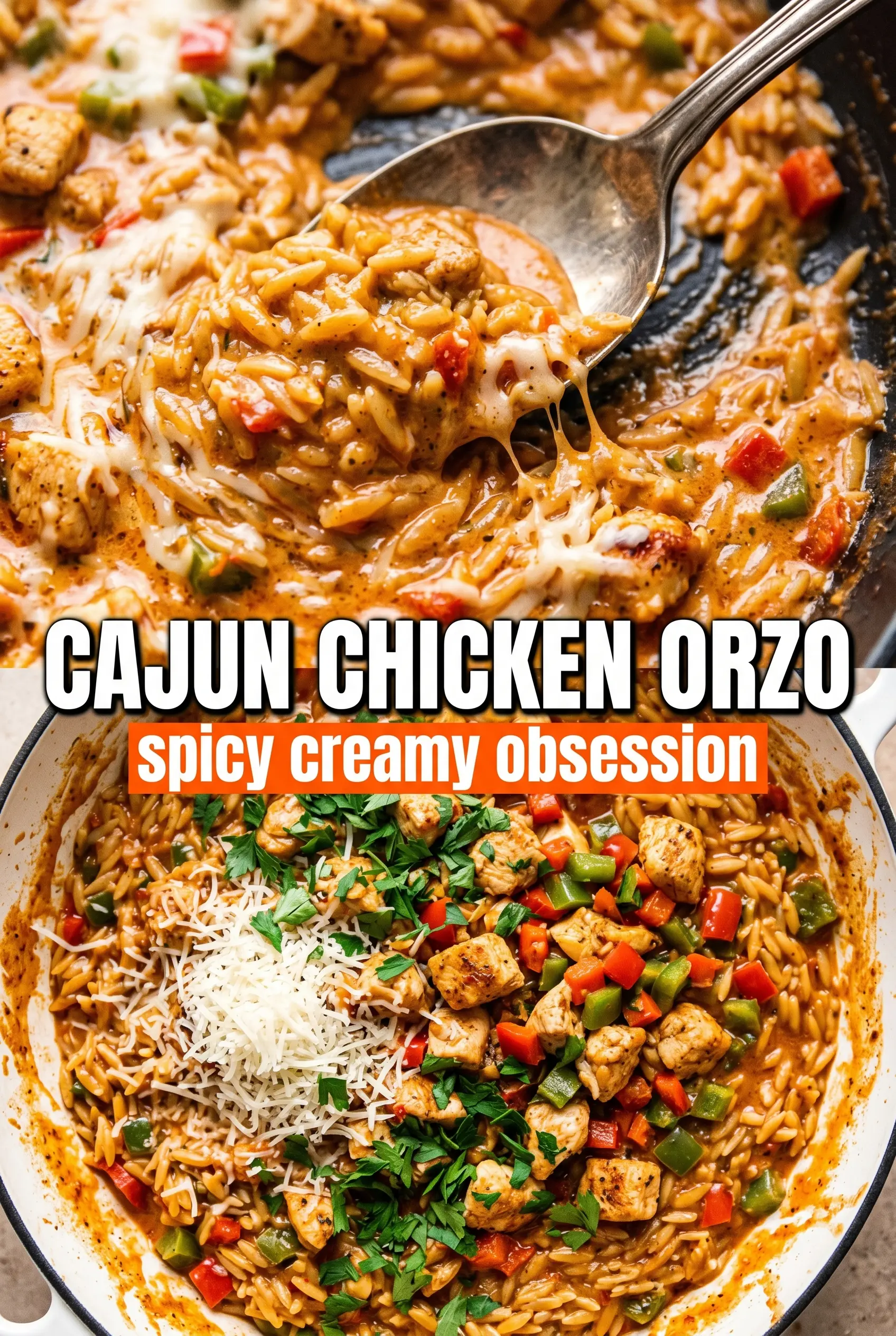
Blackened Cajun chicken over creamy orzo is the kind of dinner that disappears fast because every bite hits a different note: smoky crust on the chicken, sweet peppers in the sauce, and just enough heat to keep things interesting. The orzo turns silky without going mushy, and the whole skillet eats like something that took much longer than it did.
The key is treating this like two jobs in one pan. First, give the chicken a hard sear so the Cajun seasoning actually blooms and forms that dark crust instead of tasting flat. Then toast the orzo before the broth goes in; that quick step keeps the pasta from turning soft and bland, and it gives the finished dish a little more depth.
Below, I’ve included the one timing detail that keeps the sauce creamy instead of grainy, plus a few smart swaps if you need to work with what’s already in the kitchen.
The chicken got that deep blackened crust I was hoping for, and the orzo stayed creamy without getting gummy. My husband went back for seconds before I even sat down.
Save this Cajun Chicken Orzo for a skillet dinner with blackened chicken, creamy orange orzo, and just enough heat to wake up the whole table.
The Trick to Keeping Cajun Chicken Orzo Creamy Instead of Clumpy
Orzo can go from pleasantly saucy to sticky fast once the liquid starts to cook off, and that’s the main place this dish can slip. The fix is to stir often while the broth reduces, especially once the pasta starts to swell. That motion keeps the starch moving through the pan instead of settling into a thick paste at the bottom.
The second thing people miss is heat control at the end. Heavy cream and Parmesan want a gentle simmer, not a hard boil. If the pan is raging when the cheese goes in, the sauce can turn grainy or look a little broken. Pulling the heat back gives the dairy time to melt into the starch instead of fighting it.
What Each Ingredient Is Actually Doing in This Skillet

- Boneless skinless chicken thighs — Thighs stay juicy under high heat and hold up to the blackened sear better than chicken breast. Breast works in a pinch, but it needs less time and can dry out faster, so watch the internal temperature closely.
- Cajun seasoning — This is where the heat, salt, and smoke come from, so a bland blend will make the whole dish taste flat. If yours is salt-free, season the chicken a little more aggressively before searing so the crust still tastes complete.
- Orzo — Orzo gives you that creamy, risotto-like finish without the constant stirring rice needs. Toasting it for a minute in the skillet helps it keep its shape and gives the final dish a little nutty backbone.
- Heavy cream and Parmesan — These two turn the broth into a glossy sauce. Use real Parmesan if you can; pre-shredded cheese often melts less smoothly because of the anti-caking coating.
- Bell peppers, onion, and garlic — They build sweetness and aroma so the dish doesn’t lean only on heat. Dice the onion and peppers small enough that they soften before the orzo finishes, otherwise you end up with crunchy bits in an otherwise tender skillet.
- Smoked paprika — This deepens the color and rounds out the Cajun spice blend with a little extra smoke. If your seasoning is already heavy on paprika, you can cut this back slightly without changing the structure of the dish.
Building the Skillet So Every Layer Tastes Like It Belongs
Blackening the Chicken First
Rub the chicken thighs with half of the Cajun seasoning, then sear them in hot olive oil until the outside is deeply browned and the centers hit 165°F. Don’t move them around early; they need contact with the pan to form that crust. If the seasoning seems to darken too fast, the pan is too hot, so lower the heat slightly and keep going. Remove the chicken before you start the vegetables so the fond stays in the skillet.
Softening the Vegetables in the Same Pan
Cook the bell peppers and onion in the same skillet until the onion turns translucent and the peppers lose their raw crunch. The browned bits left behind from the chicken should start loosening as the vegetables release moisture, which is exactly what you want. Add the garlic and remaining Cajun seasoning for just a minute; garlic burns fast, and burnt garlic will take over the whole pan.
Cooking the Orzo in the Sauce
Stir in the orzo and toast it briefly before adding the broth. Once the liquid goes in, keep the mixture at a lively simmer and stir often so the pasta cooks evenly and nothing sticks on the bottom. If the pan looks dry before the orzo is tender, add a small splash of broth or water instead of turning the heat up hard, which only risks scorching the starch.
Finishing with Cream and Cheese
Lower the heat before you add the cream and Parmesan, then stir until the sauce turns glossy and coats the pasta. The sauce should look loose at first; it tightens a little as it sits off the heat. Slice the chicken and lay it over the top so the juices run into the orzo instead of leaving the meat to dry out on a plate.
Three Ways to Adjust Cajun Chicken Orzo Without Losing the Point
Make It Lighter with Chicken Breast
Chicken breast works if that’s what you have, but it needs less time on the heat. Pound it to an even thickness and pull it as soon as it reaches 165°F so it stays tender. You’ll lose a little richness compared with thighs, but the creamy orzo and spices still carry the dish.
Make It Dairy-Free
Swap the heavy cream for full-fat coconut milk and skip the Parmesan, or use a dairy-free Parmesan-style cheese that melts well. The sauce will taste a little less sharp and more mellow, but it still turns creamy if you keep the heat low. Add a squeeze of lemon at the end to wake it back up.
Turn the Heat Down for a Milder Skillet
Use a mild Cajun seasoning or cut the blend in half and replace the rest with smoked paprika and a little garlic powder. You’ll keep the smoky backbone without as much burn. This is the best path if you’re serving kids or anyone who likes Cajun flavor without the full kick.
Storage and Reheating
- Refrigerator: Store in an airtight container for up to 3 days. The orzo will thicken as it chills, so expect a creamier, less loose texture.
- Freezer: Freezing isn’t ideal because the cream sauce can separate and the orzo softens too much. If you must freeze it, cool it completely first and reheat gently with extra broth or cream.
- Reheating: Warm it on the stove over low heat with a splash of broth or water, stirring until the sauce loosens. The common mistake is blasting it in the microwave until the dairy splits and the chicken dries out.
Answers to the Questions Worth Asking
Cajun Chicken Orzo
Ingredients
Equipment
Method
- Rub the chicken thighs with 1 tablespoon Cajun seasoning. Sear in the olive oil in a large deep skillet over medium-high heat for 4-5 minutes per side until blackened and cooked through to 165°F, then remove and slice.
- In the same skillet, cook the bell peppers and onion over medium heat for 4 minutes. Add the garlic and remaining Cajun seasoning and cook 1 minute.
- Add the orzo and toast for 1 minute. Pour in the chicken broth, bring to a simmer, and cook uncovered for 10-12 minutes, stirring often, until the orzo is tender.
- Stir in the heavy cream and Parmesan, then simmer for 2 minutes until creamy. Top with the sliced Cajun chicken.
- Garnish with sliced green onions and serve with lemon wedges. Add smoked paprika if desired for extra smoky color and heat.