Deeply browned chicken thighs and a glossy balsamic glaze make this skillet dinner feel a lot more special than the amount of work it asks of you. The skin turns crisp in the pan, the tomatoes collapse just enough to sweeten the sauce, and the whole thing finishes with that sticky-tangy coating that clings to every bite. It’s the kind of dinner that gets noticed the second it hits the table.
The trick here is to sear the chicken hard enough to build flavor before the sauce goes in, then let the balsamic reduce until it looks syrupy rather than thin and sharp. Bone-in, skin-on thighs hold up best because they stay juicy while the glaze tightens around them. Whole garlic cloves soften into the sauce without turning bitter, and a little butter at the end gives the glaze that smooth finish that bottled balsamic never has.
Below, I’ve included the timing cues that matter most, plus a few swaps and storage notes for the nights when you need this to stretch a little further.
The sauce reduced into a thick glaze exactly when the chicken finished, and the tomatoes gave it this sweet, jammy edge I wasn’t expecting. My husband kept spooning the sauce over his rice.
Save this one-pan balsamic chicken for the nights when you want crispy-skinned thighs and a glossy tomato-balsamic glaze without extra pans.
The Crisp-Skin Move That Keeps the Glaze from Going Flat
The biggest mistake with balsamic chicken is rushing the sauce before the skin has had time to brown. If the chicken goes into the liquid too early, the skin softens and the finished dish tastes more steamed than glazed. Searing skin-side down first builds the base flavor in the pan and gives the sauce something worth clinging to later.
Bone-in, skin-on thighs are the right cut here because they can handle the extra time it takes to reduce the balsamic. Breasts can work, but they dry out faster and don’t give you the same rich pan juices. The goal is not just cooked chicken. It’s chicken that stays juicy while the sauce cooks down around it.
What Each Ingredient Is Actually Doing in the Pan
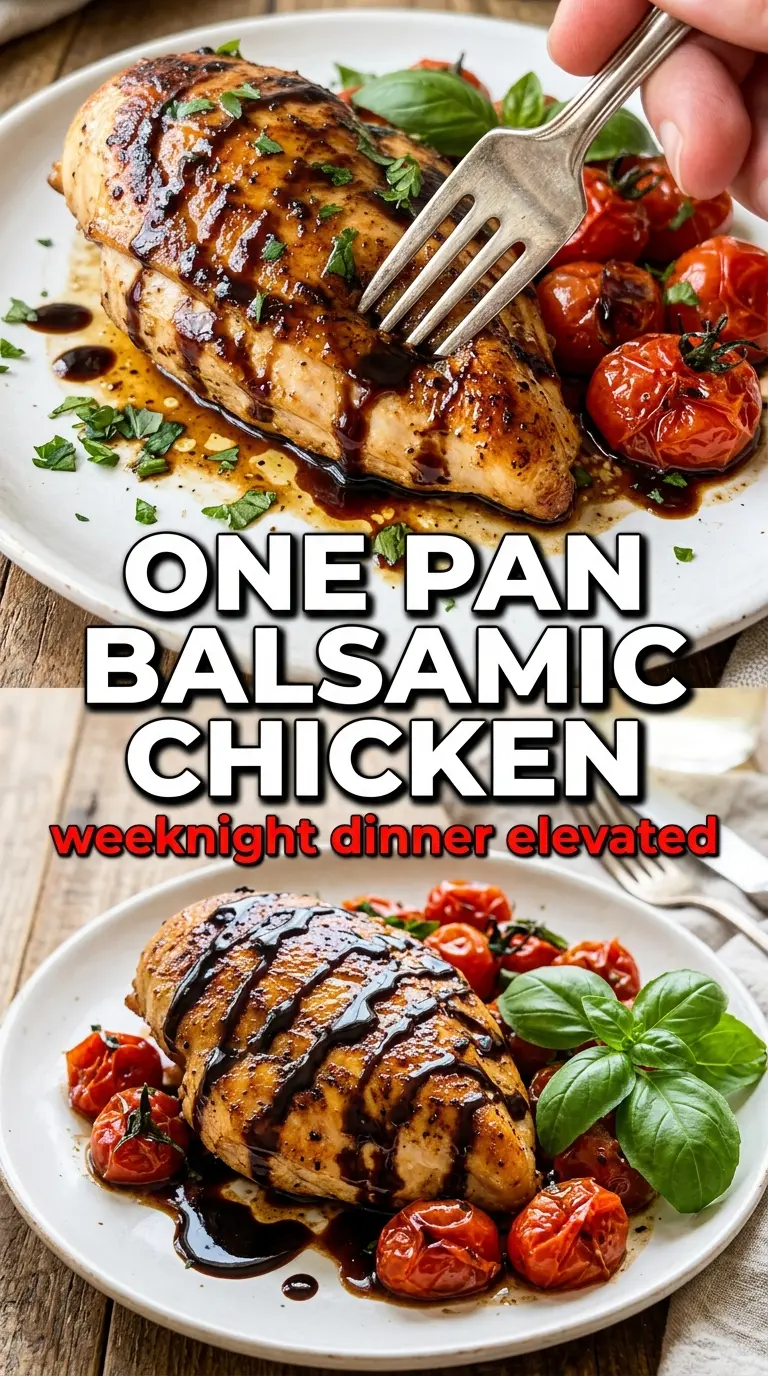
- Bone-in, skin-on chicken thighs — These stay tender while the sauce reduces, and the skin gives you the crisp finish that makes the dish feel complete. If you swap in boneless thighs, shorten the simmer so they don’t overcook.
- Balsamic vinegar — This is the backbone of the glaze, so use one that tastes balanced rather than harsh. A cheap bottle can still work here because honey and broth round it out, but if your vinegar is aggressively acidic, the sauce will stay sharp no matter how long it reduces.
- Honey — This softens the tang and helps the glaze take on that glossy, lacquered look. Maple syrup can stand in, but the finish will taste a little darker and less clean.
- Cherry tomatoes — They blister, collapse, and add little bursts of sweetness that keep the sauce from tasting one-note. Don’t skip them unless you have to; they’re doing more than garnish work here.
- Whole garlic cloves — Whole cloves mellow in the skillet and perfume the sauce without burning as quickly as chopped garlic would. If you slice them thin, they’ll brown faster and can turn bitter before the glaze is done.
- Butter — Stirred in at the end, it gives the sauce a smoother, more satin finish. If you leave it out, the glaze still works, but it won’t coat the chicken as evenly.
Building the Glaze Without Burning the Bottom
Seasoning and Searing
Season the chicken generously on both sides, then lay it skin-side down in hot olive oil. You want a loud sizzle right away; if the pan only hisses softly, it’s not hot enough and the skin will stick. Let it sit untouched for 7 to 8 minutes until the skin is deep golden and releases cleanly, then flip it just long enough to color the other side. Pulling it early leaves the skin pale, and adding the sauce too soon softens all that work away.
Blistering the Tomatoes and Garlic
Once the chicken is out of the pan, add the garlic cloves and tomatoes and cook them for about 2 minutes. The tomatoes should just start to split and wrinkle at the edges. That brief burst of heat wakes up the sweetness in the tomatoes without reducing them to mush. If the garlic starts to darken too fast, lower the heat before it turns bitter.
Reducing the Balsamic
Pour in the balsamic vinegar, honey, and broth and scrape up every browned bit from the skillet bottom. Bring the liquid to a boil first, then drop it to medium heat once the chicken goes back in. The sauce should bubble steadily and thicken enough to coat the back of a spoon by the time the chicken reaches 165°F. If it still looks thin, keep cooking; balsamic needs time to lose its sharp edge and turn glossy.
Finishing with Butter and Basil
Stir in the butter after the heat comes down and the sauce has thickened. Butter added too early can separate, especially in a sauce that has already reduced hard. Fresh basil goes on at the end so it stays bright instead of wilted and dark. Serve right away from the skillet while the glaze is still loose enough to spoon over the chicken.
How to Adapt This Skillet for Different Nights
Use boneless thighs for a faster dinner
Boneless thighs cook faster and still stay juicy, but they won’t give you quite the same dramatic crisp skin. Start checking them several minutes earlier, and pull them as soon as they’re cooked through so the glaze doesn’t reduce past the point of coating.
Make it dairy-free without losing the glossy finish
Leave out the butter and finish with an extra tablespoon of olive oil instead. The sauce won’t have the same silky richness, but it will still cling to the chicken and taste bright and balanced.
Make it gluten-free with no changes
This recipe is naturally gluten-free as written, so there’s nothing special to swap. Just check your broth and balsamic to be sure there’s no hidden flour or seasoning blend added in.
Add more vegetables to turn it into a full skillet meal
Stir in sliced zucchini, mushrooms, or a handful of baby spinach near the end of cooking. Just avoid loading the pan too early or the vegetables will steam and water down the glaze.
Storage and Reheating
- Refrigerator: Store leftovers in an airtight container for up to 3 days. The skin softens, but the sauce stays flavorful.
- Freezer: It freezes well for up to 2 months, though the tomatoes will soften more after thawing. Cool completely before freezing, and pack the chicken with plenty of sauce so it doesn’t dry out.
- Reheating: Reheat gently in a covered skillet over low heat with a splash of broth or water. High heat will tighten the chicken and can push the glaze from sticky to scorched.
Questions I Get Asked About This Recipe
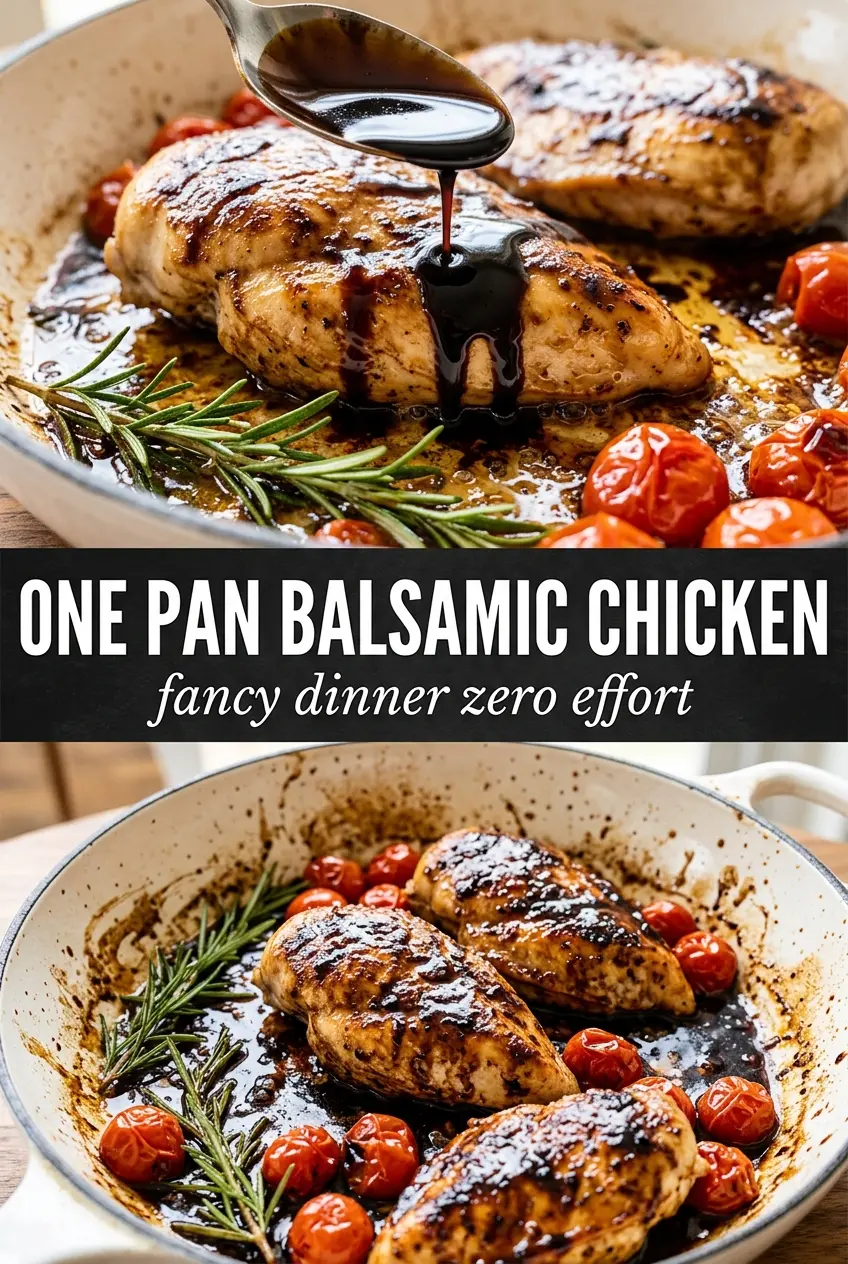
One Pan Balsamic Chicken
Ingredients
Equipment
Method
- Season the chicken thighs generously on both sides with salt, pepper, garlic powder, and Italian seasoning.
- Heat the olive oil in a large cast iron skillet over medium-high heat and sear the chicken skin-side down for 7-8 minutes until the skin is deeply golden and crispy; flip and sear 3 more minutes; remove.
- Add the whole garlic cloves and cherry tomatoes and cook for 2 minutes until the tomatoes begin to blister.
- Pour in the balsamic vinegar, honey, and chicken broth, stir, and bring to a boil while scraping up the browned bits.
- Return the chicken skin-side up and cook over medium heat for 12-15 minutes until the chicken reaches 165°F and the balsamic sauce reduces to a thick glaze.
- Stir in the butter until melted, scatter fresh basil over the top, and serve straight from the skillet.