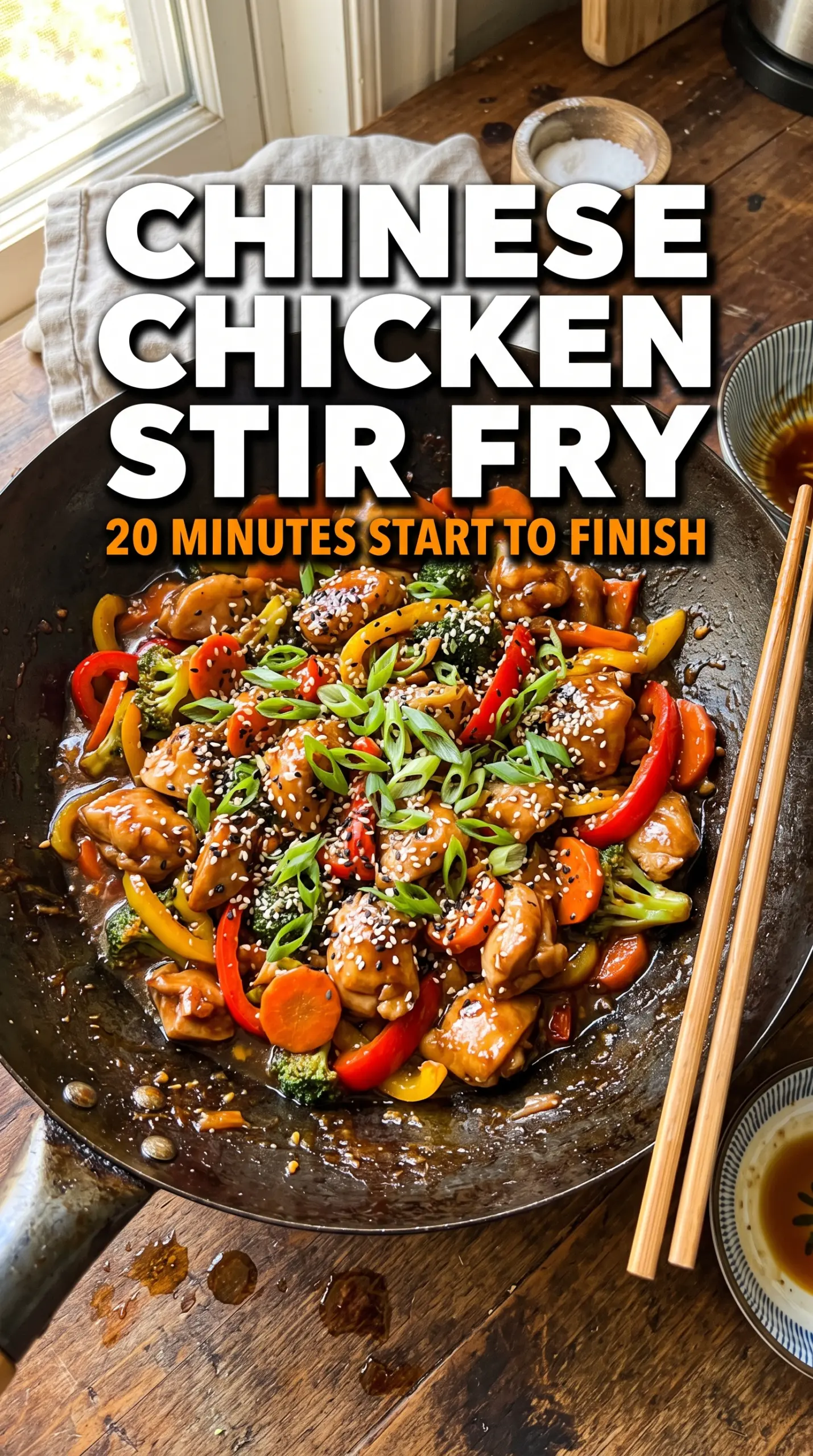
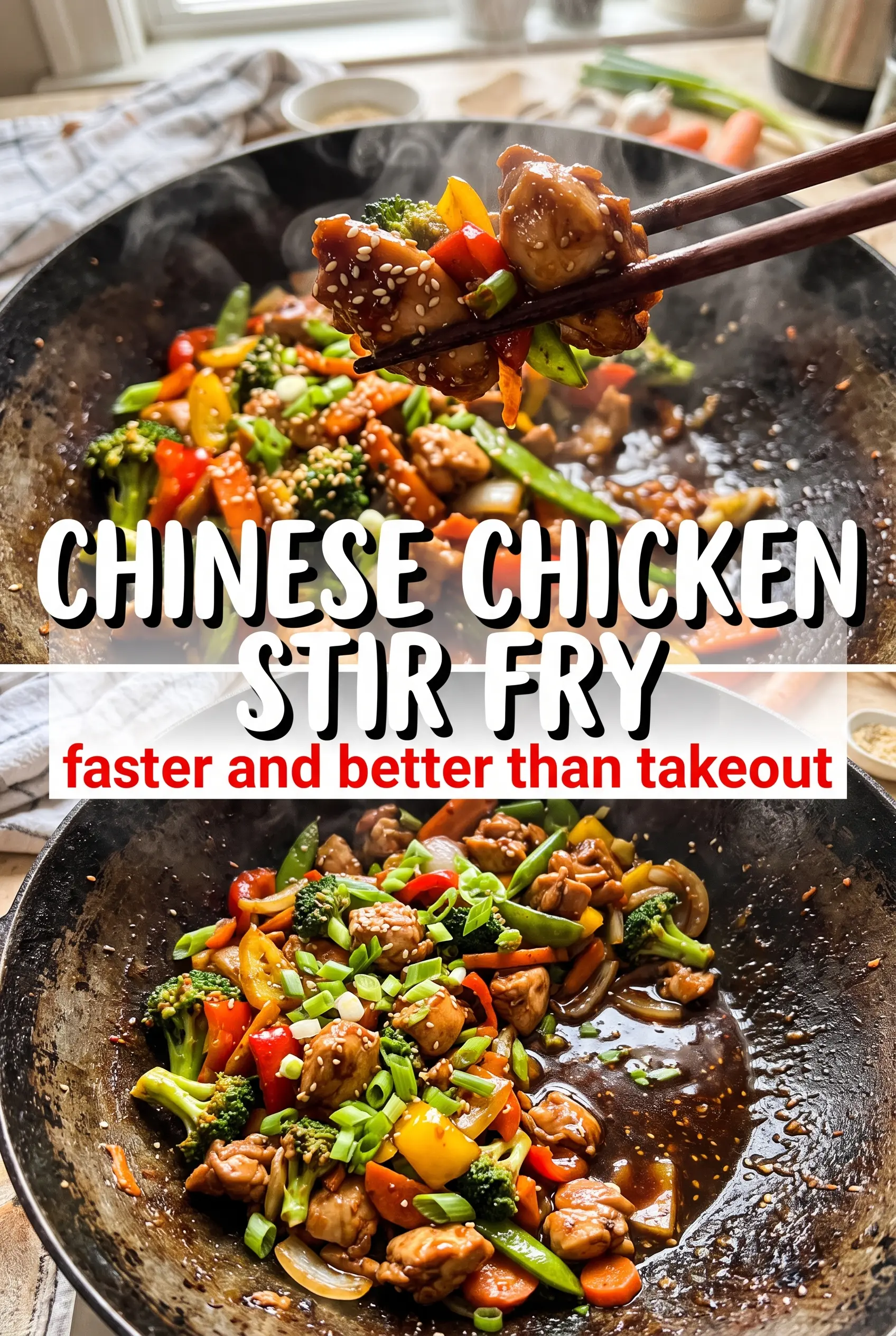
Tender chicken, crisp vegetables, and a glossy soy-ginger sauce are what make this Chinese chicken stir fry worth putting on repeat. The chicken stays light instead of heavy because it gets a quick cornstarch coating before it hits the wok, and the vegetables keep their bite instead of collapsing into the sauce. Everything finishes with that takeout-style sheen that clings to the rice instead of pooling at the bottom of the bowl.
The trick here is heat and timing. The wok needs to be hot enough to sear the chicken fast, which keeps it juicy, and the vegetables go in just long enough to soften at the edges while staying bright. The sauce gets mixed before anything starts cooking, so once the pan is moving you can keep the whole dish on schedule instead of scrambling for the whisk halfway through.
Below, I’ve included the details that matter most: how to keep the sauce from turning gluey, which vegetables can be swapped without wrecking the balance, and the one reheating method that keeps the chicken from drying out.
The chicken stayed tender and the sauce thickened up right in the wok without getting gummy. I loved that the peppers and broccoli still had some crunch, and my husband asked if I could make it again the next night.
Save this Chinese chicken stir fry for the nights when you want glossy sauce, crisp vegetables, and dinner on the table fast.
The Fastest Way to Lose the Stir-Fry Gloss
The biggest mistake in a dish like this is crowding the pan. Once the chicken starts steaming instead of searing, the cornstarch coating turns pasty and the sauce never gets that slick, restaurant-style finish. High heat matters, but space matters just as much, which is why a wok or a large skillet gives you better color and better texture than a tight pan ever will.
Another thing that keeps this dish sharp is the order of the aromatics. Garlic and ginger go in after the vegetables have had a head start, not at the beginning, because they burn fast over high heat. Once they hit the pan, they need just enough time to bloom and turn fragrant before the sauce goes in.
What Each Ingredient Is Doing in the Pan
- Chicken breasts — Thin slices cook quickly and stay tender. If you cut them thicker, the outside overcooks before the center is done. Slice against the grain for the softest bite.
- Cornstarch — This does two jobs: it lightly coats the chicken for a silkier texture and helps the sauce thicken at the end. Flour won’t give the same clean, glossy finish.
- Soy sauce, oyster sauce, and hoisin — This trio builds the savory-sweet backbone of the dish. Soy sauce brings salt and depth, oyster sauce adds body, and hoisin gives a rounded, slightly sweet note that makes the sauce taste complete.
- Chicken broth — This loosens the sauce so it can coat the vegetables before thickening. Water will work in a pinch, but the broth adds more flavor without extra effort.
- Broccoli, bell peppers, and carrot — These vegetables hold up well to high heat and give you color, crunch, and contrast. If you swap in softer vegetables, reduce the stir-fry time or they’ll go limp.
Getting the Wok Hot, Then Moving Fast
Coating the Chicken First
Toss the chicken with cornstarch, salt, and white pepper until each piece looks lightly dusted, not thickly caked. That thin coating helps the chicken sear and gives the sauce something to cling to later. If the chicken looks wet or clumpy, it will stick and steam instead of browning.
Searing Before the Vegetables
Heat the oil until it shimmers and starts to smoke in spots, then add the chicken in a single layer. Let it sit long enough to take on color before stirring, because constant movement robs it of the browning you want. Pull it out once it’s cooked through; if you leave it in while the vegetables cook, it’ll overdo and turn dry.
Keeping the Vegetables Crisp
Stir-fry the bell peppers, broccoli, and carrot just until the broccoli turns bright green and the peppers soften at the edges. You want bite, not softness. Add the garlic and ginger at the end of this stage so they perfume the pan without burning in the high heat.
Thickening the Sauce and Bringing It Home
Pour in the sauce and keep everything moving as it bubbles. It should thicken in 1 to 2 minutes and turn glossy enough to coat a spoon. Return the chicken and toss just until every piece is lacquered; if you cook it much longer, the sauce tightens too far and starts clinging in a sticky layer instead of a smooth glaze.
How to Adjust This Stir Fry Without Losing the Balance
Gluten-Free Version
Use a certified gluten-free soy sauce or tamari, and check that your oyster sauce and hoisin are labeled gluten-free. The sauce will still thicken the same way because the cornstarch is doing the work, so you won’t lose the glossy finish.
Vegetable Swaps That Still Hold Up
Snap peas, mushrooms, baby corn, and sliced zucchini can all work here. Just keep softer vegetables in larger pieces and add them later, or they’ll release too much moisture and thin the sauce.
Using Chicken Thighs Instead
Boneless thighs give you a little more richness and stay juicy even if you push the cooking time by a minute. Cut them thin so they still sear fast, and trim any excess fat so the sauce doesn’t get greasy.
Storage and Reheating
- Refrigerator: Store leftovers in an airtight container for up to 4 days. The vegetables will soften a little, but the flavor holds up well.
- Freezer: It freezes, but the vegetables lose their crispness. If you plan to freeze it, undercook the vegetables slightly and cool everything before sealing it in a freezer-safe container for up to 2 months.
- Reheating: Reheat in a skillet over medium heat with a small splash of water or broth. The microwave works in a pinch, but it can make the chicken rubbery and the sauce uneven, so the pan is the better choice.
Answers to the Questions Worth Asking
Chinese Chicken Stir Fry
Ingredients
Equipment
Method
- Toss the thinly sliced chicken with the cornstarch, salt, and white pepper until evenly coated, with no dry spots visible.
- Whisk together soy sauce, oyster sauce, hoisin sauce, brown sugar, sesame oil, cornstarch, and chicken broth until smooth and glossy.
- Heat the vegetable oil in a wok or large skillet over high heat until smoking, then add the chicken in a single layer and cook 4-5 minutes until golden and cooked through, stirring once or twice so the edges brown.
- Remove the cooked chicken to a plate so it stays tender while you cook the vegetables.
- Stir-fry the bell peppers, broccoli, and carrot for 3-4 minutes until bright and just tender-crisp, keeping them moving so they don’t steam.
- Add the minced garlic and grated ginger and stir-fry for 30 seconds, until fragrant and just starting to turn lightly golden.
- Pour in the sauce and stir for 1-2 minutes until thickened and shiny, so the vegetables look lacquered.
- Return the chicken and toss for 30-60 seconds until evenly coated with the glossy dark sauce and reheated through.
- Serve the stir fry over fluffy white rice, then top with sesame seeds and green onions so the surface has a fresh pop of color.