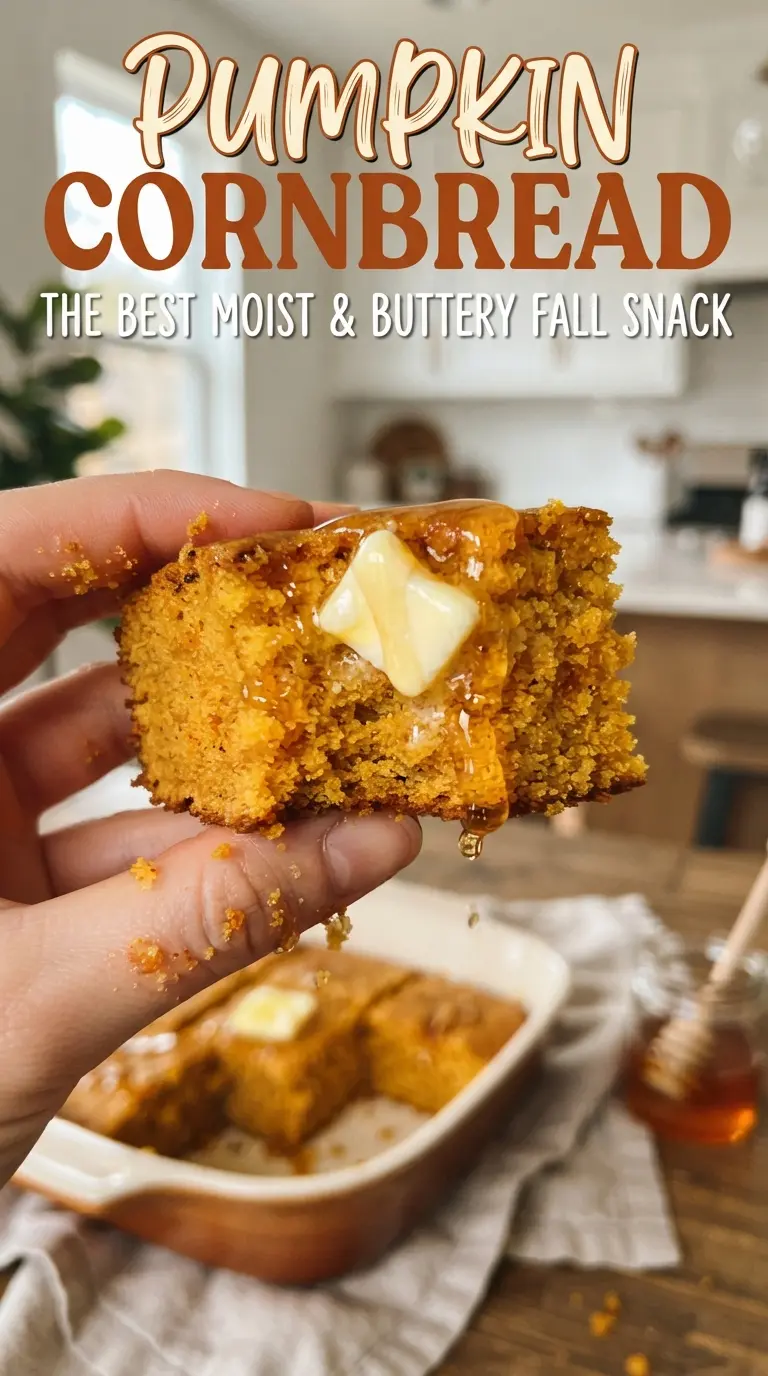
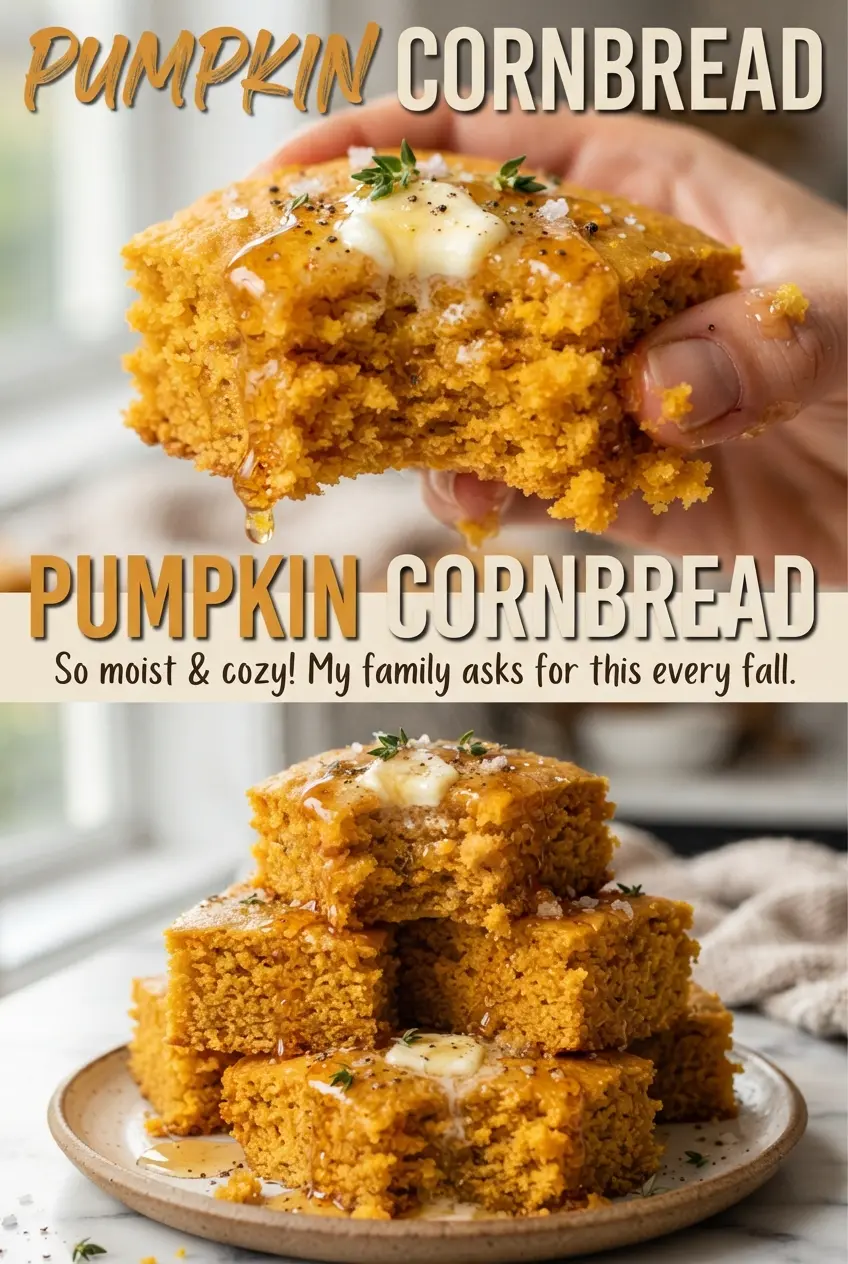
Golden pumpkin cornbread comes out tender in the middle with crisp, burnished edges and just enough sweetness to make it welcome at dinner without turning into cake. The pumpkin adds color and a moist crumb, but the cornmeal keeps the texture grounded, so every square tastes like cornbread first. Warm from the pan, it’s the kind of side that disappears fast, especially with a pat of butter melting into the top.
This version works because the wet ingredients are whisked separately before they ever meet the dry mix, which keeps the batter from getting overworked. Pumpkin puree adds body and softness, while buttermilk brings a gentle tang that balances the brown sugar and maple syrup. The butter goes in melted, so you get richness without having to cream anything or drag out extra bowls.
Below, I’ve included the small details that matter most: how to keep the crumb tender, why cast iron gives you the best edges, and what to change if you need to swap the buttermilk.
The pumpkin flavor came through without making it heavy, and the edges got that perfect little crunch in the cast iron pan.
Save this pumpkin cornbread for the nights when you want a tender, maple-kissed side with crisp, golden edges.
The Small Mistake That Makes Pumpkin Cornbread Dense
Pumpkin cornbread goes wrong when the batter gets mixed like a quick bread that needs to be smooth. It doesn’t. Once the wet and dry ingredients meet, the flour starts developing structure fast, and extra stirring turns the crumb tight instead of tender. The goal is a batter that looks a little rough but spreads easily in the pan.
The other trap is too much pumpkin. Pumpkin puree adds moisture, but it also weighs the batter down, so the leavening has to be strong enough to lift it. That’s why the baking powder and buttermilk matter together here: one creates lift, the other helps the crumb stay soft without tasting flat or one-note.
- Cornmeal — Use standard yellow cornmeal for the best cornbread texture. Fine cornmeal makes a softer crumb, while a coarser grind gives a more rustic bite.
- Pumpkin puree — Use pure pumpkin, not pumpkin pie filling. Pie filling is already sweetened and spiced, which throws off both flavor and texture.
- Buttermilk — This gives the cornbread a slight tang and helps it rise. If you’re out, use milk mixed with 1 teaspoon of lemon juice or vinegar per 3/4 cup, then let it sit for 5 minutes.
- Maple syrup — It doesn’t make the cornbread taste like dessert. It rounds out the pumpkin and brown sugar and keeps the sweetness soft.
What Each Ingredient Is Actually Doing in This Recipe
- Primary ingredient (the star) — Quality matters most. Choose the best you can find.
- Cooking medium (oil, butter, or broth) — This carries flavors and prevents dryness.
- Seasonings (salt, pepper, spices, herbs) — Layer flavors so nothing overpowers. Build depth gradually.
- Aromatics (garlic, onion, herbs) — Cook with fat to bloom flavors. Become the foundation.
- Supporting ingredients — Complement the main ingredient without overpowering it.
- Sauce or liquid (if applicable) — Brings flavors together. Balance richness with acid.
- Acid (lemon, vinegar, wine, or other) — Brightens and prevents flat-tasting results.
- Final finish (garnish, glaze, or sauce) — Prevents one-dimensional taste and adds visual appeal.
Building the Batter Without Losing the Tender Crumb
Mix the dry ingredients first
Whisk the cornmeal, flour, brown sugar, baking powder, salt, and pumpkin pie spice until the color looks even. That quick step keeps the spice from clumping and helps the baking powder spread through the batter evenly. If you see streaks of brown sugar or spice, keep whisking; uneven dry mix means uneven rise.
Whisk the wet ingredients until smooth
In a separate bowl, whisk the pumpkin puree, eggs, buttermilk, melted butter, and maple syrup until the mixture looks glossy and uniform. The butter should be warm but not hot, or it can start cooking the eggs on contact. If the butter firms up in little bits, whisk a little longer and it will smooth out once it meets the dry ingredients.
Stop mixing the second the flour disappears
Pour the wet mixture into the dry ingredients and stir just until no dry pockets remain. A few small lumps are fine; they usually bake out. Overmixing is the fastest way to get a tough square, and this batter needs only enough handling to come together.
Bake until the center is set and the edges are deep gold
Spread the batter into a greased 8×8-inch pan or 10-inch cast iron skillet and bake at 400°F for 22 to 25 minutes. The top should be golden, the edges should pull slightly from the pan, and a toothpick should come out clean or with a few moist crumbs. If the center still looks wet, give it a few more minutes rather than cutting it early, because cornbread finishes setting as it cools.
How to Adjust the Sweetness, Dairy, or Pan Size
Make it less sweet for dinner
Cut the brown sugar to 1/4 cup and leave the maple syrup in place. You’ll still get a gentle sweetness, but the cornbread will read more like a side dish and less like a tea bread.
Dairy-free version
Swap the buttermilk for an unsweetened non-dairy milk plus 1 teaspoon lemon juice or vinegar, and use melted vegan butter or neutral oil. The texture will still be tender, though the flavor loses a little of the tang that buttermilk brings.
Bake it in a muffin tin
Divide the batter into a greased muffin tin and start checking around 14 to 16 minutes. Muffins brown faster at the edges and give you more crust per bite, but they dry out sooner than the pan version, so don’t overbake them.
Storage and Reheating
- Refrigerator: Store covered for up to 4 days. The crumb firms up a little in the fridge, but the flavor stays good.
- Freezer: Freeze slices tightly wrapped for up to 2 months. Thaw at room temperature or overnight in the fridge.
- Reheating: Warm slices in a 300°F oven for 8 to 10 minutes or toast them lightly. The common mistake is microwaving too long, which makes the crumb rubbery instead of soft.
Questions I Get Asked About This Recipe
Pumpkin Cornbread
Ingredients
Equipment
Method
- Preheat the oven to 400°F, then grease an 8x8-inch pan or a 10-inch cast iron skillet so the cornbread releases easily.
- In a mixing bowl, whisk together cornmeal, flour, brown sugar, baking powder, salt, and pumpkin pie spice until evenly combined and no dry lumps remain.
- In a separate bowl, whisk pumpkin puree, eggs, buttermilk, melted butter, and maple syrup until smooth and glossy.
- Pour the wet mixture into the dry mixture and stir just until combined, stopping as soon as no dry streaks show to keep the crumb tender.
- Spread the batter into the greased pan and smooth the top for even baking.
- Bake at 400°F for 22-25 minutes, until the top is golden and a toothpick inserted in the center comes out clean (visual cue: golden edges).
- Serve warm with butter so it melts into the cornbread.