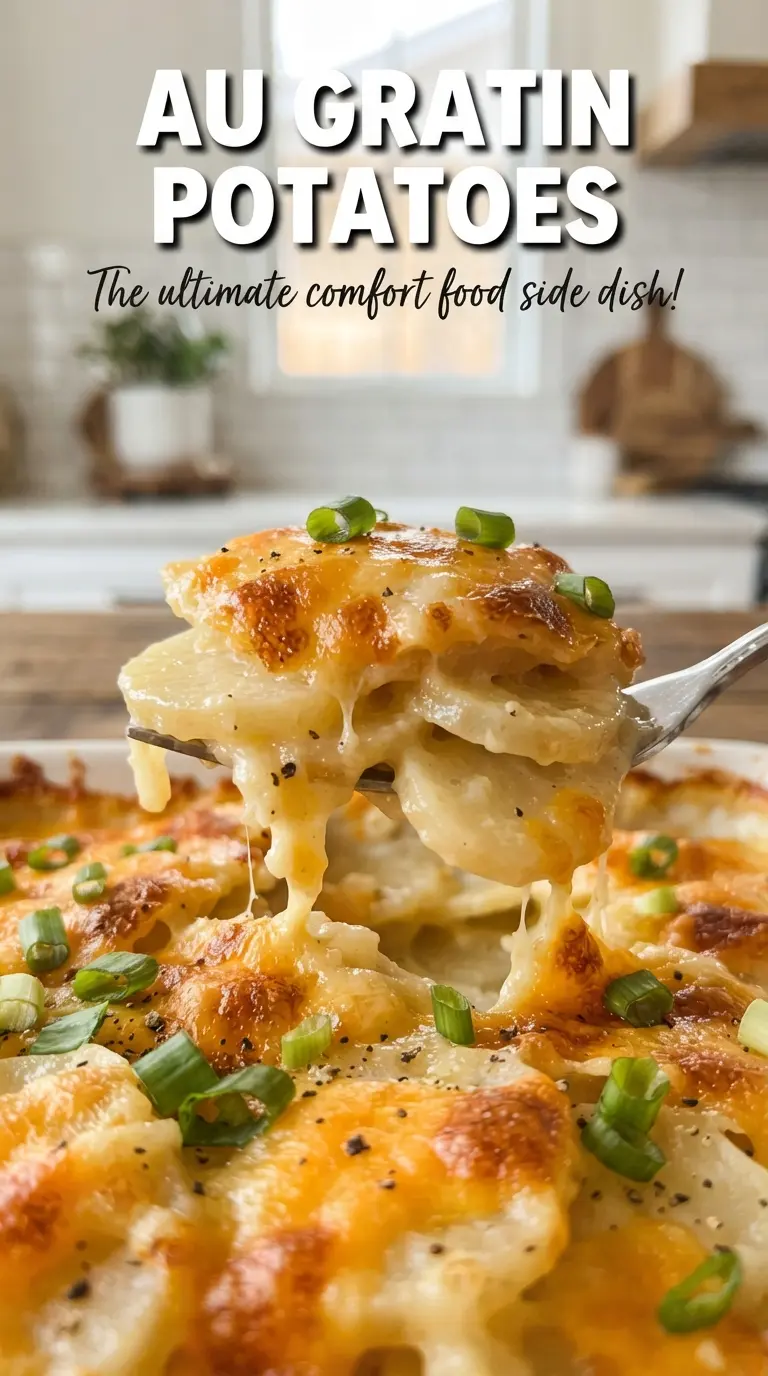
Au gratin potatoes earn their place on the table when the top turns deeply golden and the layers underneath stay soft, creamy, and intact instead of collapsing into a soupy mess. The best versions taste rich without feeling heavy, with enough garlic, thyme, and sharp cheese to keep every bite interesting all the way through the dish.
What makes this version work is the balance in the sauce and the way it’s built. Yukon Gold potatoes hold their shape and turn tender without turning mealy, while the blend of cheddar and Gruyere gives you both sharpness and melt. The sauce gets thickened before it ever hits the pan, which keeps it from pooling at the bottom and leaving the top dry.
If you’ve had au gratin potatoes split, go watery, or bake into a greasy layer, the details below will help. The rest time matters more than people think, and there’s a simple reason for the foil-and-uncover method that keeps the top browned without overcooking the center.
The sauce thickened up beautifully and the potatoes were tender all the way through without falling apart. The Gruyere on top browned into the best crust, and I had people going back for seconds before the dish even cooled.
Love these creamy au gratin potatoes with that bubbling cheese crust? Save them to Pinterest for your next holiday dinner or Sunday roast.
The Mistake That Makes Au Gratin Potatoes Watery
The biggest failure in au gratin potatoes is rushing the sauce or slicing the potatoes too thick. If the sauce never fully thickens on the stove, it keeps leaking into the dish while it bakes, and you end up with a loose, milky pan instead of clean, creamy layers. Thin, even slices matter just as much, because uneven potatoes cook at different speeds and leave you with soft edges and hard centers in the same bite.
The foil-covered bake gives the potatoes time to steam through before the top starts browning. Then the uncovered finish sets the crust and lets the cheese take on color without drying out the sauce underneath. The 15-minute rest is not optional here; that’s when the sauce settles and clings to the potatoes instead of spilling out the moment you serve it.
What Each Ingredient Is Actually Doing In This Dish
The potatoes carry the dish, and Yukon Golds are the right call because they stay tender but don’t disappear into the sauce. Russets can turn a little too fluffy and break down more easily, which changes the texture from layered to mushy. Slice them as evenly as you can, about 1/8 inch thick, so the whole pan finishes at the same time.
- Butter — This starts the base and carries the garlic flavor. It also gives the flour a head start so the roux tastes cooked instead of raw.
- Flour — This thickens the milk and cream into a sauce that can coat the potatoes instead of slipping off them. Cook it for the full minute so the finished dish doesn’t taste pasty.
- Whole milk and heavy cream — The milk keeps the sauce from becoming too rich, while the cream gives it body and a silkier finish. You need both for the right texture; using only milk makes the sauce thinner, and using only cream can feel heavy.
- Sharp cheddar and Gruyere — Cheddar brings the bite, and Gruyere melts smoothly with a nutty edge. If you need a swap, fontina works in place of Gruyere, but the flavor will be milder.
- Fresh thyme — This keeps the dish from tasting flat and gives the sauce a clean herbal note. Dried thyme works in a pinch, but use less because the flavor comes through more aggressively.
Building the Sauce So It Clings to Every Layer
Cooking Out the Flour
Melt the butter, then cook the garlic just until it smells fragrant, not browned. Add the flour and whisk for a full minute so the mixture looks sandy and smooth before any liquid goes in. If you skip that step, the sauce can taste raw or chalky after baking.
Whisking in the Dairy Slowly
Add the milk and cream in a steady stream while whisking constantly. The sauce should look thin at first, then start to thicken enough to coat the back of a spoon as it simmers. If it looks lumpy, the heat is usually too high or the liquid was added too fast, but a patient whisk over medium heat usually smooths it back out.
Layering for Even Tenderness
Build the dish in three layers of potatoes and sauce so the top doesn’t dry out before the center cooks. Spoon the sauce over each layer so it reaches the edges and settles between the slices. Finish with the remaining cheese on top, where it can brown into that sharp, salty crust everyone fights over.
Make It More Garlic-Forward
Add an extra clove or two when you cook the butter, but keep the heat low so the garlic softens instead of browning. This deepens the flavor without changing the texture of the sauce. Browned garlic turns bitter and makes the whole dish taste harsh.
Gluten-Free Version
Swap the all-purpose flour for a 1:1 gluten-free blend that can handle sauce thickening. The finished texture stays close to the original as long as you whisk until the sauce is smooth before layering. Avoid blends that rely heavily on starch alone, since they can turn a little gluey.
Lighter Dairy Swap
Use all whole milk instead of the milk-and-cream combination if you want a slightly lighter result. The sauce will still work, but it won’t bake up quite as rich or as velvety. I wouldn’t use lower-fat milk here because the sauce thins out too much and can separate more easily.
Storage and Reheating
- Refrigerator: Store covered for up to 4 days. The sauce will firm up as it chills, which is normal.
- Freezer: It freezes, but the texture softens a bit after thawing. For best results, cool completely, wrap tightly, and freeze in portions rather than the whole dish.
- Reheating: Reheat covered in a 325F oven until hot in the center. If you blast it at high heat, the top will overbrown before the middle warms through.
Answers to the Questions Worth Asking

Au Gratin Potatoes
Ingredients
Equipment
Method
- Preheat oven to 375F, then butter a 9x13-inch baking dish for easy release.
- Melt butter, then cook minced garlic for 30 seconds until fragrant, stirring and keeping it from browning.
- Whisk in all-purpose flour and cook for 1 minute to remove the raw flour taste, until smooth and lightly thickened.
- Slowly whisk in whole milk and heavy cream, then simmer until thickened, whisking often as it coats the back of a spoon.
- Season the sauce with salt, black pepper, and fresh thyme leaves, stirring to evenly distribute the herbs and specks.
- Remove from heat and stir in 1 cup cheddar and 1/2 cup Gruyere so they melt into a creamy, glossy sauce.
- Layer a third of the sliced Yukon gold potatoes in the baking dish, spreading them into an even bed.
- Spoon a third of the sauce over the potatoes, letting it seep down between the slices.
- Repeat layering with another third of potatoes and another third of sauce, smoothing the top layer for even baking.
- Repeat once more with the remaining third of potatoes and the remaining third of sauce, then top with the remaining shredded cheddar and Gruyere.
- Cover with foil and bake for 45 minutes, until the potatoes look tender at the edges and bubbling begins under the foil.
- Uncover and bake 25-30 minutes more at 375F until golden and tender, with a bubbling cheese crust that has browned spots.
- Rest for 15 minutes before serving so the layers set and the cheese sauce slices cleanly.