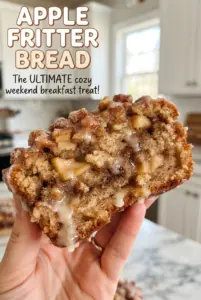
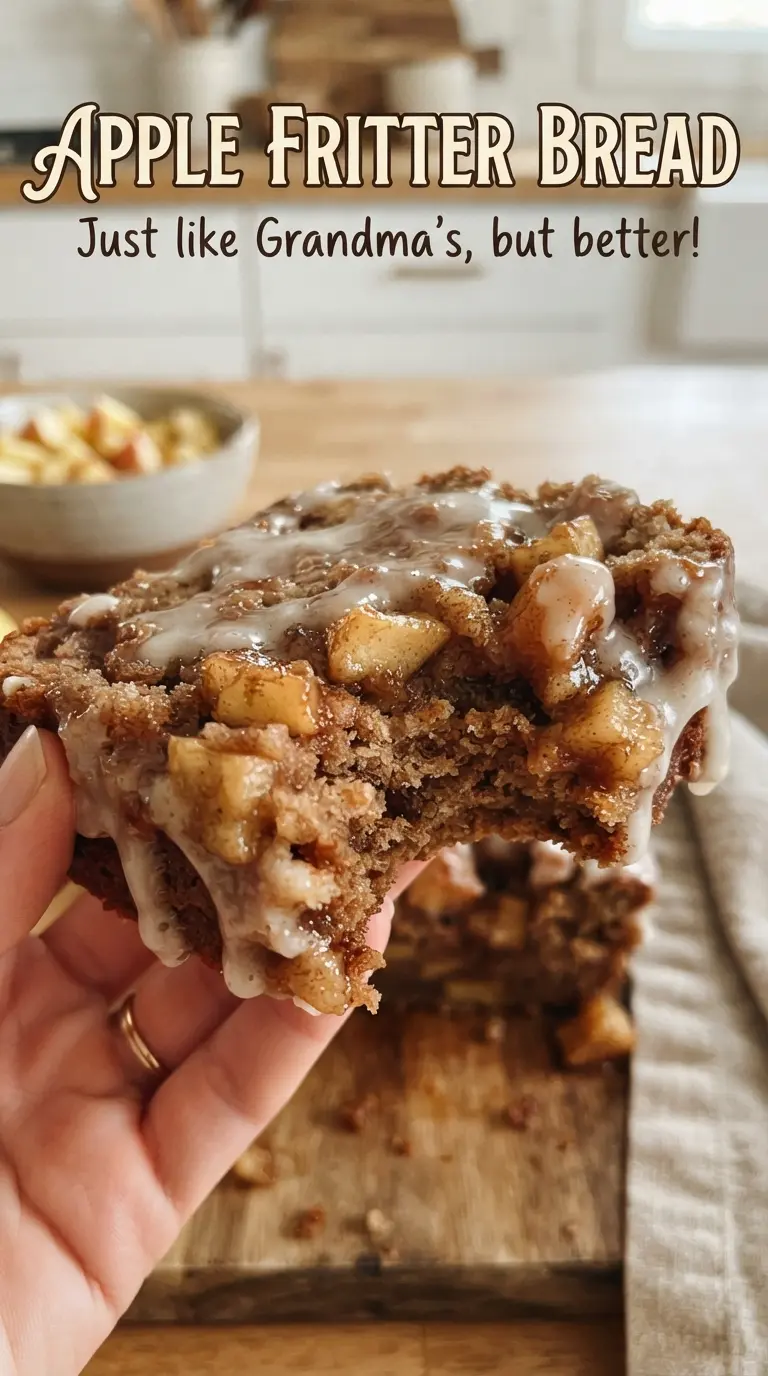
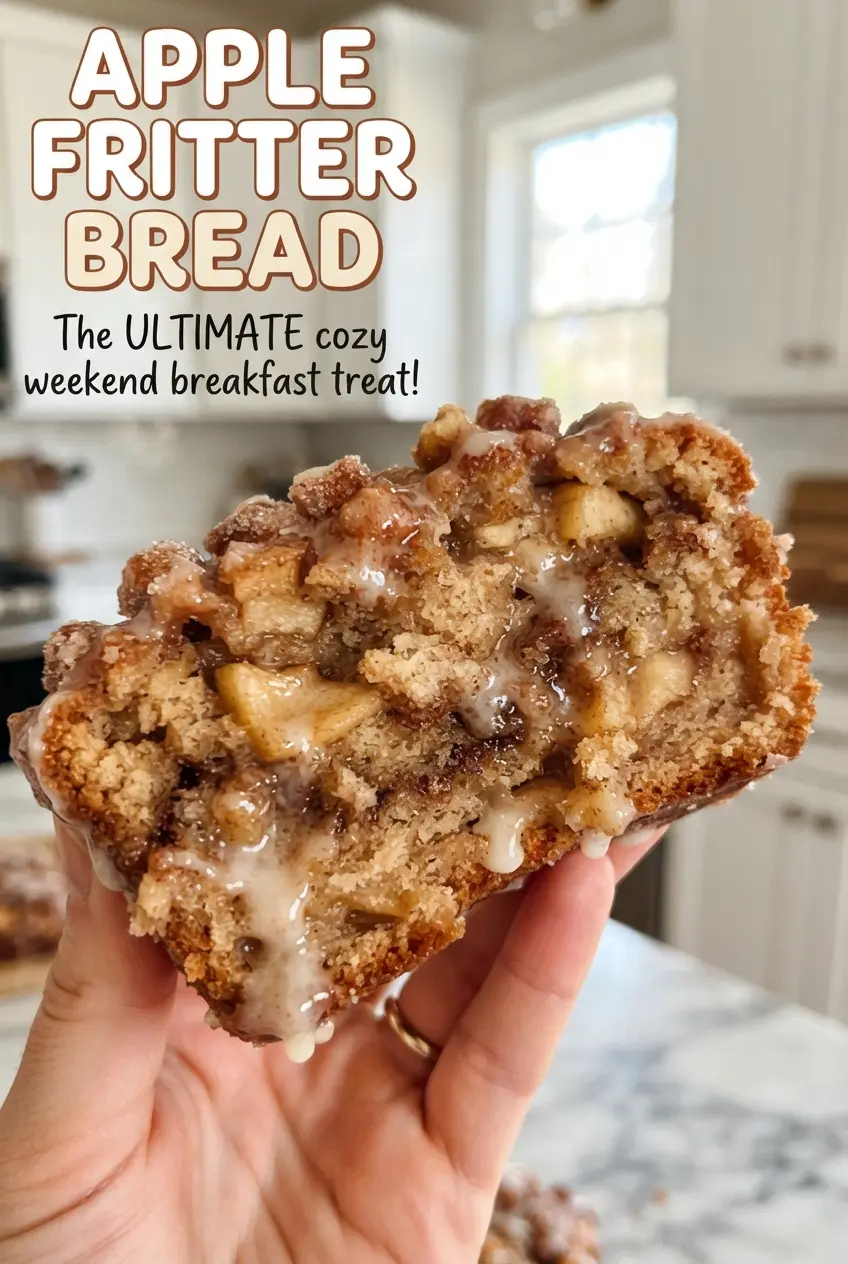
Apple fritter bread bakes up with a soft, vanilla-scented crumb, pockets of tender apple, and those ribboned layers of cinnamon sugar that taste like the best part of a fritter without any frying. The glaze sinks into the top just enough to give each slice that bakery-style finish, but the loaf still slices neatly once it cools.
What makes this version work is the layering. Some of the cinnamon sugar gets tossed with the apples first, so the fruit stays seasoned all the way through instead of tasting flat inside the loaf. Then the batter is built in alternating layers with the apples and the remaining sugar, which gives you those streaks instead of a muddy cinnamon swirl.
Below, I’ll walk through the small details that keep the loaf from turning heavy, plus a few swaps that help if your apples run extra juicy or you want a slightly different finish.
The apple layers stayed distinct and the loaf didn’t sink in the middle. I used Honeycrisp and the cinnamon sugar made the whole kitchen smell amazing while it baked.
Save this apple fritter bread for the kind of bake that gives you soft apple layers, a cinnamon swirl, and a thick vanilla glaze in every slice.
The Trick to Keeping the Apples from Sinking and the Swirl from Disappearing
Apple bread gets dense fast when the fruit is too wet or the batter is overmixed. The fix here is simple: toss the chopped apples with some of the cinnamon sugar before they go into the loaf. That coating helps pull off a little surface moisture, seasons the fruit, and keeps the pieces from sinking as quickly into the batter.
The other thing that matters is how you layer it. If you dump everything together, you lose the separate streaks that make this bread taste like an apple fritter instead of plain spice bread. Alternating batter, apples, and cinnamon sugar gives you pockets of flavor in every slice, and the gentle swirl at the end is just enough to knit it together without turning it muddy.
Why These Ingredients Matter More Than the List Suggests
- Apples — A firm baking apple holds its shape better, so the loaf stays studded with fruit instead of collapsing into apple mush. Honeycrisp, Granny Smith, or a mix of sweet and tart all work well. If your apples are especially juicy, dice them a little smaller so they distribute evenly and don’t flood the batter.
- Brown sugar — This brings the caramel note that makes the cinnamon layer taste like an actual fritter filling. Light or dark brown sugar both work, but dark brown sugar gives a deeper molasses edge.
- Butter — Softened butter is what gives the crumb that tender, bakery-style texture. Cold butter won’t cream properly, and melted butter changes the structure enough that the loaf can bake up heavier.
- Milk — The batter needs just enough liquid to loosen without thinning out the swirl. Whole milk gives the richest result, but 2% works fine. For a dairy-free version, an unsweetened oat milk is the easiest swap.
- Powdered sugar — This makes the glaze smooth and fast to whisk together. Don’t swap in granulated sugar here; it won’t dissolve the same way and the glaze will feel gritty.
Building the Loaf So It Bakes Up Light Instead of Gummy
Creaming the Base
Beat the butter and granulated sugar until the mixture looks pale and fluffy, not just combined. That step traps air, which helps the loaf rise instead of packing down around the apples. Add the eggs one at a time and beat in the vanilla after that so the batter stays smooth and emulsified.
Keeping the Batter Tender
Whisk the dry ingredients separately, then add them to the wet mixture alternately with the milk. This keeps the batter from getting tough. Stop mixing as soon as the flour disappears; if you keep going, the loaf turns dense and the crumb loses that soft fritter-like bite.
Layering and Swirling
Spread half the batter in the pan, add half the apples and half the cinnamon sugar, then repeat. The goal is clean layers with a few visible streaks, not a full marble. Drag a knife through the top just once or twice. Over-swirling blends the sugar into the batter and you lose the contrast that makes each slice interesting.
Baking to the Right Center
Bake until the top is set and a toothpick inserted into the center comes out clean or with just a few moist crumbs. If the top browns before the middle is done, tent it loosely with foil for the last 10 to 15 minutes. Let the loaf cool for at least 15 minutes before glazing so the sugar doesn’t run off the sides in a puddle.
Three Ways to Change the Finish Without Losing the Fritter Feel
Dairy-Free Loaf
Swap the butter for a good plant-based baking butter and use unsweetened oat milk in both the batter and glaze. The loaf will still be tender, though the crumb may be a touch softer and less rich than the original. Oat milk works better than almond milk here because it gives the glaze a little more body.
A Tartier Apple Flavor
Use all Granny Smith apples if you want a sharper contrast against the sweet glaze. The loaf tastes brighter and a little less dessert-sweet, and the apples hold their shape especially well. This is the version I’d pick if you like your apple bakes with a little edge.
Less Sweet Glaze
Start with 2 tablespoons of milk and whisk in the powdered sugar until the glaze is thick but drizzleable. A thinner glaze gives you a cleaner finish and lets the cinnamon swirl stand out more. If you want it heavier, add the third tablespoon slowly so it doesn’t turn watery.
Storage and Reheating
- Refrigerator: Keep covered for up to 4 days. The glaze softens the top a bit, but the loaf stays moist.
- Freezer: Freeze slices tightly wrapped for up to 2 months. For the best texture, freeze without glaze and add it after thawing.
- Reheating: Warm slices in the microwave for 10 to 15 seconds or in a low oven until just warmed through. Don’t overheat it, or the apples dry out and the crumb turns tight.
Questions I Get Asked About This Recipe
Apple Fritter Bread
Ingredients
Equipment
Method
- Preheat oven to 350F, then grease and line a 9x5-inch loaf pan.
- Mix brown sugar and ground cinnamon, then toss the apples in 2 tablespoons of the mixture to coat.
- Beat butter and granulated sugar until fluffy, then beat in eggs and vanilla extract.
- Whisk all-purpose flour, baking powder, and salt, then add to the batter alternately with milk.
- Spread half the batter in the prepared pan.
- Top with half the apples and half the remaining cinnamon sugar, then repeat the layers with the remaining batter, apples, and cinnamon sugar.
- Swirl gently with a knife to create cinnamon-sugar streaks through the loaf.
- Bake for 50-55 minutes at 350F, until a toothpick comes out clean.
- Cool the loaf for 15 minutes.
- Whisk powdered sugar with 2-3 tablespoons of milk until smooth, then drizzle over the loaf.