Silky noodles coated in a glossy garlic cream sauce have a way of disappearing fast, and this one-pot version earns its place because the pasta cooks right in the sauce. That means the starch stays in the pot, the sauce tightens naturally, and every strand ends up carrying parmesan and garlic in the same bite. It tastes richer than the ingredient list suggests, but it never feels heavy.
The trick is keeping the heat at a gentle boil once the pasta goes in. Too much heat and the cream can reduce faster than the pasta cooks, leaving you with a tight sauce and underdone noodles. Stirring often matters here, too, because it keeps the pasta from sticking and helps the sauce emulsify instead of separating.
Below you’ll find the small details that make this pasta work on a weeknight: how to keep the garlic sweet instead of bitter, when to add the parmesan, and how to adjust the texture if the sauce thickens more than you expected.
The sauce turned out perfectly silky and clung to the linguine instead of pooling in the bowl. I liked that the garlic stayed mellow, not harsh, and the pasta was done right when the liquid thickened up.
Save this one-pot creamy garlic pasta for the nights when you want a glossy parmesan sauce and only one pot to wash.
The Pasta Water Problem Most One-Pot Recipes Skip
The biggest mistake with creamy one-pot pasta is assuming the sauce will thicken on its own at the end. It only works if the pasta cooks in a liquid that is just active enough to soften the noodles while slowly reducing into a sauce. If the heat is too low, the pasta turns gummy before the liquid concentrates. If it is too high, the cream can reduce too fast and the bottom of the pot starts to catch.
That is why the broth and cream go in together before the pasta, and why the pot needs frequent stirring once the noodles are added. The starch released by the pasta is part of the sauce here. You want it suspended in the liquid, not left behind in a clump at the bottom.
What Each Ingredient Is Actually Doing In This Dish
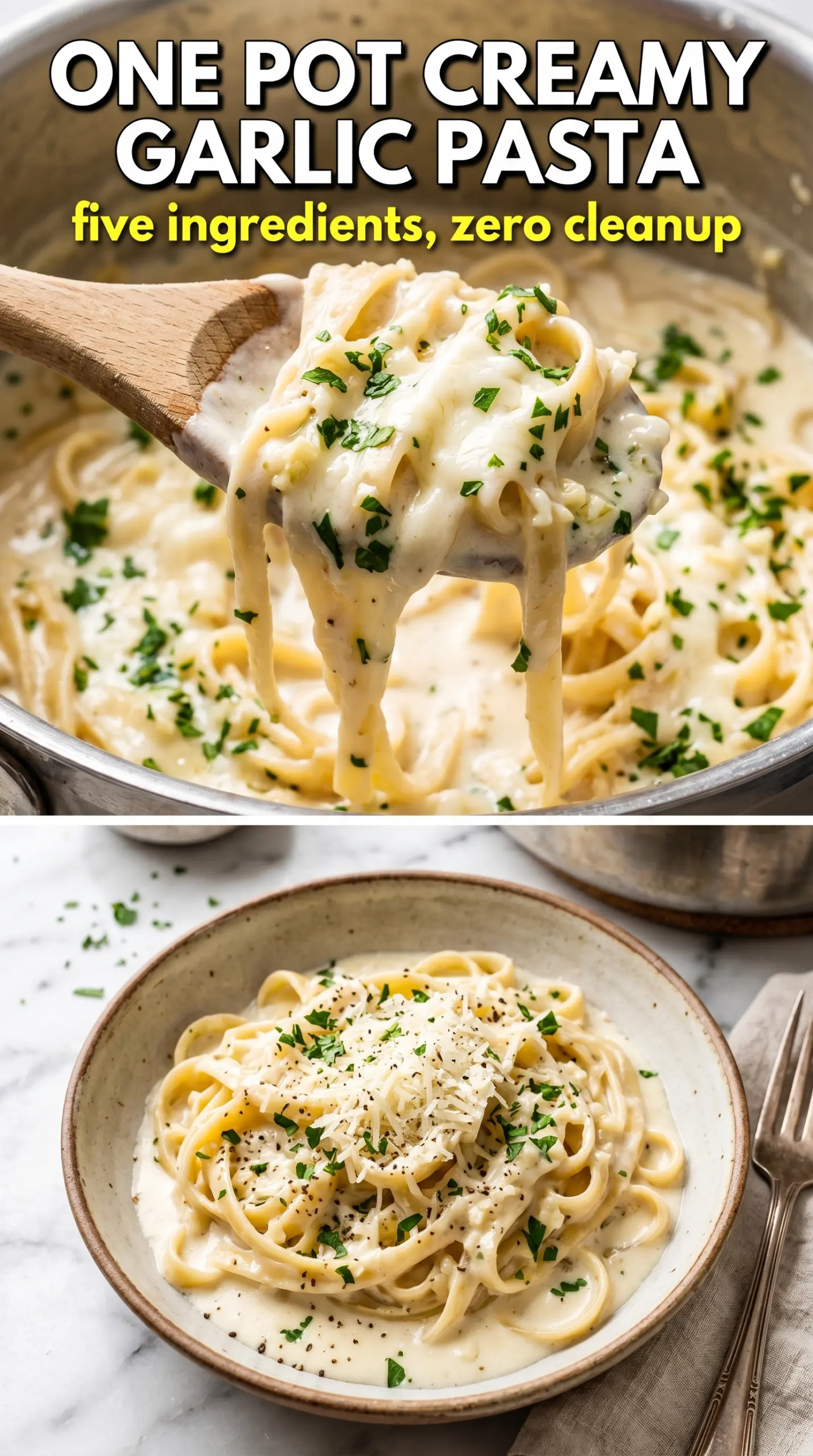
- Linguine or spaghetti — Long pasta works best because it moves through the sauce and cooks evenly in the pot. Short shapes can work, but they tend to clump more and don’t give you the same silky finish. Use regular dried pasta, not fresh, because fresh pasta would overcook before the sauce had time to reduce.
- Heavy cream — This is what gives the sauce its body and keeps the parmesan from turning grainy. Half-and-half will work in a pinch, but the sauce will be thinner and a little less stable. If you use a lighter dairy option, lower the heat and expect to add a splash more parmesan at the end.
- Parmesan — Grate it yourself if you can. Pre-grated parmesan often contains anti-caking agents that keep it from melting as smoothly, which matters a lot in a sauce this simple. Add it off the heat or at the very lowest simmer so it melts into the cream instead of turning stringy.
- Garlic — The garlic sets the whole tone of the dish, so it only needs a short sauté until fragrant and just beginning to turn golden. If it browns deeply, the sauce will taste sharp and bitter. Mince it finely so it perfumes the butter quickly and distributes well through the pasta.
- Broth — Broth adds seasoning and gives the pasta enough liquid to cook without watering down the cream. Vegetable broth works fine here if that is what you have. Just choose one you like the taste of, because whatever is in the broth will show up in the finished sauce.
Getting The Sauce To Emulsify Around The Pasta
Softening The Garlic Without Burning It
Melt the butter over medium heat and add the garlic once the butter is foamy, not sizzling hard. Stir it for 1 to 2 minutes until it smells sweet and looks just barely golden at the edges. If the garlic darkens too much, start over; that bitterness will stay in the sauce no matter how much cheese you add. The goal here is a soft garlic base, not browned garlic.
Cooking The Pasta In The Cream Mixture
Pour in the broth and cream, bring it to a gentle boil, then add the uncooked pasta. Stir often so the strands stay separated and the starch can help thicken the liquid evenly. The pasta should move easily through the pot, not sit in a dry tangle at the bottom. If the liquid disappears before the noodles are tender, add a small splash of broth or water and keep cooking.
Finishing With Parmesan At The End
When the pasta is al dente and the sauce looks glossy and slightly loose, stir in the parmesan and Italian seasoning. The cheese should melt into the sauce and tighten it in a minute or two. If you add parmesan while the pot is boiling hard, it can seize or turn grainy. Pull the pot off the heat for a moment if needed, then stir until everything looks smooth and unified.
How To Adapt This One-Pot Pasta Without Losing The Creamy Finish
Make It Vegetarian
Use vegetable broth instead of chicken broth and keep everything else the same. The pasta still gets plenty of body from the starch and cream, so you won’t lose the silky texture. Just taste at the end before salting, since vegetable broth can range from very mild to quite salty.
Go Lighter With Half-And-Half
Half-and-half will make the sauce a little looser and less rich, but it still works if you keep the heat gentle and don’t rush the reduction. Expect the finished pasta to be softer-set rather than glossy and plush. Add the parmesan slowly at the end so it has time to melt without clumping.
Use Gluten-Free Pasta
A sturdy gluten-free spaghetti can work, but it needs a closer eye because it can go from firm to soft faster than wheat pasta. Start checking a couple minutes early and stir more often so the noodles don’t stick. If the sauce seems thin, let it sit off the heat for a minute before serving; gluten-free pasta often tightens a little as it rests.
Add Chicken Or Mushrooms
For chicken, cook bite-size pieces in the butter before the garlic, then remove them and add them back at the end. For mushrooms, sauté them first until they release their moisture and brown, which gives the pasta a deeper, more savory base. Either addition makes the dish more substantial, but it also means the sauce will feel a little less purely creamy and a little more dinner-worthy.
Storage And Reheating
- Refrigerator: Store leftovers in an airtight container for up to 3 days. The sauce will thicken and the pasta will keep soaking up liquid.
- Freezer: I don’t recommend freezing this one-pot pasta. Cream sauces tend to split when thawed, and the pasta turns soft.
- Reheating: Warm it gently on the stove or in the microwave with a splash of broth, milk, or water. Heat slowly and stir often so the sauce loosens again instead of drying out or breaking.
Questions I Get Asked About This Recipe
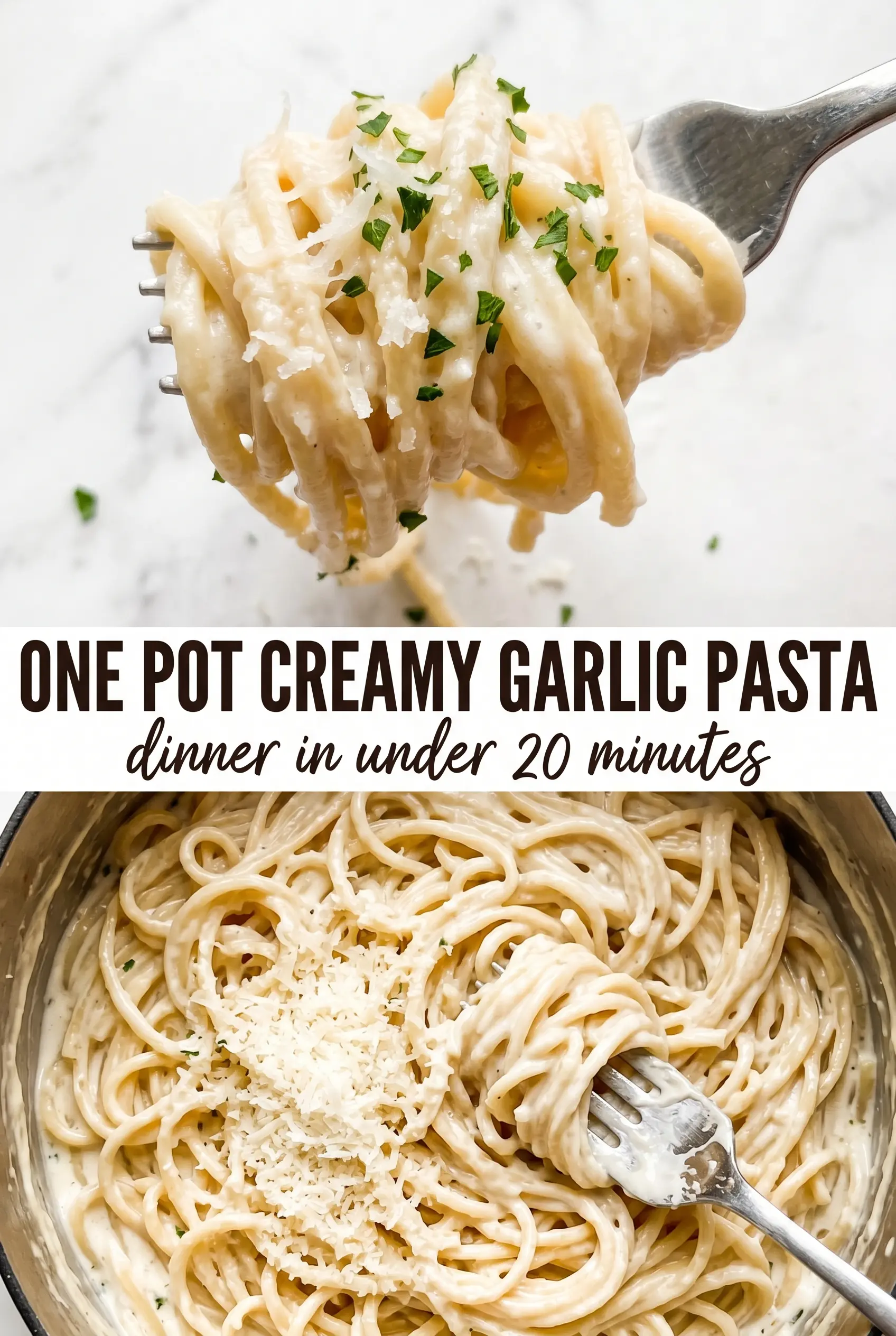
One Pot Creamy Garlic Pasta
Ingredients
Equipment
Method
- Melt butter in a large pot over medium heat, then add garlic and sauté for 1–2 minutes until fragrant and just golden.
- Add broth and heavy cream, then bring the mixture to a gentle boil.
- Add uncooked pasta and cook, stirring frequently, for 10–12 minutes until al dente and the liquid has reduced into a creamy sauce.
- Stir in parmesan and Italian seasoning until the cheese is fully melted and the sauce is silky.
- Season generously with salt and cracked black pepper.
- Serve immediately topped with fresh basil and extra parmesan.