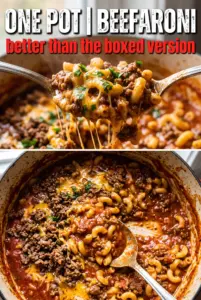
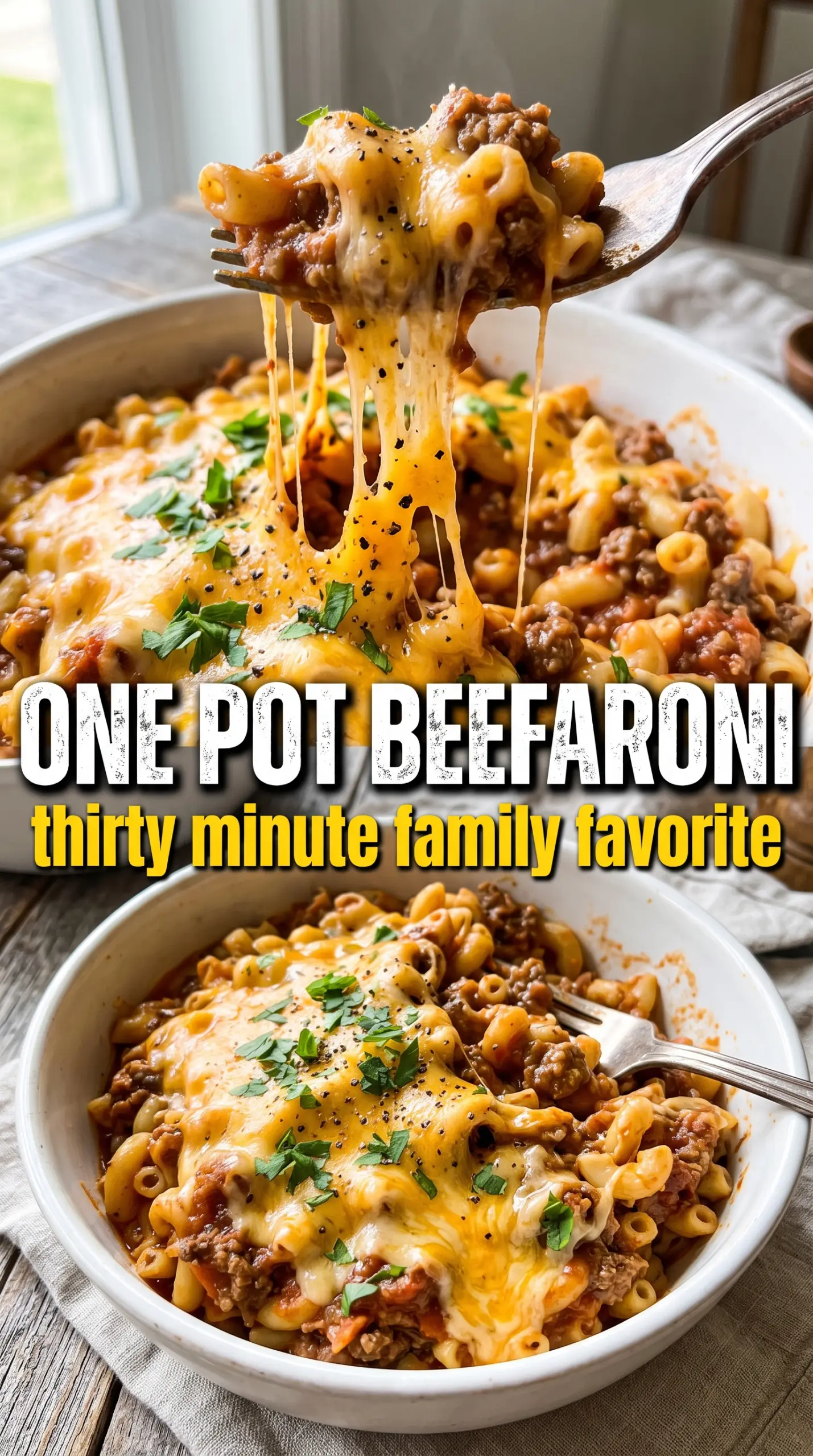
One pot beefaroni lands in that sweet spot between weeknight dinner and real comfort food. The macaroni cooks right in the tomato-beef sauce, so every elbow turns glossy and coated instead of getting rinsed off and sitting in a separate pot. The cheddar melts through the whole thing at the end, which gives you a rich, creamy finish without turning the sauce heavy or gluey.
The trick is building enough flavor before the pasta goes in. Browning the beef with the onion gives the sauce a deeper base, and the tomato paste tightens up the flavor so the finished dish tastes cooked, not rushed. Using uncooked macaroni is what makes this work as a true one-pot meal, but it only works if there’s enough liquid and you keep the heat low enough for the pasta to soften evenly.
Below, I’ll walk through the part that matters most: how to keep the sauce thick without scorching the pasta, plus the swaps that still give you that cozy, cheesy beefaroni texture.
The sauce thickened up right as the macaroni finished, and the cheddar melted in smooth instead of getting stringy. My kids went back for seconds before I even sat down.
Save this one pot beefaroni for the nights when you want cheesy macaroni and beef sauce with barely any cleanup.
The Part Most Beefaroni Recipes Get Wrong
The failure point in beefaroni is usually timing, not seasoning. If the pasta goes in too early, it drinks up the liquid before the sauce has a chance to thicken, and you end up with dry elbows stuck in a thin tomato broth. If it goes in too late, the sauce gets tight before the pasta softens and the whole pot feels heavy instead of spoonable.
This version works because the liquid ratio is built for uncooked macaroni, and the pot stays covered while the pasta cooks. That traps heat and steam long enough to cook the noodles evenly while the starch helps the sauce cling. The other thing that matters is heat control at the end: once the cheddar goes in, the pot should be off the burner so the cheese melts into the sauce instead of separating.
- Keep the simmer gentle after the pasta goes in. A hard boil can break the macaroni on the outside before the centers are tender.
- Stir once or twice while it cooks. That keeps the elbows from settling into a sticky layer on the bottom.
- Let the pot rest for a minute after cooking. The sauce thickens fast as it cools, and that pause gives you the right texture.
What the Cheese and Tomato Paste Are Doing Here
- Ground beef — Use an 80/20 blend if you can. It brings enough fat for flavor, but you still want to drain off most of it after browning so the sauce doesn’t turn greasy.
- Crushed tomatoes — This gives the sauce body without needing extra simmer time. If you only have diced tomatoes, blend them briefly first so the sauce clings to the pasta instead of staying chunky and loose.
- Tomato paste — This is the ingredient that makes the sauce taste deep instead of flat. Cook it in for a minute with the liquid so it loses that raw tinny edge and blends into the beef.
- Sharp cheddar — Sharp cheese matters here because the tomato sauce can mute flavor fast. Shred it yourself if you can; pre-shredded cheese melts less smoothly because of the coating on it.
- Elbow macaroni — The shape matters more than people think. The curved noodles trap sauce inside and around them, which is exactly what you want in beefaroni.
Getting the Pasta Tender Without Losing the Sauce
Browning the Beef and Onion
Cook the beef and onion together until the meat loses its pink color and the onion turns soft and translucent. You want some browned bits on the bottom of the pot, because that’s the foundation of the sauce. Drain off excess fat before adding the garlic, or the finished dish will taste heavy.
Building the Tomato Base
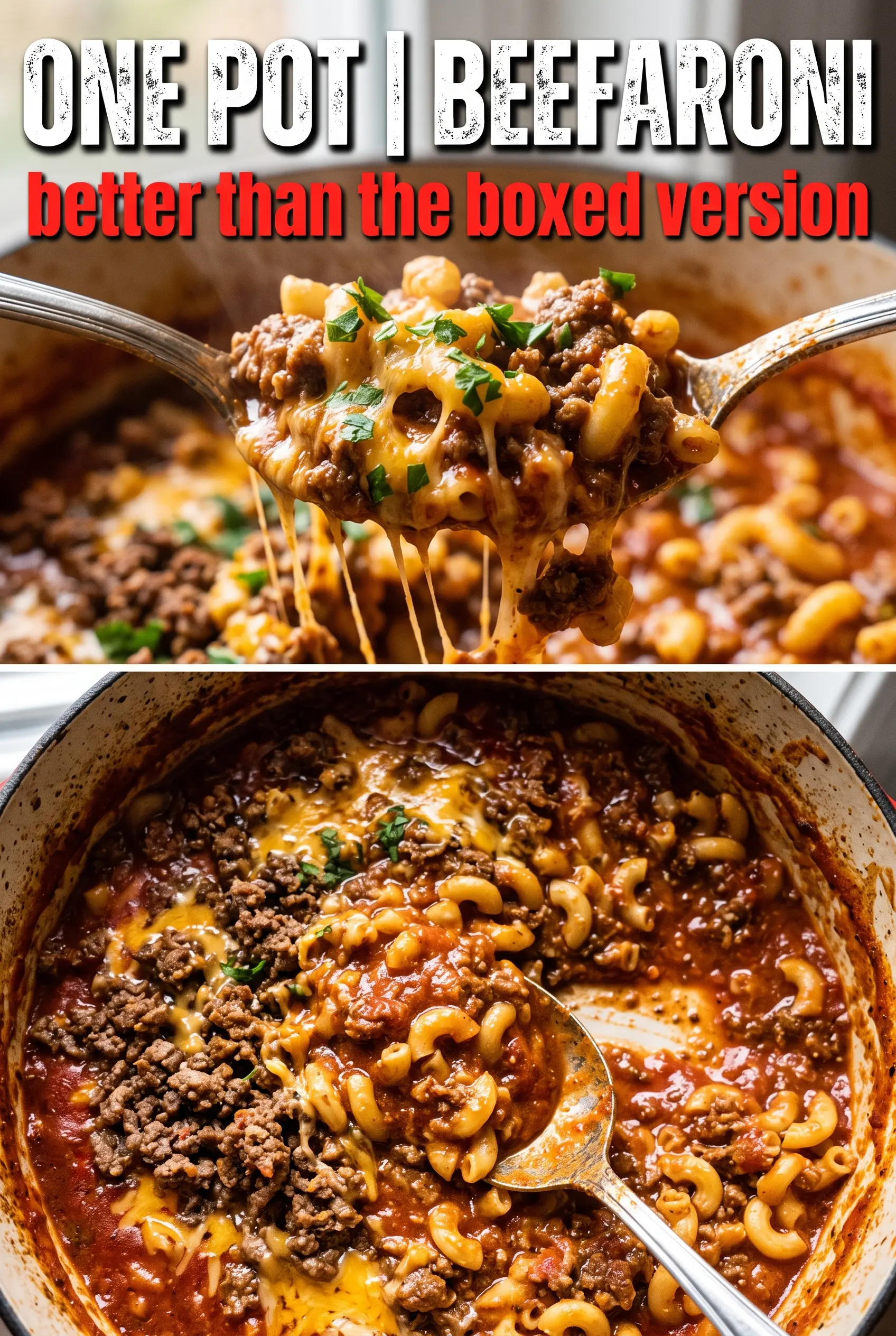
Stir in the crushed tomatoes, broth, tomato paste, and seasonings, then bring the pot to a real boil before the pasta goes in. That initial heat helps the tomato paste dissolve and keeps the sauce from tasting thin. If the mixture looks too thick before you add the macaroni, it will tighten up too much by the time the pasta finishes.
Cooking the Macaroni in the Sauce
Add the uncooked macaroni, stir well, then lower the heat and cover the pot. The pasta should be at a steady simmer, not a rolling boil, for 12 to 15 minutes. Stir once or twice during cooking so nothing sticks, and start checking early if your pot runs hot because overcooked elbows turn mushy fast.
Melting in the Cheddar
Take the pot off the heat before adding the cheese. That keeps the cheddar smooth and prevents the sauce from becoming oily or grainy. Stir until the cheese disappears into the sauce, then let it sit for a minute so the texture settles into that thick, spoonable finish.
Ways to Adjust This Pot of Beefaroni Without Losing the Comfort
Gluten-Free Version
Use a sturdy gluten-free elbow pasta, but expect to check it a little earlier than the package says. Some gluten-free pastas release more starch and thicken faster, so keep extra broth nearby in case the pot tightens before the noodles finish.
Dairy-Free Beefaroni
Skip the cheddar and finish with a dairy-free shredded cheese that melts well, or leave the cheese out and add a drizzle of olive oil at the end for body. You’ll lose some of the creamy finish, but the tomato-beef base still carries plenty of comfort.
Turkey Instead of Beef
Ground turkey works well if you want a lighter pot, but it needs a little more seasoning because it has less fat and less natural depth than beef. Leave the tomato paste and smoked paprika in place so the sauce still tastes full.
Make It a Bigger Batch
Double everything in a wide Dutch oven, not a small pot. If you crowd the pasta too much, it won’t cook evenly and the sauce will reduce before the macaroni is tender.
Storage and Reheating
- Refrigerator: Store in an airtight container for up to 4 days. The pasta will keep soaking up sauce, so it thickens as it sits.
- Freezer: It freezes well for up to 2 months, though the macaroni softens a bit after thawing. Freeze in portions for the easiest reheating.
- Reheating: Warm it gently on the stove or in the microwave with a splash of broth or water. The common mistake is blasting it on high heat, which dries out the pasta before the center is hot.
Questions I Get Asked About This Recipe
One Pot Beefaroni
Ingredients
Equipment
Method
- Place the ground beef and diced onion in a large pot over medium-high heat and cook until browned, stirring occasionally; drain excess fat. Visual cue: no pink remains and the onion looks softened.
- Add the minced garlic to the pot and cook for 1 minute. Visual cue: it becomes fragrant without browning too much.
- Add crushed tomatoes, beef broth, tomato paste, Italian seasoning, garlic powder, smoked paprika, salt, and black pepper, then stir well and bring to a boil. Visual cue: the surface bubbles steadily.
- Add the uncooked elbow macaroni, stir to coat, reduce heat to medium-low, cover, and cook for 12–15 minutes until pasta is al dente and the sauce thickens. Visual cue: macaroni is tender but still slightly firm in the center and sauce clings to it.
- Remove the pot from heat and stir in the shredded sharp cheddar until fully melted. Visual cue: the sauce turns glossy and creamy with no cheese streaks.
- Taste and adjust seasoning with more salt and black pepper if needed, then serve with fresh parsley garnish. Visual cue: parsley is bright green on top for contrast.