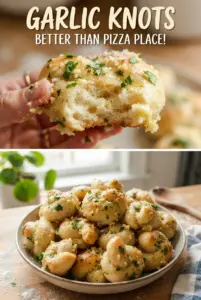
Golden garlic knots disappear fast because they hit the sweet spot between soft dinner roll and savory breadstick. The centers stay tender and pillowy, the edges take on a little chew, and the garlic butter soaks into every twist and crease. When they come out of the oven with Parmesan melting into the top and marinara waiting on the side, there’s not much need for convincing.
The trick is using room-temperature pizza dough so it stretches cleanly instead of snapping back. Cutting the dough into equal pieces keeps the knots baking at the same rate, and brushing on only a light coat of butter before baking helps the surface brown without sliding off. The real flavor hit comes after baking, when the hot knots soak up the garlic-parsley butter instead of cooking the garlic into bitterness in the oven.
Below, I’ve included the small details that make the difference: how tight the knots should be, when to brush on the butter, and what to do if you want them a little more cheesy or a little more garlicky.
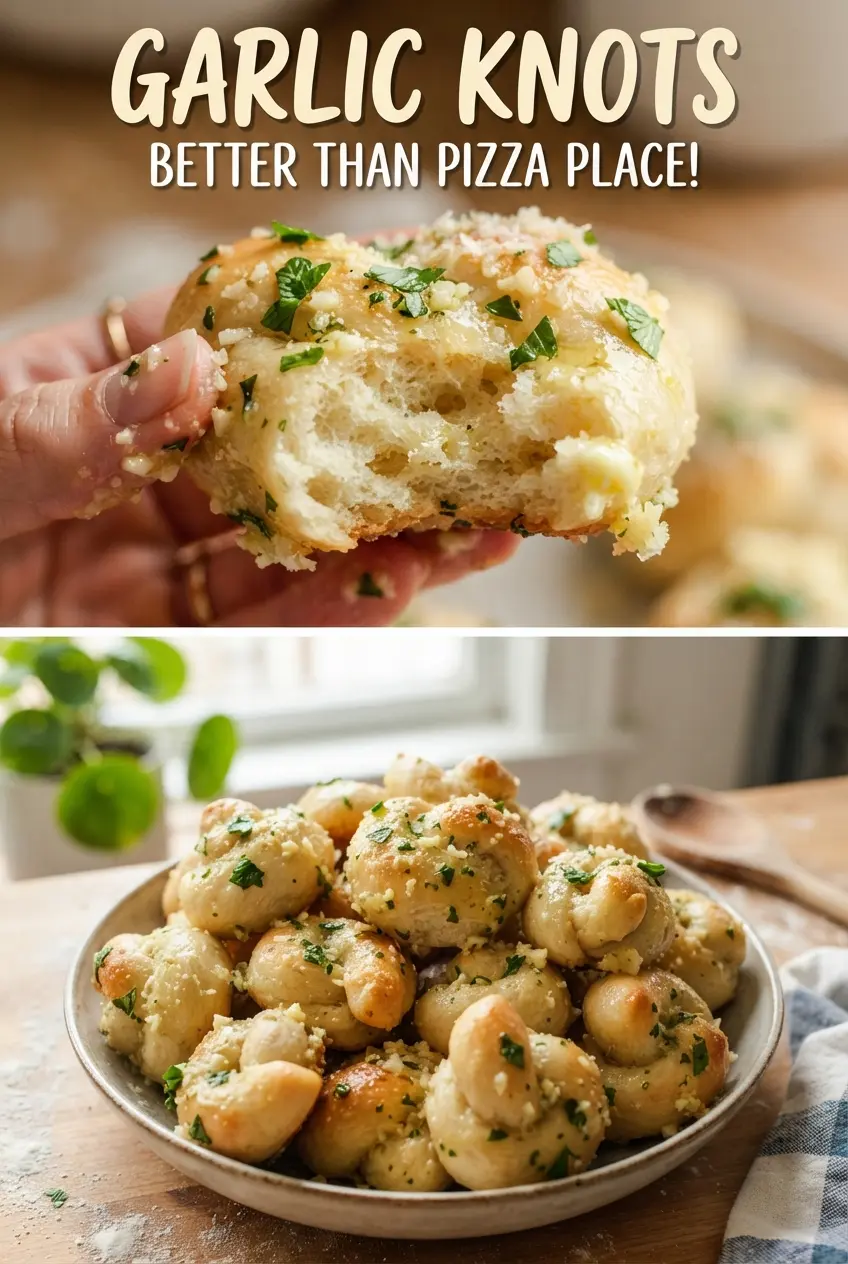
The knots baked up soft inside with those little browned ridges on top, and the garlic butter soaked in without making them soggy. I served them with pasta and everyone kept reaching for the last one.
Save these garlic knots for pasta night, pizza night, or any time you need soft, buttery bread with a real garlic finish.
The little details that keep garlic knots soft instead of dry
The biggest mistake with garlic knots is baking them until they look deeply browned and dry. By the time the tops are dark, the inside has usually gone past tender and started to feel bready in the wrong way. Pull them when they’re just golden with pale seams still visible in the twists; they’ll finish setting on the tray.
Using room-temperature dough matters here because cold dough fights back when you try to shape it. If the ropes keep shrinking, let them rest for five minutes and try again. That short pause relaxes the gluten and makes the knots easier to tie without tearing.
- Refrigerated pizza dough — This gives you a soft, reliable base without making dough from scratch. Let it sit out until it’s flexible and no longer cold to the touch, or it’ll keep springing back while you try to shape it.
- Butter — Melted butter is what gives the knots their glossy finish and rich flavor. If you want a slightly deeper, nuttier note, brown it lightly first, but don’t take it too far or the garlic will taste harsh against it.
- Garlic — Fresh minced garlic gives the strongest finish once it’s stirred into the warm butter after baking. Garlic powder won’t taste the same here; it reads flatter and loses that sharp, fresh aroma.
- Parmesan — Finely grated Parmesan clings to the warm butter and adds a salty, savory edge. Use the good stuff if you can, since the flavor shows up on the surface of every knot.
Brushing in the right order is what builds the flavor

- Pizza dough — Room-temperature dough is easier to divide cleanly and shape into even ropes. If you use it straight from the fridge, it resists stretching and the knots end up lopsided.
- Butter — Brush some on before baking so the tops color and a little more afterward so the garlic flavor stays fresh and bright. That second brushing is what makes these taste like garlic knots instead of plain rolls with topping.
- Garlic, parsley, and salt — Stir these into the remaining butter only after the knots come out of the oven. The heat softens the garlic just enough without cooking away its punch, and the parsley stays vivid instead of dull.
- Marinara — A simple dipping sauce gives the knots a tangy contrast that keeps them from tasting one-note. Warm it if you want a better match for the bread, but it doesn’t need much more than that.
Shaping, baking, and finishing the knots
Cutting and tying the dough
Divide the dough into 16 even pieces so each knot bakes at the same speed. Roll each piece into a rope about 7 inches long, then tie it once in the middle and tuck the ends under for a neat shape. If the dough tears, it’s still too cold; give it a few more minutes on the counter before trying again.
Baking until just golden
Lay the knots on parchment so they don’t stick and brush them lightly with melted butter. Bake at 400F for 13 to 15 minutes, watching for a light golden color on the tops and set edges. If you wait for deep browning, they’ll dry out before the center stays soft.
Finishing with garlic butter and Parmesan
Stir the garlic, parsley, and salt into the remaining butter while the knots bake, then brush it over the hot bread as soon as it comes out. The residual heat blooms the garlic without burning it and helps the butter soak into the seams of the knots. Finish with Parmesan while the surface is still warm so it sticks instead of sliding off.
How to change these garlic knots without losing the texture
Dairy-free garlic knots
Use a plant-based butter that melts cleanly and has a neutral flavor. The knots will still get glossy and tender, though the finish will be a little less rich than with dairy butter.
Extra-cheesy garlic knots
Add a little Parmesan to the butter before baking and a second pinch right after brushing. That gives you a stronger salty crust, but too much before baking can fall off the dough, so keep most of it for the finish.
Garlic knots with store-bought sauce
A good jarred marinara works fine here. Warm it gently before serving so it tastes brighter and clings better to the bread instead of feeling cold next to the hot knots.
Make-ahead baking
You can shape the knots a few hours ahead and keep them covered in the fridge. Bring them back to room temperature before baking so they puff evenly instead of staying dense in the center.
Storage and Reheating
- Refrigerator: Store leftovers in an airtight container for up to 3 days. The knots soften a bit as they sit, but they still reheat well.
- Freezer: Freeze baked knots in a single layer, then transfer to a freezer bag for up to 2 months. Hold the Parmesan until after reheating for the best texture.
- Reheating: Warm them in a 325F oven for 8 to 10 minutes. The microwave makes the crust rubbery, so use the oven if you want the edges to come back to life.
Answers to the questions worth asking
Garlic Knots
Ingredients
Equipment
Method
- Preheat the oven to 400F and line a baking sheet with parchment. Set the sheet aside so it’s ready when the knots are formed.
- Cut the room-temperature pizza dough into 16 pieces, then roll each into a 7-inch rope and tie into a knot. Shape them with a snug tie so the knots hold their form while baking.
- Place the knots on the baking sheet, leaving a little space between them. Brush the tops lightly with melted butter to help them brown.
- Bake the knots for 13-15 minutes at 400F until golden brown. Look for crisp, browned edges and a set, springy center.
- Stir the garlic, chopped parsley, and salt into the remaining butter, then brush over the hot knots. The butter should look glossy as it sinks into the surface.
- Sprinkle the knots with grated Parmesan and serve with marinara sauce for dipping. Pull one apart and serve immediately while the garlic butter still tastes warm.