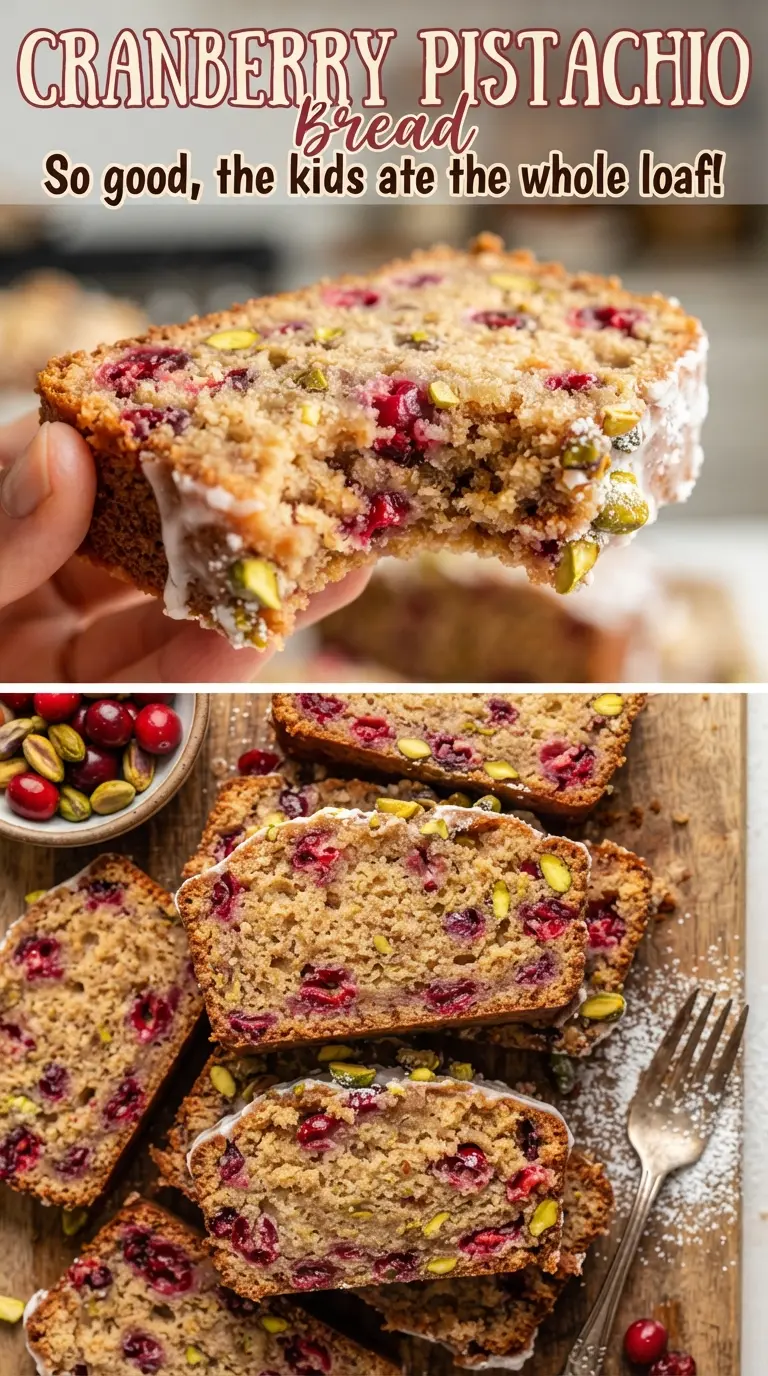
Cranberry pistachio bread bakes into a tender, fragrant loaf with a bright orange crumb, bursts of tart cranberry, and just enough nutty crunch to keep every slice interesting. The glaze gives it that bakery-style finish, but the real win is how well the loaf stays soft for days without turning heavy or dry.
What makes this version work is the balance of moisture and lift. Yogurt or sour cream keeps the crumb plush, while orange zest rubbed into the sugar pulls out the citrus oils before anything else goes in. That step matters. It gives the loaf a deeper orange flavor than using juice alone, and it perfumes the batter from the start.
Below, I’ve included the small details that keep the loaf from getting dense, plus the best way to handle frozen cranberries so they don’t bleed too much color into the batter.
The loaf stayed incredibly moist, and the cranberries didn’t sink at all. I used frozen berries and the crumb still baked up tender with that perfect orange glaze on top.
Save this cranberry pistachio bread for the kind of loaf that slices cleanly, glazes beautifully, and stays tender all week.
The Bake That Fails When the Batter Gets Overmixed
Quick breads rise on tenderness, not muscle. Once the flour goes in, every extra stroke starts building gluten, and that’s what turns a soft loaf into something tight and a little rubbery. The batter should look a bit rough when it goes into the pan. If it looks perfectly smooth, you’ve probably gone too far.
The other common failure is uneven fruit distribution. Cranberries are heavier than the batter, and chopped pistachios can clump if they aren’t folded in gently near the end. A light hand keeps the loaf from streaking, sinking, or packing down in the center.
- Orange zest — Rubbing it into the sugar wakes up the oils and makes the citrus flavor taste much fuller. That step is worth doing every time.
- Yogurt or sour cream — Both keep the crumb moist and tender. Sour cream gives a slightly richer loaf, while yogurt brings a brighter tang. Use either one straight from the fridge.
- Fresh or frozen cranberries — Fresh berries hold their shape best, but frozen work well too. Use them straight from the freezer and fold them in at the end so they don’t bleed as much color.
- Pistachios — Their flavor is mild, buttery, and just salty enough to balance the tart fruit. Chop them medium-fine so you get crunch without tearing up the crumb.
Building the Batter Without Beating the Life Out of It
- All-purpose flour — This gives the loaf enough structure to support the fruit without making it heavy. Swap in a 1:1 gluten-free baking blend if needed, but the texture will be a little more delicate and less springy.
- Butter, melted — Melted butter mixes easily and keeps the loaf rich. Don’t use it hot; warm butter can start scrambling the eggs or thinning the batter too much.
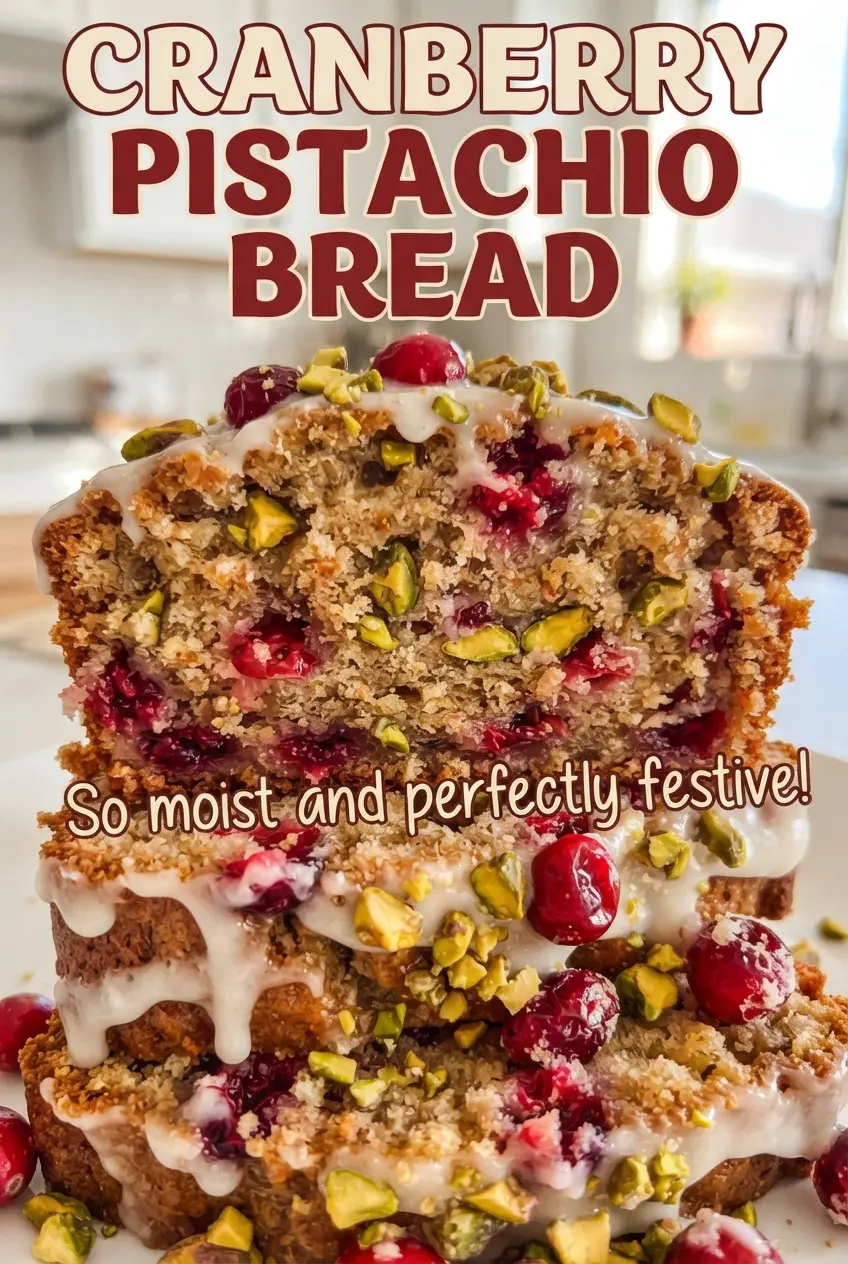
- Powdered sugar glaze — The glaze is thin on purpose so it drips over the top instead of frosting the loaf shut. Add the orange juice slowly until it falls from the whisk in a ribbon.
Rubbing the Zest Into the Sugar
Start with the sugar and orange zest together. Rub them between your fingers until the mixture looks damp and smells strongly of orange. That small step pulls the aroma out of the zest and gives the loaf a deeper citrus note than whisking zest into liquid later would. If you skip it, the orange flavor stays flatter and less fragrant.
Mixing the Wet Ingredients
Whisk in the eggs, yogurt or sour cream, melted butter, orange juice, and vanilla until the mixture looks smooth and slightly glossy. The butter should be fully incorporated, with no greasy streaks floating on top. If your butter is too hot, it can thin the batter and make the loaf bake up greasy instead of soft, so let it cool first.
Bringing the Batter Together
Whisk the flour, baking powder, baking soda, and salt in a separate bowl, then fold the dry ingredients into the wet mixture just until you stop seeing flour. A few streaks are fine at this point. Overmixing tightens the crumb, and that’s the fastest way to lose the soft texture you want in a quick bread.
Folding in the Fruit and Nuts
Use a spatula and fold in the cranberries and half of the pistachios at the very end. The batter will be thick, and that’s exactly what you want. If the cranberries are frozen, don’t thaw them first. Tossing them in frozen helps them hold their shape and keeps the loaf from turning pink.
Baking Until the Center Sets
Spread the batter into the prepared loaf pan and bake until the top is deeply golden and a toothpick comes out clean or with just a few moist crumbs. Start checking at 55 minutes, especially if your oven runs hot. If the top browns before the center is done, lay a loose piece of foil over it for the last stretch of baking.
Glazing a Fully Cooled Loaf
Cool the loaf completely before you whisk and drizzle the glaze. If the bread is warm, the glaze melts right off and soaks into the crust instead of sitting in a pretty layer on top. Sprinkle on the remaining pistachios while the glaze is still wet so they stick instead of rolling away.
How to Adapt This Loaf Without Losing the Tender Crumb
Dairy-Free Version
Use a plant-based butter and a thick dairy-free yogurt with some tang. The loaf will still be moist, but the flavor will be a little less rich than the original. Choose an unsweetened yogurt so the sugar level stays balanced.
Frozen Cranberries Only
Use them straight from the freezer and fold them in at the very end. Thawing makes them bleed into the batter and can turn the loaf streaky. Frozen berries may also add a few minutes to the bake time.
Gluten-Free Swap
A good 1:1 gluten-free baking blend works here, but the loaf will be a little more fragile and may need a longer cooling time before slicing. Don’t switch to almond flour alone; it won’t give the loaf enough structure to hold the cranberries.
Lighter Citrus Finish
Swap half the orange juice in the glaze for milk or water if you want a thinner, less sweet finish. The loaf will still taste bright, but the top won’t set as shiny or bold. This is the version to use if you want the fruit to stay front and center.
Storage and Reheating
- Refrigerator: Store wrapped or in an airtight container for up to 5 days. The crumb stays moist, though the glaze softens a bit.
- Freezer: Freeze the unglazed loaf or individual slices tightly wrapped for up to 2 months. Add the glaze after thawing for the best texture.
- Reheating: Warm slices at room temperature or for a few seconds in the microwave. Don’t overheat them, or the crumb turns gummy and the pistachios lose their crunch.
Answers to the Questions Worth Asking
Cranberry Pistachio Bread
Ingredients
Equipment
Method
- Preheat the oven to 350F, then grease and line a 9x5-inch loaf pan. A hot oven cue is when it reaches 350F.
- Rub the sugar and orange zest together until fragrant, then whisk in the eggs, yogurt, melted butter, orange juice, and vanilla extract. Whisk until the mixture looks smooth and glossy.
- Whisk the flour, baking powder, baking soda, and salt in a bowl, then fold into the wet mixture just until combined. Stop as soon as no dry streaks remain.
- Fold in the halved cranberries and 1/2 cup of the chopped pistachios, then spread the batter into the prepared loaf pan. The loaf pan should be evenly filled.
- Bake at 350F for 55-60 minutes until a toothpick inserted in the center comes out clean. The top should look set and lightly browned.
- Cool the loaf completely before glazing. The surface should feel cool to the touch.
- Whisk the powdered sugar with 2 tablespoons orange juice until smooth, then drizzle over the cooled loaf. The glaze should fall in thin lines and partially set on the surface.
- Sprinkle the remaining pistachios over the glazed loaf. The nuts should adhere lightly to the drizzle.