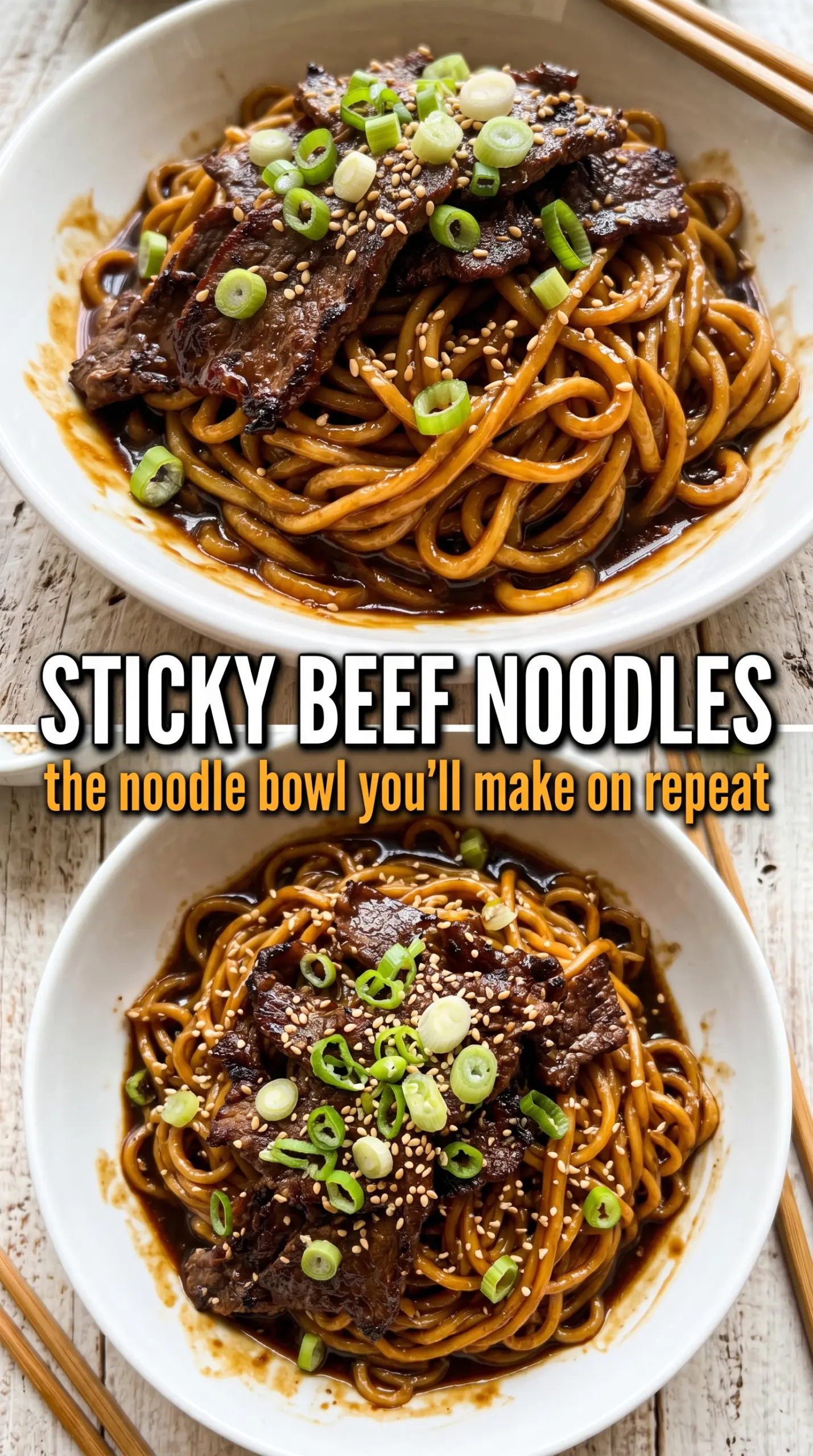
Sticky beef noodles hit that sweet spot between fast takeout energy and the kind of dinner that actually satisfies. The noodles come out glossy and coated, the beef turns deeply savory, and the sauce clings in a way that makes every bite taste like it was built with intention. Nothing watery, nothing bland, just a pan of noodles that disappears faster than you expect.
The trick is keeping the sauce concentrated enough to cling. Brown sugar, soy sauce, oyster sauce, and a little rice vinegar build the backbone, while sesame oil gives it that rounded finish that tastes restaurant-style without needing a long ingredient list. High heat matters here too: it helps the beef brown instead of steam, and it lets the sauce tighten up around the noodles instead of pooling at the bottom of the skillet.
Below, I’ve included the small choices that make a big difference, from how to keep ramen from turning soggy to the one move that keeps the sauce glossy instead of thick and pasty. If you’ve ever wanted a ground beef noodle dinner that tastes bold without taking much time, this is the one to keep on repeat.
The sauce coated every noodle and didn’t pool in the bottom of the pan. I used ramen just like the recipe said, and the texture stayed springy even after tossing everything together.
Sticky beef noodles with glossy ramen and a soy-garlic sauce are perfect for saving when you need a fast, saucy dinner that still tastes cooked with care.
The Sauce Needs to Coat, Not Flood
The biggest mistake with sticky beef noodles is treating the sauce like a broth. It should be strong, slightly salty, and just sweet enough to glaze the noodles, because ramen absorbs liquid fast and can turn mushy if the pan is too wet. This recipe works because the sauce goes in after the beef has browned, then gets reduced briefly in the heat of the skillet before the noodles join the party.
- High heat does the heavy lifting — It pushes off excess moisture from the beef and helps the sauce cling. If the pan is crowded, the meat steams instead of browns, and the final dish tastes flat.
- The brown sugar is for texture, not just sweetness — It helps the sauce turn glossy and sticky as it reduces. If you cut it too much, the sauce stays thin and never really hugs the noodles.
- Rice vinegar keeps the sauce from tasting heavy — That tiny bit of acid keeps the soy and oyster sauce from reading one-note. Lime juice works in a pinch, but it’s sharper and less rounded.
What Each Ingredient Is Actually Doing in the Pan
- Ground beef — Use regular ground beef for the best balance of flavor and richness. Very lean beef works, but it can taste dry unless you keep a little fat in the pan for the sauce to pick up.
- Ramen noodles — These are ideal because they soften quickly and catch the sauce in all those curly edges. Discard the seasoning packets; they’d muddy the soy-garlic base you’re building here.
- Soy sauce and oyster sauce — Soy brings salt and depth, while oyster sauce gives the dish that darker, glossier takeout-style finish. If you don’t have oyster sauce, hoisin can work, but the result will be sweeter and less savory.
- Fresh garlic and ginger — Fresh is worth it here. Powdered versions won’t give you the same sharp, fragrant kick when they hit the hot beef.
- Sriracha — This doesn’t make the noodles spicy-hot; it just rounds out the sauce. If you want more heat, add more at the end so you don’t overpower the balance in the pan.
Getting the Noodles Glossy Without Turning Them Soggy
Brown the Beef Until the Pan Smells Toasty
Start with a hot skillet and let the beef sit long enough to take on color before breaking it apart completely. You want browned bits, not pale crumbles, because those browned edges become part of the sauce once the garlic and ginger go in. If there’s a lot of grease, drain off the excess so the finished dish stays sticky instead of oily.
Cook the Garlic and Ginger Just Until Fragrant
Add the garlic and ginger after the beef is browned and stir for about a minute. That short cook wakes them up without letting the garlic scorch, which would make the whole pan taste bitter. As soon as the kitchen smells warm and sharp, move on to the sauce.
Let the Sauce Tighten Around the Noodles
When the sauce goes in, stir quickly and add the cooked ramen right away. Toss over high heat for about two minutes, just until the noodles look glossy and the liquid has mostly disappeared from the bottom of the pan. If the pan still looks wet at the end, keep tossing for another 30 seconds; if it goes too far, a small splash of water loosens it back up without thinning the flavor too much.
Finish Before the Noodles Sit Too Long
Serve immediately after tossing with sesame seeds and sliced green onions. Ramen keeps soaking up sauce as it sits, so the texture is best right out of the skillet. If you’re making this for a crowd, have the garnishes ready before the noodles go in so you can get them to the table while they’re still springy.
How to Adapt This When You’re Missing Something
Make It Gluten-Free
Use gluten-free rice noodles or gluten-free ramen and swap in tamari for the soy sauce. Check your oyster sauce label too, since not every brand is gluten-free. The flavor stays close, but the noodles will be a little less chewy than classic ramen.
Make It Dairy-Free and Already Is
This recipe doesn’t need any dairy, so it already fits a dairy-free table. That’s part of why it’s such an easy weeknight fallback: the sauce gets its richness from beef, sesame oil, and oyster sauce instead of cream or butter.
Swap the Beef for Ground Turkey or Chicken
Ground turkey or chicken works, but it needs a little help to taste as full-bodied as beef. Keep the sauce as written and don’t skip the browning step, because the deeper color is what gives lean meat some backbone. A splash of extra sesame oil at the end helps round out the lighter meat.
Add Vegetables Without Diluting the Sauce
Thinly sliced bell peppers, shredded cabbage, or snap peas fit in well, but keep the amount modest so they don’t water down the skillet. Stir them in after the beef browns and cook just until crisp-tender, then add the sauce. If you overload the pan, the noodles won’t get that sticky finish.
Storage and Reheating
- Refrigerator: Store leftovers in an airtight container for up to 3 days. The noodles will absorb more sauce as they sit, so the dish gets tighter and less glossy.
- Freezer: It freezes, but the ramen softens after thawing. If you do freeze it, pack it in portions and expect a softer texture after reheating.
- Reheating: Reheat in a skillet over medium-low with a splash of water to loosen the sauce. The common mistake is blasting it on high heat, which dries out the beef before the noodles can loosen up.
Answers to the Questions Worth Asking
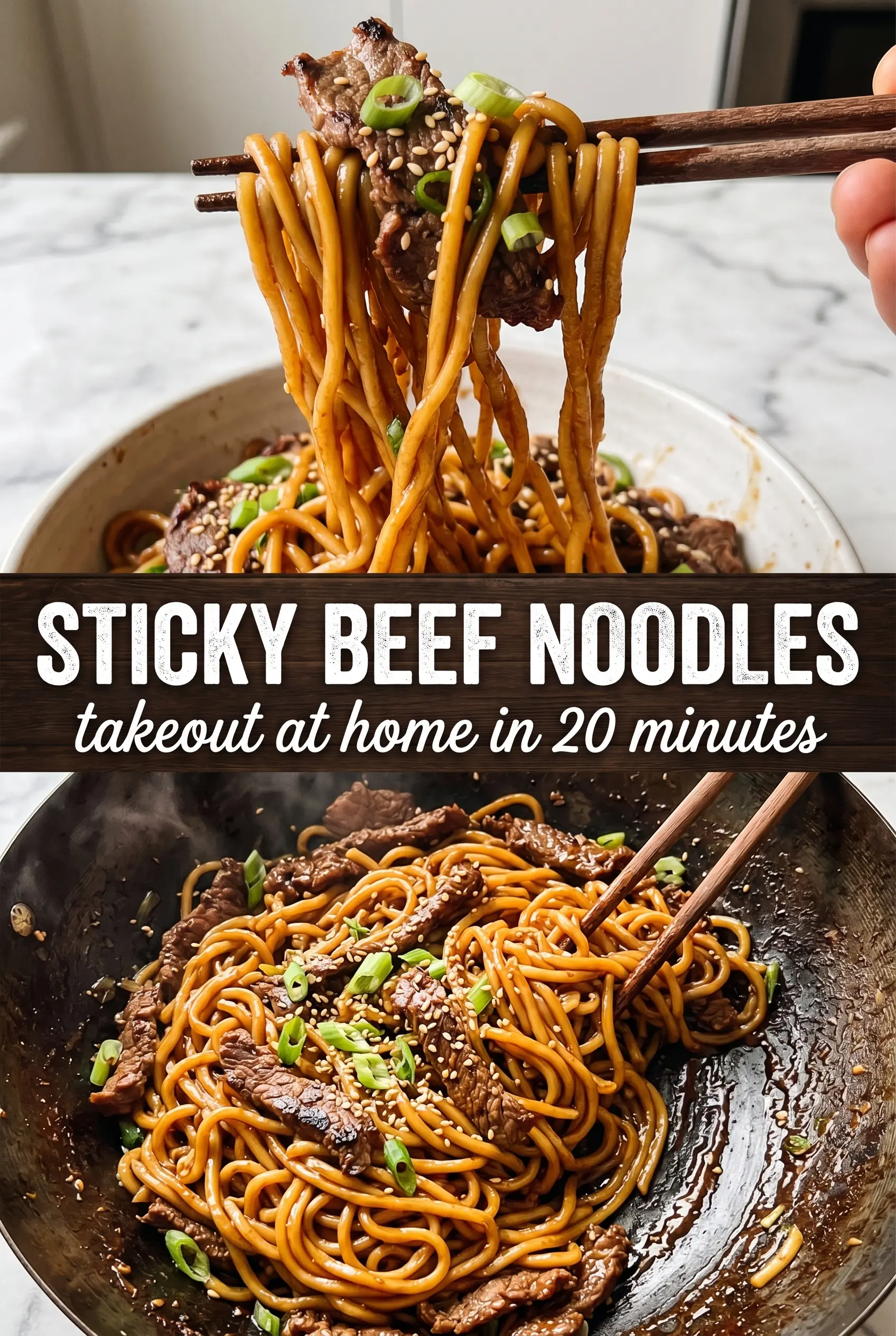
Sticky Beef Noodles
Ingredients
Equipment
Method
- Cook the ramen noodles according to package directions, then discard the seasoning packets, drain, and set aside so the noodles don’t overcook (visual cue: tender noodles, no dry spots).
- Whisk together the soy sauce, oyster sauce, brown sugar, sesame oil, rice vinegar, and sriracha until smooth and glossy (visual cue: sugar fully dissolved, sauce looks uniform).
- Brown the ground beef in a large skillet over high heat, breaking into crumbles, then drain excess fat (visual cue: deeply browned crumbles, less visible grease).
- Add the minced garlic and grated ginger and cook for 1 minute, stirring, until fragrant (visual cue: aroma blooms and garlic turns lightly golden at the edges).
- Pour in the sticky sauce and stir until it bubbles and thickens slightly (visual cue: glossy sauce clings to the beef).
- Add the cooked noodles to the skillet and toss over high heat for 2 minutes until noodles are coated and the sauce is absorbed (visual cue: noodles look shiny and cling together).
- Serve immediately, topped with sesame seeds and sliced green onions (visual cue: green onion freshness and sesame specks on the glossy noodles).