Golden chicken thighs tucked into lemony rice make this one-pan Mediterranean dinner feel like more than the sum of its parts. The chicken roasts on top, so the skin turns crisp while the juices drip down into the rice below, and the rice comes out fluffy, savory, and full of garlic, oregano, and bright lemon. The feta softens just enough to melt into the grains without disappearing completely, which is exactly what gives each bite that salty, creamy finish.
The trick is starting with bone-in, skin-on thighs and giving them a short marinade while the oven heats. You don’t need hours here; the lemon, garlic, and oregano work fast, and the rice picks up plenty of flavor from the broth and the chicken as everything bakes together. Keeping the pan tightly covered for the first stretch lets the rice steam properly before the skin gets its final roast.
Below you’ll find the small details that keep the rice from drying out, how to keep the chicken skin from going soft, and a few smart swaps if you’re working around what you have in the kitchen.
The rice cooked through beautifully and soaked up all the lemony chicken drippings. I was worried the olives would take over, but they balanced the feta and tomatoes perfectly.
Save this Mediterranean Chicken and Rice for a one-pan dinner with crisp skin, lemony rice, and feta that melts right into the grains.
The Reason the Rice Cooks Under the Chicken Instead of Beside It
Putting the rice directly under the chicken isn’t just convenient. It’s what turns plain baked rice into the part people go back for first. The chicken drippings land straight into the pan as it roasts, and the broth absorbs those juices while the rice steams under a tight foil cover. If you uncover too early, the top layer of rice can dry out before the center is tender.
Bone-in, skin-on thighs matter here because they stay juicy during the full bake and give you enough fat to flavor the rice without making it greasy. White long-grain rice is the right call because it stays separate and fluffy instead of turning soft or sticky. A short rest after marinating is enough to wake up the lemon and garlic without breaking down the chicken surface.
What the Lemon, Broth, and Feta Each Bring to the Pan
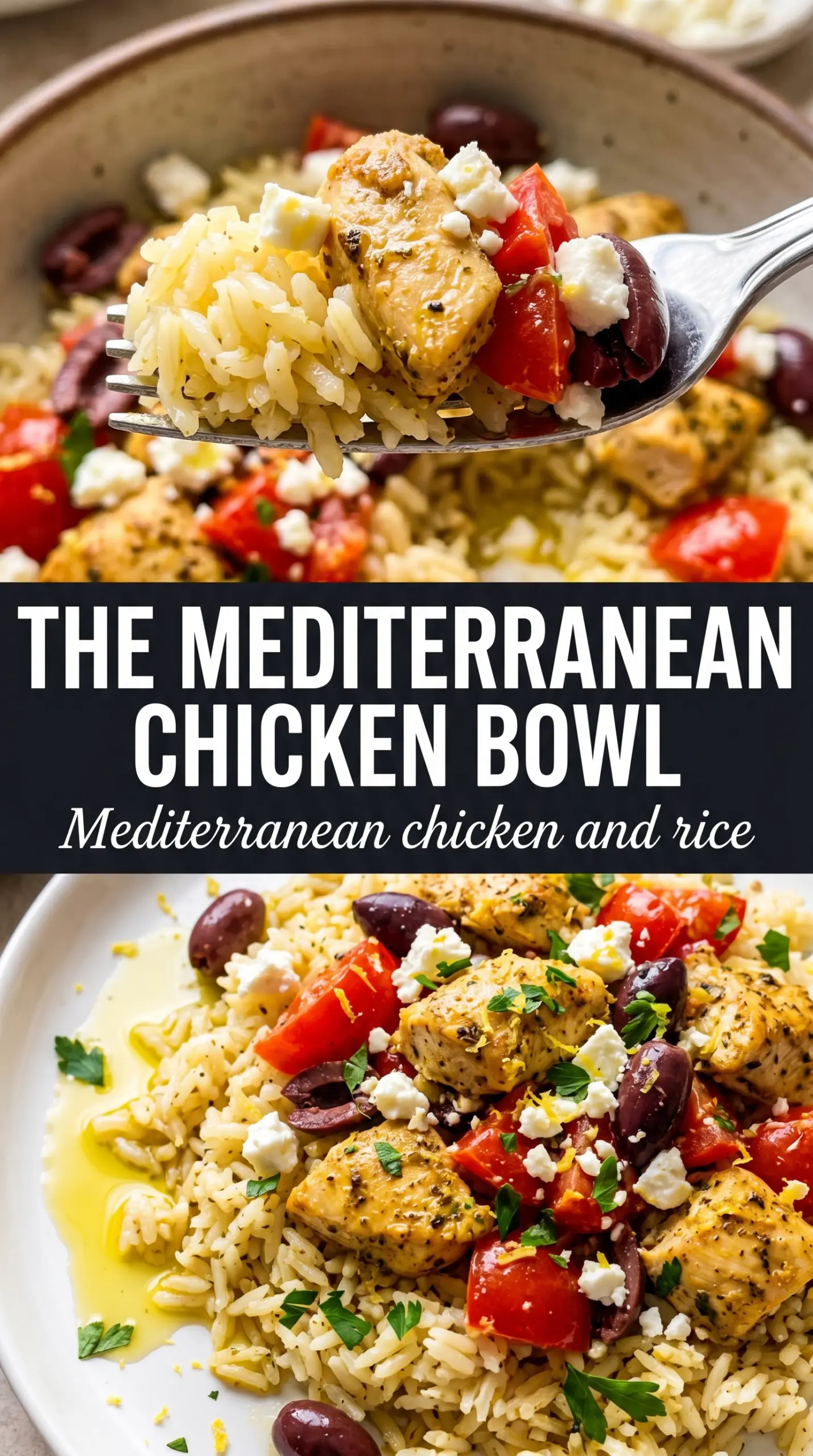
- Chicken thighs — Thighs stay tender during the full bake and give the rice a richer taste than chicken breast would. Breasts can dry out before the rice is done, so they aren’t the best swap unless you cut the bake time and watch closely.
- Lemon juice and zest — Juice brings brightness, but the zest carries the bigger lemon note through the whole dish. Don’t skip it; without zest, the lemon flavor gets buried under the broth and herbs.
- Chicken broth — This is the liquid that cooks the rice, so use a broth you actually like the taste of. Low-sodium broth gives you more control over seasoning, especially because the feta and olives add salt later.
- Kalamata olives and feta — The olives bring briny depth, while the feta softens on top of the hot rice and gives little salty pockets throughout the pan. If you use a milder olive, the dish loses some of its Mediterranean edge.
- Long-grain white rice — Long-grain rice stays fluffy and separate under the chicken. Short-grain rice turns softer and can go gluey in a covered bake like this.
How to Keep the Skin Crisp While the Rice Finishes
Building the Marinade
Whisk the olive oil, lemon juice, lemon zest, garlic, oregano, salt, and pepper until the mixture looks loose and fragrant. Coat the chicken well, then let it sit for 20 minutes while the oven heats. That short rest gives the salt time to season the meat, but if you leave it much longer, the lemon can start to change the texture on the outside of the chicken.
Setting Up the Pan
Spread the rice in a 9×13 baking dish and pour the broth over it before the chicken goes in. Stir in a pinch of salt and any marinade that hasn’t touched the raw chicken directly, then nestle the thighs skin-side up. The skin needs to stay above the liquid so it can roast instead of steaming, and the tomatoes and olives should sit around the chicken rather than on top of the skin.
Covering, Then Uncovering
Bake covered first so the rice can steam and absorb the broth. When the foil comes off, the rice should already be close to tender and the chicken skin should look opaque and starting to tighten. That final uncovered bake is where the skin browns; if the pan still looks dry, the rice likely needed a bit more broth at the start.
Finishing With Feta and Herbs
Crumbly feta goes on as soon as the pan comes out of the oven so it softens against the heat without fully melting away. Add parsley and lemon wedges at the end for freshness. If you wait too long, the feta stays firm and the whole dish tastes flatter.
Ways to Bend This One-Pan Dinner Without Losing What Makes It Work
Dairy-Free Version
Leave out the feta and finish with extra parsley, a little more lemon zest, and a drizzle of olive oil. You lose the creamy, salty finish, so bump up the olives slightly if you want the same punch at the end.
Using Chicken Breast Instead of Thighs
You can use bone-in breasts, but they need a shorter bake and a close eye so they don’t dry out before the rice finishes. The rice will still taste good, but it won’t be as rich because chicken breasts don’t baste the pan the same way thighs do.
Gluten-Free as Written
This dish is naturally gluten-free as long as your chicken broth is certified gluten-free. That’s the only ingredient worth checking, since the rest of the pan is built from rice, chicken, lemon, herbs, vegetables, and cheese.
Stirring in Extra Vegetables
A handful of chopped spinach, artichoke hearts, or zucchini can go in with the tomatoes and olives. Keep the pieces small so they cook in the same window as the rice, or you’ll end up with vegetables that are either mushy or underdone.
Storage and Reheating
- Refrigerator: Store leftovers in an airtight container for up to 4 days. The rice will firm up a little in the fridge, but the flavor holds up well.
- Freezer: This freezes fairly well for up to 2 months if you cool it completely first. The rice softens a bit after thawing, but the chicken stays usable if wrapped up with some of the pan juices.
- Reheating: Reheat covered in a 325°F oven with a splash of broth or water until hot. The biggest mistake is blasting it uncovered in the microwave, which dries the rice and makes the chicken skin rubbery.
Questions I Get Asked About This Recipe
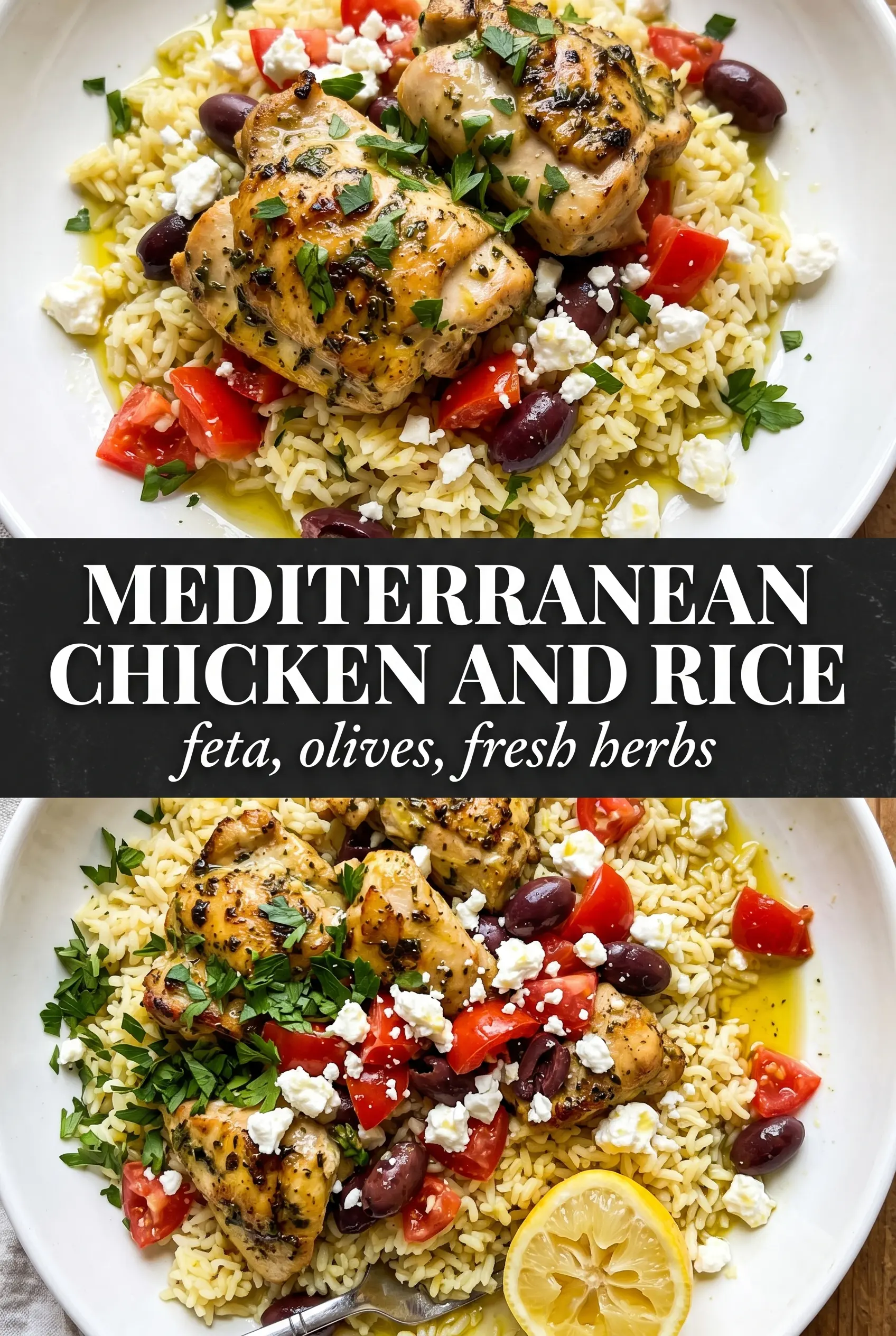
Mediterranean Chicken and Rice
Ingredients
Equipment
Method
- Whisk together olive oil, fresh lemon juice, lemon zest, minced garlic, dried oregano, salt, and pepper until evenly combined. Marinate the chicken for 20 minutes so the flavors cling to the surface.
- Preheat oven to 375°F. Spread the long-grain white rice in a 9x13 baking dish and pour the chicken broth over the rice.
- Stir in a pinch of salt and the remaining marinade so the rice seasons as it cooks. Nestle the chicken skin-side up into the rice.
- Scatter the cherry tomatoes and halved Kalamata olives around the chicken for even distribution. Cover tightly with foil.
- Bake covered at 375°F for 30 minutes. Remove the foil and bake 15 more minutes, until the chicken skin is golden and the rice is cooked through.
- Immediately crumble feta over the hot dish so it softens into the rice. Garnish with fresh parsley and serve with lemon wedges.