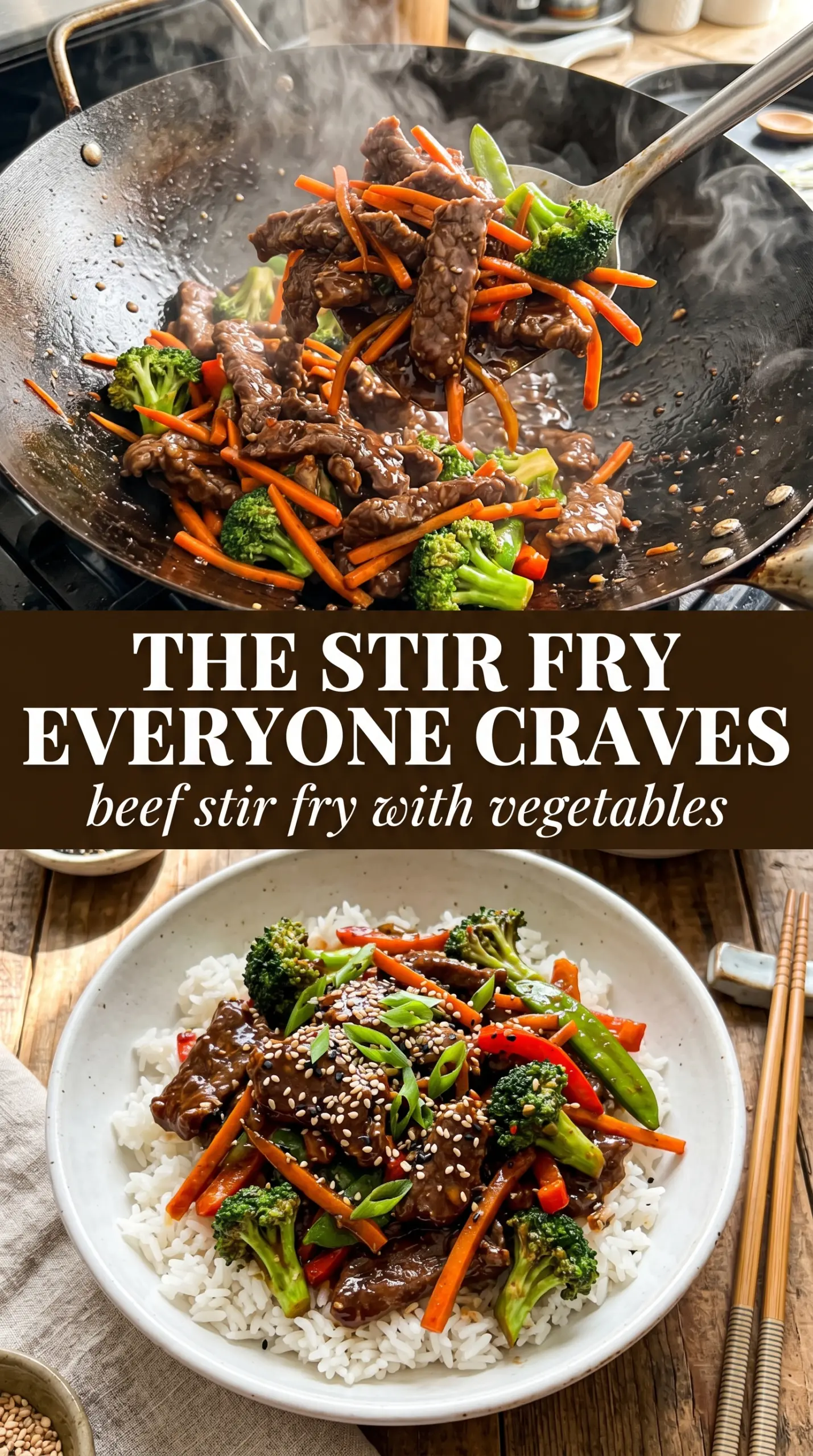
Thin slices of beef, crisp-tender vegetables, and a glossy soy-ginger sauce make this the kind of dinner that disappears fast once it hits the table. The beef stays tender because it gets a hard sear in a hot pan first, then goes back in at the very end so it doesn’t overcook while the sauce thickens. The vegetables keep a little bite, which is exactly what you want in a stir fry that feels fresh instead of soggy.
The key here is heat and timing. You want the beef in a single layer so it browns instead of steaming, and you want the sauce mixed before you start cooking so you can move quickly once the pan is hot. Cornstarch gives the sauce that takeout-style sheen, but it only works if the sauce gets a full minute or so of bubbling at the end.
Below you’ll find the small details that make this better than a rushed weeknight stir fry: how to slice the beef so it stays tender, when to add the garlic so it doesn’t burn, and a few smart swaps if you need to work with what you already have.
The beef stayed tender and the sauce thickened up fast without getting gluey. My husband went back for seconds and asked if I could put this in the regular rotation.
Save this beef stir fry with vegetables for the nights when you want tender steak, crisp vegetables, and a glossy soy-ginger sauce in under 30 minutes.
The Trick to Tender Beef Is What You Don’t Do
A lot of stir fries go wrong before the vegetables even hit the pan. If the beef goes in wet, crowded, or cold, it steams instead of searing and turns gray before it ever gets a chance to brown. The other common mistake is leaving it in the wok while the vegetables cook; by the time the sauce goes in, the beef has already gone past tender.
This version avoids that by treating the beef like the fast-cooking ingredient it is. You sear it hard and fast in a single layer, pull it out, then bring it back just long enough to coat with sauce. That keeps the edges browned and the center juicy instead of leathery.
- Thin-sliced flank or sirloin — These cuts stay tender when you slice them against the grain and cook them quickly. If the slices are thick, no sauce will save the texture.
- Broccoli, bell pepper, snap peas, and mushrooms — This mix gives you crunch, sweetness, and a little earthiness. Cut the broccoli small enough that it cooks in the same window as the peppers and peas.
- Soy sauce and oyster sauce — The soy brings salt and depth; the oyster sauce adds body and that savory restaurant-style finish. If you swap in only soy sauce, the sauce tastes thinner and flatter.
- Cornstarch slurry — This is what turns the pan juices into a glossy coating. Mix it with cold water first so it disperses evenly and doesn’t clump in the wok.
What Each Ingredient Is Actually Doing in This Recipe
- Primary ingredient (the star) — Quality matters most. Choose the best you can find.
- Cooking medium (oil, butter, or broth) — This carries flavors and prevents dryness.
- Seasonings (salt, pepper, spices, herbs) — Layer flavors so nothing overpowers. Build depth gradually.
- Aromatics (garlic, onion, herbs) — Cook with fat to bloom flavors. Become the foundation.
- Supporting ingredients — Complement the main ingredient without overpowering it.
- Sauce or liquid (if applicable) — Brings flavors together. Balance richness with acid.
- Acid (lemon, vinegar, wine, or other) — Brightens and prevents flat-tasting results.
- Final finish (garnish, glaze, or sauce) — Prevents one-dimensional taste and adds visual appeal.
Building the Sauce and Finishing the Stir Fry in the Right Order
Mix the Sauce Before the Pan Gets Hot
Whisk the soy sauce, oyster sauce, brown sugar, sesame oil, and cornstarch slurry together before you start cooking. Once the wok is hot, the whole dish moves fast, and you won’t have time to measure anything while the beef is searing. The sauce should look smooth and loose at this stage; if the cornstarch sits undissolved, it will leave little lumps when it hits the pan.
Sear the Beef in One Hard Layer
Heat the oil until it shimmers and barely smokes, then add the beef in a single layer. Leave it alone for a minute or two so it can brown; if you stir too soon, the meat releases moisture and starts braising instead of searing. You want deep brown edges, not a full gray surface. Pull the beef out as soon as it’s browned and still slightly underdone in the center.
Cook the Vegetables Until Crisp-Tender
Add the remaining oil, then stir-fry the broccoli, bell pepper, snap peas, and mushrooms over high heat. The broccoli should turn bright green, the peppers should soften at the edges, and the mushrooms should lose their raw look without collapsing. If the pan looks dry or the vegetables start scorching before they soften, your heat is too high or the pan is too crowded.
Finish Fast and Let the Sauce Bubble
Add the garlic and ginger for just 30 seconds so they smell fragrant but don’t burn. Return the beef to the pan, pour in the sauce, and toss until everything is coated. The cornstarch needs a full minute of bubbling to thicken properly; if you pull it too early, the sauce stays thin and cloudy instead of glossy.
How to Adjust This Stir Fry Without Losing What Makes It Work
Make it gluten-free
Use tamari or a certified gluten-free soy sauce in place of regular soy sauce, and check that your oyster sauce is gluten-free as well. The finished dish keeps the same glossy texture and savory depth as long as the sauce still has enough salt and body.
Swap in chicken or shrimp
Thin-sliced chicken breast or peeled shrimp work in the same method, but both cook faster than beef. Chicken needs to be fully cooked through before you pull it from the pan, and shrimp should go in at the very end so they stay springy instead of rubbery.
Use whatever vegetables are in the crisper
Snow peas, carrots cut into thin matchsticks, baby corn, or sliced zucchini can all stand in for part of the vegetable mix. Keep the pieces small and even so everything finishes at the same time; bulky chunks are the fastest way to end up with overcooked beef and underdone vegetables.
Storage and Reheating
- Refrigerator: Store leftovers in an airtight container for up to 3 days. The vegetables will soften a little, but the sauce keeps everything flavorful.
- Freezer: It freezes, but the vegetables lose some of their snap. If you plan to freeze it, undercook the vegetables slightly and cool the stir fry completely before packing it away.
- Reheating: Reheat in a skillet over medium heat with a splash of water until just hot. The biggest mistake is using high heat in the microwave or pan, which pushes the beef from tender to tough and makes the sauce oily.
Answers to the Questions Worth Asking
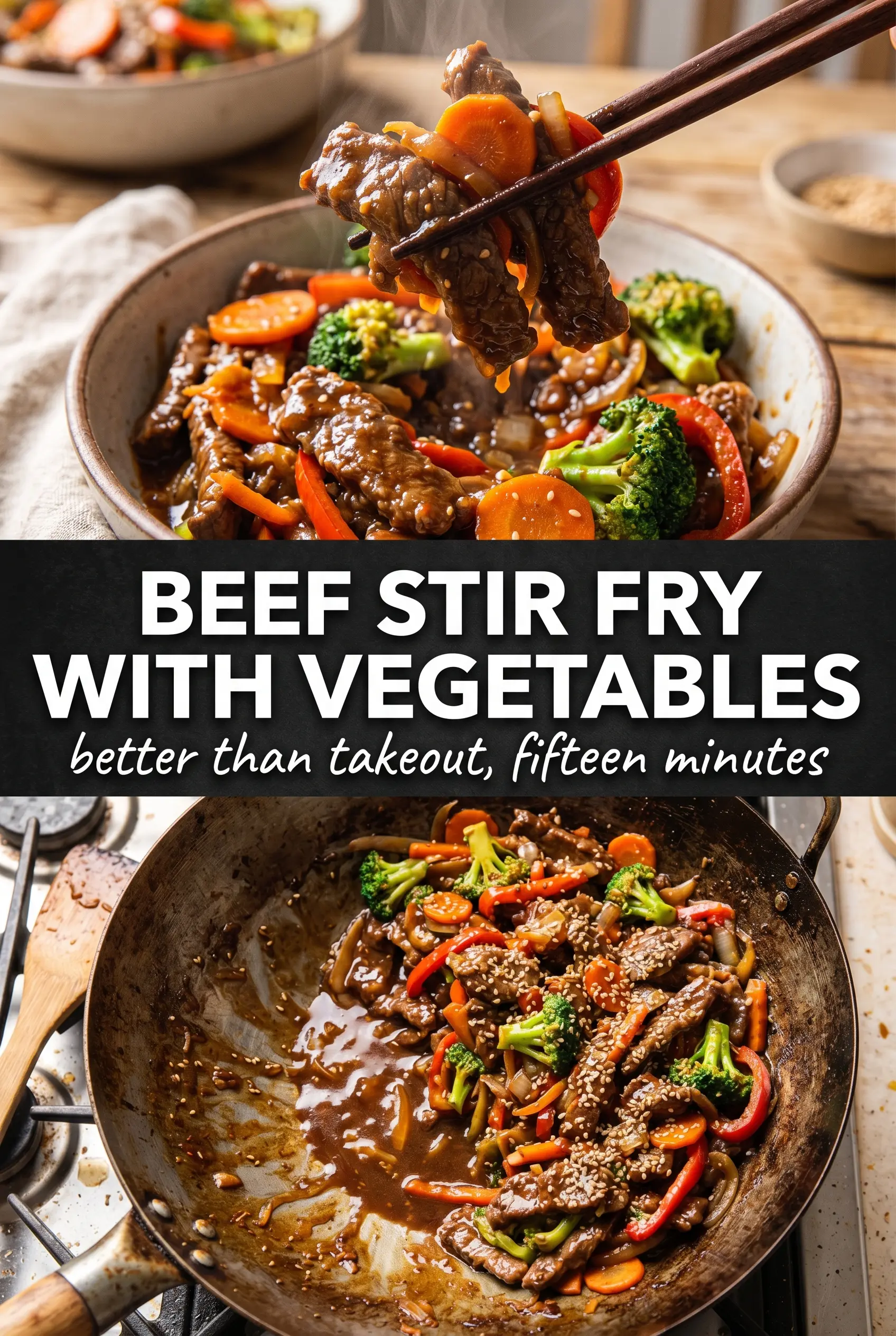
Beef Stir Fry with Vegetables
Ingredients
Equipment
Method
- Whisk soy sauce, oyster sauce, brown sugar, sesame oil, cornstarch, and water together until smooth, then set aside.
- Set the sauce aside so it’s ready to pour as soon as the beef and vegetables are cooked.
- Heat 2 tablespoons vegetable oil in a wok over high heat until smoking, then add beef in a single layer and sear for 1–2 minutes without stirring until browned.
- Toss briefly, then remove the beef from the wok and keep it aside.
- Add the remaining vegetable oil, then stir-fry broccoli, red bell pepper, snap peas, and mushrooms for 3–4 minutes until tender-crisp.
- Add garlic and fresh ginger and cook for 30 seconds, stirring until fragrant.
- Return the seared beef to the wok.
- Pour the sauce over everything and toss until combined, then stir in the cornstarch slurry and cook until the sauce is thick and glossy—about 1 minute.
- Serve immediately over cooked rice with sesame seeds on top.