Juicy chicken breasts with a sticky hot honey glaze have a way of turning an ordinary dinner into something people remember. The edges caramelize into a deep amber coating, the center stays tender, and the sweet heat lands in a way that keeps you going back for one more bite. It’s the kind of baked chicken that doesn’t need a sauce on the side because the glaze clings to every slice.
What makes this version work is the balance. Honey brings body and shine, hot sauce adds sharp heat, and a little butter smooths the glaze so it brushes on evenly instead of sliding off. A splash of apple cider vinegar keeps the sweetness from tasting flat, and the red pepper flakes add those little bursts of heat that show up in the finished crust. Baking at a higher temperature helps the glaze darken without drying out the chicken, as long as you stop at 165°F and let it rest before slicing.
Below, I’ve included the small details that matter most: how to keep chicken breasts from drying out, how to get the glaze to caramelize instead of burn, and what to change if you want to adjust the heat level without losing that sticky finish.
The glaze turned sticky and glossy in the oven, and the chicken stayed juicy even after the 5-minute rest. My husband kept saying the little hit of vinegar made the honey taste brighter instead of just sweet.
Love the sticky red-pepper glaze and caramelized edges? Save these hot honey baked chicken breasts for an easy sweet-heat dinner that bakes in one pan.
Why the Glaze Has to Go on Thin, Not Thick
The biggest mistake with hot honey chicken is slathering on a heavy layer and hoping it turns sticky. Too much glaze can puddle in the pan before the chicken is cooked, then the sugars darken faster than the meat finishes. A thinner, brushed-on layer gives you that lacquered finish because the heat can reduce it in place instead of steaming it off the surface.
This recipe also benefits from a short rest before slicing. If you cut the chicken the second it comes out of the oven, the juices run into the pan and the glaze loses some of its grip. Five minutes is enough to let the meat relax and the coating settle into that glossy, clingy finish that looks as good as it tastes.
What Each Part of the Glaze Is Actually Doing

- Honey — This is the backbone of the glaze. It gives you sweetness, shine, and that sticky coating that clings as it bakes. Don’t swap in plain sugar syrup here; it won’t brush the same way or caramelize with the same depth.
- Hot sauce — Frank’s RedHot brings vinegar, salt, and heat in one ingredient, which is why it works better than straight cayenne for this kind of glaze. It cuts through the sweetness and keeps the sauce from turning cloying.
- Butter — Melted butter rounds out the glaze and helps it emulsify, so it brushes on smoothly instead of separating. If you want a dairy-free version, use olive oil, but the glaze won’t taste quite as plush.
- Apple cider vinegar — This is the small ingredient that keeps the whole thing bright. It wakes up the honey and helps the glaze taste balanced once it caramelizes in the oven.
- Red pepper flakes — These give the sauce visible heat and that little spark of texture in the finished coating. If you want more control, start with half and add more after baking as a finishing sprinkle.
How to Get a Deep Amber Glaze Without Drying Out the Chicken
Season the Chicken First
Season both sides of the chicken before the glaze goes on. Salt, pepper, garlic powder, and smoked paprika build flavor under the surface, which matters because the glaze is sweet and punchy on top. If you skip the seasoning step, the finished dish tastes like sauce sitting on plain chicken instead of a fully seasoned dinner.
Whisk the Glaze Until It Looks Unified
The glaze should look glossy and smooth, with the red pepper flakes suspended through it instead of sinking to the bottom. If the butter looks streaky, keep whisking for another few seconds. That emulsion helps the glaze coat evenly and keeps it from separating in the hot pan.
Bake Hot, Then Check Early
Set the oven to 425°F so the glaze has enough heat to caramelize. Bake until the thickest part of the chicken reaches 165°F, but start checking at the lower end of the time range because breast size varies a lot. If the glaze is browning too quickly before the center is done, tent loosely with foil for the last few minutes.
Baste Once, Not Constantly
Brush on the reserved glaze halfway through baking. That second layer gives you a thicker coating without flooding the pan, which is what usually leads to burnt spots and thin sauce. Keep the lid off and let the oven do the work; too much opening and closing drops the heat and slows the caramelization.
Less Heat, Same Sticky Finish
Cut the hot sauce to 1 tablespoon and reduce the red pepper flakes to 1/2 teaspoon for a milder glaze. You’ll keep the glossy honey coating and the tang from the vinegar, but the burn will sit farther in the background.
Dairy-Free Hot Honey Chicken
Swap the butter for olive oil. The glaze will still cling and caramelize, but it will taste a little sharper and less rounded, so the vinegar matters even more in this version.
Thighs Instead of Breasts
Boneless skinless thighs work well if you want a richer, juicier result. They usually need a few extra minutes in the oven, but they’re more forgiving, especially if your chicken breasts are uneven in size.
Storage and Reheating
- Refrigerator: Store leftovers in an airtight container for up to 4 days. The glaze will thicken as it chills.
- Freezer: Freeze cooked chicken for up to 2 months, wrapped well and tucked into a freezer bag. The glaze won’t stay quite as glossy after thawing, but the flavor holds up.
- Reheating: Warm covered in a 325°F oven with a splash of water or extra glaze until heated through. The common mistake is blasting it in the microwave, which makes the chicken tough and the honey glaze sticky in the wrong way.
Questions I Get Asked About This Recipe
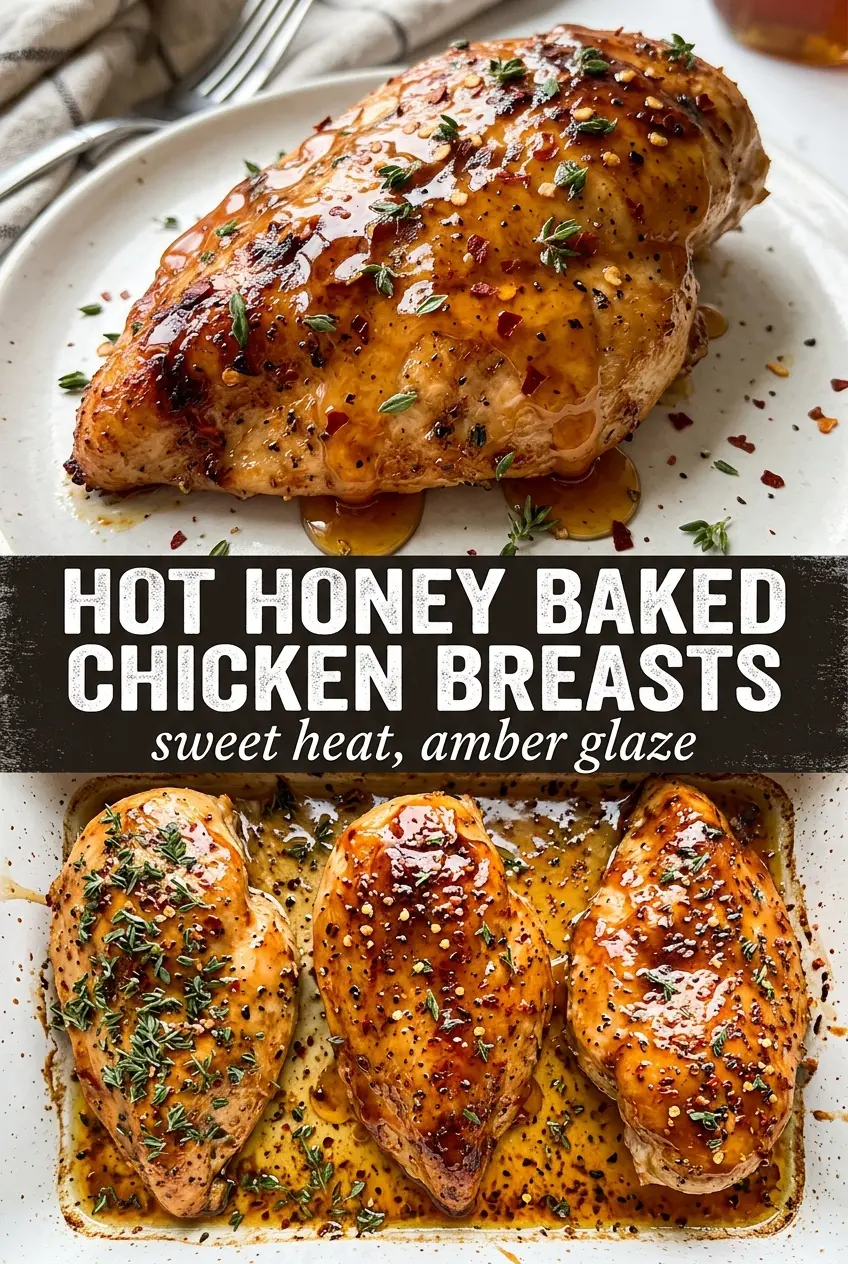
Hot Honey Baked Chicken Breasts
Ingredients
Equipment
Method
- Preheat the oven to 425°F and lightly oil a baking dish or cast iron skillet.
- Season the chicken breasts on both sides with salt, pepper, garlic powder, and smoked paprika.
- Whisk together the honey, hot sauce, melted butter, apple cider vinegar, red pepper flakes, and garlic powder until smooth.
- Place the chicken in the prepared dish and brush generously with the hot honey glaze, reserving some glaze for basting.
- Bake for 20-22 minutes, basting once at the halfway point with the reserved glaze.
- Bake until the internal temperature reaches 165°F and the glaze is caramelized to a dark amber and glistening.
- Rest the chicken for 5 minutes.
- Finish with flaky sea salt, fresh thyme, and an extra drizzle of hot honey.