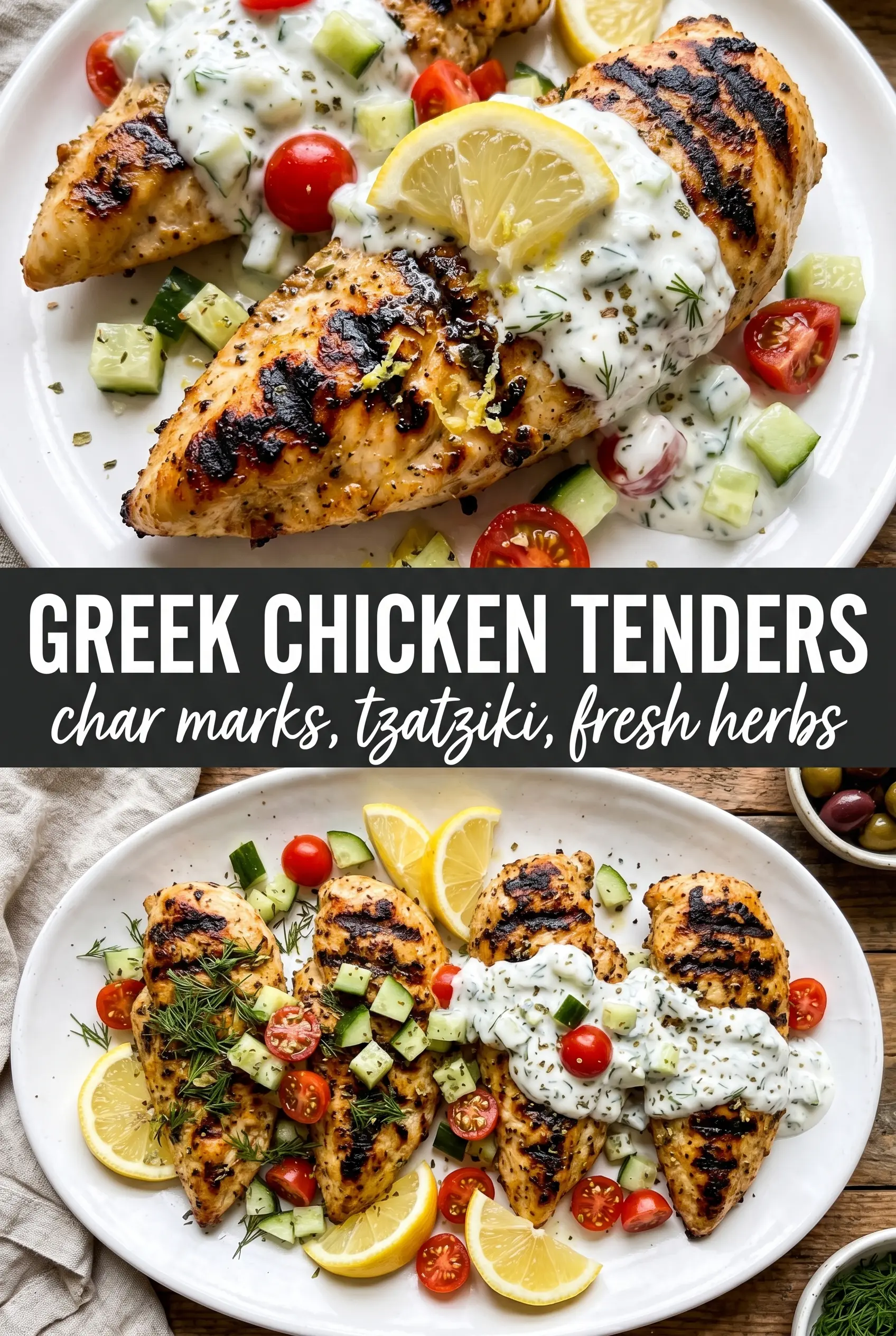
Golden-seared Greek chicken tenders hit that sweet spot between fast and satisfying: crisped edges, juicy centers, and a lemon-oregano crust that tastes bright without turning sharp or bitter. They cook in minutes, but the short marinade gives them enough time to pick up real flavor instead of just sitting on the surface.
The trick here is balance. Lemon juice gives you lift, lemon zest carries the aroma, and olive oil keeps the garlic and dried oregano from tasting harsh once the chicken hits the hot pan. A little smoked paprika and cumin round out the edges without pushing the dish away from the clean, herby Greek profile.
Below, I’ll show you how to keep the chicken tender instead of rubbery, how to get that deep golden sear without burning the garlic, and how to serve it so the tzatziki and toppings taste like part of the dish, not just garnish.
The marinade gave the chicken a bright lemony flavor, and the tenders stayed juicy even after 4 minutes per side. I served them with tzatziki and pita, and there wasn’t a piece left.
Love these lemon-oregano Greek chicken tenders? Save them for the night you want a fast skillet dinner with tzatziki and fresh herbs.
The marinade works because it’s short, not slow
With chicken tenders, a long soak can work against you. Lemon juice is acidic enough to start tightening the surface if it sits too long, which is how you end up with chicken that tastes bright but eats a little tough. Twenty minutes is the sweet spot here: enough time for the garlic, oregano, and citrus to season the meat without changing the texture.
The other reason this method works is that the chicken goes into a hot pan after it rests. That means the surface can sear instead of steaming. If the pan isn’t hot enough, the marinade will leak out, pool, and turn the chicken pale, so wait until the oil shimmers before the first piece goes in.
What the lemon, oregano, and tzatziki each bring to the plate

- Chicken tenders — These cook quickly and stay tender if you stop at 165°F. If you swap in chicken breast, slice it into even strips so everything finishes at the same time.
- Fresh lemon juice and zest — Juice gives the marinade its brightness, but the zest carries the real lemon aroma. If you skip the zest, the chicken tastes flatter even when the seasoning is right.
- Olive oil — This carries the spices and helps the surface brown instead of drying out. A good everyday olive oil is fine here; save the fancy finishing oil for the plate.
- Dried oregano, smoked paprika, and cumin — Oregano gives the Greek backbone, paprika adds color, and cumin adds a warm note that keeps the marinade from tasting one-dimensional. If you only have regular paprika, use it, but the chicken will lose a little depth.
- Tzatziki, feta, olives, cucumber, and dill — These aren’t just garnish. They cool the lemon and garlic, add salt, and make the whole plate taste complete, especially if you’re serving pita on the side.
Getting the sear right before the garlic has a chance to burn
Whisk the marinade until it looks emulsified
Mix the olive oil, lemon juice, zest, garlic, oregano, paprika, cumin, salt, and pepper until the oil and citrus look loosely blended instead of separated. That helps the spices cling to the chicken instead of sliding off in the bowl. If the garlic is chopped too finely, it can scorch later, so mince it small but not into a paste.
Let the chicken rest just long enough
Toss the tenders well so every piece is coated, then let them sit for 20 minutes. Longer isn’t better here because the lemon starts changing the texture before the chicken has enough time to gain anything from it. If the bowl is sitting in a warm kitchen, don’t push the rest time much past that mark.
Sear in a hot pan without crowding it
Heat the skillet or grill pan over medium-high until the oil shimmers, then lay the chicken in with space between each piece. You want an immediate sizzle. If the pan is crowded, the tenders release moisture and steam instead of browning, and the marinade can turn patchy and dull.
Stop at 165°F and pull them early if needed
Cook for 3 to 4 minutes per side, depending on thickness, until the outside is deeply golden and the center reaches 165°F. The chicken keeps cooking for a minute after it comes off the heat, so taking it off at the right temperature matters. If the garlic on the surface starts getting too dark before the chicken is done, lower the heat a little for the second side.
How to adapt these Greek chicken tenders without losing the point of the dish
Make it dairy-free with a simple swap
The chicken itself is already dairy-free, so the only change is the finish. Use a dairy-free tzatziki or serve it with cucumber salad, lemon potatoes, or hummus instead of feta-heavy toppings. You’ll keep the Greek feel without losing the bright, cool contrast on the plate.
Turn it into a gluten-free dinner
The chicken and marinade are naturally gluten-free, so this one is easy. Just serve it with gluten-free pita or over rice, chopped salad, or roasted potatoes. Watch packaged tzatziki if you’re buying it instead of making it, since some brands use thickeners or additives you may want to avoid.
Use chicken breast when that’s what you have
Slice chicken breasts into even strips so they cook like tenders instead of thick, uneven pieces. Keep the marinade time the same, but watch the pan closely because breast meat dries out faster if you chase color too long. Pull it as soon as it reaches 165°F and the juices run clear.
Storage and Reheating
- Refrigerator: Store the cooked chicken in an airtight container for up to 4 days. The flavor holds well, though the exterior softens a bit once chilled.
- Freezer: Freeze the cooked tenders for up to 2 months. Wrap them tightly and thaw in the refrigerator so they reheat evenly instead of drying out at the edges.
- Reheating: Warm in a covered skillet over low heat with a splash of water or broth, or use a 300°F oven until just heated through. High heat dries out tenders fast, so don’t blast them in the microwave unless you’re in a hurry.
Answers to the questions worth asking
Greek Chicken Tenders
Ingredients
Equipment
Method
- Whisk together olive oil, lemon juice, lemon zest, garlic, oregano, smoked paprika, cumin, salt, and pepper until combined, with the herbs evenly distributed.
- Toss chicken tenders in the marinade until coated, then let rest for 20 minutes to marinate (room temperature or refrigerate).
- Heat a large skillet over medium-high heat and add a drizzle of olive oil until it shimmers.
- Cook the marinated chicken tenders for 3-4 minutes per side, flipping once, until golden and the internal temperature reaches 165°F.
- Spread tzatziki on a serving platter and arrange chicken tenders over the top.
- Scatter crumbled feta, Kalamata olives, cucumber slices, and fresh dill around the chicken for garnish and color.
- Serve with warm pita and lemon wedges for squeezing over the tenders.