Smothered chicken and rice lands on the table with the kind of old-school comfort that doesn’t need dressing up. The chicken turns fork-tender, the gravy goes dark and savory with sweet onions, and the rice underneath soaks up every bit of that broth until the whole skillet tastes like it simmered all afternoon. It’s the sort of dinner that feels generous without asking for much more than one good pan and a little patience.
What makes this version work is the order. The chicken gets a real sear first, which gives the gravy its backbone, and the onions cook in those browned drippings instead of starting from scratch. The rice goes in uncooked, so it absorbs the broth, cream, and chicken juices while it cooks instead of turning into a separate side dish that sits underneath the main event.
Below, I’ll show you how to keep the gravy smooth, how to avoid gummy rice, and the small timing cues that matter most when the lid goes on.
The gravy turned out silky and the rice cooked through without getting mushy. I followed the browning step exactly, and those pan drippings made all the difference.
Save this smothered chicken and rice for the night you want tender chicken, caramelized onions, and creamy rice all in one skillet.
The Reason the Rice Stays Tender Instead of Turning Sticky
The most common failure in smothered chicken and rice is treating the rice like a separate side and giving it too much liquid or too much heat. Here, the rice cooks right in the gravy, which means the broth has to be flavorful enough to carry the dish and the heat has to stay low enough to let the grains swell without breaking down. If the pot boils hard under the lid, the rice on the bottom turns soft before the chicken is fully done.
The other thing that matters is the chicken going back in skin-side up. That keeps the skin from steaming into rubber and lets some of the fat render into the rice below. You’re building layers: browned chicken, sweet onions, a roux-like base, then rice that catches all of it.
What the Onion, Broth, and Cream Are Each Doing Here

- Bone-in, skin-on chicken thighs — These hold up to the long simmer and give you the richest pan drippings. Boneless thighs will work, but they cook faster and won’t perfume the rice the same way.
- Onion — This is where the gravy gets its sweetness and depth. Slice it thin so it softens and browns evenly instead of clumping into big chewy pieces.
- Flour — It thickens the pan sauce just enough to coat the rice and cling to the chicken. Cook it with the onions for a full minute so it doesn’t taste raw.
- Chicken broth — Use a broth you’d drink on its own. Thin broth still works, but bland broth gives you a flat gravy no amount of seasoning can fully fix.
- Heavy cream — This softens the edges of the gravy and gives it that smooth, smothered finish. Half-and-half can work in a pinch, but the sauce will be a little lighter and less plush.
- Long-grain white rice — Long-grain rice stays fluffy and separate enough to absorb the gravy without collapsing. Don’t swap in quick-cooking rice here unless you want a much softer texture and a shorter simmer.
Building the Skillet So the Gravy and Rice Finish Together
Seasoning and Searing the Chicken
Pat the chicken dry before seasoning it. That skin needs to hit the oil dry if you want a deep golden crust instead of pale, flabby skin. Sear skin-side down first and leave it alone until it releases easily from the pan; if it sticks, it’s not ready yet. The goal is color and rendered fat, not cooking the thighs through at this stage.
Cooking the Onions Into the Drippings
Once the chicken comes out, the onion goes into the same pot. Those browned bits on the bottom are the base of the gravy, so don’t wash them away. Cook the onions until they turn soft and take on a deep golden color around the edges; if they rush straight to the garlic, the gravy loses a lot of its backbone. Add the garlic only at the end so it perfumes the pan instead of burning bitter.
Thickening the Gravy Before the Rice Goes In
Sprinkle the flour over the onions and stir it in until it disappears into the fat and juices. Then add the broth gradually while scraping the bottom of the pot, because that’s where the flavor is hiding. Once the cream and Worcestershire go in, the sauce should look loose and glossy, not pasty. If it turns lumpy, the liquid was added too fast or the flour didn’t get stirred through the onions long enough.
Letting the Rice Finish Under the Lid
Stir in the uncooked rice, then nestle the chicken back in skin-side up. Bring the pot to a gentle simmer before covering it tightly, then drop the heat low and let it cook undisturbed. The rice should be tender and the liquid mostly absorbed by the end, with the chicken registering 165°F. If you lift the lid too often, steam escapes and the rice cooks unevenly.
Three Ways to Shift This Toward What You’ve Got on Hand
Make It Dairy-Free Without Losing the Smothered Feel
Swap the heavy cream for unsweetened canned coconut milk or an equal amount of unsweetened oat cream. Coconut milk brings more body than plain broth, though it adds a faint sweetness; oat cream keeps the flavor closer to the original. Either way, keep the heat low once it’s added so the sauce stays smooth.
Use Chicken Breasts, But Change the Timing
Chicken breasts can work, but they need less time than thighs and dry out faster. Sear them just until golden, then check them early while the rice cooks. The rice can stay on the same timeline, but the chicken may need to come out sooner and rest on top so it doesn’t overcook.
Turn It Into a Gluten-Free Pan Dinner
Replace the all-purpose flour with a gluten-free flour blend that’s meant for thickening. The texture of the gravy stays close, though some blends thicken a little faster, so add the broth slowly and watch the consistency as it simmers. Avoid swapping in cornstarch at the start, since it doesn’t handle long simmering the same way.
Storage and Reheating
- Refrigerator: Store in an airtight container for up to 4 days. The rice will absorb more sauce as it sits, so it gets thicker by day two.
- Freezer: It freezes well, though the rice softens a bit after thawing. Freeze in portions for up to 2 months and thaw overnight in the fridge.
- Reheating: Warm gently on the stove or in the microwave with a splash of broth to loosen the gravy. High heat dries out the chicken and makes the rice tight before the center is heated through.
Questions I Get Asked About This Recipe
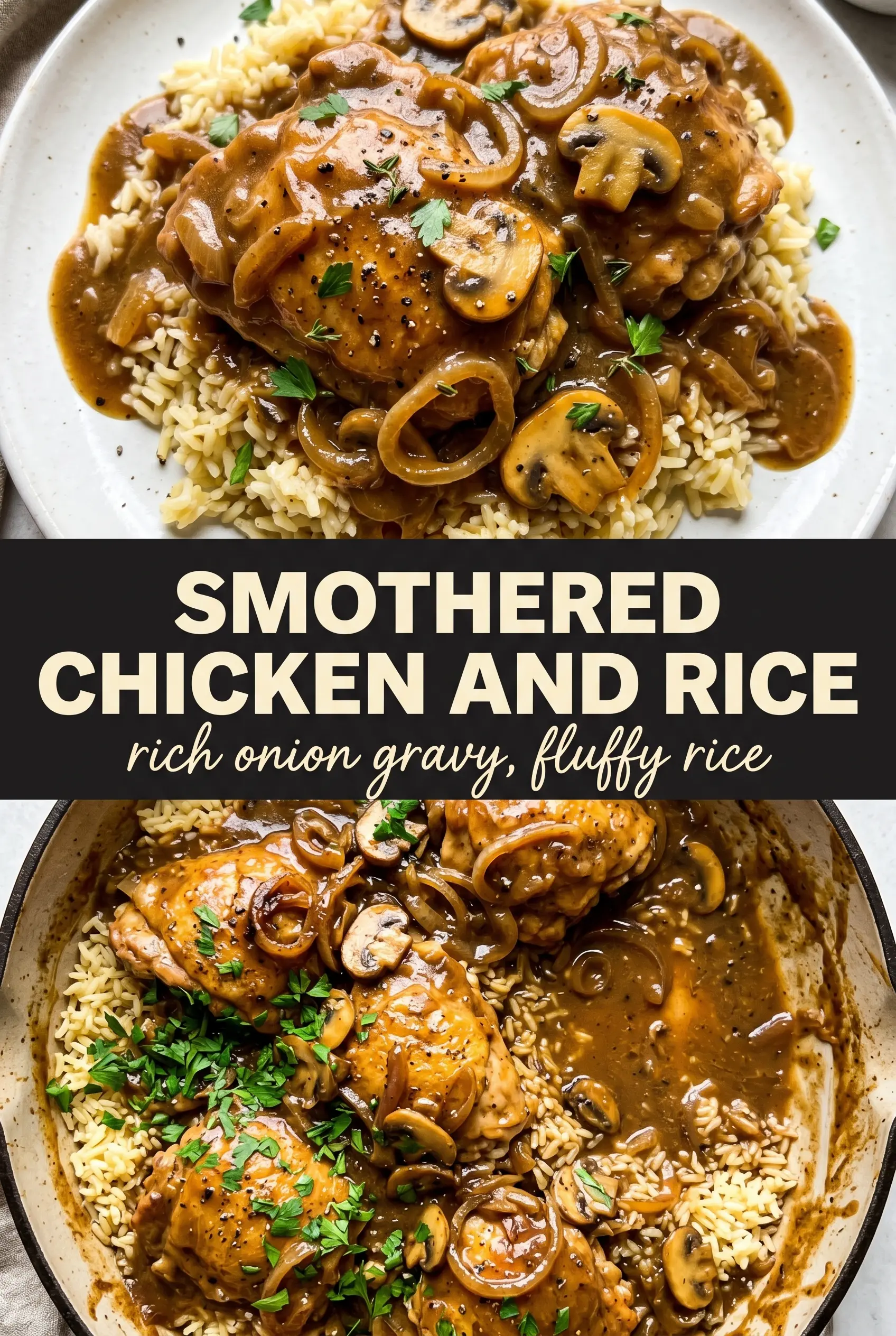
Smothered Chicken and Rice
Ingredients
Equipment
Method
- Season the chicken thighs with garlic powder, onion powder, smoked paprika, salt, and pepper. Sear skin-side down in the vegetable oil in a large Dutch oven over medium-high heat for 6-7 minutes until golden, then flip and sear for 4 minutes; remove to a plate.
- Cook the sliced onion in the same pot over medium heat for 8-10 minutes until caramelized. Add the minced garlic and cook for 1 minute.
- Sprinkle the flour over the onions and stir for 1 minute to cook off the raw taste. Gradually add the chicken broth while scraping up browned bits, then stir in the heavy cream and Worcestershire sauce until smooth.
- Stir in the uncooked long-grain white rice, then nestle the chicken skin-side up into the broth. Bring the mixture to a simmer, then cover tightly and cook over low heat for 20-22 minutes until the rice is tender and the chicken reaches 165°F.
- Garnish with fresh parsley and serve. Let it stand 2 minutes so the rice settles and the gravy clings to the chicken.