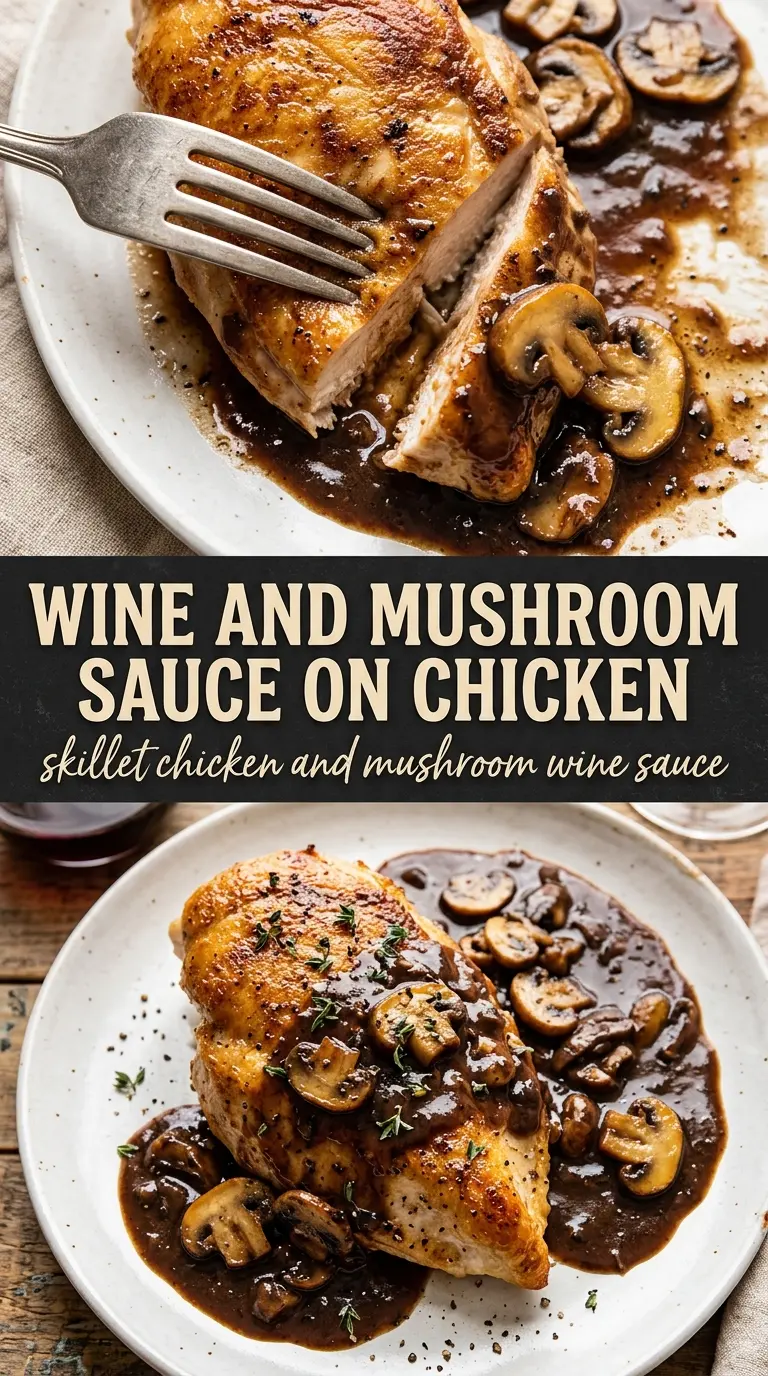
Golden seared chicken breasts in a dark, silky mushroom wine sauce earn their place in the dinner rotation fast. The chicken stays juicy, the mushrooms turn deeply savory, and the sauce finishes glossy enough to coat the back of a spoon without feeling heavy. It tastes like something you’d order at a bistro, but it comes together in one skillet with ingredients that make sense on a weeknight.
The trick is building flavor in layers instead of rushing the pan. The chicken gets a hard sear first, which leaves browned bits behind, and those bits are what give the sauce its depth. The mushrooms need enough time to release their moisture and then brown properly before the wine goes in. If they go in and out too quickly, the sauce ends up thin and flat instead of rich and rounded.
Below, I’ll show you how to keep the sauce smooth, what kind of wine gives the best result, and which swaps still keep the dish balanced if you need to make it your own.
The sauce reduced beautifully and turned out glossy instead of watery, and the mushrooms got those deep browned edges that made the whole skillet taste restaurant-quality.
Love the glossy mushroom wine sauce and golden chicken? Save this skillet dinner for the night you want something elegant without extra dishes.
The Part That Keeps the Sauce From Tasting Flat
The biggest mistake in chicken with wine sauce is treating the sauce like a quick pour-and-simmer situation. If the pan isn’t properly browned before the liquid goes in, the wine just tastes sharp instead of rounded. Here, the seared chicken and deeply browned mushrooms do the heavy lifting, and the wine pulls all of that flavor back into the sauce.
Another place people rush is the mushrooms. They need space and heat so they can drop their moisture, then brown in the fat left behind. If the pan looks crowded or wet, keep cooking until the skillet dries out and the mushrooms start taking on color. That’s when the sauce starts tasting like something built, not assembled.
- Chicken breasts — Boneless, skinless breasts cook quickly and let the sauce stay front and center. Pound thicker ends lightly if one side is much thicker; that keeps the pan from overcooking the thinner edge before the center is done.
- Cremini mushrooms — These have more flavor than white button mushrooms and hold up well in the sauce. Slice them evenly so they brown at the same rate instead of steaming in uneven pieces.
- Dry red wine — A dry red gives the sauce depth and a slightly richer finish. If you use white wine, choose something dry and crisp, not sweet, or the sauce can taste thin and sugary.
- Dijon mustard — This doesn’t make the sauce taste mustardy; it sharpens the cream and keeps the finish from feeling heavy. It’s one of those small additions that makes the sauce taste deliberate.
What Each Ingredient Is Actually Doing in This Recipe
- Primary ingredient (the star) — Quality matters most. Choose the best you can find.
- Cooking medium (oil, butter, or broth) — This carries flavors and prevents dryness.
- Seasonings (salt, pepper, spices, herbs) — Layer flavors so nothing overpowers. Build depth gradually.
- Aromatics (garlic, onion, herbs) — Cook with fat to bloom flavors. Become the foundation.
- Supporting ingredients — Complement the main ingredient without overpowering it.
- Sauce or liquid (if applicable) — Brings flavors together. Balance richness with acid.
- Acid (lemon, vinegar, wine, or other) — Brightens and prevents flat-tasting results.
- Final finish (garnish, glaze, or sauce) — Prevents one-dimensional taste and adds visual appeal.
Building the Sauce in the Right Order
Seasoning and Searing the Chicken
Season the chicken generously before it ever touches the pan. You want a confident, even layer of salt, pepper, garlic powder, and thyme so the meat tastes seasoned all the way through, not just on the surface. Sear over medium-high heat until the outside is deep golden and the chicken releases without sticking. If it resists when you try to turn it, it needs another minute; forcing it early tears the crust and leaves those browned bits behind on the wrong side of the skillet.
Cooking the Mushrooms Until They Brown
Add the butter and mushrooms to the same skillet and let them sit long enough to start browning before stirring constantly. At first they’ll look crowded and a little damp, then they’ll shrink, sizzle, and finally develop those darker edges that tell you the flavor is concentrated. If the mushrooms stay pale, the sauce will never get the depth it needs. Give them time and let the moisture cook off before adding garlic.
Deglazing With Wine
Pour in the wine and scrape the bottom of the skillet right away so none of the browned bits stay stuck. The liquid should bubble and lift the fond from the pan, then simmer down until the harsh alcohol smell softens. That short reduction matters. If you move too fast here, the sauce can taste sharp instead of polished.
Finishing the Cream Sauce
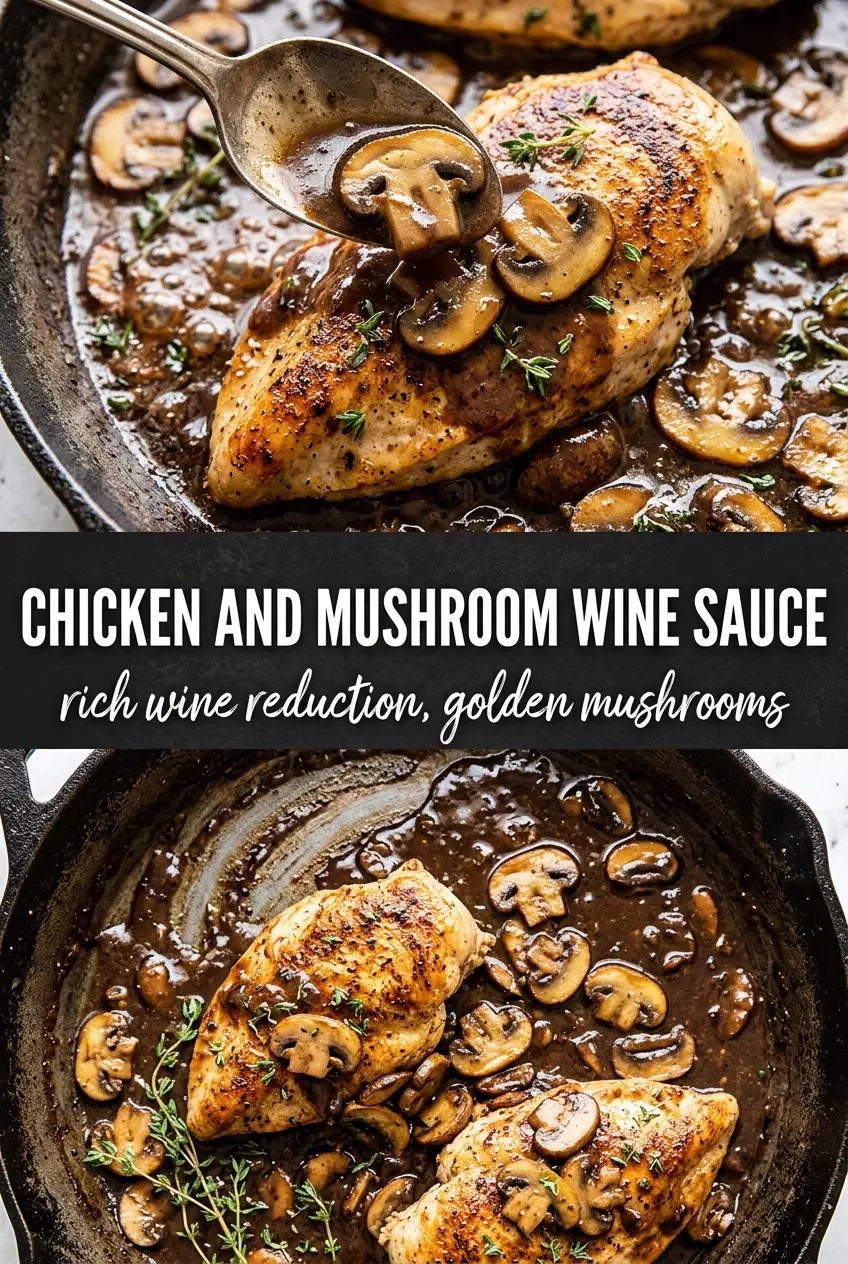
Add the broth, cream, Dijon, and thyme, then let the sauce simmer until it thickens enough to lightly coat a spoon. Keep the heat at a steady simmer, not a hard boil, or the cream can split and the sauce loses its smooth finish. When the chicken goes back in, spoon sauce over the top and let it warm through for a minute or two so the center stays juicy without overcooking.
Ways to Adjust It Without Losing the Good Part
Use white wine for a lighter finish
White wine makes the sauce brighter and a little cleaner tasting. Pick a dry one like Sauvignon Blanc or Pinot Grigio, and keep the reduction step the same so the sauce still tastes balanced instead of thin.
Make it dairy-free with a few careful swaps
Use olive oil instead of butter and swap the heavy cream for full-fat coconut cream or an unsweetened dairy-free cooking cream. The sauce will be a little less classic and more rounded, but it still coats the chicken well if you keep the simmer gentle.
Turn it into a mushroom-forward vegetarian skillet
Swap the chicken for thick slices of cauliflower steak or pan-seared tofu and use vegetable broth instead of chicken broth. You’ll lose some of the meaty richness from the original, so let the mushrooms brown deeply and don’t skip the Dijon.
Storage and Reheating
- Refrigerator: Store leftovers in an airtight container for up to 3 days. The sauce thickens as it chills, which is normal.
- Freezer: Freeze only if you need to, but the cream sauce can separate a bit when thawed. If you do freeze it, cool it completely first and thaw overnight in the refrigerator.
- Reheating: Reheat gently on the stove over low heat with a splash of broth or water. High heat is the main mistake here; it tightens the chicken and can cause the cream sauce to break.
Answers to the Questions Worth Asking
Skillet Chicken and Mushroom Wine Sauce
Ingredients
Equipment
Method
- Season the chicken generously with salt, pepper, garlic powder, and dried thyme. Heat olive oil in a large skillet over medium-high until hot, then sear chicken for 5-6 minutes per side until golden and cooked through to 165°F, then remove.
- Melt butter in the same pan over medium-high heat, then cook sliced cremini mushrooms for 5-6 minutes until deeply golden. Add minced garlic and cook for 1 minute until fragrant.
- Pour in the dry red wine and deglaze, scraping up all browned bits from the pan. Simmer for 3 minutes to reduce slightly.
- Add chicken broth, heavy cream, Dijon mustard, and fresh thyme leaves. Simmer for 5-6 minutes, stirring occasionally, until the sauce thickens to a dark and glossy consistency with herb flecks.
- Return the chicken to the pan and spoon the mushroom wine sauce over each breast. Keep warm in the pan briefly to coat the chicken evenly, then garnish with fresh thyme sprigs and serve.