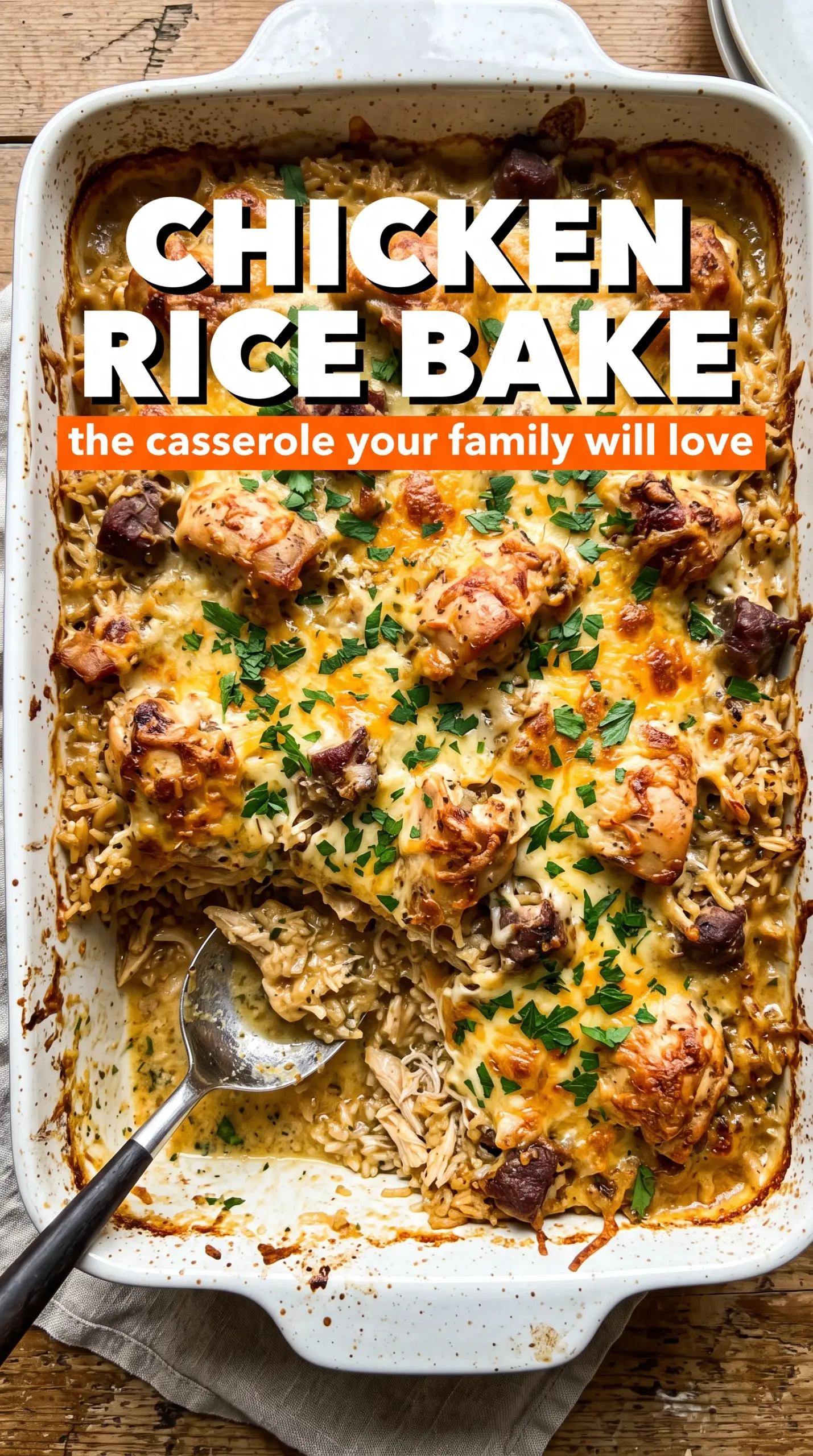
Golden chicken over savory rice is the kind of bake that disappears fast because it gives you both the main dish and the starch in one pan, with the rice catching every bit of seasoning and drippings as it cooks. The chicken stays juicy under that foil cover, then the last stretch in the oven turns the skin bronzed and the top of the rice into something almost casserole-like at the edges.
What makes this version work is the layering. The uncooked rice goes in with the soups and liquid from the start, so it absorbs flavor as it softens instead of sitting under bland steam. The onion soup mix gets split between the rice and the chicken, which keeps the whole dish seasoned all the way through without making the top too salty. Bone-in chicken is the right choice here because the skin and bones carry more flavor into the rice than boneless cuts ever will.
Below, you’ll find the one step that keeps the rice from turning gummy, the ingredient swaps that still give you a rich bake, and the storage notes for leftovers that reheat without drying out.
The rice came out tender, not mushy, and the chicken skin on top was actually browned after I took the foil off. My husband kept going back for the rice because it had all those pan juices baked right in.
Save this Pioneer Woman Chicken Rice Bake for a one-pan dinner with tender chicken and deeply savory rice.
The Trick That Keeps the Rice Tender Under a Layer of Chicken
The biggest mistake in chicken-and-rice bakes is treating the rice like a side dish instead of part of the cooking structure. Here, the rice needs enough liquid to finish on its own, but not so much that it turns soupy once the chicken starts releasing juices. The foil cover does the heavy lifting early by trapping steam, then the uncovered finish lets excess moisture cook off and the top brown instead of staying pale and wet.
If your rice ever comes out crunchy in the middle, it usually means the dish was uncovered too soon or the pan was too shallow for the amount of liquid. A tight foil seal matters more than people think. You want that first hour to behave almost like a gentle braise so the rice can soften before the top dries out.
What Each Soup Mix Is Actually Doing in the Pan
- Cream of mushroom soup — This brings the deepest savory note and helps the rice taste rich instead of one-dimensional. If you want the best result, use a standard condensed soup, not a low-sodium version that tastes thin unless you’re willing to add more seasoning.
- Cream of chicken soup — This gives the dish a rounder chicken flavor and helps the sauce stay smooth as it bakes. It’s the soup that makes the casserole taste like it cooked all day, even though the prep is quick.
- Cream of celery soup — This adds a little background sweetness and celery flavor that keeps the dish from tasting heavy. If you don’t have it, cream of broccoli works in a pinch, but the flavor shifts greener and a little sharper.
- Long-grain white rice — Long-grain rice holds its shape best in this bake. Short-grain rice turns softer and stickier, which can be too heavy once the soups reduce in the oven.
- Bone-in chicken pieces — This is the ingredient you don’t want to swap casually. Boneless chicken cooks faster, but you lose the drippings and the skin-on browning that flavor the rice underneath.
Building the Dish So the Bottom Rice Doesn’t Stay Watery
Mixing the Base First
Stir the soups, rice, and liquid together in the baking dish before the chicken goes in. That gives the rice a chance to distribute evenly instead of clumping under the chicken pieces, and it keeps the broth from pooling in one corner. The mixture should look loose and creamy at this stage, not dry and pasty.
Seasoning the Chicken Properly
Season the chicken generously before it touches the rice. The skin needs salt and paprika to brown well, and the seasoning on the outside is what gives the top layer its flavor once the foil comes off. If the chicken looks pale and underseasoned before baking, it will taste flat after 90 minutes in the oven.
The Covered Bake and the Uncovered Finish
Bake covered first so the rice can absorb liquid and the chicken can cook through without drying out. When the foil comes off, the surface should look hydrated but no longer soupy, and the chicken skin will begin to crisp as the remaining moisture evaporates. If the rice still looks wet at the end, leave it uncovered a few extra minutes instead of serving it too soon.
How to Adapt This Bake for Different Pans, Diets, and Leftovers
Make It Dairy-Free Without Losing the Creamy Texture
Use dairy-free condensed soups if you can find them, or build the base with a dairy-free cream-style soup substitute. The dish still works because the real job of the soups here is body and seasoning, not just dairy richness.
Use Chicken Thighs for Extra Juiciness
Bone-in thighs are a great swap if you want darker meat and a little more forgiveness in the oven. They release plenty of flavor into the rice and stay moist even if the bake goes a few minutes long.
Make It Gluten-Free With the Right Soup Labels
This can work gluten-free if you use certified gluten-free condensed soups and onion soup mix. Don’t assume the standard pantry version is safe, because the thickener and seasoning packets often hide wheat.
Storage and Reheating
- Refrigerator: Store leftovers in an airtight container for 3 to 4 days. The rice will thicken as it sits, so expect it to be a little firmer the next day.
- Freezer: It freezes fairly well, especially if you portion it into smaller containers. The rice softens a bit after thawing, but the flavor holds up.
- Reheating: Reheat covered in the oven at 325°F with a splash of broth or water to loosen the rice. The common mistake is microwaving it until the chicken turns rubbery and the rice dries out before the center is hot.
Answers to the Questions Worth Asking
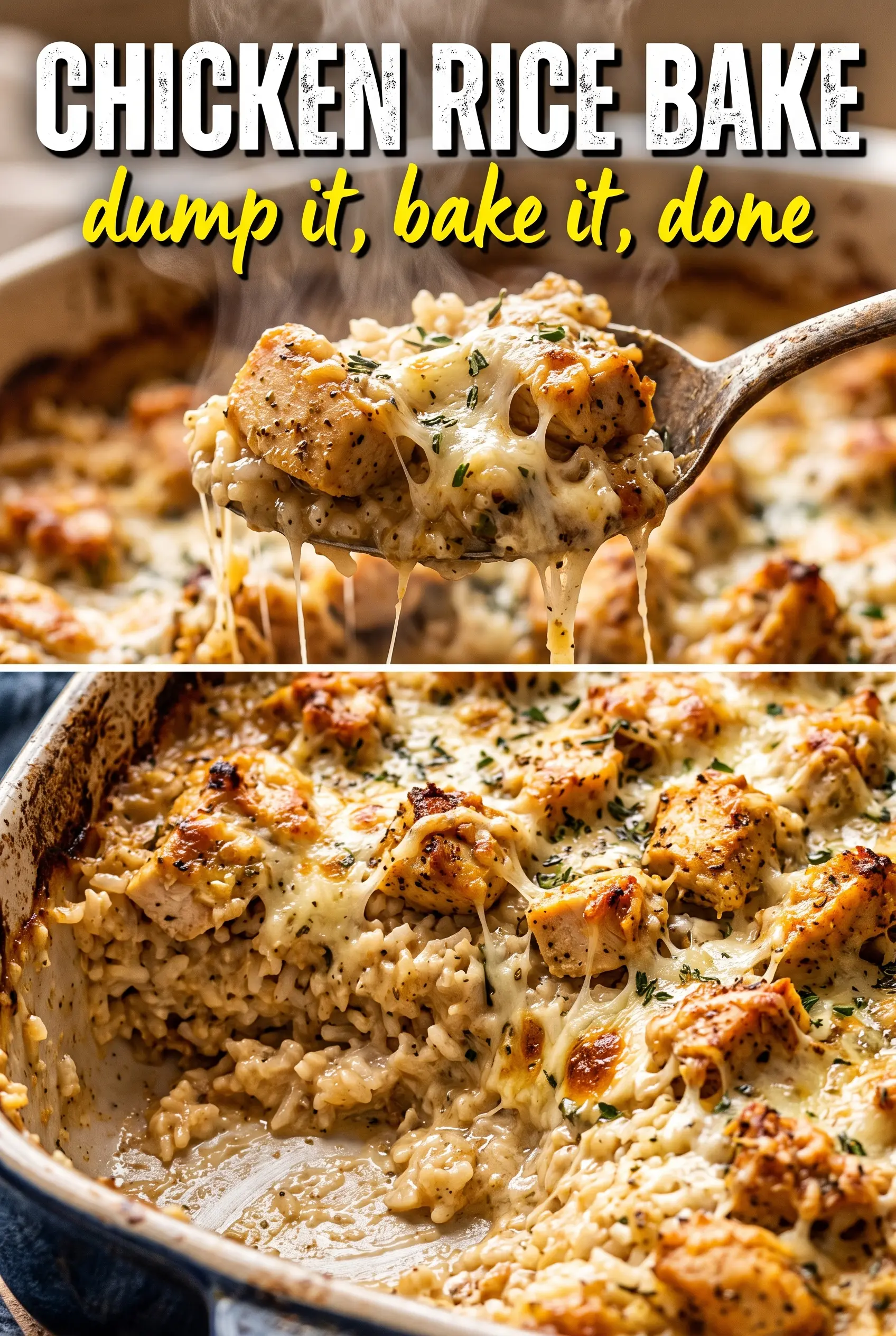
Pioneer Woman Chicken Rice Bake
Ingredients
Equipment
Method
- Preheat the oven to 350°F and grease a large 9x13 baking dish.
- Whisk together cream of mushroom soup, cream of chicken soup, cream of celery soup, long-grain white rice, and water or chicken broth in the prepared dish until combined.
- Sprinkle half of the onion soup mix into the rice and stir.
- Season the chicken pieces generously with salt, pepper, garlic powder, and paprika.
- Nestle the chicken pieces skin-side up into the rice so they sit partially embedded.
- Sprinkle the remaining onion soup mix over the chicken.
- Cover tightly with foil and bake at 350°F for 1 hour, keeping the rice covered to absorb the pan juices.
- Remove the foil and bake at 350°F for 25-30 minutes until the chicken is golden and the rice has absorbed all liquid, with the surface looking set and dry.