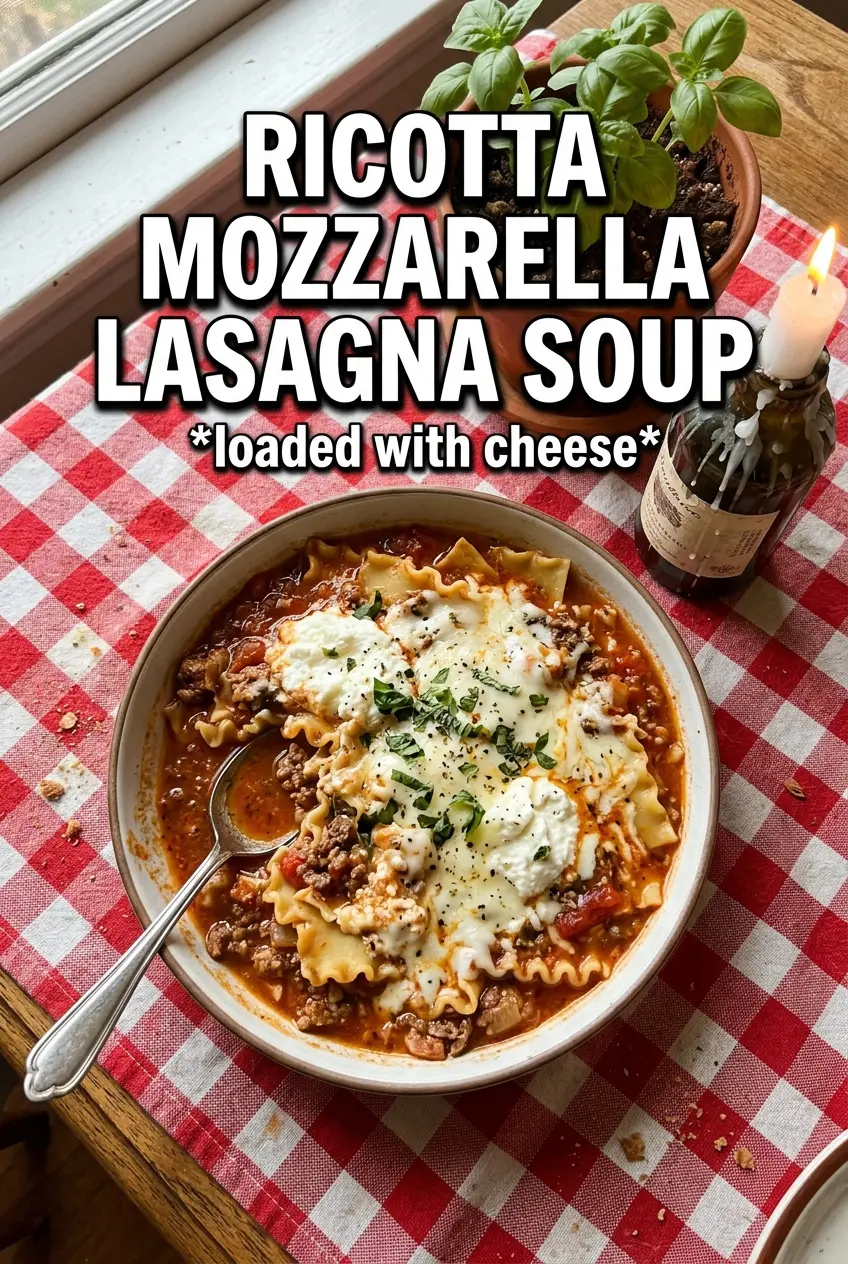
Lasagna soup gives you everything people love about a bubbling pan of lasagna, but in a bowl that comes together on a weeknight. The broth is deep and tomatoey, the sausage brings enough richness to stand up to the pasta, and the ricotta-mozzarella topping melts into creamy pockets that turn each spoonful into something bigger than soup.
What makes this version work is the order. Browning the sausage first gives the pot a savory base, and cooking the tomato paste with the onion and garlic takes the edge off the tomatoes before the broth goes in. Broken lasagna noodles cook right in the soup, so they pick up flavor instead of tasting separate and plain. The cheese mixture is intentionally thick and generous, so it softens into the hot broth instead of disappearing.
Below, you’ll find the small details that keep the noodles from going mushy and the cheese topping from clumping. I also included a few easy swaps and storage notes, since this one reheats well if you handle the pasta the right way.
The noodles held up beautifully and the ricotta-mozzarella topping melted into the broth instead of turning stringy. I added a little extra basil on top and it tasted like lasagna without all the layering.
Save this lasagna soup with ricotta and mozzarella for a rich, cozy bowl with melty cheese and a tomato broth that tastes like simmered all afternoon.
The Trick to Keeping the Noodles From Drinking All the Broth
The biggest mistake with soup that includes pasta is letting it sit too long before serving. Lasagna noodles are thirsty, and once they’re in the pot, they keep absorbing liquid fast. That’s fine if you’re serving right away, but if the soup has to wait, the broth will tighten up and the noodles turn soft in a way that feels heavy instead of comforting.
The fix is simple: simmer only until the noodles are just cooked through, then serve. If you know you’ll have leftovers, pull the pot from the heat a minute early and add a splash of broth when reheating. The soup should look loose in the pot, because the noodles will keep soaking up liquid in the bowl.
- Browned sausage — This is where the flavor starts. Don’t rush the browning, because those little caramelized bits at the bottom deepen the broth.
- Tomato paste — Cooking it for a couple of minutes takes away the raw, tinny edge and gives the soup a fuller tomato base.
- Broken lasagna noodles — Rough pieces are better than neat squares. They create the right bite and keep the soup from feeling too uniform.
What Each Ingredient Is Actually Doing in the Bowl

- Italian sausage — Use mild or hot depending on how much heat you want. The fat from the sausage seasons the whole pot, so if you use lean turkey sausage, the soup will taste lighter and a little less round.
- Crushed and fire-roasted tomatoes — Crushed tomatoes make the broth thick and silky, while fire-roasted tomatoes add a subtle smoky note. If you only have standard diced tomatoes, the soup still works, but the flavor will be brighter and less deep.
- Beef broth — This gives the soup more body than chicken broth. Chicken broth works in a pinch, but beef broth makes the tomato base taste richer and more like a slow-simmered sauce.
- Ricotta, mozzarella, and parmesan — Ricotta brings the creamy base, mozzarella gives that stretchy melt, and parmesan adds salt and sharpness. Whole milk versions hold up best; low-fat ricotta tends to get grainy once it hits the hot soup.
- Fresh basil and nutmeg — Basil wakes up the cheese topping, and a tiny pinch of nutmeg gives the ricotta a warmer, more lasagna-like finish. Don’t overdo the nutmeg; it should support the cheese, not announce itself.
Building the Broth Before the Pasta Goes In
Getting color on the sausage
Cook the sausage over medium-high heat and break it into crumbles as it browns. You want real color, not just gray cooked meat, because that browning is what gives the broth its backbone. Drain off excess fat if the pot looks greasy, but leave a little behind for the onion and garlic to cook in.
Softening the onion and blooming the tomato paste
Let the onion cook until it turns translucent and starts to smell sweet, about 4 minutes. Then stir in the garlic and tomato paste and cook them together for 2 minutes. If the paste still smells sharp or raw, it needs another minute; this step is what keeps the soup from tasting flat.
Simmering the noodles at the right moment
Add the broth, tomatoes, and seasonings, then bring everything to a steady boil before the noodles go in. Once the broken lasagna pieces are added, lower the heat and simmer until they’re tender but still have a little bite at the center. If the pot boils too hard here, the noodles can break down on the edges and muddy the texture.
Finishing with the cheese topping
Mix the ricotta, mozzarella, parmesan, basil, nutmeg, salt, and pepper until it looks thick and evenly combined. Spoon a generous mound onto each bowl of hot soup right before serving. The heat from the broth should soften the cheese without fully dissolving it, so you get that lasagna-like swoop in every bite.
How to Adjust This for the Way You Cook
Make it a little lighter
Use turkey sausage and chicken broth if you want a leaner soup. The flavor will be less deep, so add an extra spoonful of tomato paste and season more aggressively with salt and basil to bring the broth back into focus.
Make it gluten-free
Swap in a sturdy gluten-free pasta shape that can hold up in broth, and cook it just until tender. Gluten-free noodles can go soft fast, so check them early and stop the simmer as soon as they lose that raw center.
Make it vegetarian
Skip the sausage and use a hearty vegetable broth, then add mushrooms or lentils if you want more body. You’ll lose the meaty richness, but a little extra parmesan in the soup and a good pinch of red pepper flakes helps keep it satisfying.
Make the cheese topping ahead
Mix the ricotta topping a few hours in advance and keep it covered in the fridge. Give it a quick stir before serving so the basil and cheese are evenly distributed again.
Storage and Reheating
- Refrigerator: Store for up to 4 days. The noodles will keep absorbing broth, so expect the soup to thicken as it sits.
- Freezer: Freeze the broth and sausage base without the noodles for best results. Pasta turns soft after thawing, so cook fresh noodles when you reheat.
- Reheating: Warm gently on the stove over medium-low heat with a splash of broth or water. If the soup boils hard, the noodles can break apart and the cheese topping won’t melt as cleanly.
Questions I Get Asked About This Recipe
Lasagna Soup With Ricotta And Mozzarella
Ingredients
Equipment
Method
- Brown the Italian sausage in a Dutch oven over medium-high heat, breaking into crumbles, until cooked through; drain the fat.
- Sauté the diced onion for 4 minutes, then add the minced garlic and tomato paste; cook for 2 minutes, stirring until fragrant.
- Add the crushed tomatoes, diced fire-roasted tomatoes, beef broth, Italian seasoning, dried basil, dried oregano, and red pepper flakes; bring the mixture to a boil.
- Add the broken lasagna noodles and simmer for 10-12 minutes, until cooked through and tender.
- Season generously with salt and pepper, tasting the broth and adjusting as needed.
- Mix the whole milk ricotta, shredded whole milk mozzarella, freshly grated parmesan, fresh basil, nutmeg, salt, and pepper together until well combined into a thick, scoopable mixture.
- Ladle the soup into bowls and drop a very large dollop of the cheese mixture into each bowl so it begins to melt into the hot soup.