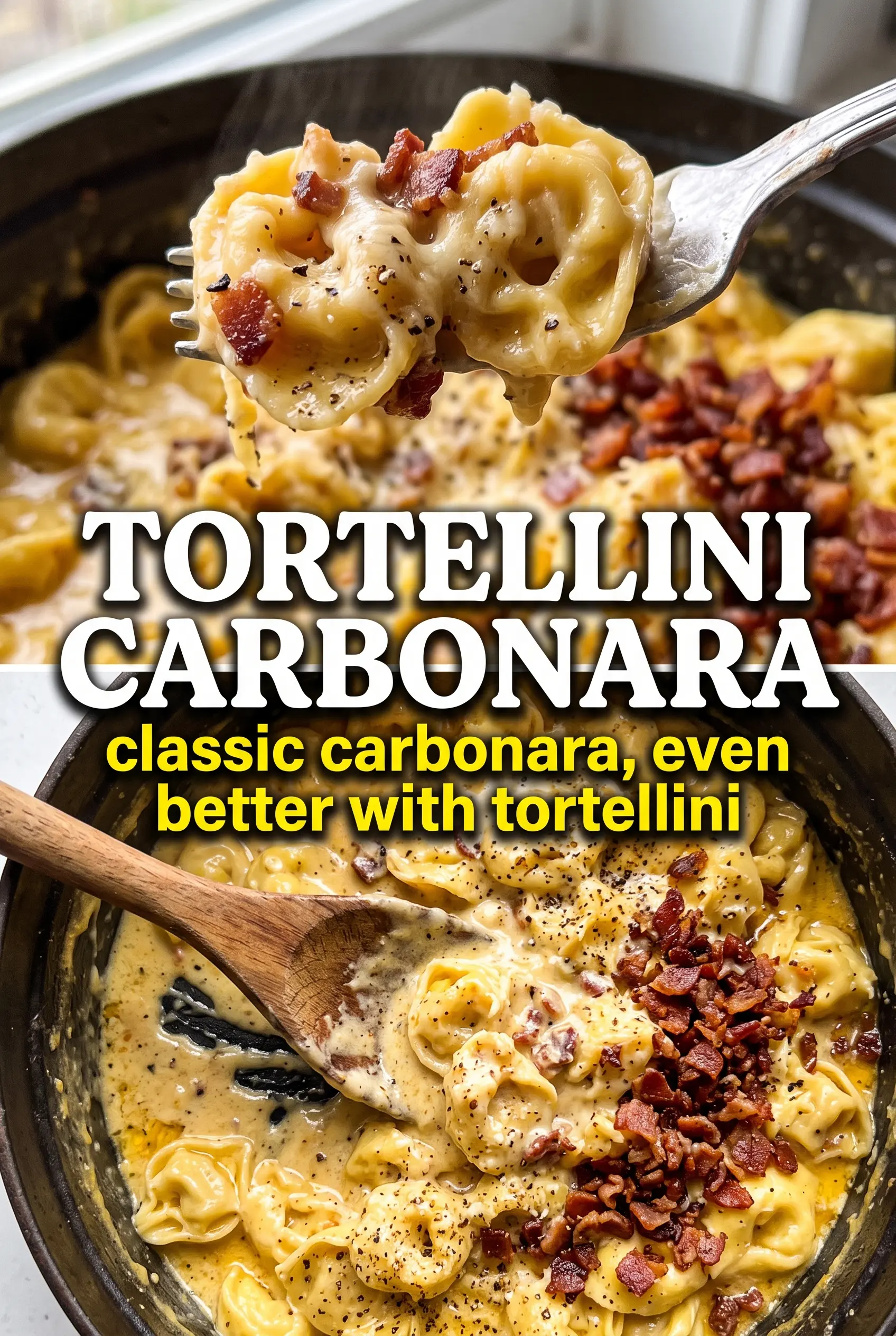
Pillowy cheese tortellini and carbonara sauce are a natural fit, and this version leans into everything that makes the pairing work: salty pancetta, sharp parmesan, and enough black pepper to cut through all that richness. The sauce coats every fold of pasta instead of pooling at the bottom of the bowl, which is exactly what you want from a weeknight carbonara that still feels special.
The trick is treating the eggs like a delicate sauce, not a scramble. Hot tortellini goes into the skillet off the heat, then the egg and cheese mixture gets tossed in fast with a little pasta water until it turns glossy and silky. That gentle approach keeps the sauce creamy and lets the parmesan melt into the eggs instead of seizing up or turning grainy.
Below, I’ll walk through the one timing detail that matters most, plus a few swaps if you only have bacon instead of pancetta or want to make the dish a little lighter. The whole recipe comes together quickly, but the order of operations is what makes it work.
The sauce turned out silky instead of clumpy, and the tortellini held onto it beautifully. I followed the off-heat step exactly and the parmesan melted right in.
Save this tortellini carbonara for the night when you want silky egg sauce, crispy pancetta, and dinner on the table in under 30 minutes.
The Off-Heat Toss That Keeps Tortellini Carbonara Creamy
Carbonara goes wrong fast when the pan is too hot. Eggs cook in a hurry, parmesan turns sandy, and the sauce breaks into little curds instead of clinging to the pasta. With tortellini, that risk is even higher because the pasta pockets hold heat and carry more steam than regular noodles.
The fix is simple: pull the skillet off the burner before the egg mixture goes in, then toss constantly while adding pasta water a splash at a time. The residual heat is enough to thicken the sauce slowly. You’re looking for a glossy coating that drapes over the tortellini, not a heavy cream sauce that sits in the bowl.
- Off-heat cooking — This is the whole dish. The pan should be warm, not scorching, when the eggs hit it.
- Pasta water — The starch helps the sauce emulsify and loosen at the same time. Plain water won’t give you the same cling.
- Freshly grated parmesan — Pre-grated cheese can stay grainy. Finely grated blocks melt into the eggs much more smoothly.
- Lots of black pepper — It cuts the richness and gives the sauce its carbonara backbone.
What the Eggs, Cheese, and Tortellini Each Bring to the Pan

The tortellini does more than replace spaghetti here. Its cheese filling makes the dish feel richer and turns every bite into a little pocket of extra creaminess. Refrigerated tortellini works best because it cooks quickly and stays tender without falling apart in the final toss.
- Pancetta or thick-cut bacon — Pancetta gives a cleaner, saltier finish, while bacon brings a smokier note. Either works, but bacon will push the dish a little more toward breakfast-y richness.
- Eggs plus one yolk — The extra yolk helps make the sauce more velvety and less likely to look thin. Using only whole eggs can still work, but the sauce won’t have quite the same body.
- Parmesan — This is the main flavor base in the sauce, so use the best you can and grate it yourself. The finer the grate, the easier it melts.
- Garlic — It should perfume the fat, not brown. Thirty seconds is enough; if it colors, it can taste harsh in a sauce this delicate.
Getting the Sauce From Glossy to Clinging
Render the Pancetta Until the Fat Is Ready
Cook the pancetta or bacon over medium heat until the pieces are crisp and the fat has rendered out into the skillet. You want enough fat left behind to carry the garlic and coat the tortellini, but not a pool so deep that the final sauce feels greasy. Lift the meat out with a slotted spoon so it stays crisp for the finish.
Wake Up the Garlic Without Browning It
Add the minced garlic to the warm fat and stir for about 30 seconds off heat. The skillet should still have enough warmth to soften the garlic and release its flavor, but not so much that it browns. If it starts to color, it’ll taste bitter and stand out in the finished sauce.
Build the Egg Mixture Before the Pasta Hits the Pan
Whisk the eggs, yolk, parmesan, and a generous amount of black pepper in a bowl until it looks thick and speckled. This mixture should be ready before the tortellini leaves the water. Once the pasta is drained, move fast so the heat from the tortellini does the work instead of sitting around and cooling off.
Finish With Fast Tossing and Small Splashes of Water
Add the hot tortellini to the skillet with the burner off, pour in the egg mixture, and toss constantly. Add pasta water one splash at a time only if the sauce looks tight or dry. If the pan is too hot, the eggs will seize; if it’s too cool, the sauce won’t emulsify. The right texture is silky, shiny, and just thick enough to coat each tortellini.
How to Adapt This Tortellini Carbonara for Different Nights
Use bacon instead of pancetta
Bacon gives you a smokier, slightly sweeter carbonara, while pancetta tastes a little cleaner and more classic. If your bacon renders a lot of fat, spoon some off before adding the garlic so the finished sauce doesn’t turn heavy.
Make it gluten-free
Use a gluten-free refrigerated tortellini that holds its shape in boiling water. The sauce itself is naturally gluten-free, but you still want to reserve a little pasta water for emulsifying the eggs and cheese.
Make it a little lighter
Use a touch less parmesan and lean toward pancetta instead of bacon. You’ll lose a bit of the deep richness, but the sauce still comes across creamy and satisfying because the egg yolk and pasta water do the heavy lifting.
Storage and Reheating
- Refrigerator: Store leftovers for up to 3 days. The sauce will tighten as it chills.
- Freezer: I don’t recommend freezing this one. Egg-based sauces and tortellini both lose their best texture after thawing.
- Reheating: Warm gently in a skillet over low heat with a splash of water or a little milk, stirring often. High heat is the fastest way to turn the sauce grainy.
Answers to the Questions Worth Asking
Tortellini Carbonara
Ingredients
Equipment
Method
- Bring a large pot of salted water to a boil, then cook the cheese tortellini until just al dente (about 2–4 minutes per package directions). Reserve 1 cup pasta water, then drain the tortellini.
- Cook the pancetta or bacon in a large skillet over medium heat until crispy, then remove with a slotted spoon and keep the fat in the pan.
- Add the minced garlic to the reserved fat and cook for 30 seconds off heat, keeping the pan warm but not letting the garlic brown.
- Whisk the eggs, egg yolk, and parmesan together with plenty of cracked black pepper in a bowl until smooth and thick.
- Add the hot tortellini to the skillet off the heat, pour the egg mixture over top, and toss quickly to coat.
- Add the reserved pasta water a splash at a time (about 1–3 tbsp per splash), tossing constantly, until the sauce turns silky and clings to every tortellini.
- Top with the crispy pancetta, extra parmesan, and fresh parsley, then serve immediately with cracked black pepper if desired.