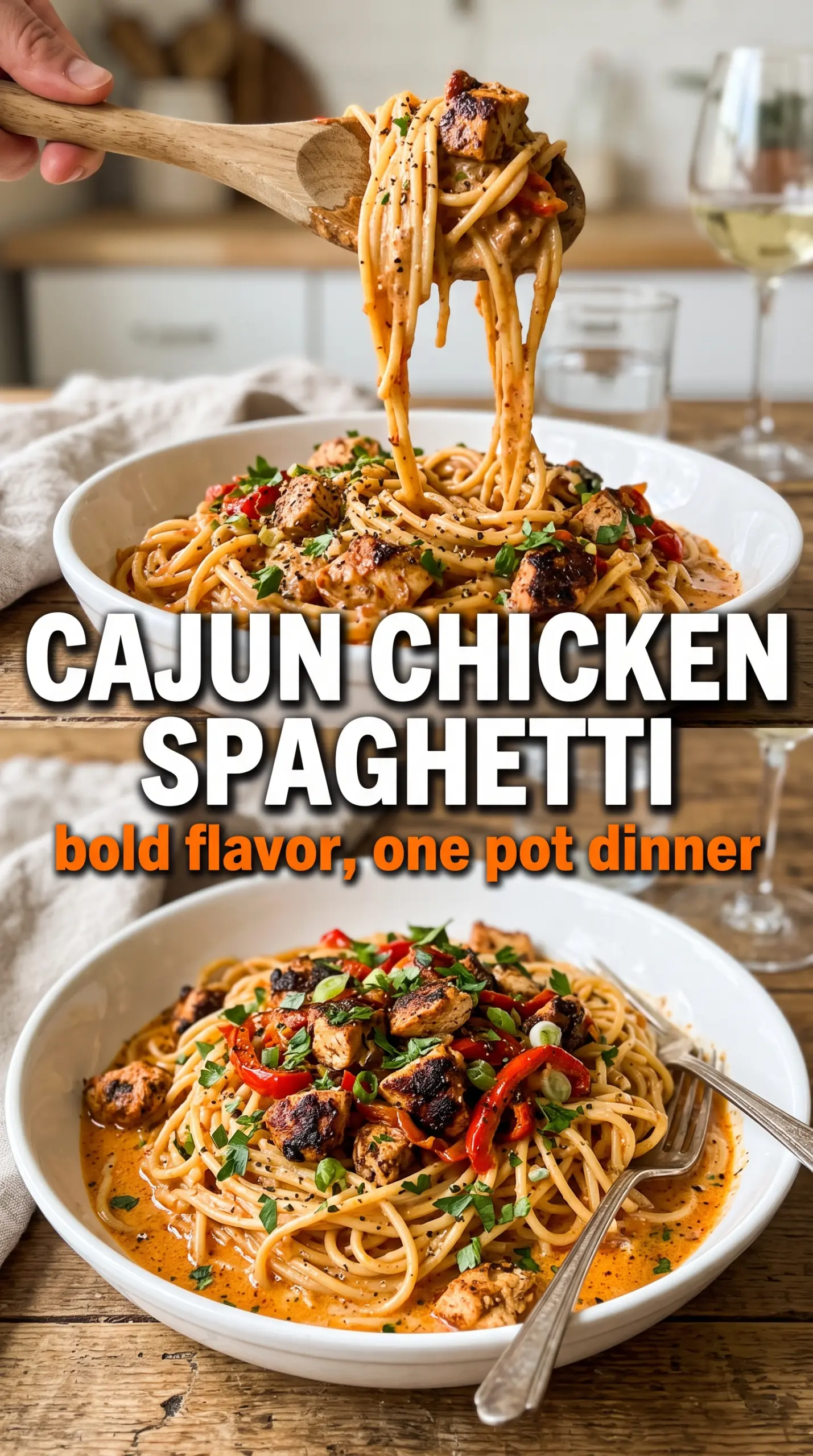
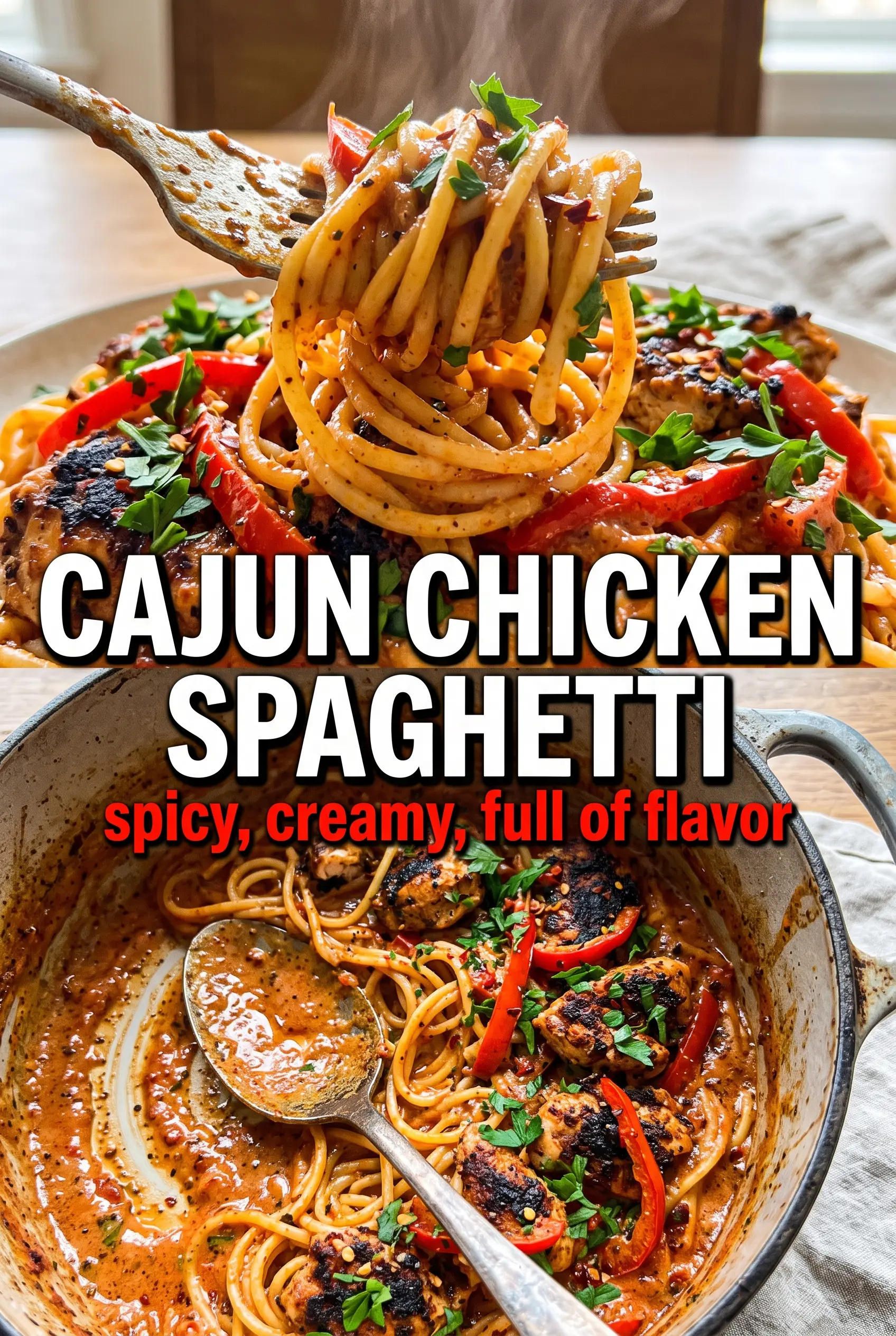
Smoky Cajun chicken spaghetti hits that sweet spot between bold and comforting: tender spaghetti coated in a deep-red cream sauce, peppery blackened chicken on top, and just enough heat to keep every bite interesting. The sauce clings to the noodles instead of pooling in the bowl, and the whole dish tastes like it came together with a lot more effort than it actually did.
What makes this version work is the order. The chicken gets a hard sear first, which builds flavor in the pan, and the onions and bell peppers soften in those same browned bits before the cream goes in. That means the sauce starts with real depth instead of relying on extra seasoning to carry everything. A little pasta water at the end loosens the sauce just enough so it coats the spaghetti instead of turning heavy.
Below, you’ll find the small details that matter here: how dark to let the chicken get without drying it out, when the cream should start thickening, and what to do if your sauce tightens up before the pasta is fully coated.
The sauce thickened up beautifully and coated every strand of spaghetti. I was worried the Cajun seasoning would be too strong, but with the cream and parmesan it came out balanced, and the blackened chicken had that perfect seared edge.
Save this Cajun Chicken Spaghetti for the nights when you want smoky blackened chicken, a creamy Cajun sauce, and dinner on the table fast.
The Part That Keeps the Cream Sauce From Going Heavy
The biggest mistake in Cajun pasta is building the sauce too fast over too much heat. Heavy cream doesn’t need a hard boil to thicken; it needs a gentle simmer and enough time to pick up body from the broth and parmesan. If the heat is too high, the cream can look greasy before the cheese has a chance to melt in smoothly.
Keeping the chicken in the pan long enough to leave those browned bits behind matters just as much. Those dark spots on the bottom aren’t burned flavor you should avoid. They’re the backbone of the sauce, and the onions and bell peppers pull them loose as they soften.
- Cajun seasoning — This does double duty: it seasons the chicken and gives the sauce its color and heat. Store-bought blends vary a lot, so taste before adding extra salt.
- Heavy cream — This is what gives the sauce its velvety body. Half-and-half will work in a pinch, but the sauce will be thinner and a little less stable.
- Parmesan — Use finely grated parmesan so it melts cleanly. Coarse shreds can turn stringy or clump if the sauce is too hot.
- Bell pepper and onion — These aren’t filler. They soften into the sauce and add sweetness that keeps the Cajun seasoning from tasting sharp.
What You Need to Know Before the Pasta Hits the Pan
- Chicken breast — Slice it into even strips so it sears quickly without drying out. If the pieces are too thick, the outside will blacken before the center cooks through.
- Spaghetti — This shape works because the sauce can coat every strand. Linguine will also work, but avoid very thin pasta; it disappears under the sauce.
- Butter and olive oil — The oil helps the chicken sear without scorching the butter, and the butter adds flavor when you move on to the vegetables. Using both gives you better browning than butter alone.
- Chicken broth — This loosens the pan and adds savory depth before the cream goes in. If you use water instead, the sauce tastes flatter and needs more seasoning.
Building the Cajun Chicken Spaghetti in the Right Order
Cooking the Pasta First
Start the spaghetti in well-salted water and cook it until just al dente. You want a little bite left because it’s going back into the sauce, and it will soften a bit more as it finishes. Reserve pasta water before draining; that starch helps the sauce cling if things get tight. If you forget this and the sauce feels stiff later, plain water won’t fix it the same way.
Blackening the Chicken
Toss the chicken with half the Cajun seasoning, then sear it in a hot skillet with oil until the edges go dark and the strips release easily. Don’t keep moving it around; that’s how you lose the crust. Pull it out as soon as it’s cooked through. If it stays in the pan too long while the sauce builds, it will dry out and lose that sharp, smoky edge.
Softening the Vegetables and Starting the Sauce
Use the same pan for the onion and bell pepper. The vegetables should soften and pick up the browned bits from the chicken, not steam in their own moisture. Add the garlic and the rest of the seasoning for just a minute so it blooms without turning bitter. Then pour in the broth and cream and let the mixture simmer gently until it starts to coat the back of a spoon.
Finishing with Parmesan and Pasta
Stir in the parmesan off the hottest part of the burner so it melts smoothly. Add the spaghetti and toss until every strand is coated, then splash in reserved pasta water a little at a time if the sauce tightens up. Put the chicken back on top at the end so it stays juicy and the crust doesn’t disappear into the sauce.
How to Change the Heat, Richness, or Shape of This Dish
Make it milder without losing the Cajun character
Use a milder Cajun seasoning blend and start with less on the chicken. You’ll still get the smoky paprika and garlic notes, but the finish will be gentler. Add more at the end only after tasting the sauce, since cream softens heat more than salt.
Make it gluten-free
Swap in your favorite gluten-free spaghetti and cook it just until tender. The sauce itself is naturally gluten-free as long as your Cajun seasoning and broth are certified gluten-free. Save a little extra pasta water because gluten-free pasta can tighten or break a bit faster in the sauce.
Make it lighter with half-and-half
Half-and-half will give you a thinner, less luxurious sauce, but it still works if you simmer it patiently and don’t rush the cheese. Keep the heat low and add the parmesan gradually so the sauce doesn’t split. This version won’t cling quite as thickly, so expect a looser finish.
Swap the spaghetti for another pasta shape
Linguine, fettuccine, or penne all work well. Long noodles give you the same silky twirl as spaghetti, while penne traps more sauce in the ridges. Just keep the pasta slightly underdone so it can finish in the pan without turning soft.
Storage and Reheating
- Refrigerator: Store leftovers in an airtight container for up to 3 days. The sauce will thicken as it chills.
- Freezer: I don’t recommend freezing this one. Cream sauces can separate after thawing, and the pasta softens too much.
- Reheating: Warm it gently on the stove over low heat with a splash of broth or water. The common mistake is blasting it in the microwave until the sauce breaks and the chicken turns tough.
Answers to the Questions Worth Asking
Cajun Chicken Spaghetti
Ingredients
Equipment
Method
- Bring a large pot of salted water to a boil, then cook the spaghetti until al dente, about 8–10 minutes. Reserve 1/2 cup pasta water, drain, and set aside.
- Pat the chicken slices dry and season with 1 tablespoon Cajun seasoning. Heat olive oil in a cast iron skillet over high heat and sear the chicken for 4–5 minutes until blackened, then set aside.
- Melt the butter in the same skillet, then cook onion and bell pepper for 4 minutes. Add garlic and the remaining Cajun seasoning, and cook for 1 minute.
- Pour in chicken broth and heavy cream, then simmer for 5 minutes until thickened. Stir in parmesan until smooth.
- Add the cooked spaghetti to the Cajun cream sauce and toss until coated, adding reserved pasta water as needed for a silky cling. Top with the blackened chicken slices.
- Garnish with fresh parsley and extra parmesan before serving.