Sticky, savory-sweet ground turkey turns into a weeknight dinner that tastes like you put in far more effort than you did. The sauce clings to every crumb of turkey, the garlic and ginger stay bright, and the whole pan comes together with that glossy finish that begs to be spooned over rice. It’s the kind of meal that disappears fast because it hits all the right notes at once: salty, sweet, a little sharp, and just enough heat to keep each bite interesting.
What makes this version work is the order. The turkey gets browned first so it doesn’t steam, then the garlic and ginger go in just long enough to bloom without burning, and the sauce is thickened at the end with a cornstarch slurry so it coats instead of pooling in the skillet. Honey brings the stickiness, soy sauce brings the backbone, and rice vinegar keeps the sauce from turning one-note. When that balance is right, you get a pan sauce that tastes polished but still comes together in minutes.
Below, I’m walking through the small details that matter most, plus a few swaps for making this work with what’s already in your kitchen. The difference between decent and great here is mostly about heat control and not rushing the sauce.
The sauce thickened up right when it should have, and the turkey stayed juicy instead of turning dry. I served it over rice with extra green onions and my husband asked if we could put it in the regular dinner rotation.
Save this honey garlic ground turkey for the nights when you want a glossy rice bowl that comes together fast and still tastes like dinner.
Why the Turkey Needs Space Before the Sauce Goes In
Ground turkey can turn gray and soft fast if it’s crowded or stirred too soon. The first few minutes in the skillet are about giving it contact with the pan so it can brown and lose some moisture instead of sitting in its own steam. That browning matters here because the sauce is sweet and glossy; without a little savory edge from the meat itself, the dish tastes flat.
Once the turkey is cooked through, the garlic and ginger need only a minute. Any longer and the garlic starts to bitter, especially once the honey hits the pan. The sauce also thickens at the very end, which keeps the honey from scorching and gives you that clingy texture instead of a thin glaze that slides to the bottom of the bowl.
What Each Ingredient Is Actually Doing in the Pan
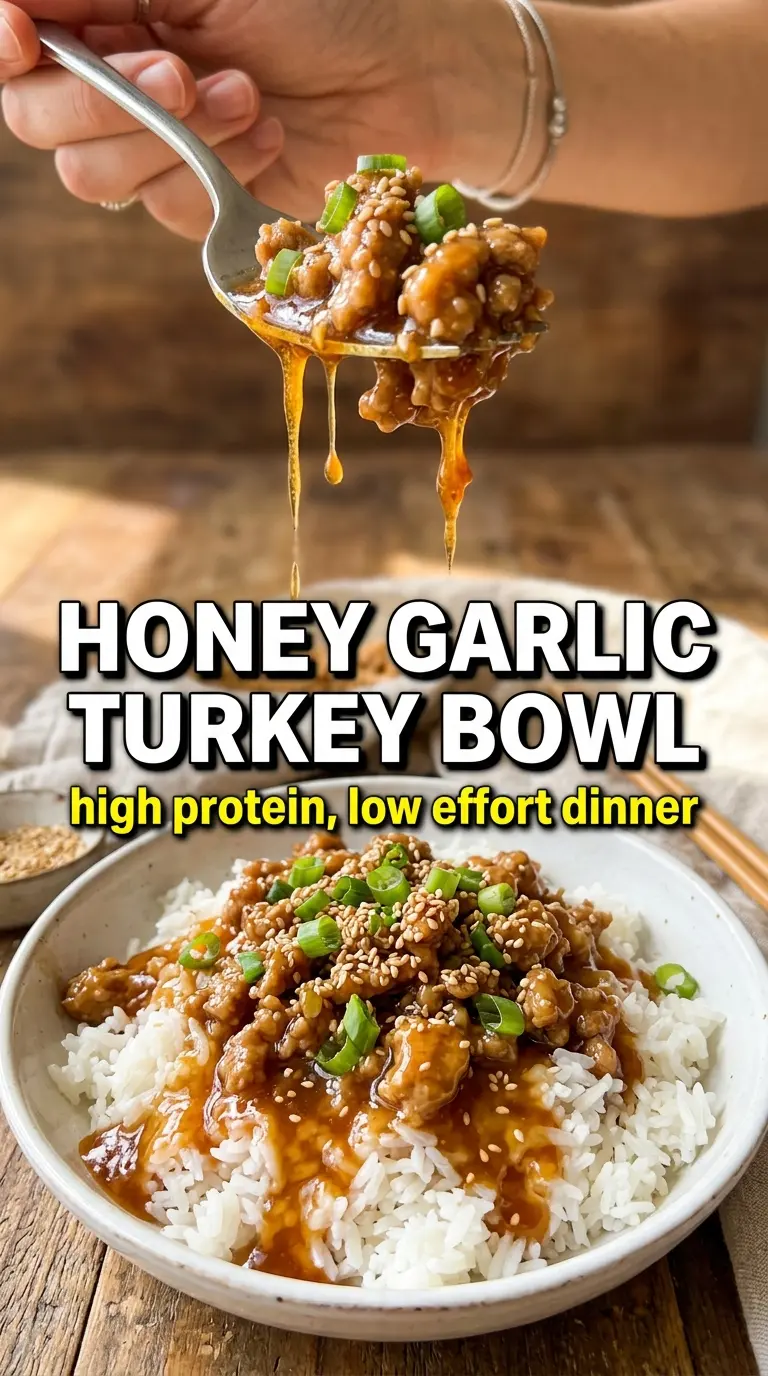
- Lean ground turkey — This is the base, so use a fresh package if you can. Lean turkey gives you a lighter finish, but it can dry out if overcooked, which is why the sauce and the short simmer matter. If you only have extra-lean turkey, a little more oil in the pan helps keep the texture from turning chalky.
- Garlic and ginger — These two carry the whole dish. Fresh ginger gives the sauce lift and warmth that powdered ginger can’t fully match, and minced garlic brings the sharp, savory backbone. If you’re out of fresh ginger, a small pinch of ground ginger works in a pinch, but use less than you think because it gets louder as it cooks.
- Honey, soy sauce, and rice vinegar — This is the balance point. Honey gives shine and sweetness, soy sauce brings salt and umami, and rice vinegar keeps the sauce from tasting heavy. If you need a gluten-free version, use tamari instead of soy sauce and keep the rest the same.
- Cornstarch slurry — This is what turns the sauce into a glaze. Mix it with cold water first so it disperses cleanly; if you add dry cornstarch straight to the pan, it clumps. Let it bubble for a minute or two so the sauce loses that starchy taste and turns glossy.
- Sesame oil, green onions, and sesame seeds — Sesame oil is small in quantity but big in impact, so don’t swap in more of it to replace the others; it’s a finishing flavor, not the main cooking fat. The green onions and sesame seeds add freshness and texture right at the end, which keeps the bowl from feeling one-dimensional.
How to Build a Glossy Sauce Without Ending Up With a Thin Skillet
Brown the Turkey First
Heat the olive oil over medium-high and break the turkey into small pieces as it cooks. Leave it alone for a minute or two at a time so the bottom can pick up some color; if you stir constantly, it steams and stays pale. You’re looking for cooked-through crumbles with a few browned bits stuck to the pan, not a wet pile of meat.
Wake Up the Garlic and Ginger
Add the garlic and ginger after the turkey is cooked, then stir them around for about a minute until they smell fragrant. That short cook pulls out their aroma without giving the garlic time to turn bitter. If the pan looks dry at this point, the tiny bit of oil left behind is enough; adding more oil isn’t necessary.
Pour, Thicken, and Stop at Glossy
Whisk the sauce ingredients together before they go in so the honey and soy sauce blend evenly. Once the sauce is in the skillet, stir in the cornstarch slurry and keep the mixture moving as it bubbles for 2 to 3 minutes. It should thicken enough to coat the turkey and leave a clear trail when you drag a spoon through it; if it still looks loose, give it another minute, but don’t crank the heat or the honey can darken too fast.
Finish With Freshness
Spoon the turkey over hot rice and scatter the green onions and sesame seeds over the top. The heat from the rice lightly softens the onions while keeping them crisp enough to taste fresh. A squeeze of lime on the side works well if you want a little extra brightness, especially when the sauce tastes rich.
Three Useful Ways to Change the Bowl Without Losing What Makes It Good
Gluten-Free Version
Swap the soy sauce for tamari or a certified gluten-free soy sauce. The flavor stays salty and savory, and the texture doesn’t change at all, so this is the easiest adjustment in the recipe. Just check your cornstarch and any toppings if you’re cooking for someone with a strict gluten-free need.
Lower-Sugar Bowl
Use 2 tablespoons honey instead of 1/4 cup and add an extra teaspoon of rice vinegar to keep the sauce lively. You’ll lose a little of the sticky lacquer, but the turkey will still taste balanced and the sauce will cling well once it thickens. This works best over rice or cauliflower rice, where you won’t miss the extra sweetness.
Spicier, More Takeout-Style Turkey
Double the red pepper flakes or add a spoonful of chili garlic sauce with the wet ingredients. That gives the dish more heat and a little garlicky punch without changing the basic technique. The sauce will still thicken the same way, but the sharper spice cuts through the honey and makes the bowl feel bolder.
Storage and Reheating
- Refrigerator: Store leftovers in an airtight container for up to 4 days. The sauce may thicken more in the fridge, but that’s normal.
- Freezer: It freezes well for about 2 months. Cool it completely first, then pack it in freezer-safe containers with a little room at the top.
- Reheating: Reheat gently in a skillet with a splash of water to loosen the glaze, or microwave in short bursts, stirring once or twice. Don’t blast it on high heat or the turkey can dry out and the honey can turn sticky in the wrong way.
Answers to the Questions Worth Asking
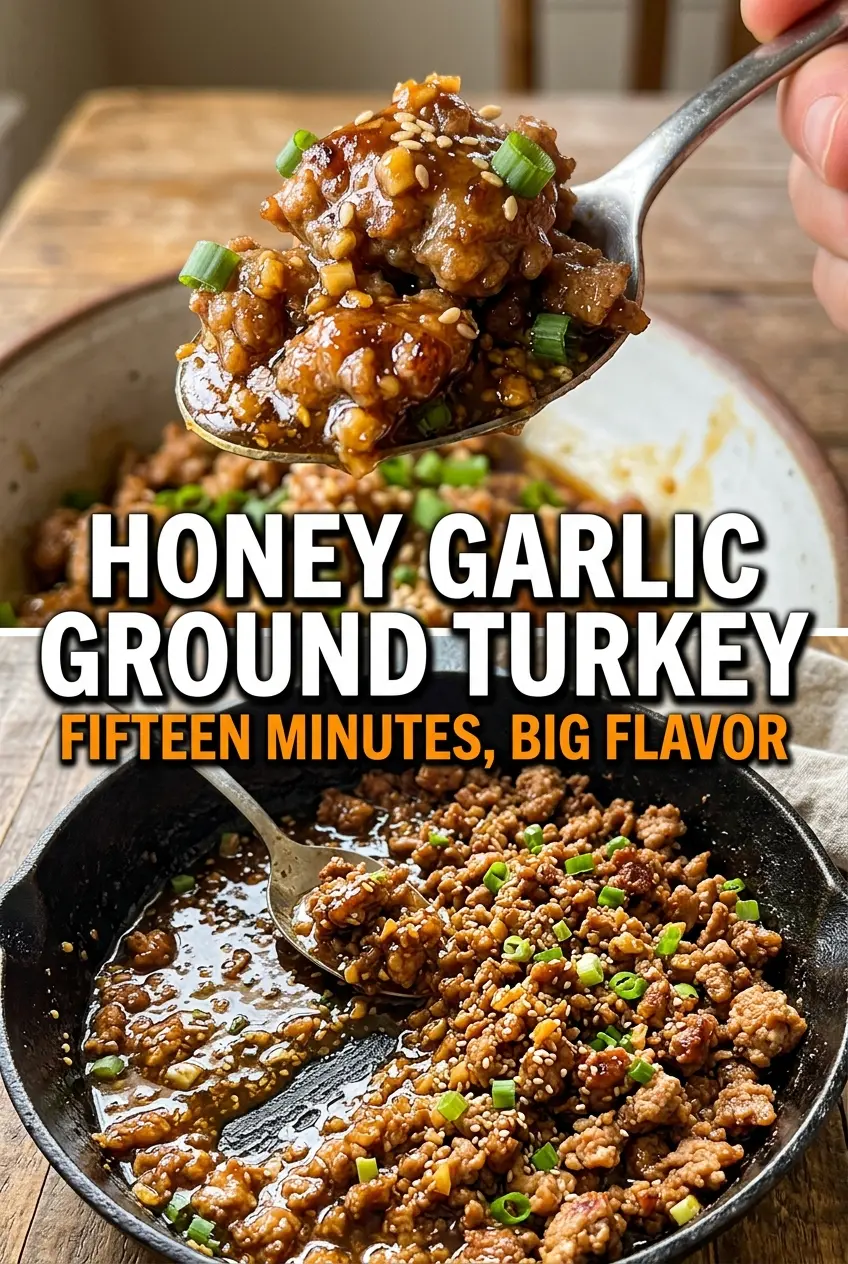
Honey Garlic Ground Turkey
Ingredients
Equipment
Method
- Heat olive oil in a large skillet over medium-high heat, then add lean ground turkey and cook until no longer pink, breaking into crumbles.
- Add garlic and ginger and cook for 1 minute until fragrant.
- Whisk together honey, soy sauce, rice vinegar, sesame oil, and red pepper flakes, then pour over the turkey.
- Stir in the cornstarch slurry and cook for 2–3 minutes until the sauce thickens and coats the turkey.
- Serve the sticky honey garlic turkey over cooked rice, and garnish with sesame seeds and sliced green onions.