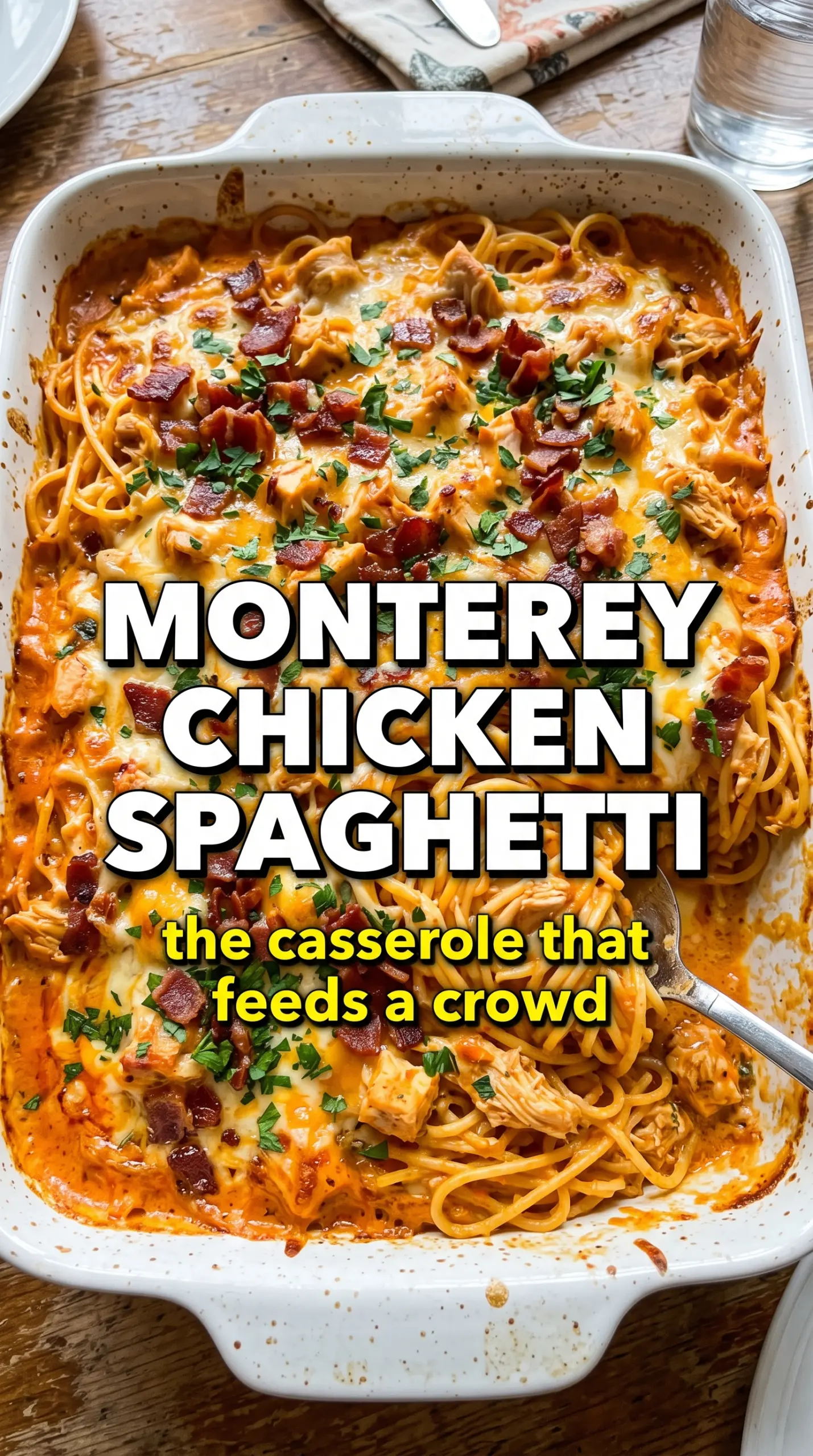
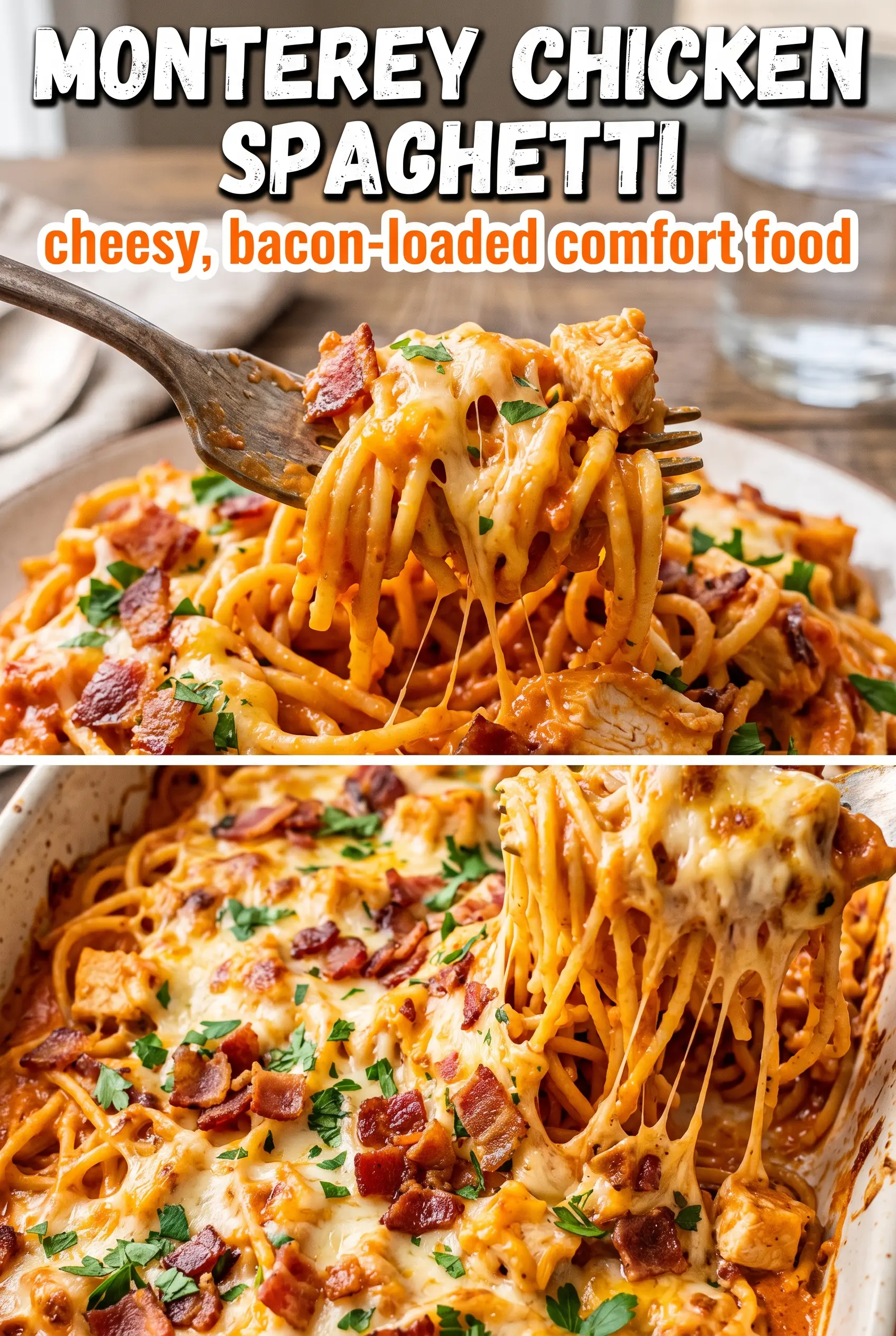
Monterey chicken spaghetti bakes up creamy underneath with a golden, bubbling cheese lid that cracks just enough when you scoop it. The bacon brings salt and crunch, the green pepper and onion keep it from tasting flat, and the whole dish lands somewhere between casserole comfort and a proper pasta dinner. It’s the kind of pan that disappears fast because every bite has a little bit of everything.
What makes this version work is the way the sauce is built before it ever hits the oven. The soups, broth, and sour cream whisk into a smooth base that clings to the spaghetti instead of soaking into a dry, heavy bake. Draining the green chiles and cooking the bacon until crisp matter here, because extra moisture or limp bacon turns the casserole muddy instead of rich.
Below, I’ll walk you through the part that matters most: how to keep the pasta from overcooking and the sauce from turning loose in the oven. I’ve also included the swaps I’d actually use when I need to stretch it, lighten it, or work with what’s in the fridge.
The sauce stayed creamy and didn’t dry out, even after baking, and the bacon on top gave it the perfect salty crunch. I used rotisserie chicken and it tasted like I spent way more time on it than I did.
Save this Monterey Chicken Spaghetti for the nights when you want a creamy pasta bake with a crisp bacon finish and a bubbly Monterey Jack crust.
The Reason This Casserole Stays Creamy Instead of Drying Out
The biggest mistake with spaghetti casseroles is treating the oven like the place where everything gets cooked from scratch. By the time this dish goes in, the pasta should already be tender, the chicken already cooked, and the sauce already mixed into something smooth and pourable. The oven is there to meld everything together and brown the cheese, not to rescue undercooked ingredients.
The other thing that matters is balance. Two canned soups give the casserole body, but the sour cream and broth keep it from turning stiff or pasty. If the mixture looks thick before baking, it will bake up even thicker, so it should coat the pasta easily and still settle into the dish without standing up in clumps.
- Cooked spaghetti — Break it in half before mixing so it distributes through the casserole instead of turning into one tangled slab. Cook it just to al dente, because it softens more in the oven.
- Sour cream — This is what gives the sauce its tang and creamy finish. Plain Greek yogurt can work in a pinch, but it tastes a little sharper and can tighten up more during baking.
- Chicken broth — This loosens the sauce enough to coat the pasta evenly. Water works, but it leaves the filling flatter and less savory.
- Monterey Jack and cheddar blend — Monterey Jack melts smoothly, while cheddar gives the top more flavor and color. Pre-shredded cheese is fine here, though freshly shredded melts a touch cleaner.
What Each Ingredient Is Doing in the Bake
- Cream of chicken soup — Adds body and a familiar savory base. It’s not just filler; it’s part of the structure that keeps the casserole cohesive.
- Cream of mushroom soup — Brings a deeper, earthier note that keeps the whole dish from tasting one-dimensional. If you don’t like mushrooms, you can swap in another can of cream of chicken, but the flavor will be lighter.
- Diced green chiles — These add a gentle bite without making the casserole spicy. Drain them well so they don’t thin out the sauce.
- Bacon — Crisp bacon gives salt, smoke, and texture. If it goes in soft, it stays soft after baking, so cook it until it’s properly crisp before crumbling.
- Green bell pepper and onion — These are the fresh backbone of the dish. Dice them small so they soften enough in the oven and don’t stick out in big crunchy pieces.
The Order That Keeps the Sauce Smooth and the Top Golden
Build the Creamy Base First
Whisk the soups, broth, sour cream, and garlic powder until the mixture looks completely smooth and uniform. That step matters because any stubborn streaks of sour cream or soup paste will show up later as uneven pockets in the casserole. If the base seems too thick to coat a spoon, add a splash more broth before you move on.
Toss the Pasta While the Sauce Is Loose
Add the spaghetti, chicken, chiles, bacon, pepper, and onion while the sauce still flows easily. Once the pasta starts absorbing liquid, the mixture thickens fast, and that’s when people end up with dry spots at the bottom of the pan. Season after everything is combined so the salt lands on the whole dish instead of just the sauce.
Bake Until the Cheese Blisters
Spread the mixture into the prepared dish and cover the top with the cheese blend in an even layer. Bake until the edges are bubbling and the top turns spotted gold, not just pale melted cheese. If the center still looks loose when you shake the pan, give it a few more minutes; pulling it too early leaves the middle soupy instead of creamy.
Let It Set Before Scooping
Give the casserole a short rest after it comes out of the oven. That pause lets the sauce settle back into the pasta so the first serving holds together instead of running across the plate. A fresh sprinkle of parsley at the end wakes up the rich sauce and gives the top a clean finish.
How to Adapt This for Different Tables and Different Fridges
Make It Gluten-Free
Use a gluten-free spaghetti and check that your soups are labeled gluten-free. The texture stays close to the original, though gluten-free pasta can soften faster, so pull the casserole as soon as the cheese is golden and the edges are bubbling.
Skip the Bacon, Keep the Smoke
For a pork-free version, leave out the bacon and add a pinch of smoked paprika to the sauce. You lose the crisp topping, but you still get that savory depth that keeps the casserole from tasting like plain creamy pasta.
Use Rotisserie Chicken Without Losing Texture
Rotisserie chicken works beautifully here, as long as you shred it into medium pieces instead of tiny bits. Larger shreds stay juicy in the bake and give the casserole more of a true chicken bite instead of disappearing into the sauce.
Storage and Reheating
- Refrigerator: Store leftovers covered for up to 4 days. The pasta will absorb some sauce, so expect it to thicken.
- Freezer: It freezes well for up to 2 months if packed tightly after cooling. Thaw overnight in the fridge before reheating so the sauce doesn’t separate.
- Reheating: Reheat covered in a 325°F oven until hot, adding a splash of broth if the casserole looks tight. Microwave portions work too, but stop and stir once so the edges don’t turn gummy while the center stays cold.
Questions I Get Asked About This Recipe
Monterey Chicken Spaghetti
Ingredients
Equipment
Method
- Preheat the oven to 350°F and grease a 9x13 baking dish.
- Whisk together cream of chicken soup, cream of mushroom soup, chicken broth, sour cream, and garlic powder until smooth.
- Combine cooked spaghetti, shredded chicken, soup mixture, green chiles, bacon, bell pepper, and onion; toss to coat and season with salt and pepper.
- Spread the mixture into the prepared dish and top evenly with 2 cups of shredded Monterey Jack and cheddar cheese blend (divided).
- Bake for 25-30 minutes at 350°F until bubbly and the cheese is golden, with steam visible around the edges.
- Garnish with fresh parsley before serving.