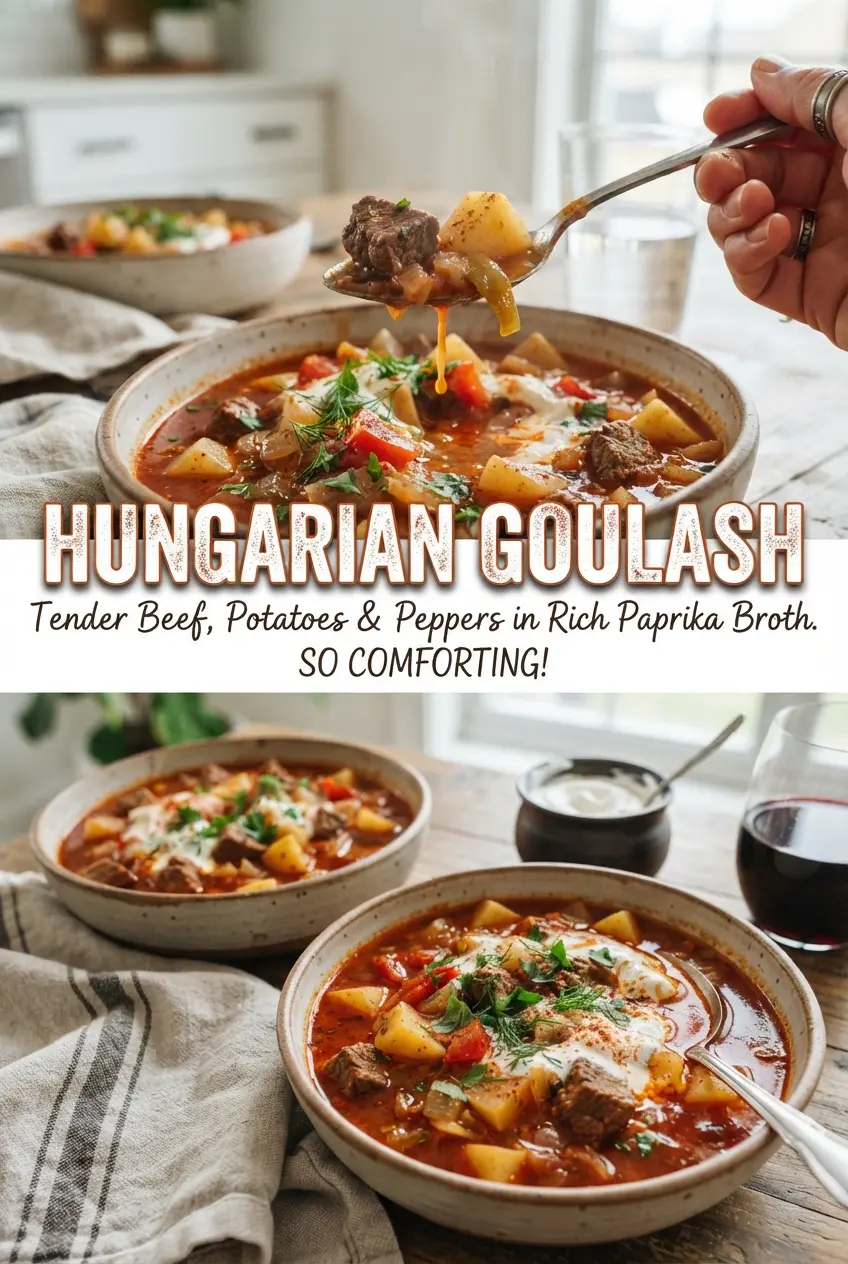
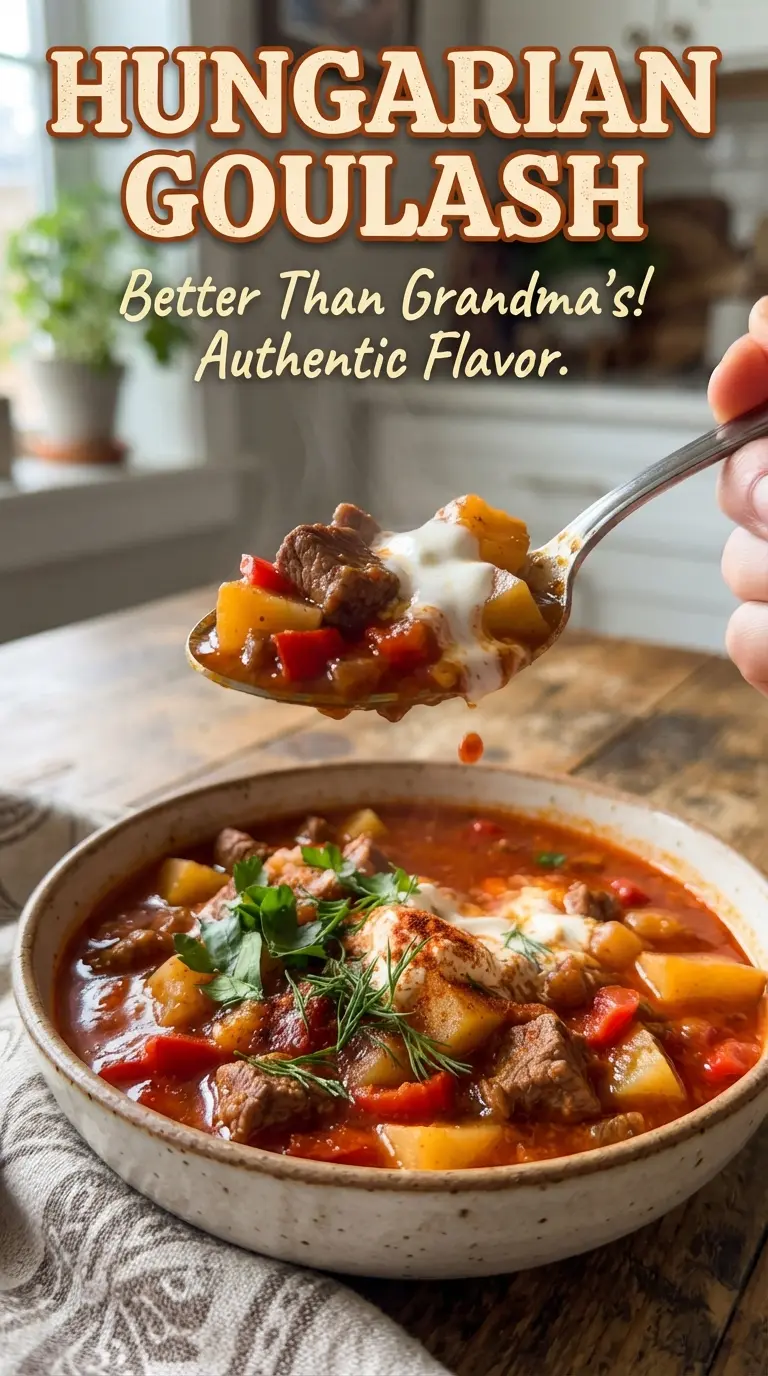
Hungarian goulash is the kind of pot that fills the kitchen with paprika, onion sweetness, and the kind of slow-cooked beef that turns fork-tender without falling apart into shreds. The broth stays brothy rather than thick and gravy-like, which is part of what makes it feel right: each spoonful tastes clean, deep, and smoky-sweet, with potatoes and carrots softening in the background.
The real move here is blooming the paprika off the heat after the onions have gone golden. That keeps it from turning bitter and lets the spice perfume the whole pot instead of tasting flat or dusty. Beef chuck is the right cut for this because it has enough connective tissue to handle a long simmer and still stay juicy, while the potatoes and peppers give the stew its familiar, hearty shape.
Below you’ll find the timing that keeps the beef tender, the ingredient choices that matter most, and a few smart swaps if you need them. If you’ve had goulash that tasted one-note before, this version fixes that.
The paprika stayed bright and the beef turned meltingly tender after the long simmer. I also loved that the potatoes held their shape instead of turning to mush.
Save this Hungarian goulash for a paprika-rich stew with tender beef, potatoes, and a ladle of sour cream on top.
The Paprika Step That Decides Whether This Tastes Deep or Flat
Hungarian paprika needs a gentle hand. If it goes into a hot pot and sits there, it can turn bitter in seconds, and that bitterness will hang around through the whole simmer. Pulling the pot off the heat before stirring in the paprika and caraway keeps the spice sweet, fragrant, and red instead of dull brown.
The other thing that matters here is patience with the onions. They’re not just background flavor; they build the body of the stew and give the broth a rounded sweetness that balances the beef and peppers. When they’ve turned deeply golden, not just softened, the finished goulash tastes fuller without needing flour or extra thickeners.
- Beef chuck — This is the cut that gives you tender chunks after a long simmer. Lean stewing beef can work, but it tends to dry out before it gets truly soft.
- Sweet Hungarian paprika — Use the good stuff here. Regular paprika won’t give the same aroma or color, and smoked paprika changes the dish into something else entirely.
- Lard or vegetable oil — Lard gives the stew a richer, more traditional base, but a neutral oil works fine if that’s what you have.
- Potatoes — Add them later so they keep their shape. If they go in too early, they’ll collapse and cloud the broth.
- Sour cream — This is the finishing note, not an afterthought. A spoonful stirred in at the table softens the paprika and gives each bowl a cool, creamy edge.
What Each Ingredient Is Actually Doing in This Recipe
- Primary ingredient (the star) — Quality matters most. Choose the best you can find.
- Cooking medium (oil, butter, or broth) — This carries flavors and prevents dryness.
- Seasonings (salt, pepper, spices, herbs) — Layer flavors so nothing overpowers. Build depth gradually.
- Aromatics (garlic, onion, herbs) — Cook with fat to bloom flavors. Become the foundation.
- Supporting ingredients — Complement the main ingredient without overpowering it.
- Sauce or liquid (if applicable) — Brings flavors together. Balance richness with acid.
- Acid (lemon, vinegar, wine, or other) — Brightens and prevents flat-tasting results.
- Final finish (garnish, glaze, or sauce) — Prevents one-dimensional taste and adds visual appeal.
Building the Goulash Without Burning the Paprika
Getting the Onions Deep and Golden
Cook the diced onions slowly in the lard or oil until they’re soft, sweet, and properly golden. This takes about 10 minutes, sometimes a touch more, and the color here matters because pale onions give you a thinner, sharper broth. Add the garlic for just a minute at the end so it smells fragrant but doesn’t take on any color.
Blooming the Paprika Off the Heat
Take the pot off the burner before the paprika and caraway go in. Stir them through the hot onion mixture until the whole pot smells warm and red; that short pause wakes up the spice without scorching it. If you skip this step and add paprika directly over heat, the stew can turn bitter and muddy.
Coating the Beef Before the Simmer
Add the beef and stir it through the paprika mixture so every piece gets coated. Going back to medium heat for a few minutes helps the meat pick up flavor and gives the paprika a chance to cling to the surface instead of dissolving into the broth right away. You’re not browning the beef hard here; you’re building the base.
The Long Simmer and the Late Vegetables
Once the broth, tomato paste, peppers, salt, pepper, and bay leaf go in, cover the pot and let it settle into a gentle simmer. The liquid should move lazily, not boil hard, or the beef can tighten up instead of softening. Add the potatoes and carrots only after the first hour, when the beef has started to relax, so they finish tender at the same time instead of turning mushy early.
How to Adjust This Stew Without Losing Its Shape
For a richer, more traditional pot
Use lard instead of oil and don’t rush the onions. Lard gives the broth a fuller mouthfeel and a more old-world finish, especially with sweet paprika and beef chuck. The flavor reads rounder and more savory, not greasy.
Dairy-free serving option
Skip the sour cream and finish each bowl with a little extra broth spooned over the top. You still get the deep paprika stew, just without the creamy tang at the end. If you want a dairy-free finish with more body, a spoonful of unsweetened plain coconut yogurt can work, but it changes the flavor slightly.
Gluten-free by default
This stew is naturally gluten-free as written, as long as your beef broth is certified gluten-free. The texture comes from slow cooking, not flour, so you don’t need to change the method at all.
Make it stretch for a bigger crowd
You can add an extra pound of potatoes or another carrot and keep the broth the same if you want a more vegetable-forward pot. For a meatier crowd, increase the beef to 3 pounds and add another cup of broth so the pot doesn’t turn cramped and dry during the long simmer.
Storage and Reheating
- Refrigerator: Keeps well for 4 days. The flavor gets even better overnight, and the broth may thicken slightly as it chills.
- Freezer: Freezes well for up to 3 months. Cool it completely first, then freeze in airtight containers, leaving a little room at the top for expansion.
- Reheating: Warm it gently on the stove over low to medium-low heat until hot. A hard boil can tighten the beef and break the tender texture you worked to build.