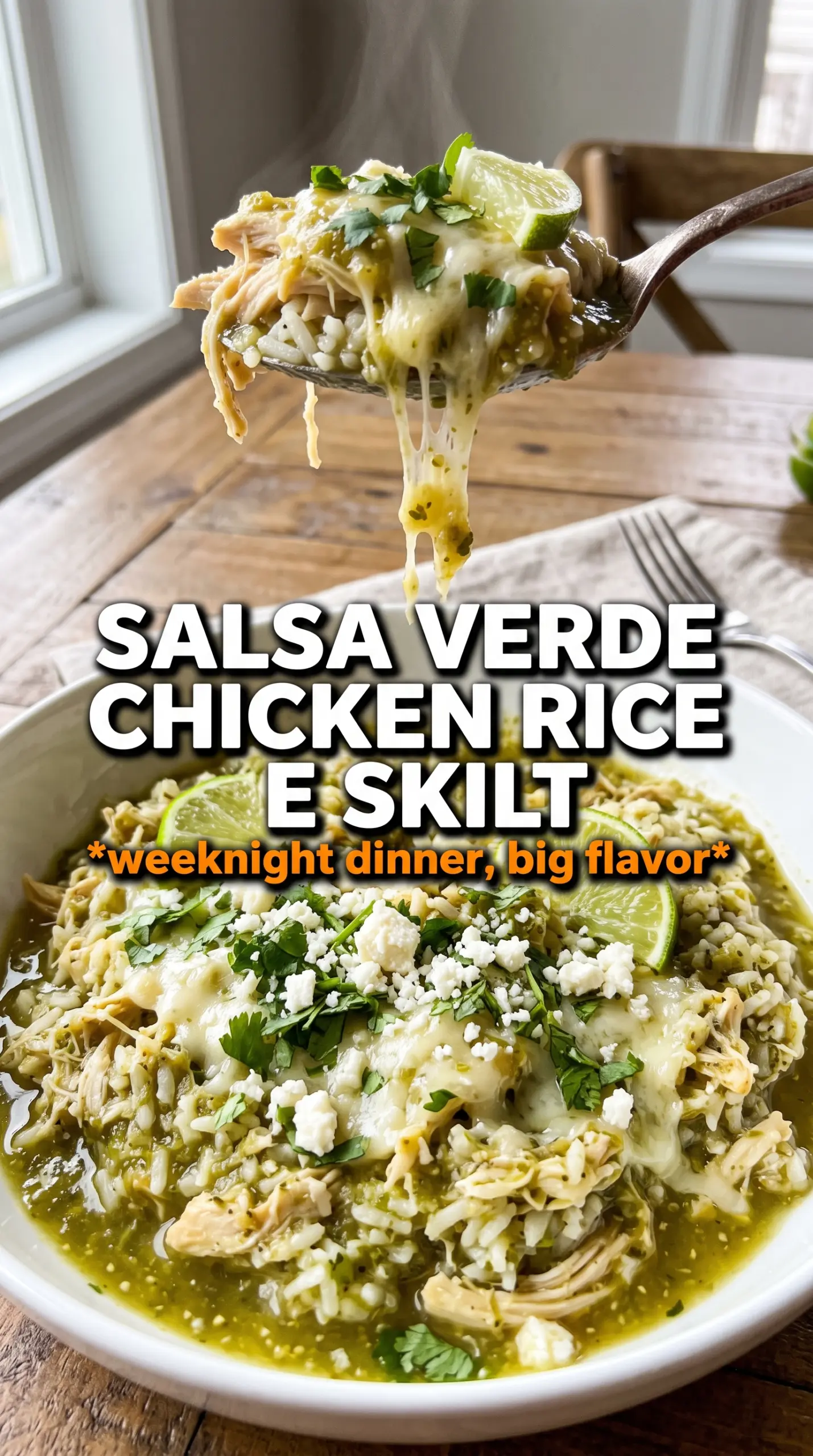
Golden chicken thighs tucked into tangy salsa verde rice make this skillet dinner one of those rare one-pan meals that actually tastes layered, not rushed. The rice comes out savory and spoonable, the beans add a little body, and the melted Monterey jack pulls everything together without turning the whole pan heavy.
The key is giving the rice a quick toast before the liquid goes in. That small step keeps the grains from going soft and mushy under the salsa verde. Searing the chicken first also leaves browned bits in the pan, and those bits melt right into the broth for a deeper, more developed base than you get from simmering everything together from the start.
Below, I’ve included the one timing detail that keeps the rice tender and the chicken juicy, plus a few smart swaps if you need to work with what’s already in the pantry. This is the kind of skillet that handles weeknights well, but still feels worth setting down in the middle of the table.
The rice soaked up the salsa verde beautifully and still held its texture. I loved that the chicken stayed juicy even after the 20-minute simmer, and the lime at the end made the whole skillet pop.
Save this salsa verde chicken and rice skillet for the nights when you want one pan, melty cheese, and dinner that comes together without fuss.
The One Pan Move That Keeps the Rice From Turning Soft
Salsa verde rice can go wrong fast if the pan is too crowded or the liquid gets added before the grains are lightly toasted. The rice needs that brief time in the hot skillet to pick up a little oil and heat on the outside before it hits the broth. That gives you separate, tender grains instead of a pot of soft, half-muddled rice.
The other piece that matters here is the chicken sear. You’re not cooking it through at this stage; you’re building color and leaving browned bits behind. If the skillet looks dry after the chicken comes out, that’s a good sign, not a problem. Those browned spots dissolve into the salsa verde and broth once the rice goes in.
- Boneless chicken thighs — Thighs stay juicy during the simmer and tolerate a little extra time without drying out. Chicken breasts will work, but they need a closer eye and can turn chalky if they’re overcooked.
- Long-grain white rice — This is the safest choice because it cooks evenly and stays fluffy. Short-grain rice can get sticky here, and brown rice needs a different liquid ratio and a much longer cook time.
- Salsa verde — This does more than season the dish; it brings acidity, tomatillo brightness, and the liquid the rice cooks in. A thicker, jarred salsa verde works well, but if yours is very thin, reduce the broth by a splash so the rice doesn’t go soupy.
- Monterey jack — It melts smoothly and blankets the top without breaking or getting greasy. Pepper jack is a good swap if you want more heat.
What Each Ingredient Is Actually Doing in This Recipe
- Primary ingredient (the star) — Quality matters most. Choose the best you can find.
- Cooking medium (oil, butter, or broth) — This carries flavors and prevents dryness.
- Seasonings (salt, pepper, spices, herbs) — Layer flavors so nothing overpowers. Build depth gradually.
- Aromatics (garlic, onion, herbs) — Cook with fat to bloom flavors. Become the foundation.
- Supporting ingredients — Complement the main ingredient without overpowering it.
- Sauce or liquid (if applicable) — Brings flavors together. Balance richness with acid.
- Acid (lemon, vinegar, wine, or other) — Brightens and prevents flat-tasting results.
- Final finish (garnish, glaze, or sauce) — Prevents one-dimensional taste and adds visual appeal.
What Each Layer Is Doing While the Skillet Cooks
Season the chicken first so the spices cling to the surface before the pan heats up. The cumin and chili powder don’t just flavor the meat; they bloom in the oil and leave a little toasted depth in the skillet. Sear the thighs over high heat until you get a real golden crust, then pull them out before they’re cooked through.
Add the garlic for just 30 seconds. Any longer and it can turn sharp or bitter once the broth goes in. Stir the rice around for about 2 minutes so it picks up the oil and starts to look a little translucent at the edges. That tiny window is where the final texture gets set.
Building the Base
Pour in the salsa verde and broth after the rice has toasted, then stir well and scrape the bottom of the pan. You want the liquid to come up evenly around the grains, not sit in one corner of the skillet. Beans and corn go in at this stage because they can handle the simmer without breaking down. If the mixture looks too thick before the chicken goes back in, add a small splash of broth rather than water.
Simmering Without Stirring It Apart
Once the chicken is nestled back into the rice, cover the skillet and turn the heat low. A steady simmer is what you want, not a hard boil. If the pan boils aggressively, the rice on the bottom can scorch before the top finishes cooking. Leave the lid on for the full 20 minutes unless you can hear the pan sputtering or see the liquid disappearing too fast.
The Melted Finish
When the rice is tender and the chicken is cooked through, scatter the cheese over the top and cover the pan again for 2 minutes. The steam melts the Monterey jack evenly without overcooking the rice below. Finish with cilantro and lime wedges right before serving. The lime matters here; it wakes up the salsa verde and keeps the cheese from making the skillet feel flat.
How to Adapt This for Different Kitchens and Different Nights
Make it dairy-free
Skip the Monterey jack and finish with extra cilantro, avocado, and a squeeze of lime. You lose the creamy melt on top, but the skillet still has plenty of body from the rice, beans, and salsa verde.
Use chicken breasts instead of thighs
Chicken breasts work if that’s what you’ve got, but cut them into large pieces and check them a few minutes early. They dry out faster than thighs, so the goal is just to finish them through while the rice cooks, not to leave them simmering long after they’re done.
Swap the beans or skip them
White beans keep the skillet mild and creamy, while pinto beans make it a little heartier and more familiar in a Tex-Mex way. If you skip the beans entirely, reduce the broth by about 1/4 cup so the pan doesn’t end up looser than you want.
Storage and Reheating
- Refrigerator: Store leftovers in an airtight container for up to 4 days. The rice will firm up a bit as it chills, but the flavor holds well.
- Freezer: This freezes well, especially if you skip the cilantro until serving. Cool completely, portion into freezer-safe containers, and freeze for up to 2 months.
- Reheating: Reheat covered in the microwave or on the stove with a splash of broth to loosen the rice. The biggest mistake is blasting it uncovered until the rice dries out and the chicken turns tough.
Answers to the Questions Worth Asking
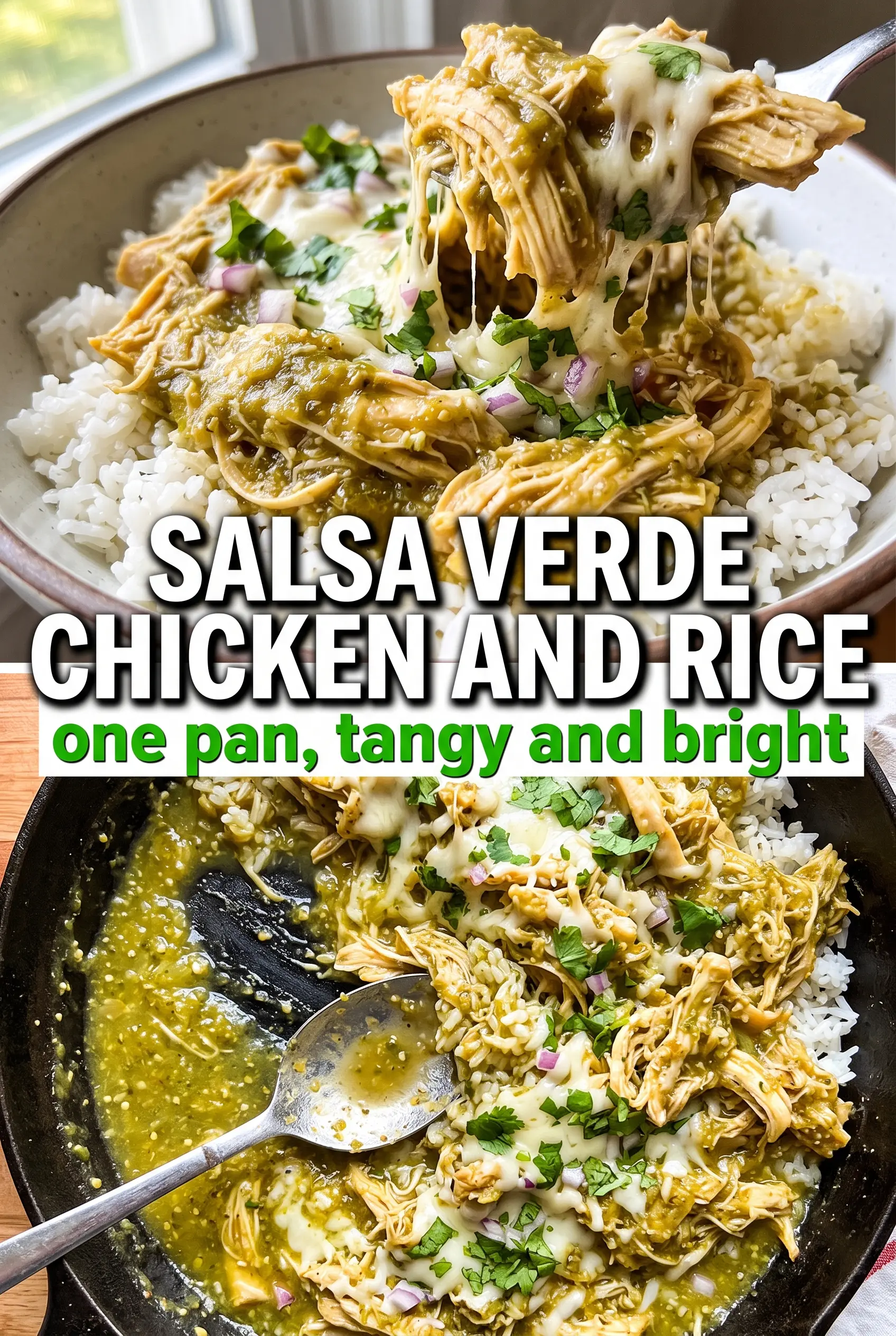
Salsa Verde Chicken and Rice Skillet
Ingredients
Equipment
Method
- Season boneless chicken thighs with cumin, chili powder, salt, and pepper.
- Heat olive oil in an oven-safe cast iron skillet over high heat and sear chicken thighs for 4–5 minutes per side until golden; remove and set aside.
- Add garlic to the pan and cook for 30 seconds.
- Add long-grain white rice and toast for 2 minutes.
- Pour in salsa verde and chicken broth, stir, then add white beans or pinto beans and frozen corn.
- Nestle the seared chicken thighs back into the rice, bring to a simmer, cover, and cook over low heat for 20 minutes until the rice is cooked and the chicken is done.
- Top the skillet with shredded Monterey jack cheese, cover, and cook for 2 minutes to melt the cheese.
- Garnish with fresh cilantro and lime wedges before serving.