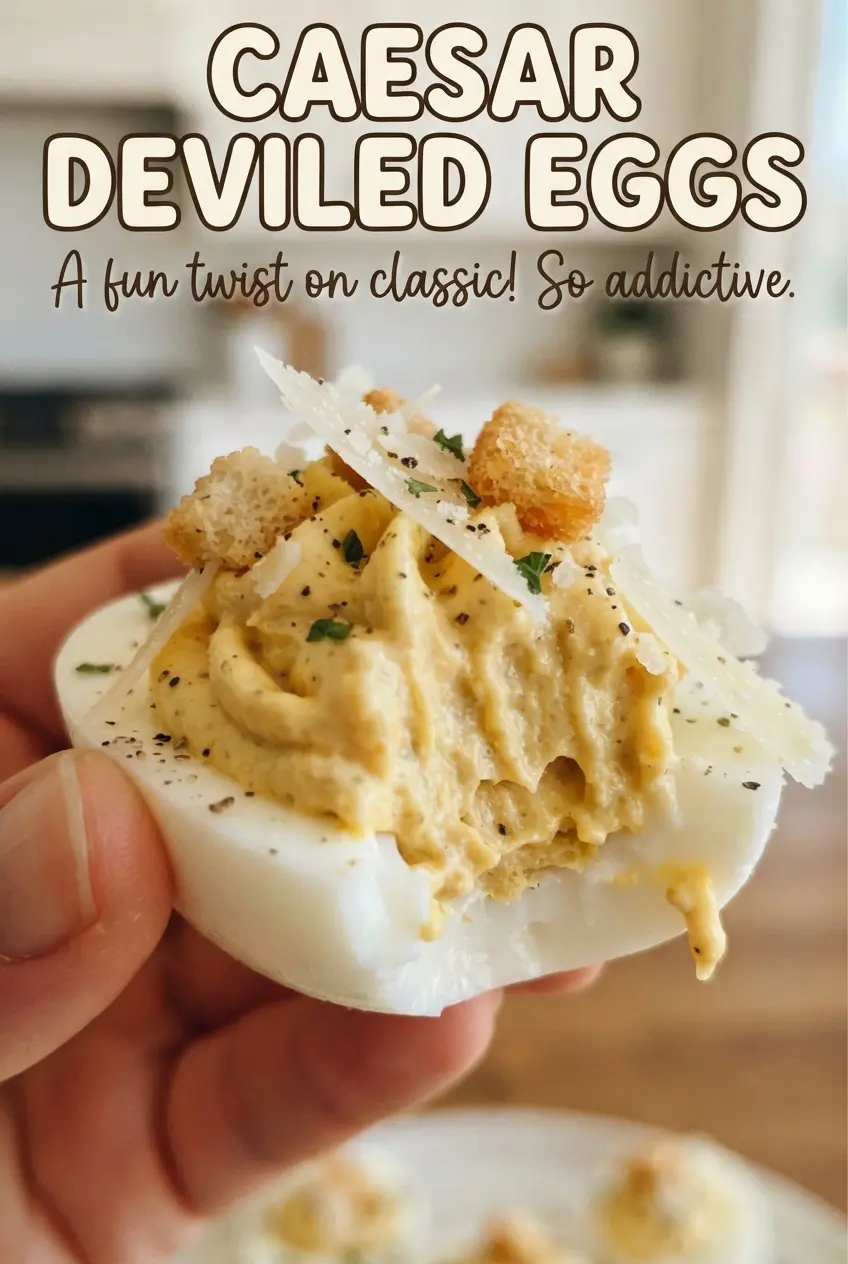
Caesar deviled eggs land somewhere between a classic party tray and a sharp, salty appetizer with real personality. The filling turns silky and savory from the yolks, Parmesan, anchovy, and Dijon, while the lemon and pepper keep it from feeling heavy. Then the garnish does the rest: a little crunch, a little freshness, and enough Parmesan on top to make it obvious what you’re eating before the first bite.
What makes this version work is restraint. Anchovy brings depth, not a fishy taste, especially once it’s mashed into the warm yolks with garlic and mustard. The mayonnaise smooths everything out, but the Parmesan is what gives the filling that Caesar-style backbone. If you’ve ever had deviled eggs that tasted flat or one-note, it usually means the yolks needed more acid, more salt, or a sharper savory element.
Below you’ll find the small details that keep the filling creamy instead of pasty, plus a few smart swaps if you want to adjust the intensity. The garnish matters here, too — it’s not just for looks. It gives each egg the same crunchy, briny, salad-like finish that makes Caesar flavors work in the first place.
The filling was perfectly smooth and the little crouton on top gave each bite that Caesar salad crunch I didn’t know deviled eggs needed.
Save these Caesar Deviled Eggs for the appetizer platter when you want creamy yolks, salty Parmesan, and a crunchy crouton finish.
The Trick to Caesar Deviled Eggs That Taste Sharp, Not Heavy
Deviled eggs get muddy when the filling leans too hard on mayonnaise and not hard enough on the bright, salty parts. Caesar flavors need contrast. The Parmesan, anchovy, lemon, and Dijon all pull in different directions just enough to keep the yolks tasting rich instead of dull. If the mixture tastes flat before it goes into the whites, it will taste flatter after chilling.
The other place people go wrong is overmixing until the filling turns gluey. Mash until smooth, but stop once the texture is creamy and pipeable. A little black pepper at the end matters here because it gives the filling the same bite you expect from a good Caesar salad.
What Each Ingredient Is Actually Doing in This Dish

- Egg yolks — These are the base of the filling, and they need to be cooked fully but not overcooked or the texture turns chalky. The ice bath matters because it stops the yolks from getting that gray ring and makes peeling easier.
- Mayonnaise — This gives the filling its smooth body. Use a good one if you can, since it’s doing a lot of the textural work, but the eggs and Parmesan carry enough flavor that you don’t need anything fancy.
- Parmesan — Grated Parmesan seasons the filling from the inside and brings the Caesar connection home. Freshly grated is best because it melts into the yolks more cleanly than the shelf-stable kind.
- Anchovy or anchovy paste — This is the ingredient that makes the filling taste like Caesar instead of just “eggy with cheese.” Mince it finely so it disappears into the mixture; if you skip it, add a little extra salt and expect a less layered flavor.
- Garlic, Dijon, lemon juice, and Worcestershire — These are the sharp edges. Garlic brings bite, Dijon helps emulsify the filling, lemon lifts it, and Worcestershire adds that deep savory note that keeps the whole thing from tasting one-dimensional.
- Romaine, croutons, and shaved Parmesan — The garnish isn’t decoration here. The romaine gives freshness, the crouton gives crunch, and the shaved cheese makes the Caesar idea obvious at a glance.
Building the Filling So It Stays Smooth
Cooking the Eggs Cleanly
Start the eggs in cold water and bring them up together. That gives you fewer cracked shells and more even cooking than dropping cold eggs into already-boiling water. Once the water boils, take the pot off the heat and cover it; the residual heat cooks the yolks without pushing them into that dry, crumbly zone.
After 12 minutes, move the eggs straight into an ice bath. That stops the cooking and helps the shells release more cleanly. If the whites tear while peeling, the eggs were either too fresh or not chilled long enough.
Mashing the Yolks Into a Caesar-Style Paste
Break the yolks down first before adding everything else. That keeps you from chasing little lumps around the bowl later. Add the mayonnaise, Parmesan, anchovy, garlic, Dijon, lemon juice, and Worcestershire, then mash or stir until the filling looks glossy and evenly combined.
If it seems stiff, add a small spoonful more mayonnaise. If it seems loose, chill it for a few minutes before piping. The filling should hold its shape but still look soft enough to flow through a piping bag or a zip-top bag with the corner snipped.
Finishing With the Right Crunch
Pipe or spoon the filling into the egg whites, then top each one with a narrow strip of romaine, a tiny crouton, and a shaving of Parmesan. Add the garnish right before serving so the lettuce stays crisp and the croutons don’t soften. A final grind of black pepper brings the whole tray together and keeps each bite from tasting too rich.
How to Adapt These Without Losing the Caesar Character
No Anchovy Version
If anchovy is a hard no, skip it and add a tiny extra pinch of salt plus a little more Worcestershire. You’ll lose some of the classic Caesar depth, but the Parmesan, garlic, and lemon still keep the filling savory and bright.
Dairy-Free Shortcut
Use a dairy-free mayonnaise and swap the Parmesan for a finely ground dairy-free Parmesan alternative. The texture will still be creamy, but the flavor won’t have quite the same nutty edge, so lean a little harder on the lemon and black pepper.
Make-Ahead Party Tray
You can cook, peel, and fill the eggs a day ahead, then cover and refrigerate them without the garnish. Add the romaine, croutons, and shaved Parmesan just before serving so the texture stays crisp instead of softening in the fridge.
Extra-Small Bites for a Crowd
If you’re serving a bigger group, halve the whites again after filling for mini bites. The flavor stays the same, but the ratio of filling to egg white shifts a little more savory and rich, which works well on an appetizer tray.
Storage and Reheating
- Refrigerator: Store filled deviled eggs in a covered container for up to 2 days. The romaine and croutons soften, so keep the garnish separate until serving.
- Freezer: Don’t freeze them. The whites turn rubbery and the filling separates after thawing.
- Reheating: These are meant to be served cold. If they’ve been in the fridge, let them sit out for 10 to 15 minutes so the filling loses its chill and the flavors come through more clearly.
Answers to the Questions Worth Asking
Caesar Deviled Eggs
Ingredients
Equipment
Method
- Place the eggs in a pot, cover with cold water, and bring to a boil. Cover the pot, remove from the heat, and let the eggs stand 12 minutes.
- Transfer the eggs to an ice bath and chill 10 minutes. Peel the eggs and halve them lengthwise.
- Mash the yolks with mayonnaise, grated Parmesan, anchovy (fillets or paste), garlic, Dijon, lemon juice, and Worcestershire until smooth. Mix until there are no visible yolk lumps.
- Season the filling with plenty of black pepper. Add more pepper if you want a stronger bite.
- Pipe the filling into the egg whites. Fill each half to the top for even texture.
- Top each deviled egg with a romaine strip, a crouton, and shaved Parmesan. Finish with a light final crack of black pepper if desired.