Country fried chicken lands with a crust that crackles under the fork and stays crisp long enough to carry a blanket of peppery gravy without turning soggy right away. The meat underneath stays juicy because the chicken gets a real buttermilk soak first, then a seasoned flour dredge that fries into a rough, craggy shell instead of a smooth coating.
The gravy matters just as much as the chicken here. A quick roux in the same pan picks up the browned bits left behind after frying, and that’s what gives it the deep, savory taste you want with this dish. Cornstarch in the dredge helps the crust fry up lighter and a little more fragile in the best way, while the spices keep every bite seasoned all the way through.
Below, I’ll walk you through the part that makes the biggest difference: keeping the oil steady at 325°F so the crust browns before the chicken dries out. I’ve also included the swaps and troubleshooting notes that help when the coating won’t stick or the gravy turns lumpy.
The crust stayed shattery even after I spooned on the gravy, and the chicken was cooked through right on the 15-minute mark. I’ve made a lot of fried chicken recipes, but the buttermilk soak and the cornstarch in the flour made this one noticeably lighter and crunchier.
Save this country fried chicken for when you want a crackly crust, creamy pepper gravy, and real Southern-style comfort on one plate.
The Trick to Crisp Chicken That Still Stays Tender Under Gravy
The biggest mistake with country fried chicken is rushing the coating or frying too hot. If the oil is screaming hot, the crust darkens before the chicken cooks through. If it’s too cool, the breading drinks oil and turns heavy. A steady 325°F gives you that deep golden shell and enough time for the meat to reach 165°F without drying out.
The other piece people miss is the rest after dredging. Once the flour hits the damp chicken and sits for a few minutes, it starts to hydrate and cling in rough little ridges. Those ridges are what fry up into the craggy texture everybody wants. Skip that pause and the coating tends to slip off or fry into a smoother, less interesting crust.
- Buttermilk — This does more than add tang. It tenderizes the chicken a little and gives the flour something sticky to grab onto. Regular milk won’t give the same texture or grip.
- Cornstarch — The cornstarch loosens the flour coating just enough to make it lighter and more fragile after frying. That’s one of the reasons this crust shatters instead of eating like a thick batter.
- Bone-in chicken pieces — Dark meat and bone-in pieces stay juicier through the fry. You can use a mix of thighs, drumsticks, and breasts, but if you use breasts, watch the temperature closely because they dry faster.
What Each Ingredient Is Actually Doing in This Dish

- Hot sauce — You won’t taste heat after frying, but it sharpens the buttermilk marinade and helps the chicken season all the way through.
- Smoked paprika, garlic powder, onion powder, cayenne — These build the seasoning inside the crust instead of relying on the gravy to do all the work. If you want less heat, cut the cayenne in half, but don’t skip it entirely or the coating tastes flat.
- Whole milk and chicken broth — Milk gives the gravy body, while broth keeps it from tasting like plain white sauce. If you only have milk, use it, but add a little more salt and pepper because the gravy will need the lift.
- Butter and flour for the gravy — This roux is what thickens the gravy smoothly. Cook it for a minute or two before adding liquid so the gravy doesn’t taste raw or floury.
Building the Crust, Frying the Chicken, and Finishing the Gravy
Let the Marinade Do Its Job
Combine the buttermilk, hot sauce, salt, and pepper, then submerge the chicken pieces and let them sit for at least an hour. Overnight works too, and the flavor gets a little deeper, but the chicken is still perfectly good after a shorter soak. If the marinade looks thin, that’s fine — it only needs to coat and season, not become a thick paste.
Dredge for Rough, Craggy Edges
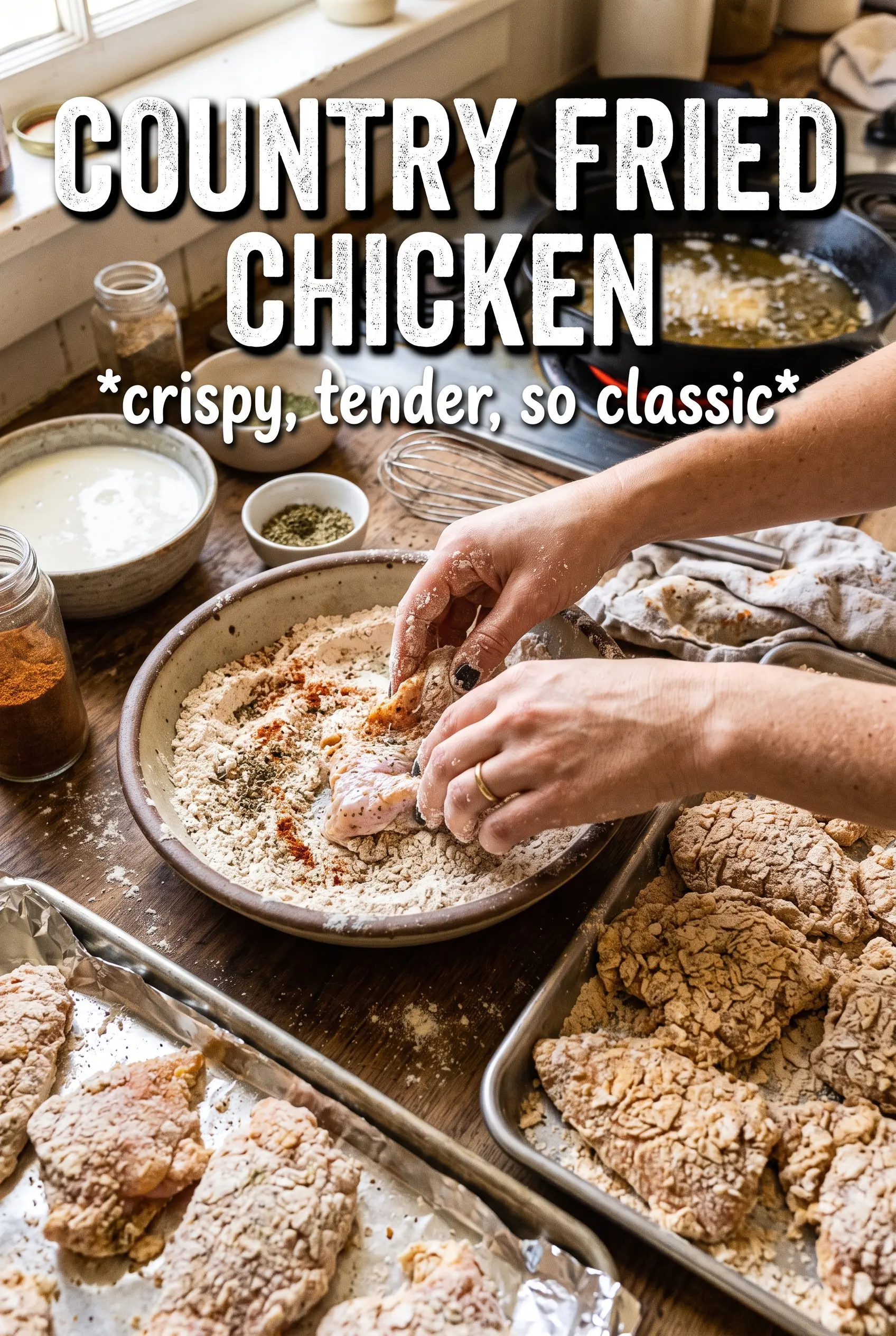
Whisk the flour, cornstarch, and spices in a shallow bowl, then lift each piece from the marinade and let the excess drip off before pressing it into the flour mixture. Press hard enough to pack on a good layer, then set the coated chicken aside for a few minutes. That pause matters because it lets the flour hydrate and cling, which keeps the crust from falling away in the oil.
Fry at a Steady 325°F
Heat the oil in a cast-iron skillet until it reaches 325°F and fry the chicken in batches so the temperature doesn’t crash. You’re looking for a deep golden crust that sounds lively in the pan, not a pale coating that soaks up oil. Turn the pieces once they release easily from the skillet and fry until the internal temperature hits 165°F. If the outside browns too fast, your oil is too hot; pull the pan off the burner for a minute before continuing.
Use the Pan Drippings for the Gravy
Pour off all but a couple of tablespoons of oil, then melt the butter and whisk in the flour. Cook that paste for a minute or two until it smells nutty and looks slightly sandy. Slowly whisk in the milk and broth so the gravy stays smooth, then simmer until it coats a spoon. If it turns lumpy, the liquid went in too fast or the heat was too high.
Season Until It Tastes Like the Chicken Needs It
Salt and black pepper are what make country gravy taste finished, not just thick. Add more pepper than you think you need; it should look speckled and taste sharp enough to cut through the fried coating. Spoon it over the chicken right before serving so the crust softens just a little at the edges without losing all of its crunch.
Three Ways to Make This Country Fried Chicken Fit Your Kitchen
Dairy-Free Version
Use unsweetened plain plant milk with a tablespoon of lemon juice or vinegar stirred in for the marinade, then make the gravy with unsweetened oat milk and chicken broth. The chicken will still fry up well, but the gravy won’t be quite as rich as the classic version.
Gluten-Free Coating
Swap the all-purpose flour for a good gluten-free all-purpose blend and keep the cornstarch. The crust will still get crisp, though it may be a little more delicate when you move the chicken in and out of the skillet.
Extra Peppery Southern Gravy
Add a full teaspoon of cracked black pepper to the gravy at the end and let it simmer for another minute. That gives you a sharper, more old-school finish that cuts through the fried crust beautifully.
Using Chicken Tenders Instead of Bone-In Pieces
Tenders cook faster and are easier to serve, but they won’t stay as juicy as bone-in pieces. Start checking them early and pull them as soon as they hit temperature, or the lean meat will dry out before the crust is deeply colored.
Storage and Reheating
- Refrigerator: Store the chicken and gravy separately for up to 3 days. The crust softens in the fridge, but it still holds together well.
- Freezer: The fried chicken freezes better than the gravy. Freeze the chicken on a tray, then pack it in a container for up to 2 months. Freeze the gravy only if you don’t mind whisking it smooth again after thawing.
- Reheating: Warm the chicken on a rack in a 375°F oven until hot and crisp again. Reheat the gravy slowly on the stove with a splash of milk or broth, stirring often so it doesn’t scorch or split.
Answers to the Questions Worth Asking
Country Fried Chicken
Ingredients
Equipment
Method
- In a bowl, whisk buttermilk, hot sauce, salt, and black pepper until combined. Add bone-in chicken pieces and marinate for 1 hour, or up to overnight in the fridge, until the chicken looks evenly coated.
- In a shallow bowl, whisk all-purpose flour, cornstarch, garlic powder, onion powder, smoked paprika, cayenne, salt, and black pepper. Stir until the dry mixture looks uniform in color and speckled with spices.
- Remove chicken pieces from the buttermilk marinade and let excess drip off. Dredge each piece in the flour mixture, pressing to adhere so the coating clings thickly.
- Heat vegetable oil in a large cast-iron skillet to 325F. Fry chicken for 12-15 minutes per side, turning once, until deeply golden and the internal temperature reaches 165F as checked at the thickest part.
- In a saucepan (or the cleaned skillet if desired), melt butter over medium heat and whisk in flour. Cook for 1-2 minutes, whisking constantly, until it smells lightly nutty and looks smooth.
- Gradually whisk in whole milk and chicken broth, keeping the mixture lump-free. Cook until thick and pourable, then season with plenty of salt and black pepper.
- Serve the fried chicken smothered in country gravy. Finish with a final crack of black pepper on top while the coating still looks crisp.