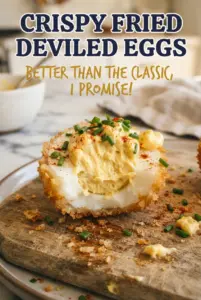
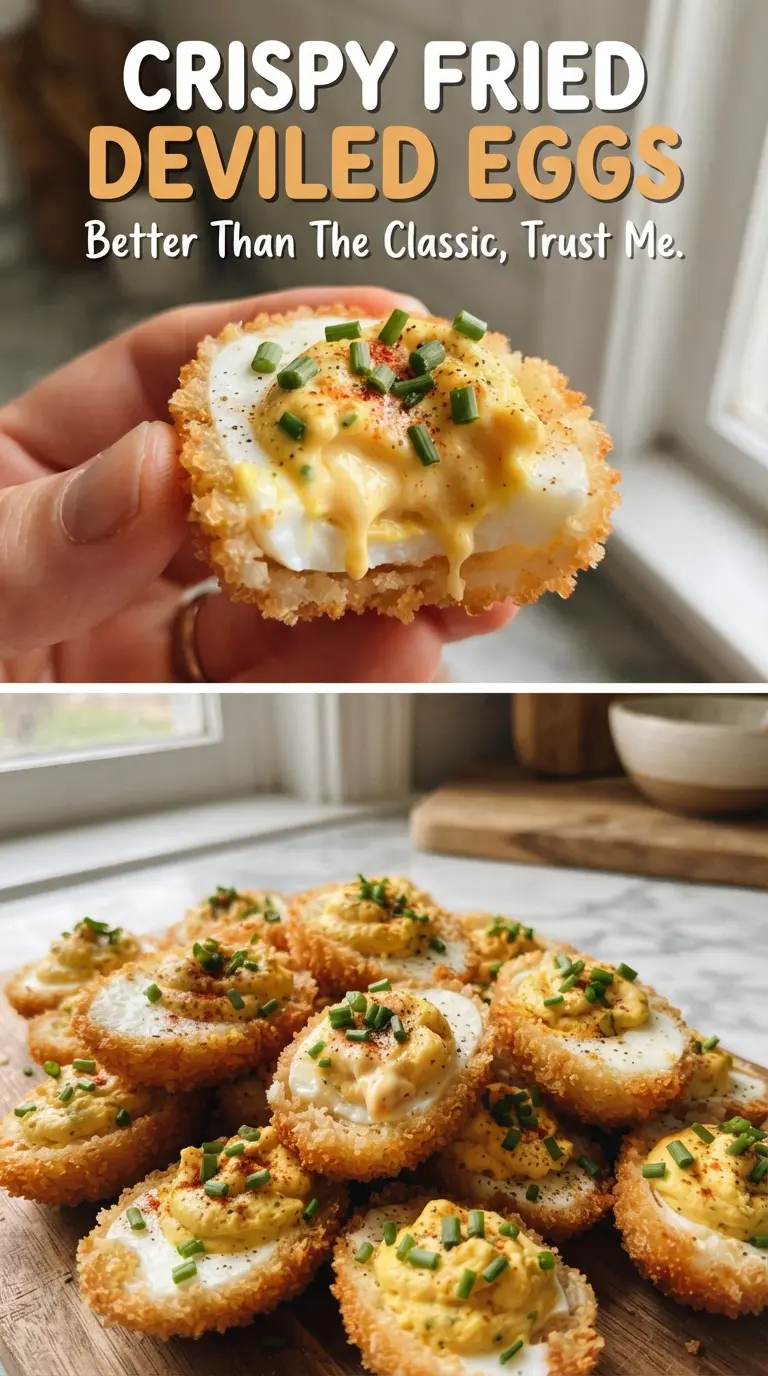
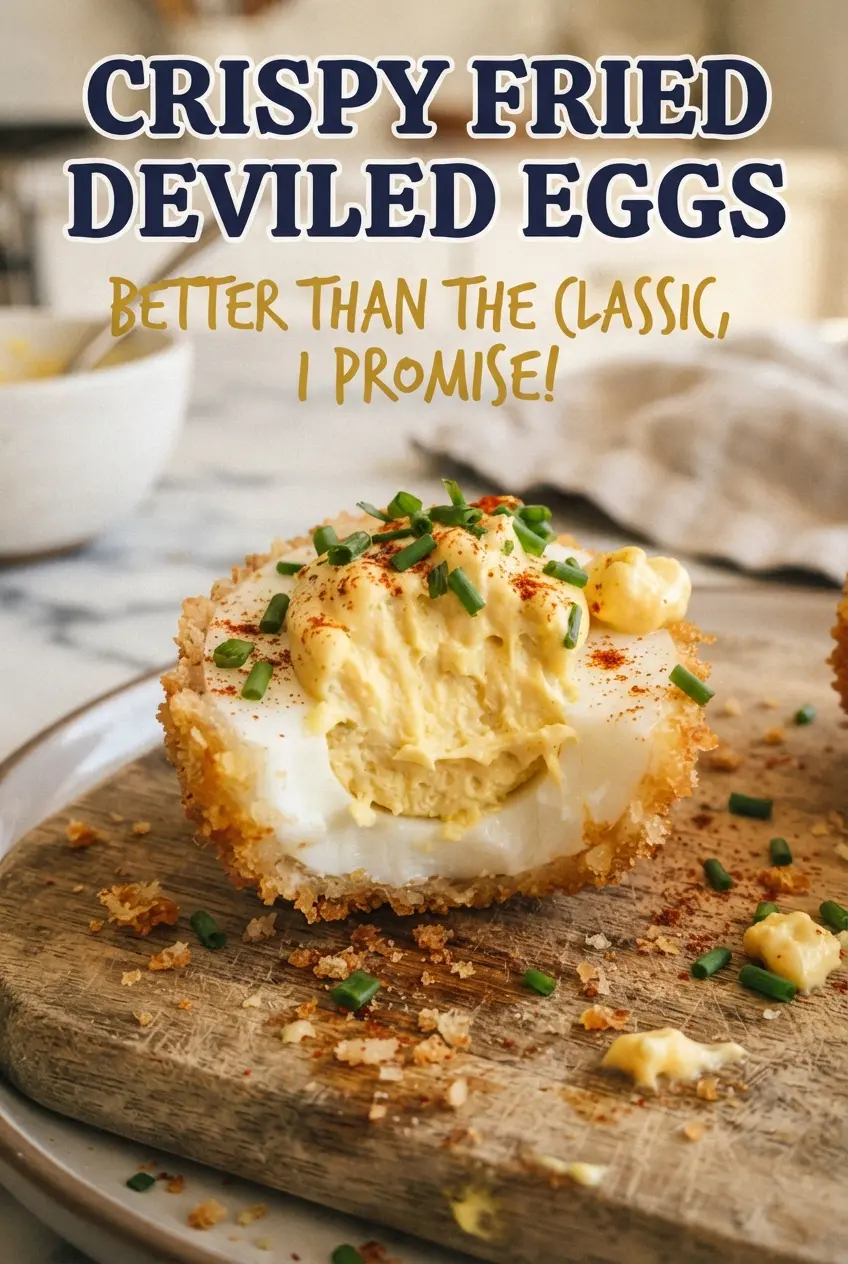
Crispy fried deviled eggs hit the table with the kind of contrast that makes people reach for a second one before they’ve finished the first. The egg white turns shatter-crisp in a panko coating, the yolk filling stays cool and creamy, and the little hit of relish and Dijon keeps the whole bite from feeling heavy. It’s the familiar Southern appetizer, just with a crackly shell that makes it feel new again.
The trick is treating the egg whites like something you’d fry on purpose, not just something holding the filling. A dry coating of flour, egg, and panko gives the crust something to cling to, and the garlic powder in the breadcrumbs adds just enough seasoning to keep the outside from tasting flat. Chill the yolk mixture before piping it in, because warm filling will soften the crust before you get the platter to the table.
Below, I’ve included the small details that matter most, from keeping the shells neat after boiling to frying in batches so the oil stays hot enough for a crisp finish. If you’ve ever wanted deviled eggs that stay crunchy instead of soggy, this is the version worth keeping.
The panko stayed crunchy even after I let these sit out for a bit, and the filling piped in smoothly after chilling. My husband kept grabbing “just one more” until the plate was empty.
Crispy fried deviled eggs bring together creamy yolks and a shattering panko crust — perfect for the appetizer table when you want something familiar with a crunchy twist.
The Crisp Coating Is What Keeps These From Turning Soft
Deviled eggs usually fail in one of two places: the whites get rubbery, or the whole thing turns soggy once the filling goes in. Frying the egg white halves after they’ve been coated solves the first problem, but only if the oil is hot enough to set the crust fast. If the temperature drops too far, the breadcrumbs drink up oil instead of turning crisp, and the coating goes greasy before the filling even shows up.
- The flour gives the egg a dry surface to grab onto. Skip it and the panko slides around when you move the eggs to the skillet.
- The beaten egg acts as glue, but it needs a thin, even layer. Thick patches create lumpy breading that fries unevenly.
- Panko stays lighter and crunchier than regular breadcrumbs. That airy texture is what makes the crust crackle instead of feeling bready.
- Frying in batches matters here. Crowding the pan drops the oil temperature, and that’s the fastest way to lose the crunch.
What the Filling and Coating Are Doing for You
- Eggs — Older eggs peel a little more cleanly than super-fresh ones, which helps a lot when you’re trying to keep the whites intact for frying. Use large eggs so the filling ratio stays balanced after halving.
- Mayonnaise — This is what makes the yolk filling smooth and pipeable. A good store-bought mayo works fine; just don’t use one with a sharp, watery finish, or the filling can taste thin.
- Sweet pickle relish — It gives the filling a little sweetness and acidity, which keeps the rich yolks from tasting flat. If you swap it for chopped pickles, drain them well so the filling doesn’t loosen.
- Dijon mustard — Dijon brings a cleaner, brighter bite than yellow mustard and blends into the filling without turning it harsh. If you only have yellow mustard, use a little less because it reads louder.
- Panko breadcrumbs — Regular crumbs won’t give the same light crunch. If you need a gluten-free version, use gluten-free panko and keep the rest of the method the same.
- Vegetable oil — Pick a neutral oil with a high smoke point. You’re frying the coating, not flavoring it, so this is one place where neutral really matters.
Frying the Whites First, Then Filling Them
Boil, Chill, and Peel Cleanly
Start the eggs in cold water, bring them up to a boil, then cover the pot, pull it off the heat, and let them stand for 12 minutes. That gentler method gives you yolks that are set without going chalky and whites that stay tender instead of rubbery. Chill them completely before peeling, because warm eggs tear more easily and leave ragged edges that fry unevenly.
Build a Filling That Pipes Instead of Smears
Mash the yolks with mayonnaise, relish, Dijon, and salt until the mixture is smooth enough to mound on a spoon. If it looks stiff, add a tiny spoonful more mayo; if it looks loose, chill it longer before piping. A chilled filling holds its shape when it lands in the crisp shells, which keeps the coating from softening too fast.
Set the Crust in Hot Oil
Heat about 1 inch of oil to 350°F and fry the coated whites in batches for 1 to 2 minutes. You’re looking for a deep golden crust that sounds faintly crackly when you lift it from the oil. If the coating darkens too fast, the oil is too hot; if it stays pale and heavy, it’s too cool.
Fill After Frying, Not Before
Let the fried whites cool for about 5 minutes before piping in the yolk mixture. That short rest keeps the filling from melting the crust on contact. Finish with paprika and chives right before serving so the top stays bright and the eggs look as good as they taste.
Three Ways to Make These Work for the Table You’re Serving
Gluten-Free Crunch
Use a gluten-free panko-style breadcrumb and keep the flour coating in place if your blend includes starch. The result is still crisp, though the crust may brown a little faster, so watch the color closely in the oil.
Dairy-Free as Written
This recipe already skips dairy, so there’s nothing to swap. That makes the creamy filling easy to serve for mixed crowds without changing the texture or the frying method.
Spicier Southern Version
Add a pinch of cayenne to the yolk mixture or a little hot sauce if you want more heat. Keep it subtle, though, because too much heat will drown out the sweet relish and make the filling taste sharp instead of balanced.
Storage and Reheating
- Refrigerator: Store the fried whites and filling separately for up to 2 days. Once assembled, the crust softens fast.
- Freezer: These don’t freeze well after frying. The whites turn spongy and the filling loses its smooth texture when thawed.
- Reheating: Recrisp the fried whites in a 375°F oven for a few minutes if needed, then cool and fill. Don’t microwave them or the crust will go limp almost immediately.
Answers to the Questions Worth Asking
Crispy Fried Deviled Eggs
Ingredients
Equipment
Method
- Place 12 large eggs in a pot, cover with cold water, and bring to a boil; cover, remove from heat, and let stand 12 minutes. Chill the eggs, peel, and halve them lengthwise.
- Mash the yolks with mayonnaise, sweet pickle relish, Dijon mustard, and salt until smooth. Transfer the filling to a piping bag and chill.
- Coat each egg white half in all-purpose flour, then dip in beaten eggs, and finally press into panko breadcrumbs mixed with garlic powder. Arrange the coated halves on a sheet pan.
- Heat 1 inch of vegetable oil to 350°F. Fry the coated egg whites in batches for 1-2 minutes until golden, then drain on paper towels.
- Cool the fried egg white halves for 5 minutes. Pipe the creamy yolk filling into the crispy whites.
- Dust with paprika and top with chives, then serve right away. Add a garnish immediately so the crunch stays crisp.