Black pepper chicken lands with glossy sauce, tender chicken, and just enough bite from the pepper to keep every bite interesting. The chicken stays juicy because it’s cooked fast in batches, then tossed back into a sauce that clings instead of pooling at the bottom of the pan. It’s the kind of takeout-style dinner that tastes bold and finished, but still comes together on a weeknight without a lot of fuss.
The trick is using freshly cracked black pepper, not the dusty kind that’s been sitting in the cabinet too long. That pepper goes into the sauce and then gets another hit at the end, which gives the dish a warm, sharp edge instead of flat heat. Dark soy sauce deepens the color and adds a little molasses-like richness, while cornstarch gives the sauce that glossy, restaurant-style finish.
Below you’ll find the part that matters most: how to keep the chicken from steaming, how to build the sauce so it thickens without going gluey, and a few swaps if you need to work around what’s in your kitchen.
The sauce thickened up fast and coated every piece instead of turning watery. I used extra cracked pepper at the end and it tasted just like the takeout version my husband always orders.
Save this black pepper chicken for a fast stir-fry night with glossy sauce, cracked pepper, and rice.
The Reason the Sauce Clings Instead of Turning Watery
The difference between a great black pepper chicken and a soggy one comes down to heat and timing. If the pan isn’t hot enough when the chicken goes in, it leaks liquid and starts steaming before it browns. That means less flavor in the pan and a thinner sauce later.
Cooking the chicken in batches keeps the surface of the pan hot enough to get color. Once the vegetables go in, they should stay crisp-tender and still have a little bite. If they cook until soft, the finished dish loses the contrast that makes this style of stir-fry satisfying.
- High heat: This keeps the chicken moving fast and helps the sauce tighten quickly at the end.
- Batch cooking: Crowding the skillet dumps out moisture and blocks browning.
- Short sauce finish: Two to three minutes is enough for the cornstarch to activate and coat everything without reducing the vegetables to mush.
What Each Ingredient Is Actually Doing in This Dish
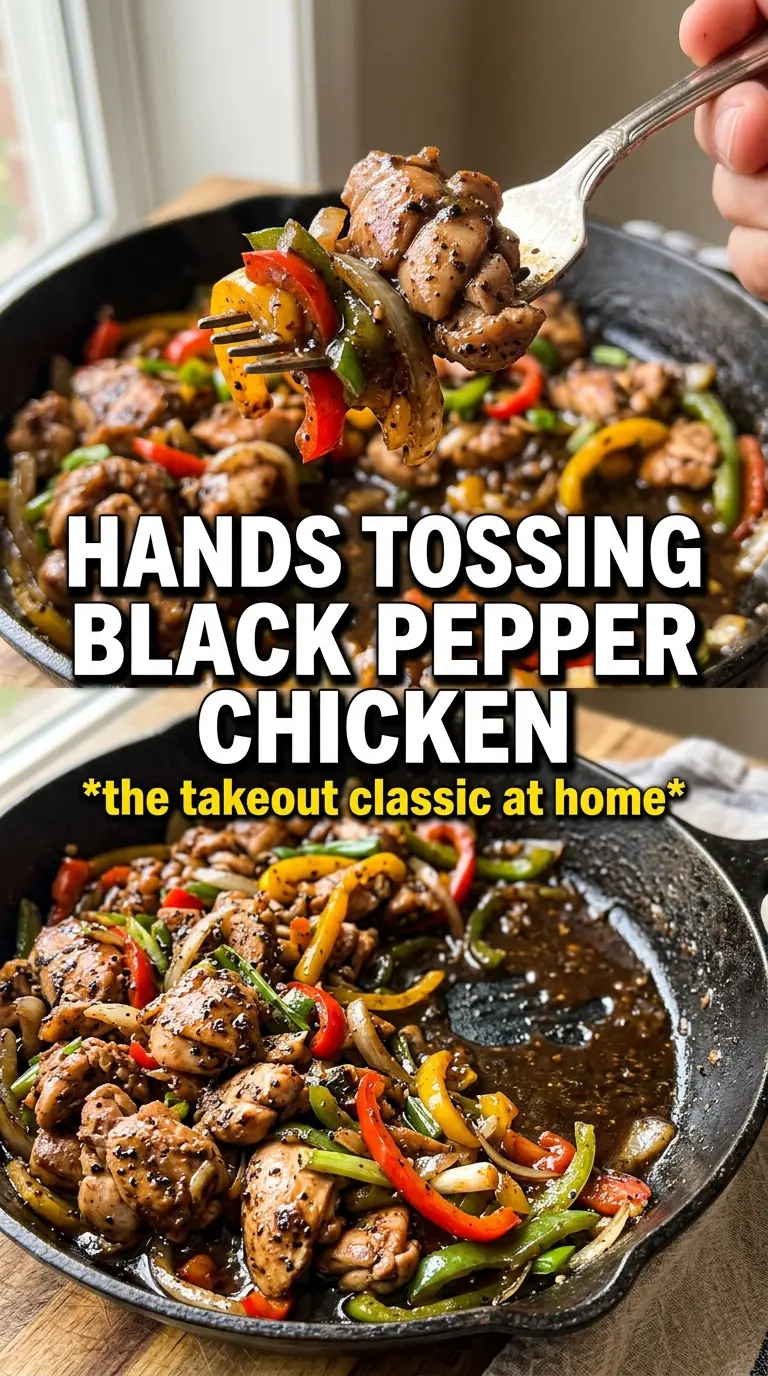
- Chicken breast: Thin slices cook quickly and stay tender. If you swap in chicken thighs, you’ll get a juicier, richer result, but the cook time stays about the same.
- Freshly cracked black pepper: This is the backbone of the dish. Pre-ground pepper won’t give the same sharp, aromatic bite, so crack it fresh if you want the sauce to taste alive.
- Dark soy sauce: This adds color and depth. If you don’t have it, use more regular soy sauce and accept a lighter sauce; it’ll still taste good, just less dark and lacquered.
- Cornstarch slurry: This is what turns the sauce glossy and clingy. Stir it in well before adding it, then give the pan a minute or two so it can thicken properly.
- Ginger and garlic: They need just a minute in the hot pan. If they cook too long, they turn bitter and disappear into the sauce instead of lifting it.
Getting the Stir-Fry Timing Right From the First Sizzle
Whisk the sauce before the pan gets hot
Mix the soy sauce, oyster sauce, dark soy sauce, brown sugar, black pepper, cornstarch, and water in a bowl before you start cooking. Once the chicken is back in the pan, things move fast, and you won’t have time to measure or whisk without overcooking something. The cornstarch needs to be fully dissolved or it can leave little white lumps in the sauce.
Brown the chicken in hot oil, not a crowded skillet
Use high heat and cook the chicken in batches so it actually sears instead of steaming. You’re looking for pale gold edges and opaque centers, not fully cooked chicken at this stage. It will finish in the sauce, and if you cook it through here, it can turn dry by the time the dish is done.
Keep the vegetables crisp, then finish fast
The bell pepper and onion only need a few minutes. They should soften slightly and pick up a little color while still holding their shape. Add the garlic and ginger near the end so they perfume the oil without burning, then return the chicken, pour in the sauce, and toss until everything turns glossy and thick. If the sauce looks thin at first, keep tossing; it usually tightens as soon as the cornstarch heats through.
How to Adapt This for What You Have on Hand
Chicken thigh swap for extra juiciness
Use boneless, skinless thighs in place of breast if you want a richer bite and a little more forgiveness on the stove. They stay tender even if the pan runs hot, though the final dish will taste a bit more savory and less lean.
Gluten-free version with a clean finish
Swap in tamari for the soy sauce and use a gluten-free oyster-style sauce if needed. The sauce still thickens and clings the same way, though the flavor will be a touch less deep if your substitute sauce is lighter.
Dairy-free and weeknight-friendly as written
This recipe is naturally dairy-free, so there’s nothing to change there. That makes it an easy choice when you want a takeout-style dinner without having to edit the ingredient list.
Extra vegetables without watering it down
Mushrooms, snap peas, or broccoli all work here, but add them in a way that matches their texture. Harder vegetables need a head start; delicate ones can go in with the bell pepper. Don’t overload the pan or the sauce will thin out before it has a chance to cling.
Storage and Reheating
- Refrigerator: Store leftovers in an airtight container for up to 4 days. The sauce will thicken a little more as it chills.
- Freezer: It freezes, but the bell peppers soften after thawing. If you want the best texture, freeze only the chicken and sauce, then cook fresh vegetables later.
- Reheating: Reheat in a skillet over medium-low heat with a splash of water until the sauce loosens and the chicken is hot. The common mistake is blasting it in the microwave until the chicken turns tough and the sauce gets sticky at the edges.
Questions I Get Asked About This Recipe
Black Pepper Chicken
Ingredients
Equipment
Method
- Whisk soy sauce, oyster sauce, dark soy sauce, brown sugar, and freshly cracked black pepper together in a bowl, then stir in cornstarch mixed with water until smooth and set aside.
- Let the sauce mixture sit while you prepare the chicken so the cornstarch hydrates slightly.
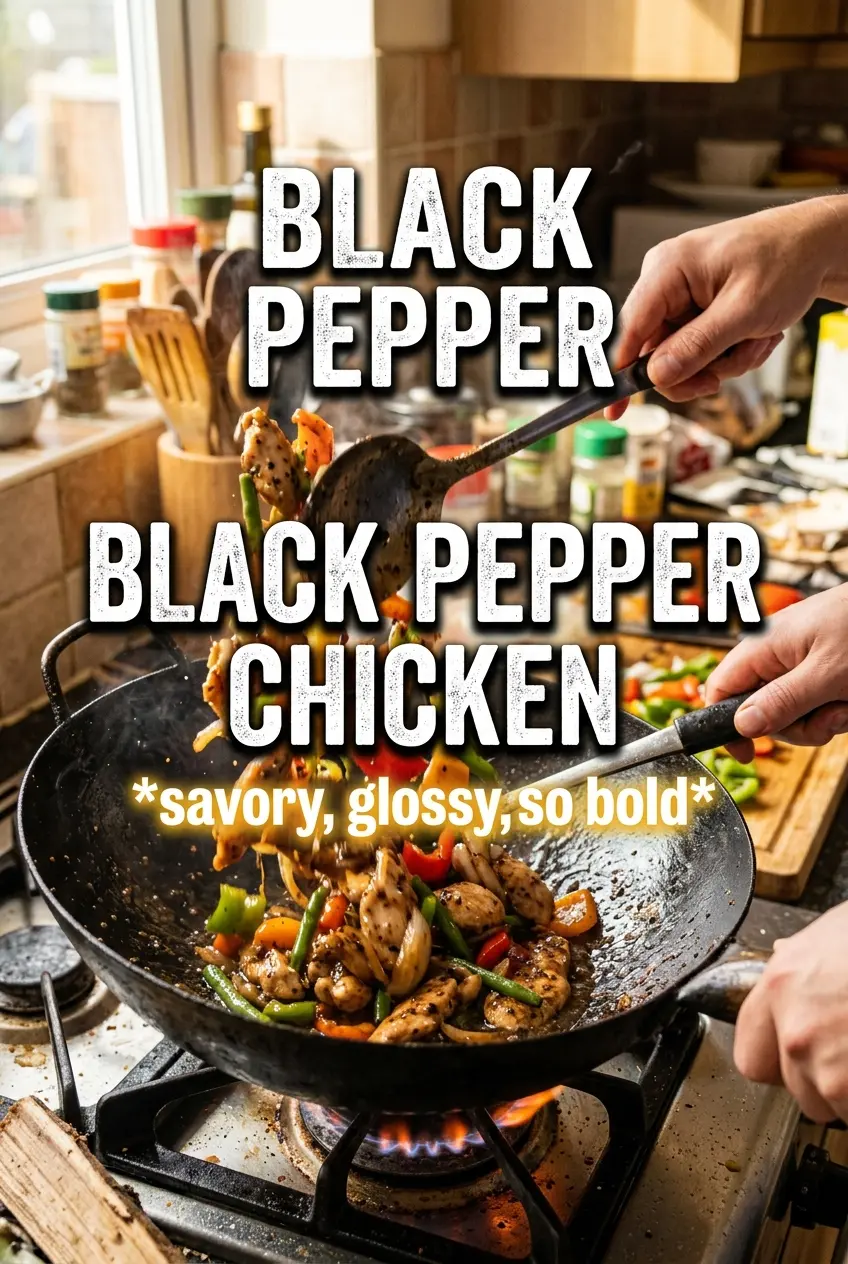
- Heat vegetable oil in a wok or large skillet over high heat until shimmering, then stir-fry the sliced chicken in batches until golden and cooked through; remove to a plate.
- Keep the heat high between batches so the chicken sears quickly rather than steaming.
- In the same wok or skillet, stir-fry bell pepper and onion for 3 minutes until crisp-tender.
- Add minced garlic and grated ginger and cook for 1 minute, stirring constantly so they don’t brown.
- Return the chicken to the pan, pour the prepared sauce over everything, and toss to coat evenly.
- Cook for 2-3 minutes until the sauce thickens into a glossy coating, then season with extra cracked black pepper and toss again.
- Serve the black pepper chicken over steamed rice so the sauce can run slightly into the grains.