Golden chicken thighs, glossy cider cream sauce, and tender apples make this the kind of skillet dinner that gets scraped clean. The chicken stays crisp at the edges, the sauce lands somewhere between savory and gently sweet, and the shallots melt into the pan until everything tastes layered instead of heavy. It feels elegant on the plate, but it cooks like a real weeknight meal.
The trick is building the flavor in stages. First, the chicken needs a hard sear so the skin has a chance to brown before it ever hits the simmering sauce. Then the apples and shallots cook in the same pan, picking up the browned bits left behind by the chicken, which is where the depth comes from. The cider brings brightness, the Dijon sharpens it, and the cream softens everything at the end without muting the apple flavor.
Below you’ll find the small details that matter here: how to keep the skin from going soft, which kind of cider gives the best result, and what to do if you want to make the dish a little lighter without losing the French-style finish.
The sauce thickened up beautifully and the apples held their shape instead of turning to mush. I made it on a Tuesday and my husband kept going back for the crispy chicken skin and that cider-Dijon sauce.
Save this French Apple Cider Chicken for a skillet dinner with crisp skin, tender apples, and a glossy cider-Dijon cream sauce.
The Skin Stays Crisp Only If You Leave It Alone
The most common mistake with this kind of braised chicken is crowding the pan and moving the thighs too soon. The skin needs uninterrupted contact with the hot fat to render and brown, and that means resisting the urge to peek or nudge it every minute. Once the skin is deep golden and releases cleanly, it has done its job. If it sticks, it is not ready yet.
After the sear, the chicken finishes in the sauce with the skin facing up, which keeps the top out of the liquid and preserves that good texture as much as braising allows. The sauce should simmer gently, not boil hard, or the dairy can tighten up later and the chicken skin can go flabby. This is one of those dishes that rewards patience in the first ten minutes and pays you back at the table.
What Each Ingredient Is Actually Doing In This Dish

- Bone-in, skin-on chicken thighs — These bring the richest flavor and stay juicy through the simmer. Boneless thighs will work in a pinch, but you lose the crisp skin and the sauce won’t have the same depth from the rendered fat.
- Hard apple cider or fresh apple cider — Hard cider gives the most complex, rounded flavor because it has a little tang and bitterness. Fresh cider works too, but if it tastes very sweet, the finished sauce can lean sugary; balance it with the Dijon and a good pinch of salt.
- Apples — Use a firm, tart apple that holds its shape in the pan, not a soft snacking apple that collapses into sauce. Thin slices cook quickly and catch some color without turning mealy.
- Shallots and garlic — Shallots melt into the sauce and add sweetness that onions would make heavier. Garlic only needs a minute; if it browns, it turns bitter fast and throws off the sauce.
- Dijon mustard — This is the backbone of the sauce. It sharpens the cider and helps the cream emulsify, so don’t swap in yellow mustard and expect the same result.
- Heavy cream — Heavy cream is what gives the sauce its silky finish and keeps it from curdling once the cider and broth are reduced. Half-and-half is more fragile here and can split if the pan is too hot.
Building The Sauce In The Same Pan Without Losing The Sear
Seasoning and Searing the Chicken
Pat the thighs dry, season them well, and lay them skin-side down in the hot olive oil and butter. You want an audible sizzle right away; if the pan is timid, the skin will steam instead of brown. Let the thighs cook until the fat renders and the skin turns deep golden, then flip just long enough to color the underside. Pull them out before they are fully cooked so they can finish gently in the sauce later.
Softening the Apples and Shallots
The pan should still have a little fat and a lot of browned bits after the chicken comes out. Add the shallots and apples and stir until the edges start to color and the shallots lose their sharp bite. Garlic and thyme go in near the end because they need only a minute to wake up; any longer and the garlic can burn while the apples are still catching up.
Deglazing and Simmering the Braise
Pour in the cider and scrape the pan bottom with a wooden spoon so nothing browned gets left behind. Let it bubble for a couple of minutes before adding the broth and Dijon; that quick simmer takes the raw edge off the cider and concentrates the fruit flavor. Return the chicken skin-side up, cover, and keep the heat low enough that the sauce barely shivers. If it boils hard, the texture gets greasy and the chicken loses the gentle braise you want.
Finishing with Cream
Stir in the cream after the chicken is cooked through and the apples are tender. Keep the heat low and let the sauce thicken for a few minutes; it should coat a spoon instead of running off like broth. Taste at the end and adjust with salt and pepper, because the cider, mustard, and broth each bring their own saltiness and acidity. If the sauce looks thin, give it another minute or two instead of turning up the heat.
How To Adapt The Dish When You Need A Different Balance
Dairy-Free Version
Swap the butter for more olive oil and finish the sauce with full-fat coconut milk or an unsweetened oat cream. The sauce won’t be as rich or as classic-tasting, but it will still be glossy and balanced if you keep the heat low and add the dairy-free cream at the very end.
Gluten-Free As Written
This recipe is naturally gluten-free as long as your broth and Dijon are certified gluten-free. The texture of the sauce doesn’t depend on flour, so you don’t need a substitute to keep it thick and silky.
Lighter Sauce, Less Rich Finish
Use half the cream and let the sauce reduce for an extra minute or two before serving. You’ll get a sharper, more cider-forward result with less body, but the apples and Dijon still carry the dish. Don’t push the heat to speed it up or the sauce can split.
Storage and Reheating
- Refrigerator: Store leftovers in an airtight container for up to 3 days. The skin softens in the fridge, but the flavor gets even better after a night in the sauce.
- Freezer: Freeze the chicken and sauce together for up to 2 months. The cream may separate slightly after thawing, but a gentle reheat and whisk usually brings it back together.
- Reheating: Warm it covered over low heat on the stove with a splash of broth or cider. High heat is the mistake here; it tightens the chicken and can make the sauce oily.
Answers To The Questions Worth Asking
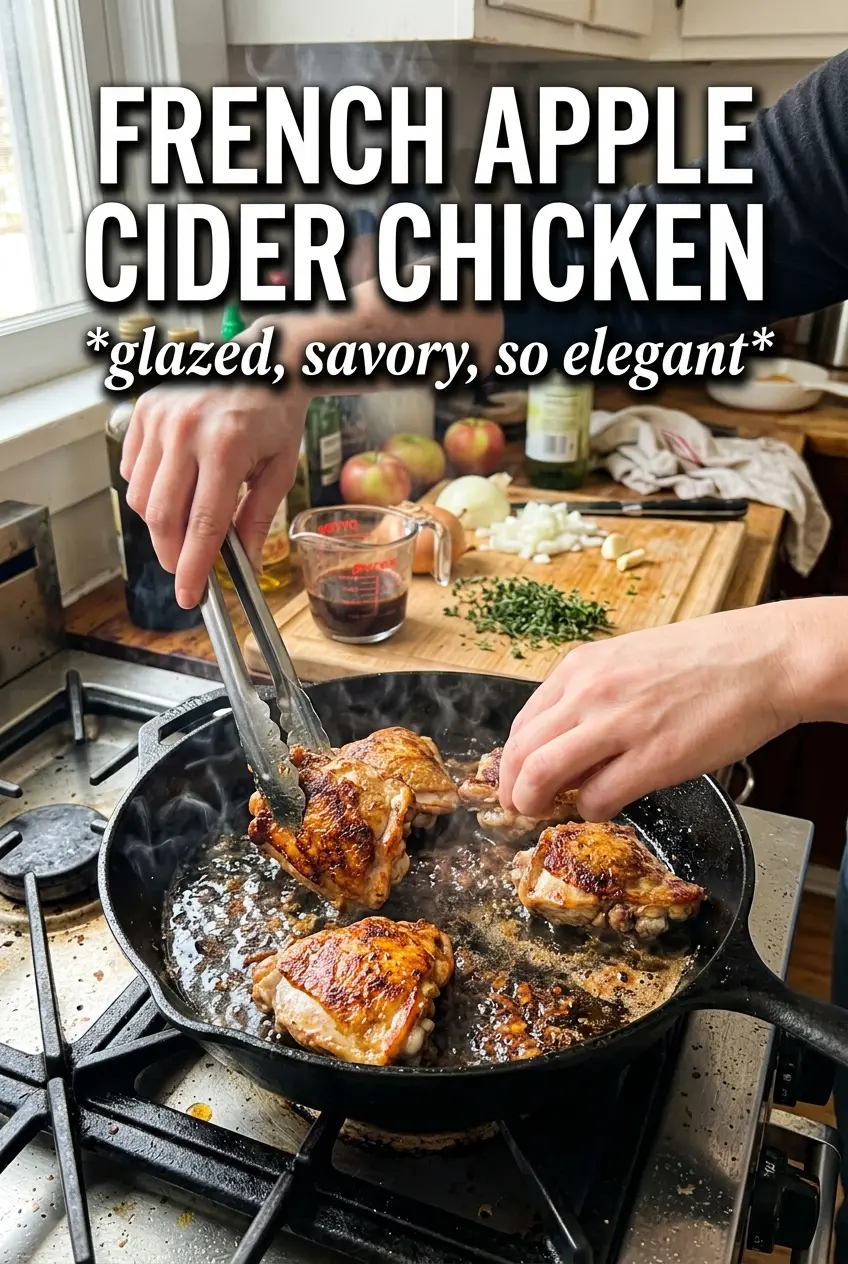
French Apple Cider Chicken
Ingredients
Equipment
Method
- Season the bone-in skin-on chicken thighs well with salt and pepper, then sear skin-side down in olive oil and butter over medium-high heat for 6-8 minutes until golden and crisp.
- Flip the bone-in skin-on chicken thighs and cook for 3 more minutes, then remove to a plate.
- Sauté the shallots and apples in the pan over medium heat for 4-5 minutes until golden and fragrant.
- Add the minced garlic and fresh thyme and cook for 1 minute, just until aromatic.
- Deglaze with hard apple cider or fresh apple cider and cook for 2 minutes to reduce slightly.
- Add the chicken broth and Dijon mustard, then stir to combine with the apple-cider reduction.
- Return the chicken skin-side up to the Dutch oven and cover, then simmer for 20 minutes until the chicken is cooked through.
- Stir in the heavy cream and simmer for 5 minutes, then season with salt and pepper to taste.