Pumpkin streusel cheesecake has the kind of contrast that keeps people coming back for a second slice: a crisp gingersnap crust, a smooth and gently spiced pumpkin filling, and a buttery oat topping that bakes into a golden crumble instead of sinking into the batter. The caramel drizzle at the end ties everything together without making the dessert feel overly sweet.
What makes this version work is the balance. The cream cheese and sour cream keep the filling rich but not dense, and the pumpkin gets enough spice to taste warm without turning muddy or flat. The streusel stays separate because the butter is kept cold and the topping is scattered over the batter right before baking, so you get those little craggy bits on top instead of a heavy layer.
Below, I’ve included the timing cues that matter most, plus a few smart swaps if you need to adapt the crust or make the cheesecake a little ahead of schedule.
The filling came out perfectly smooth and the streusel stayed crisp on top even after chilling overnight. The gingersnap crust was the best part for me.
Love the gingersnap crust and oat streusel on this Pumpkin Streusel Cheesecake? Save it to Pinterest for the dessert table when you want creamy, spiced, and crunchy in one slice.
The Water Bath Is What Keeps the Filling Silky
Cheesecake cracks when the edges set too fast and the center has to play catch-up. The water bath slows that bake down, which keeps the pumpkin filling smooth all the way through instead of dry around the rim and soft in the middle. It also helps the streusel brown without overcooking the batter beneath it.
The other place people get tripped up is overbaking. This cheesecake should still have a slight wobble in the center when it comes out of the oven. That wobble disappears during cooling and chilling; if you wait until the middle is fully firm in the oven, it usually ends up dense and grainy after it cools.
- Gingersnap crumbs — They bring spice and a firmer texture than a graham crust. If you need to substitute, graham crackers work, but the result will be milder and less bold.
- Sour cream — This softens the filling and adds enough tang to keep the pumpkin from tasting flat. Full-fat plain Greek yogurt can stand in, though the texture is a little less plush.
- Cream cheese — Use full-fat blocks, not whipped or tub-style cream cheese. The filling depends on that dense structure for a clean slice.
- Cold butter for the streusel — Cold butter creates craggy crumbs that hold their shape in the oven. If the butter softens too much, the topping turns pasty instead of crisp.
Building the Layers Without Losing the Texture
- Gingersnap crust — The crumbs, sugar, and melted butter should look like damp sand before you press them into the springform pan. Bake it for the full 10 minutes so it sets and stays crisp under the filling.
- Pumpkin cheesecake filling — Beat the cream cheese first until smooth, then add the sugar, eggs, pumpkin, sour cream, spice, cinnamon, and vanilla. If you rush this and leave lumps in the cream cheese, they won’t disappear later.
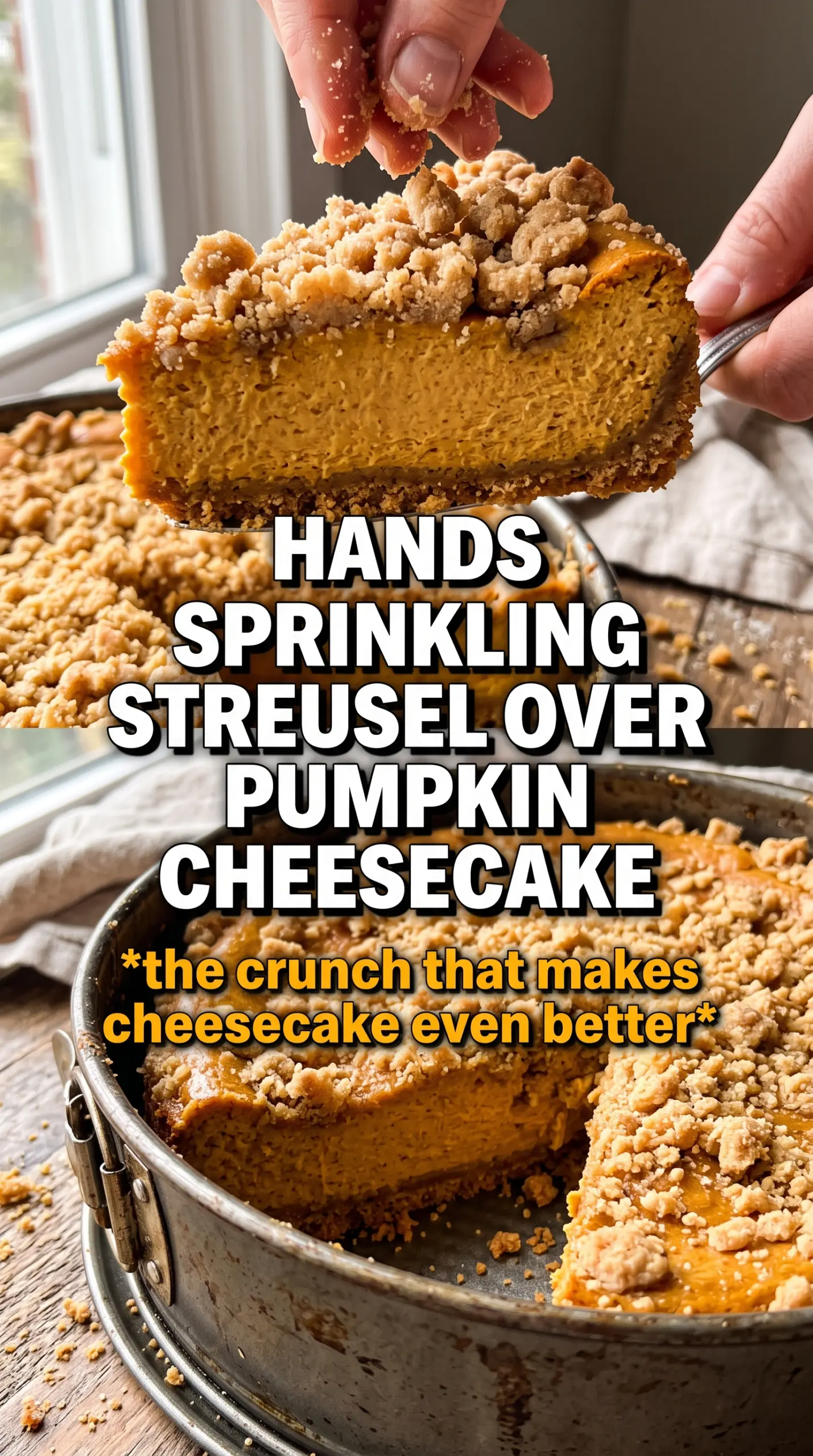
- Oat streusel — Cut the butter in until the mixture clumps into uneven crumbs. You want some bigger pieces for crunch; if it becomes a uniform paste, the top bakes up heavy instead of crisp.
- Caramel sauce — Add it at serving, not before baking. It belongs on the finished slice so the streusel keeps its texture.
From Crust to Chill Time: The Order That Matters
Pressing and Prebaking the Crust
Mix the gingersnap crumbs, sugar, and melted butter until every crumb looks coated, then press the mixture firmly into the bottom of a 9-inch springform pan. Use the bottom of a measuring cup to pack it down evenly, because loose spots can crumble when you slice the cheesecake. Bake the crust for 10 minutes until it smells toasted and looks set at the edges. Let it cool just enough so the filling doesn’t melt the butter back into the base.
Mixing the Filling Without Adding Air
Beat the cream cheese and sugar until the mixture is smooth before adding the eggs one at a time. Overbeating after the eggs go in traps air, and that air can rise and collapse in the oven, which leads to cracks. Stir in the pumpkin, sour cream, pumpkin pie spice, cinnamon, and vanilla until the batter looks uniform and glossy. Stop as soon as it comes together; cheesecake batter doesn’t need extra whipping.
Making the Streusel and Baking It Right
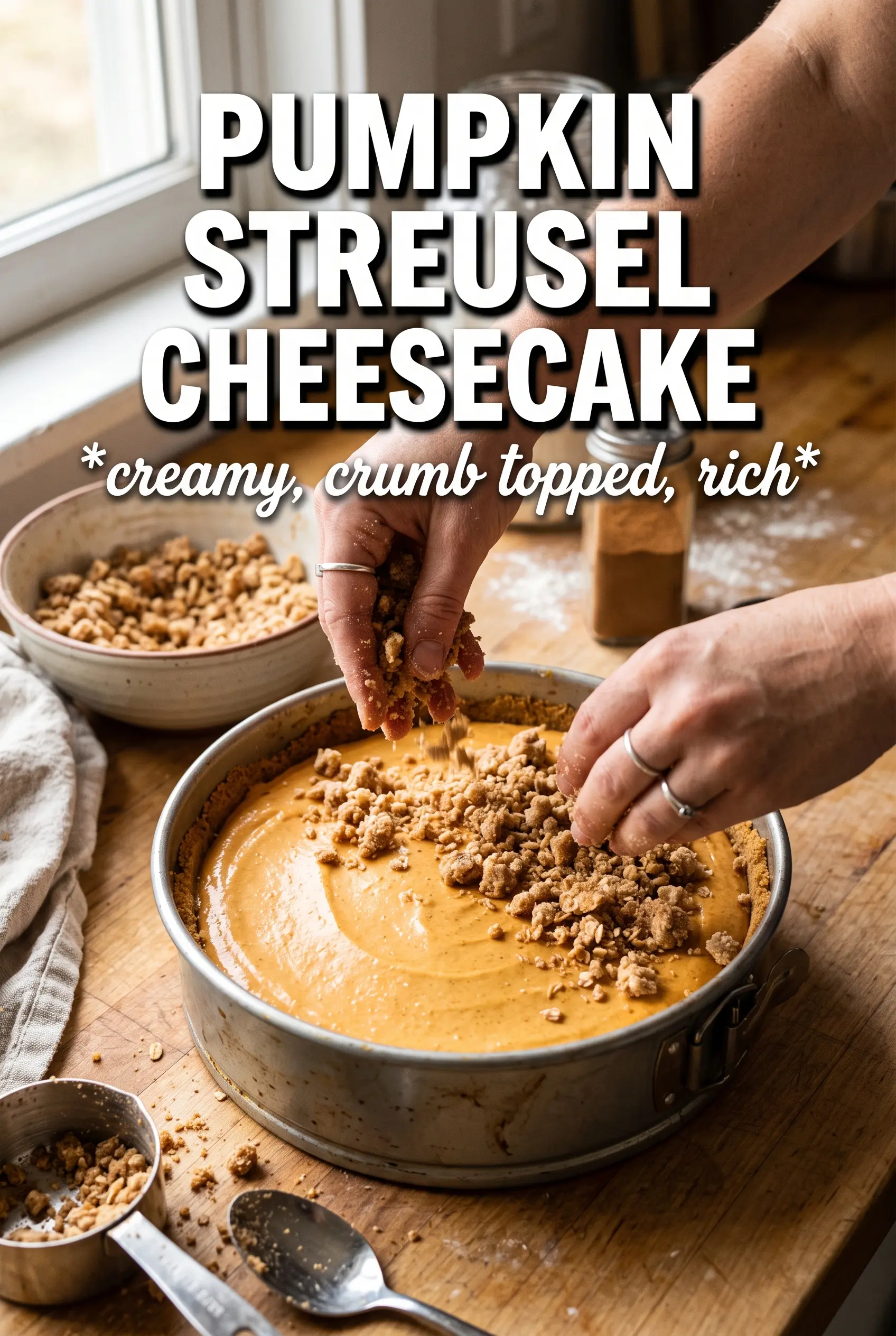
Combine the oats, flour, brown sugar, and cinnamon, then cut in the cold butter until you have coarse crumbs with some pea-sized bits. Scatter the streusel evenly over the filled pan, but don’t press it down — it needs room to crisp on top. Set the springform pan in a water bath and bake until the edges look set and the center still jiggles a little when you tap the pan. Pull it from the oven at that point; if you wait for the center to go fully still, the cheesecake will overbake on the carryover heat.
Cooling, Chilling, and Serving
Let the cheesecake cool completely before you move it to the refrigerator. Warm cheesecake going into the fridge throws off condensation, and that moisture softens the streusel. Chill it for at least 6 hours so the filling can finish setting cleanly. Drizzle with caramel right before serving, because that keeps the topping crisp and gives each slice that polished finish.
How to Adapt This Cheesecake When You Need a Different Path
Gluten-Free Crust and Streusel
Use gluten-free gingersnap crumbs and a 1:1 gluten-free flour blend in the streusel. The texture stays close to the original, though the topping can brown a little faster, so watch the last 10 to 15 minutes of baking.
Dairy-Free Cheesecake Filling
Swap in dairy-free cream cheese and a thick unsweetened dairy-free yogurt for the sour cream. The filling won’t have the exact same tang or richness, but keeping the batter chilled and not overbaking helps the texture stay creamy instead of grainy.
Making It Ahead for a Party
Bake the cheesecake the day before, chill it overnight, and add the caramel right before serving. That extra time actually helps the slices cut cleaner, and the streusel stays in better shape if it isn’t sitting under sauce for hours.
Swapping the Crust for Graham Crackers
Graham crackers work if that’s what you have, and the cheesecake will still bake up beautifully. You’ll lose the deeper spice from the gingersnaps, so the filling will taste a little softer and more classic.
Storage and Reheating
- Refrigerator: Store covered for up to 5 days. The streusel will soften a little on day two, but the cheesecake still slices well.
- Freezer: Freeze whole or in slices without the caramel sauce. Wrap tightly and freeze for up to 2 months, then thaw overnight in the refrigerator.
- Reheating: Cheesecake is best served chilled or just slightly cool, not warmed. If you want a softer slice, let it sit at room temperature for 20 to 30 minutes before serving instead of microwaving it.
Answers to the Questions Worth Asking
Pumpkin Streusel Cheesecake
Ingredients
Equipment
Method
- Preheat oven to 325°F. Press gingersnap crumbs into a 9-inch springform and bake for 10 minutes until fragrant and slightly set.
- Beat cream cheese until smooth, then pour in sugar, eggs, pumpkin, sour cream, pumpkin pie spice, cinnamon, and vanilla and mix until fully combined and glossy. Pour the filling over the baked crust.
- Cut cold butter into oats, flour, brown sugar, and cinnamon until crumbly. Scatter the streusel generously over the cheesecake.
- Place the springform in a water bath and bake at 325°F for 65-70 minutes until the center is just set with a slight jiggle. Cool to room temperature, then refrigerate for 6 hours.
- Drizzle caramel sauce over the chilled cheesecake slices right before serving, letting it run slightly down the sides for a caramel crown.