Juicy meatballs tucked into a rich brown onion gravy and spooned over mashed potatoes is the kind of dinner that disappears fast and leaves the pan scraped clean. The meatballs stay tender instead of dense, the gravy gets deep flavor from browned onions and Worcestershire, and the whole thing eats like classic comfort food without tasting flat or gluey.
What makes this version work is the order of the steps. The meatballs are browned first for flavor, but they finish gently in the gravy so they stay soft and absorb some of that oniony sauce. The gravy starts with butter and onions cooked long enough to take on color, then flour is whisked in before the broth goes slowly, which keeps the sauce smooth instead of pasty.
Below you’ll find the small details that make a big difference, from how to mix the meatballs without toughening them to what to do if your gravy gets thicker than you want.
The gravy thickened up beautifully and the meatballs stayed tender all the way through. I served it over mashed potatoes and my husband went back for seconds before I even sat down.
Save these meatballs and gravy for the nights when you want tender beef, a smooth brown onion gravy, and a skillet dinner that belongs on mashed potatoes.
The Secret to Tender Meatballs in a Gravy That Stays Smooth
The biggest mistake in meatballs and gravy is treating both parts like they need aggressive heat. They don’t. Overworking the meat makes the meatballs tight and springy, and boiling the gravy hard after the flour goes in can turn it dull or lumpy. The better approach is simple: mix just until the ingredients come together, brown the meatballs for flavor, then finish them gently in the sauce so the texture stays soft.
The gravy also needs a little patience at the onion stage. Those sliced onions are not just there for sweetness; they build the base of the sauce. Cook them until they’re soft and deepening in color, because pale onions make a flat gravy. Once the flour goes in, cook it for a full minute before adding broth so the sauce doesn’t taste raw.
- Ground beef — Use beef with enough fat to stay juicy. Extra-lean beef can work, but the meatballs will be firmer and the gravy won’t have as much richness from the skillet.
- Breadcrumbs and egg — This is the binder that keeps the meatballs tender. If you skip either one, the meatballs are more likely to break or turn dense.
- Parmesan — It adds salt and a little savory depth. Pre-grated is fine here, but finely grated melts into the mixture more evenly.
- Worcestershire sauce — It pulls the beef and gravy together with a little tang and umami. There isn’t a perfect substitute, but soy sauce can stand in if that’s what you have.
What Each Ingredient Is Actually Doing in This Recipe

- Primary ingredient (the star) — Quality matters most. Choose the best you can find.
- Cooking medium (oil, butter, or broth) — This carries flavors and prevents dryness.
- Seasonings (salt, pepper, spices, herbs) — Layer flavors so nothing overpowers. Build depth gradually.
- Aromatics (garlic, onion, herbs) — Cook with fat to bloom flavors. Become the foundation.
- Supporting ingredients — Complement the main ingredient without overpowering it.
- Sauce or liquid (if applicable) — Brings flavors together. Balance richness with acid.
- Acid (lemon, vinegar, wine, or other) — Brightens and prevents flat-tasting results.
- Final finish (garnish, glaze, or sauce) — Prevents one-dimensional taste and adds visual appeal.
Building the Skillet So the Gravy Picks Up Every Bit of Flavor
Mix the meatballs lightly
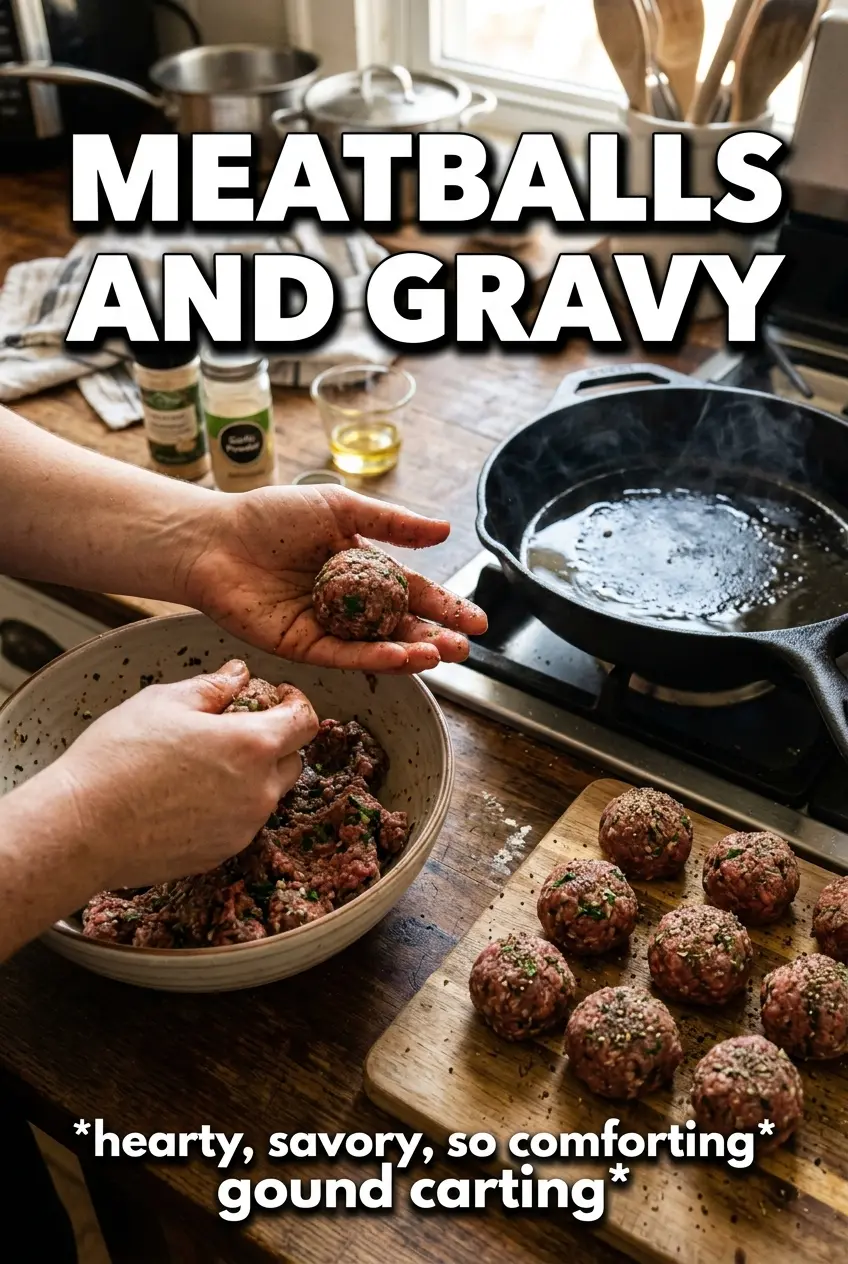
Combine the beef, breadcrumbs, parmesan, egg, garlic, onion powder, Worcestershire, salt, and pepper until the mixture just holds together. Stop as soon as you no longer see dry pockets. If you keep mixing, the meatballs turn compact and rubbery once they cook. Roll them into 1.5-inch balls and keep them similar in size so they finish at the same time.
Brown before the sauce
Use a large skillet and give the meatballs room to sear. You want color on the outside, not a full cook-through at this stage. If the pan is crowded, they’ll steam and release liquid instead of browning, and that means less flavor in the gravy later. Remove them once the outside is nicely browned; the centers will finish in the sauce.
Cook the onions until they deepen
Melt the butter and add the sliced onion. Let them cook slowly enough to soften and pick up color, stirring often so they don’t scorch. Ten minutes is a good target, but what matters is that they lose their raw edge and start looking glossy and golden. This is where the gravy gets its backbone.
Whisk the gravy until it turns silky
Sprinkle the flour over the onions and stir it around for a minute so the raw flour taste cooks out. Then add the beef broth gradually while whisking or stirring constantly. That slow addition keeps the sauce smooth. Once the Worcestershire and Dijon go in, let the gravy simmer until it coats a spoon; if it looks too thin, give it a few more minutes instead of dumping in more flour.
Finish the meatballs in the gravy
Slide the browned meatballs back into the skillet and spoon gravy over the top. Keep the heat low enough that the sauce barely bubbles. A hard boil can make the meatballs tough and can reduce the gravy too quickly. After about 15 minutes, they should be cooked through and the gravy should be glossy and thick enough to cling to mashed potatoes.
How to Adapt These Meatballs and Gravy Without Losing the Good Part
Make it dairy-free
Swap the parmesan for an extra tablespoon or two of breadcrumbs and use olive oil or a dairy-free butter substitute for the gravy. You’ll lose a little of the savory finish that parmesan brings, but the onion gravy still carries plenty of flavor if you let the onions cook down properly.
Use ground turkey or chicken
This works, but lean poultry dries out faster than beef. Add a tablespoon of olive oil to the meatball mix and don’t overcook them during the browning stage. The gravy helps a lot here, but the texture will be lighter and less rich than the beef version.
Make it gluten-free
Use gluten-free breadcrumbs in the meatballs and swap the flour for a 1:1 gluten-free flour blend or cornstarch slurry in the gravy. Cornstarch thickens faster and gives a slightly shinier finish, so add it carefully and keep the simmer gentle.
Storage and Reheating
- Refrigerator: Store leftovers in an airtight container for up to 4 days. The gravy thickens as it chills, which is normal.
- Freezer: Freeze the meatballs and gravy together for up to 2 months. Cool completely first, then pack in a freezer-safe container. The texture holds up well if you reheat it gently.
- Reheating: Warm on the stove over low heat with a splash of beef broth or water to loosen the gravy. Stir often and don’t let it boil, or the meatballs can tighten and the sauce can break.
Answers to the Questions Worth Asking
Meatballs and Gravy
Ingredients
Equipment
Method
- Mix the ground beef, breadcrumbs, parmesan, egg, minced garlic, onion powder, Worcestershire sauce, salt, and pepper until just combined, then roll into 1.5-inch balls.
- Brown the meatballs in a large skillet over medium-high heat and remove to set aside when golden-brown on the outside.
- Melt the butter in the skillet and caramelize the thinly sliced onion for 10 minutes.
- Whisk in the flour and cook for 1 minute.
- Gradually add the beef broth, Worcestershire sauce, and Dijon mustard, then simmer until the gravy thickens.
- Return the browned meatballs to the gravy and simmer for 15 minutes until cooked through.
- Serve the meatballs and gravy over mashed potatoes, then scatter with fresh parsley.