Pumpkin cheesecake snickerdoodle cookies bake up with crackly cinnamon-sugar tops, soft pumpkin-spiced centers, and a cool, tangy cheesecake pocket tucked inside. The contrast is what makes them memorable: the cookie stays tender and chewy while the filling turns rich and creamy without leaking out if you seal it well. One bite gives you the warm spice of a classic snickerdoodle and the dessert-bar feel of pumpkin cheesecake at the same time.
The trick is controlling moisture. Pumpkin brings great flavor, but it also brings water, which can make cookies spread and turn bready instead of plush. Blotting the pumpkin dry before it goes into the dough keeps the texture thick enough to hold the filling. Freezing the cream cheese mixture into small balls is just as important, because a cold center stays put long enough for the dough to set around it in the oven.
Below, you’ll find the little details that keep these cookies from turning messy: how to seal them cleanly, what the dough should feel like, and the best way to keep that cheesecake middle creamy after baking.
The filling stayed tucked inside and the cookies baked up thick with those crinkly cinnamon-sugar tops. I chilled the pumpkin like you said and they didn’t spread all over the pan.
Save these pumpkin cheesecake snickerdoodle cookies for the batch-bake day when you want a tangy center and a soft, cinnamon-sugar crust.
The One Pumpkin Mistake That Makes These Cookies Spread
The dough needs pumpkin for flavor, but pumpkin straight from the can carries enough extra moisture to throw off the whole cookie. If you skip the blotting step, the cookies can bake up puffy at first and then collapse into a soft, sticky spread. The texture won’t be the thick, crinkled snickerdoodle look you’re after.
Keeping the cream cheese filling frozen is the other nonnegotiable piece. A room-temperature filling melts too soon and can break through the dough before the cookie has time to set. Cold filling gives the dough a head start, which is what keeps the cheesecake center neatly trapped inside.
- Blotted pumpkin — This isn’t about removing every trace of moisture; it’s about preventing a loose dough. Press the pumpkin between paper towels until it looks thick and almost paste-like.
- Cream of tartar — This is what gives snickerdoodles their signature tang and that soft, slightly chewy bite. It isn’t interchangeable if you want the real snickerdoodle texture.
- Frozen filling — Small, even balls melt at the right pace. If the filling is misshapen or soft, the cookies get harder to seal cleanly.
What Each Ingredient Is Actually Doing in the Dough

- Cream cheese — Full-fat cream cheese gives the filling that cool, tangy center that tastes like cheesecake instead of sweetened frosting. Lower-fat versions can work in a pinch, but the filling gets looser and less rich.
- Powdered sugar — This sweetens the filling without any graininess. Granulated sugar leaves a rough texture here, so don’t swap it.
- Butter — Softened butter creams with the sugar and helps the cookies bake tender with crisp edges. Use unsalted if that’s what you keep on hand; just keep the salt in the dough.
- Pumpkin — The pumpkin should be blotted dry before it goes in. That’s what gives you pumpkin flavor without turning the dough slack.
- Cream of tartar and baking soda — Together they drive the classic snickerdoodle rise and that little bit of tang. Baking powder won’t give the same texture or flavor.
Building the Cookies So the Filling Stays Inside
Mix the filling and freeze it first
Stir the cream cheese, powdered sugar, pumpkin pie spice, and vanilla until smooth, then scoop it into teaspoon-sized portions and freeze them until firm. You want them cold enough to handle without smearing, not rock hard for hours. If the filling stays soft, it will leak out during shaping and you’ll lose the center.
Make the pumpkin dough without overworking it
Cream the butter and sugar until light, then beat in the blotted pumpkin, eggs, and vanilla. Add the dry ingredients and stop as soon as the flour disappears. The dough should be soft but scoopable; if you mix it aggressively after the flour goes in, the cookies can bake up tough instead of tender.
Wrap, seal, and coat generously
Scoop a 2-tablespoon portion of dough, flatten it in your palm, and set a frozen cream cheese ball in the center. Pull the dough up and around the filling, then pinch the seam closed before rolling it into a smooth ball. Roll each one generously in the cinnamon-sugar mixture so the outside bakes into that crackly, sparkly crust. If you see any filling peeking through, pinch it shut before it goes on the tray.
Bake until the edges set
Bake at 375°F for 11 to 13 minutes, just until the tops are set and the edges have that light golden look. The centers should still look a little soft when they come out; they’ll finish setting as they cool. If you wait until the whole cookie looks fully baked in the oven, the cheesecake center can dry out and the cookie will lose its soft middle.
Make Them a Little More Pumpkin Forward
Add an extra 1/4 teaspoon pumpkin pie spice to the dough if you want the pumpkin flavor to read louder. Don’t add extra pumpkin puree, though — more moisture changes the texture and makes the cookies spread.
Gluten-Free Version
A good 1:1 gluten-free flour blend works here if it includes xanthan gum. The cookies may bake up a touch more delicate, so chill the shaped dough balls for 10 to 15 minutes before baking if they feel soft.
Dairy-Free Swap
Use dairy-free cream cheese and a plant-based butter stick with a firm texture, not a soft tub spread. The filling won’t taste exactly the same, but you’ll still get the creamy center and cinnamon-sugar shell.
Storage and Reheating
- Refrigerator: Store in an airtight container for up to 5 days. The filling firms up more in the fridge, but the cookies stay soft.
- Freezer: These freeze well after baking. Freeze in a single layer, then move to a container with parchment between layers for up to 2 months.
- Reheating: Let them sit at room temperature for 15 to 20 minutes, or warm one cookie for 8 to 10 seconds in the microwave. Heat too long and the cheesecake center gets hot and loose instead of creamy.
Answers to the Questions Worth Asking
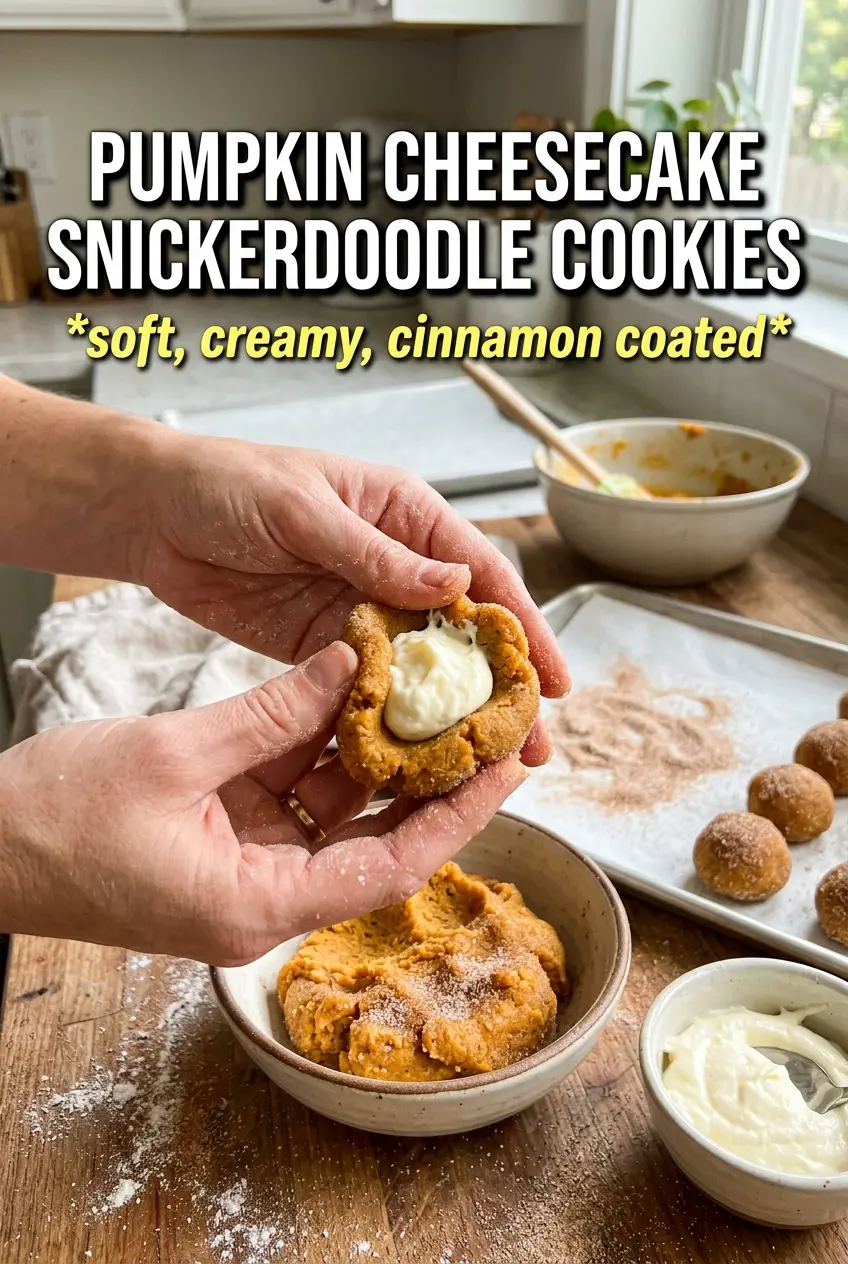
Pumpkin Cheesecake Snickerdoodle Cookies
Ingredients
Equipment
Method
- Stir together cream cheese, powdered sugar, pumpkin pie spice, and vanilla, then form into 24 teaspoon-sized balls and freeze for 30 minutes until firm.
- Beat butter and sugar until combined, then add blotted pumpkin, eggs, and vanilla and mix until smooth.
- Fold in flour, cream of tartar, baking soda, cinnamon, nutmeg, and salt until a thick dough forms.
- Scoop about 2-tablespoon portions of dough, flatten each, place a frozen cream cheese ball in the center, then wrap and seal the dough around it.
- Roll each sealed dough ball generously in a mixture of sugar, cinnamon, and pumpkin pie spice.
- Bake on a sheet pan at 375°F for 11-13 minutes, using a visual cue of set edges with centers that still look slightly soft.
- Cool cookies completely so the filling firms as it cools and the cookie structure sets.