Beef lasagna soup turns all the comfort of a baked lasagna into a bowl you can get on the table fast, with a rich tomato broth, tender pasta, and a ricotta-mozzarella topping that melts into the soup as soon as it hits the heat. The best part is that it eats like something that simmered all afternoon, even though it comes together in about 45 minutes.
What makes this version work is the layering. Browning the beef first builds a deep base, then the tomato paste cooks for a minute or two with the onion and garlic so it loses that raw edge and gives the broth more body. The broken lasagna noodles finish right in the pot, where they pick up flavor instead of tasting like plain pasta dropped into sauce.
Below you’ll find the little details that keep the noodles from clumping, how to get the cheese topping creamy instead of heavy, and a few smart swaps if you want to stretch the pot or change up the dairy.
The broth was rich without being heavy, and the lasagna noodles stayed perfectly tender instead of turning mushy. I stirred the cheese topping in at the table and it tasted just like lasagna night in soup form.
Love the rich broth and cheesy ricotta topping in this beef lasagna soup? Save it to Pinterest for an easy lasagna night without the layering.
The Noodles Only Need a Short Simmer
Lasagna noodles can go from perfectly tender to bloated and sticky fast, especially in a soup that keeps cooking at the table. The trick here is to simmer them just until they lose their raw bite, then stop. They’ll keep softening in the hot broth after the heat is off, so pulling the pot a little early gives you a better texture in the bowl.
- Broken lasagna noodles — Breaking them by hand gives you the rustic look this soup needs, and the uneven edges help the broth cling to every bite. If you cook them too long, they shed starch and turn the whole pot gummy.
- Tomato paste — Cooking it with the onion and garlic wakes it up and gives the broth a deeper, less sharp tomato flavor. Skipping that short sauté leaves the soup a little flat.
- Lean ground beef — Lean beef keeps the broth from turning greasy, but if you only have regular ground beef, drain off the fat after browning. A little fat is fine; a slick layer floating on top is not.
- Ricotta-mozzarella topping — This is the lasagna part people remember. The ricotta gives creaminess, the mozzarella melts into strands, and the parmesan sharpens the whole bowl.
What Each Ingredient Is Doing in the Pot
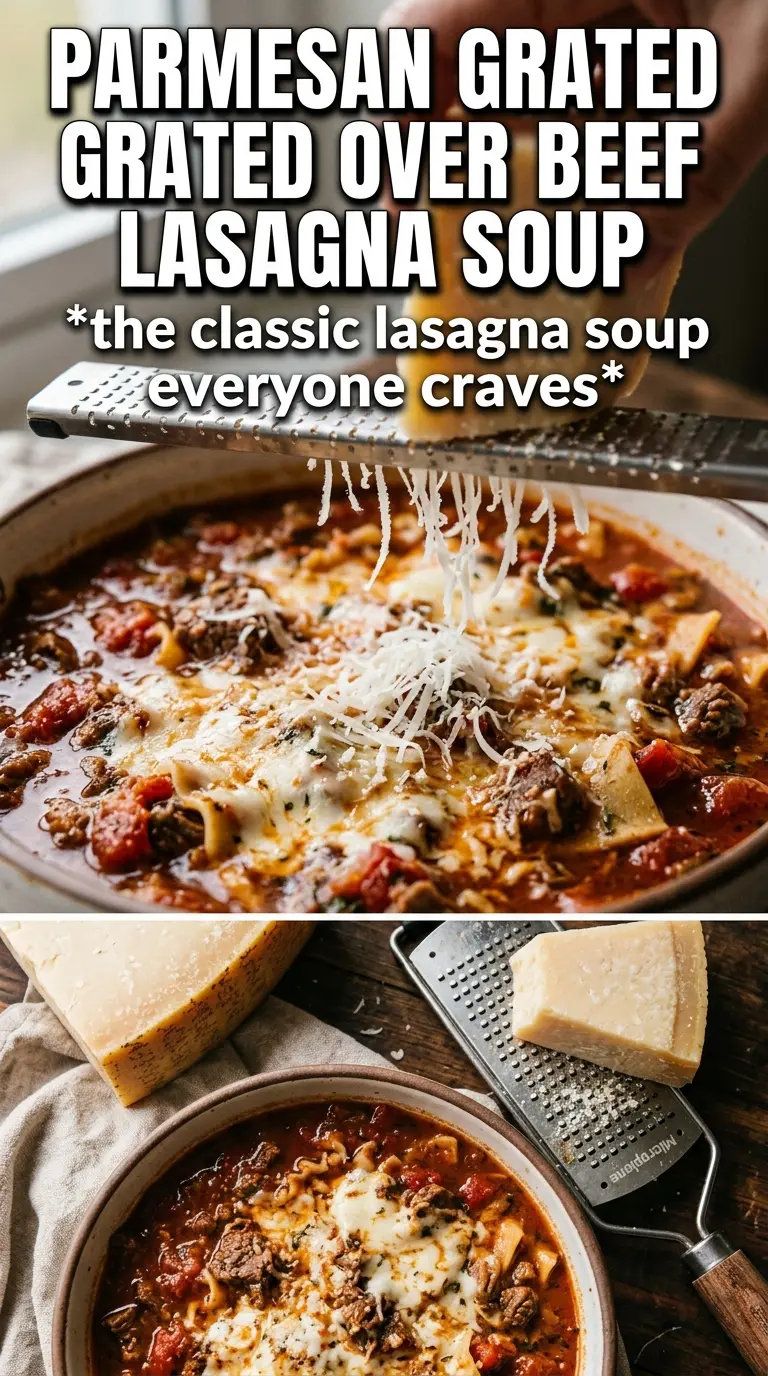
- Ground beef — This builds the savory backbone. Brown it well before adding anything else, because the browned bits on the bottom are what make the broth taste cooked instead of canned.
- Onion and garlic — The onion adds sweetness and body, and the garlic gives the soup its lasagna-like depth. Don’t rush this stage; the onion needs a few minutes to soften before the paste goes in.
- Crushed tomatoes and diced tomatoes — The crushed tomatoes create a smoother, thicker broth, while the diced tomatoes leave a little texture. If you only have one or the other, the soup still works, but the combination gives the best balance.
- Beef broth — Use a broth you’d actually drink on its own. Since this soup doesn’t rely on cream, the broth matters more than it would in a heavily enriched soup.
- Italian seasoning, basil, oregano, and red pepper flakes — This mix gives you the familiar lasagna flavor without needing a long ingredient list. If you want less heat, cut the red pepper flakes in half; if you want more, add a pinch at the end instead of loading it all in at once.
Building the Broth Before the Pasta Goes In
Brown the Beef Hard Enough to Matter
Cook the beef in a large pot over medium-high heat until it’s no longer pink and you see browned spots on the bottom of the pan. That browning is where the flavor comes from, so don’t stir constantly or the meat will steam instead of sear. Drain off the excess fat once the beef is cooked, but leave the pot itself alone; the browned residue clinging to the bottom should stay there.
Soften the Onion and Wake Up the Tomato Paste
Add the diced onion to the same pot and cook it for about 4 minutes, stirring now and then, until it turns translucent and starts to soften at the edges. Stir in the garlic and tomato paste and cook for 2 minutes more. The paste should darken slightly and smell sweet and concentrated; if it still smells raw, the broth will taste sharper than it should.
Simmer the Tomato Base
Pour in the crushed tomatoes, diced tomatoes, beef broth, Italian seasoning, basil, oregano, red pepper flakes, and black pepper. Bring the pot to a boil, then lower it to a steady simmer before the noodles go in. A hard boil after this point can break the tomatoes down too far and make the soup taste flat instead of layered.
Cook the Noodles Just to Tender
Add the broken lasagna noodles and simmer for 10 to 12 minutes, stirring every couple of minutes so they don’t stick together or settle on the bottom. You’re looking for noodles that are tender but still have a little bite in the center. If the pot gets too dry before the noodles finish, add a splash of broth or water rather than letting them sit and scorch.
Finish With Salt and the Cheese Dollop
Taste the soup and add salt only at the end, once the broth has reduced and the noodles have absorbed some of the seasoning. Mix the ricotta, mozzarella, parmesan, and basil in a small bowl, then spoon a generous dollop into each serving bowl. Ladling the hot soup around the cheese instead of stirring it all into the pot keeps the topping creamy and gives each bowl that lasagna-style finish.
How to Adapt This When You Need a Different Pantry
Make It Without the Dairy Topping
Skip the ricotta and mozzarella mixture and finish each bowl with a spoonful of dairy-free pesto or a sprinkle of nutritional yeast. You’ll lose the creamy lasagna feel, but the soup still tastes rich and satisfying because the broth carries so much of the flavor.
Use Ground Turkey Instead of Beef
Ground turkey works well if you want something lighter, but it needs the browned onion, garlic, and tomato paste step even more because the meat itself brings less richness. Add an extra pinch of salt and a little more parmesan on top to make up for the leaner flavor.
Gluten-Free Lasagna Soup
Use your favorite gluten-free lasagna noodles and watch them closely, since some brands soften faster than wheat pasta. If they start to break apart before the center is tender, pull the pot from the heat and let the residual heat finish the job.
Storage and Reheating
- Refrigerator: Store in an airtight container for up to 4 days. The noodles will absorb more broth as it sits, so expect the soup to thicken.
- Freezer: It freezes best without the noodles. If you plan ahead, freeze the broth and beef mixture, then cook fresh noodles when you reheat.
- Reheating: Warm it gently on the stove over medium-low heat with a splash of broth or water. Boiling it hard will overcook the noodles and make the texture loose and bloated.
Answers to the Questions Worth Asking

Beef Lasagna Soup
Ingredients
Equipment
Method
- Brown ground beef in a large pot until browned, then drain fat.
- Sauté onion in the same pot for 4 minutes, until softened and translucent.
- Add garlic and tomato paste, then cook for 2 minutes while stirring, until fragrant and slightly darkened.
- Add crushed tomatoes, diced tomatoes, beef broth, Italian seasoning, dried basil, dried oregano, red pepper flakes, and black pepper, then bring to a boil.
- Add broken lasagna noodles and reduce heat so the soup gently simmers.
- Simmer for 10-12 minutes, stirring occasionally, until the noodles are tender and look plump in the broth.
- Season with salt to taste and stir occasionally to prevent noodles from sticking.
- Mix ricotta, shredded mozzarella, parmesan, and fresh basil into a thick cheese dollop.
- Ladle soup into bowls and add a very generous spoonful of cheese dollop to each, letting it melt into the hot broth.