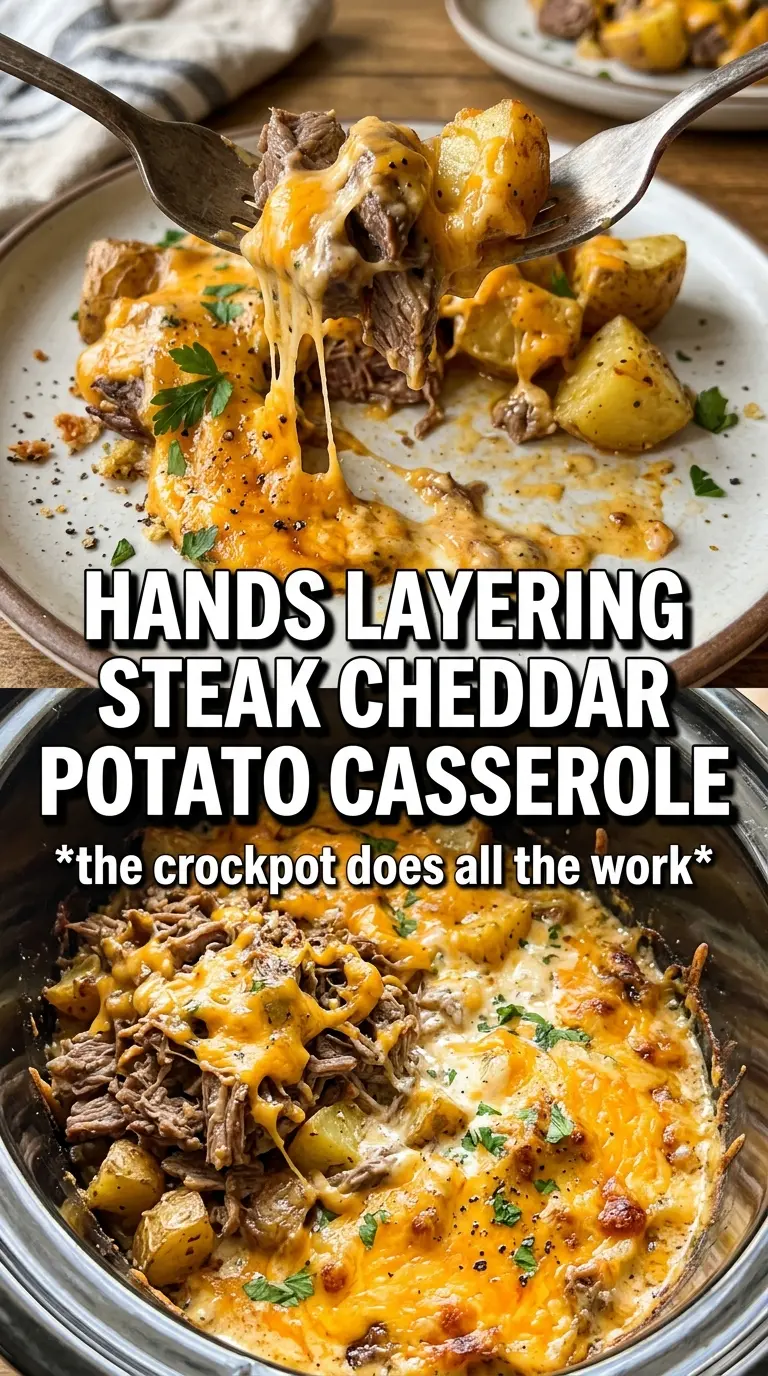
Slow cooker steak and cheddar potato casserole comes out rich, tender, and deeply satisfying, with soft Yukon gold potatoes, slices of beef that fall apart under a fork, and a sharp cheddar topping that melts into every layer. It’s the kind of dinner that tastes like it took a lot more attention than it actually did, which is exactly why it earns a permanent spot in the rotation.
The key is building enough seasoning into the slow cooker layers that the broth and cream soup don’t taste flat by the end. Thin potato slices cook evenly, and the steak stays tender when it’s cut against the grain and tucked between the potatoes instead of left sitting on top where it can dry out. The last few minutes of heat are there for the cheddar, not for further cooking, so the topping stays smooth instead of oily.
Below, I’ve added the small details that keep this casserole hearty instead of watery, plus a few smart swaps if you need to work around what’s in your kitchen.
The potatoes were tender all the way through and the cheddar melted into the broth just enough to make it creamy without turning greasy. My husband said it tasted like a steak dinner and potato casserole had a baby.
Save this slow cooker steak and cheddar potato casserole for a no-fuss dinner with tender beef, creamy potatoes, and a melted cheddar finish.
The Trick to Keeping the Potatoes Tender and the Steak Juicy
Slow cooker casseroles can turn muddy fast if the potatoes are cut too thick or the beef is left in chunks that cook unevenly. Thin, even potato slices give the heat a clear path, and they soften at the same pace as the steak, so you don’t end up with firm slices at the bottom and mush at the top. Yukon gold potatoes are the right choice here because they hold their shape better than russets and add a naturally buttery texture to the broth.
The other thing that matters is layering. Alternating potatoes, onion, and steak helps the broth move through the dish instead of pooling in one corner. If you pack everything in too tightly, the center stays under-seasoned and the edges can overcook before the middle is done. Low and slow is the best route for the beef, and the final cheddar melt should happen only after everything else is already tender.
What Each Ingredient Is Actually Doing in This Casserole
- Beef sirloin or chuck steak — Sirloin stays a little cleaner and more sliceable, while chuck turns softer and more braised. Either works, but cut it thin against the grain so the slow cooker can tenderize it without leaving chewy strips behind.
- Yukon gold potatoes — These are worth using here. They keep their shape better than starchy potatoes and help the casserole feel creamy without falling apart into paste.
- Cream of mushroom soup — This gives the casserole body and that classic savory base. A homemade white sauce won’t behave the same way in a slow cooker unless it’s thick enough before it goes in.
- Beef broth and Worcestershire sauce — The broth keeps the potatoes from steaming dry, and Worcestershire deepens the beefiness. Don’t swap in plain water unless you’re also willing to lose a lot of flavor.
- Sharp cheddar — Use sharp cheddar if you want the topping to stand up against the creamy sauce. Pre-shredded cheese works, but freshly shredded melts smoother because it doesn’t carry the anti-caking coating.
- Green onions and sour cream — These are the finishing balance. The onion adds freshness, and the sour cream cuts through the richness so the casserole doesn’t feel heavy after a few bites.
Building the Layers So the Casserole Cooks Evenly
Season the Beef Before It Goes In
Coat the sliced steak with salt, pepper, garlic powder, and onion powder before it ever touches the slow cooker. That early seasoning matters because the broth and soup will soften the edges of the flavor as it cooks. If the meat is under-seasoned at the start, the whole dish tastes flat no matter how good the cheese is at the end.
Layer Rather Than Dump
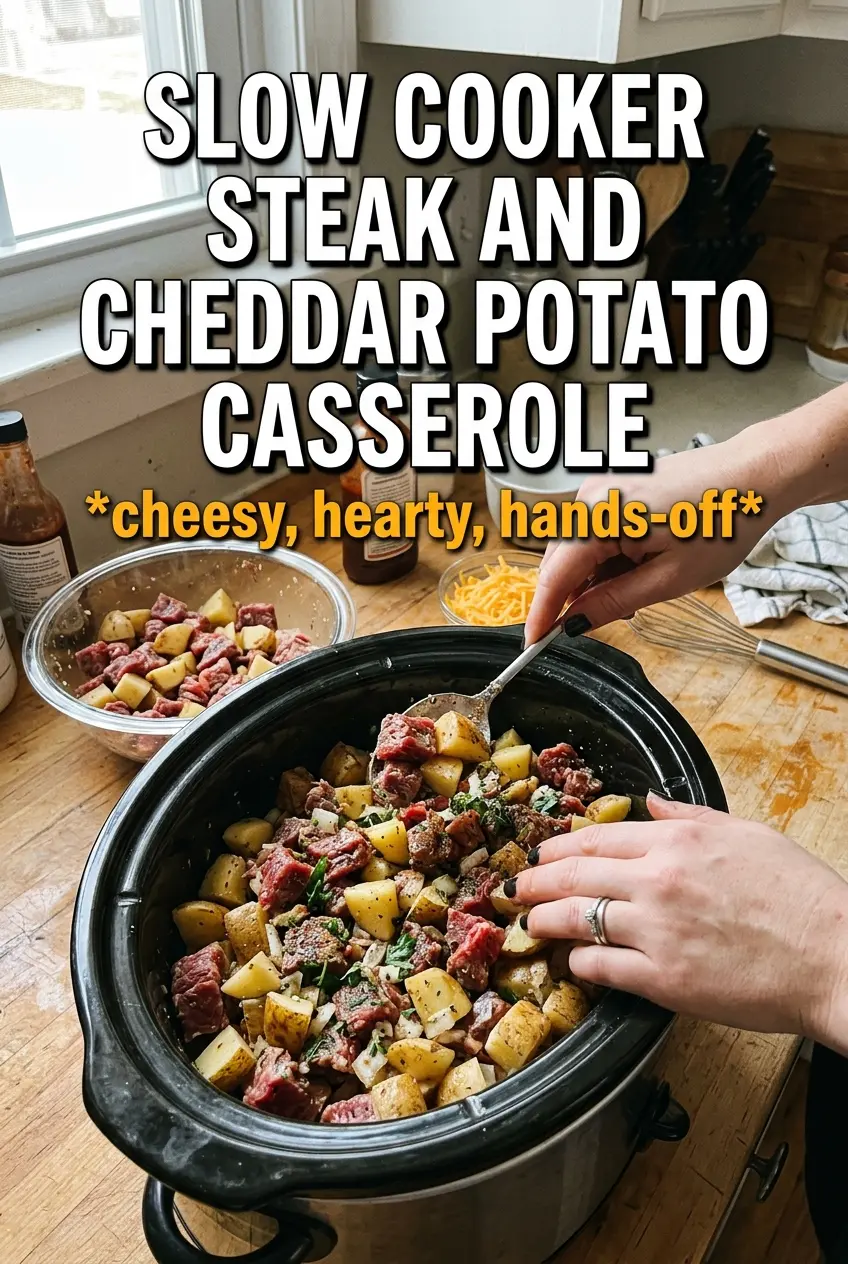
Alternate potatoes, onion, and steak in the crockpot instead of tossing everything in together. This keeps the broth moving through the dish and gives the potatoes a chance to cook without the beef clumping into one dense section. If you pile the steak in one layer, the bottom tends to overcook while the top stays bland.
Cook Until the Potatoes Yield Easily
Low for 6 to 7 hours gives the best texture, especially if your slices are thin but not paper-thin. The potatoes should be fork-tender all the way through, and the steak should separate easily without looking stringy or dry. If the potatoes still feel firm, keep cooking; lifting the lid early is one of the quickest ways to stall the slow cooker.
Add the Cheddar at the End
Scatter the cheese over the top only when everything else is already done, then cover and let it melt for the final 15 minutes on High. This keeps the cheese creamy instead of grainy or greasy. If it sits in the slow cooker for hours, the oils separate and the top loses that smooth blanket of melted cheddar you want.
How to Adapt This for a Different Pantry or Diet
Make it gluten-free
Use a gluten-free cream of mushroom soup and check that your Worcestershire sauce is certified gluten-free. The texture stays the same, but you keep the sauce from relying on wheat-based thickeners.
Swap the steak cut
Chuck steak gives you a softer, more braised texture, while sirloin stays a little firmer and meatier. If you use chuck, slice it thin and cook it low and slow so it turns tender instead of stringy.
Use a different cheese
Monterey Jack melts a little silkier, while a cheddar-jack blend softens the sharpness. If you use a milder cheese, the casserole needs a touch more salt at the end to keep the flavor from going dull.
Make it a little lighter
Use reduced-sodium broth and a lighter hand with the cheese, then finish with extra green onions for freshness. You’ll lose some richness, but the dish still feels hearty because the potatoes and beef carry the bulk of the texture.
Storage and Reheating
- Refrigerator: Store leftovers in an airtight container for up to 4 days. The potatoes will firm up a bit as they chill, but the flavor holds well.
- Freezer: This freezes better than many potato casseroles, though the texture softens slightly after thawing. Freeze in portions, then thaw overnight in the fridge before reheating.
- Reheating: Reheat gently in the microwave or covered in a 325°F oven with a splash of broth to loosen the sauce. High heat can make the beef dry and the cheese separate, so warm it slowly.
Answers to the Questions Worth Asking
Slow Cooker Steak And Cheddar Potato Casserole
Ingredients
Equipment
Method
- Season the steak slices with salt, pepper, garlic powder, and onion powder, tossing until evenly coated. Visual cue: spices should cling to the meat in a uniform layer.
- Layer potatoes, onion, and steak in the slow cooker in alternating layers. Visual cue: you should see even streaks of potato and onion throughout the stack.
- Whisk beef broth, cream of mushroom soup, Worcestershire sauce, and minced garlic in a bowl until smooth. Visual cue: the mixture should look creamy and evenly blended without lumps.
- Pour the broth mixture over the layered potatoes and steak. Visual cue: most of the top layer should be moistened and partially covered.
- Cover and cook on Low for 6-7 hours until the potatoes and steak are tender. Visual cue: potatoes should be easily pierced with a fork.
- Alternatively, cover and cook on High for 3-4 hours until the potatoes and steak are tender. Visual cue: the center potatoes should soften and the meat should break into tender shreds.
- Scatter shredded sharp cheddar over the top in an even layer. Visual cue: the surface should be fully covered with visible cheddar strands.
- Cook on High for 15 minutes until the cheddar is fully melted and bubbly at the edges. Visual cue: you should see a melted, glossy layer across the casserole.
- Serve hot with green onions and sour cream. Visual cue: add green onions for color and a spoonful of sour cream for a creamy contrast.