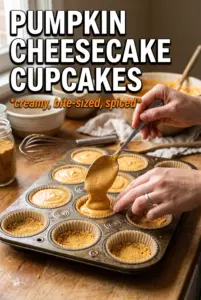
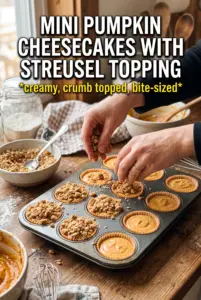
Mini pumpkin cheesecakes with streusel topping deliver the kind of finish people notice right away: a crisp gingersnap crust, a smooth pumpkin-spiced center, and a buttery oat crumble that stays lightly crunchy instead of sinking into the filling. Each bite gets a little of everything, which is exactly why these disappear fast from a dessert tray.
What makes this version work is the balance. The pumpkin brings moisture and color, but the cream cheese and sour cream keep the filling rich enough to taste like cheesecake, not pumpkin pie filling in a muffin cup. Baking them just until the centers are set keeps the texture silky, and the short chill time does the rest of the work so the tops stay neat when you drizzle on caramel.
Below, I’ll show you how to keep the streusel from turning sandy, how to know when the cheesecakes are done, and the easiest way to get clean, bakery-style little desserts out of a muffin tin.
The gingersnap crust stayed crisp and the streusel browned on top without getting soggy. I chilled them overnight and the texture was even better the next day.
Mini pumpkin cheesecakes with streusel topping are the kind of make-ahead dessert that chills beautifully and slices cleanly after a few hours in the fridge.
Save these mini pumpkin cheesecakes for an easy make-ahead fall dessert
The Trick to Keeping the Cheesecake Center Silky Instead of Puffy
Mini cheesecakes can overbake fast because the muffin tin heats from every side. That’s why the filling should come out when the centers still have a slight wobble and the edges look set. If you wait for the tops to look fully firm in the oven, they’ll finish dry and a little grainy after cooling.
The other thing that matters here is mixing. Beat the cream cheese until it’s completely smooth before the eggs go in, then stop as soon as the batter looks uniform. Overmixing after the eggs are added whips in extra air, and that air expands in the oven, then collapses as the cheesecakes cool.
- Room-temperature cream cheese gives you the smoothest batter. Cold cream cheese leaves little lumps that never fully disappear.
- Sour cream softens the texture and keeps the filling from tasting heavy. Plain full-fat Greek yogurt works in a pinch, but it brings a slightly tangier finish.
- Gingersnap crumbs are worth using here because they stand up to the pumpkin filling. Graham crackers work, but you lose the spicy edge that makes the crust taste intentional.
- The short crust bake helps the base set before the filling goes in, which keeps it from turning pasty under the custard.
What Each Layer Is Actually Doing Here
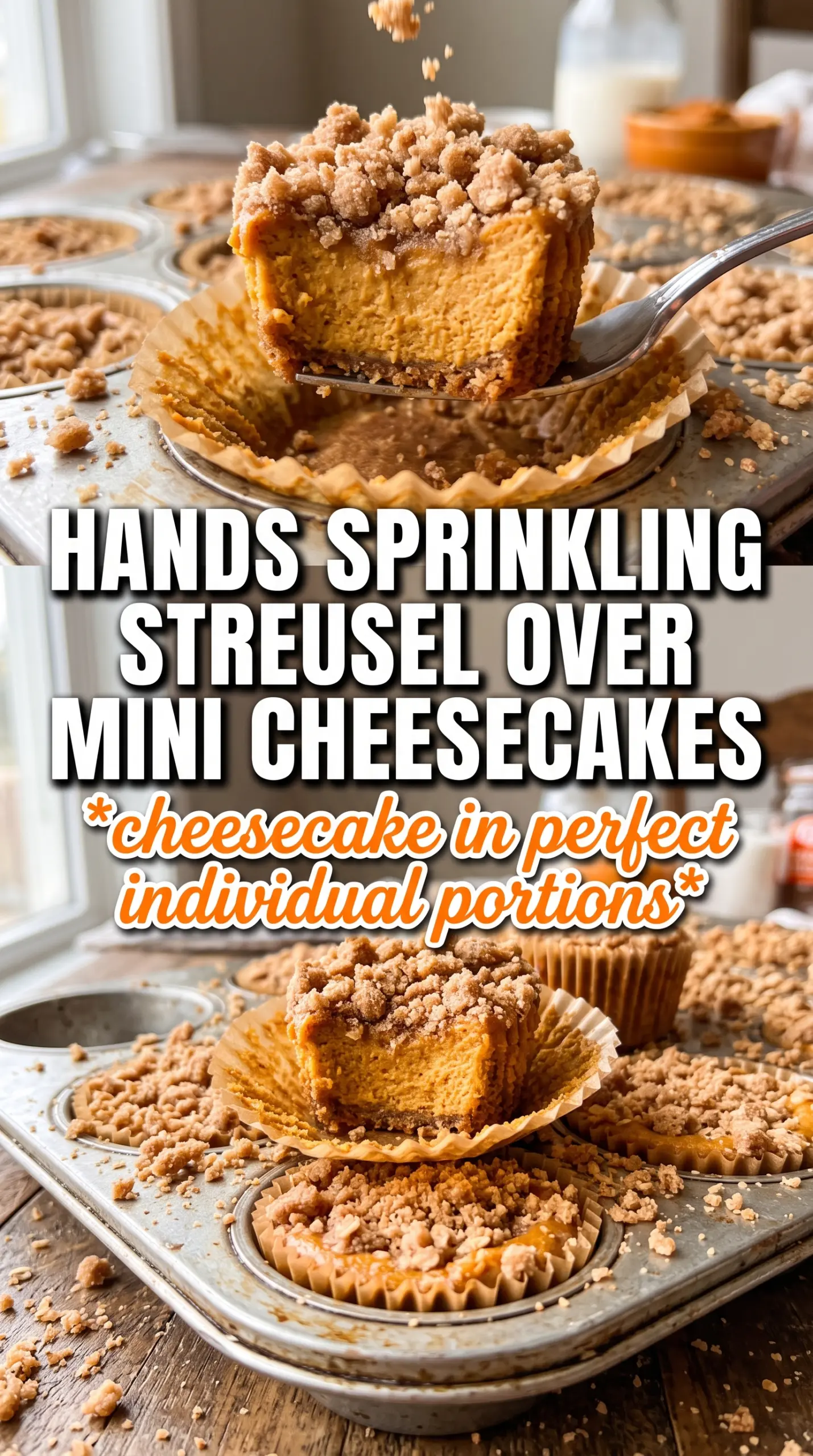
- Gingersnap crumbs bring spice and structure. They’re stronger than a standard cookie crust, which matters because pumpkin filling can soften a delicate base.
- Cream cheese is the backbone of the dessert. Use full-fat blocks, not whipped tub cream cheese, or the filling can bake up loose and watery.
- Pumpkin puree adds flavor and moisture, but it also loosens the batter. That’s why the recipe keeps the pumpkin amount moderate instead of turning this into a pumpkin custard.
- Brown sugar in the streusel gives the topping a deeper caramel note and helps it brown. White sugar works, but the crumble tastes flatter.
- Cold butter for the streusel is nonnegotiable. If it melts before baking, you’ll get a sandy layer instead of little crisp crumbs.
How to Build the Layers So the Tops Stay Neat
Pressing the Crust
Mix the gingersnap crumbs with melted butter and sugar until the crumbs look evenly moistened, then press them firmly into the liners. A flat-bottomed glass or measuring spoon makes this easier, and the goal is a compact layer that holds together when lifted. If the crust is loose now, it will crumble the second you peel back the wrapper.
Mixing the Filling
Beat the cream cheese and sugar first until the mixture looks smooth and glossy, then add the eggs one at a time. Stir in the pumpkin, sour cream, spices, and vanilla just until combined. The batter should look thick and satiny, not airy; if it starts to look fluffy, stop mixing and scrape the bowl.
Making the Streusel
Cut the cold butter into the oats, flour, brown sugar, and cinnamon until the mixture forms uneven crumbs. You want little clumps, not a paste. If the butter warms up too much, the topping will melt into the batter instead of staying in distinct golden bits on top.
Baking and Chilling
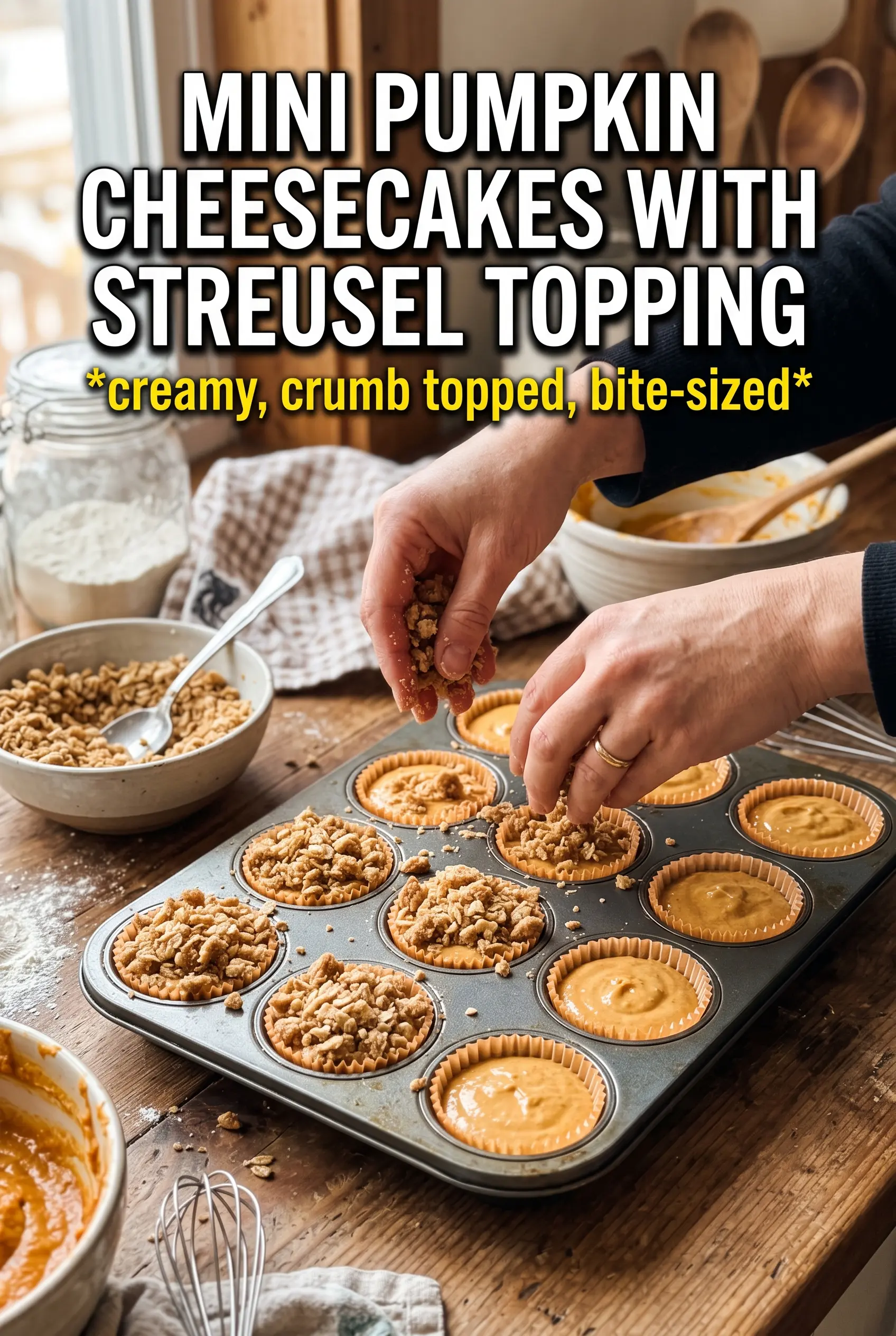
Fill the cups, scatter the streusel, and bake until the centers are just set with a slight jiggle in the middle. Let them cool before chilling so condensation doesn’t collect on top and soften the streusel. Three hours in the fridge is the minimum for clean texture, but overnight gives the neatest finish and the best flavor balance.
How to Adapt These Mini Pumpkin Cheesecakes for Different Kitchens
Gluten-Free Version
Use gluten-free gingersnaps for the crust and a 1:1 gluten-free flour blend in the streusel. The texture stays close to the original, though the crumble may look a little more rustic and less uniform.
Dairy-Free Swap
Use dairy-free cream cheese and plant-based butter, but expect a softer filling and a less rich tang. Chill them a little longer before serving so the centers firm up properly.
No Gingersnaps on Hand
Use graham crackers plus an extra 1/4 teaspoon cinnamon in the crust. You’ll lose some of the warm spice depth, but the crust still bakes up sturdy and works well with the pumpkin filling.
Storage and Reheating
- Refrigerator: Store covered for up to 4 days. The crust softens a little, but the cheesecake stays nicely set.
- Freezer: Freeze without the caramel drizzle for up to 1 month. Wrap each cheesecake tightly, then thaw overnight in the fridge.
- Reheating: Don’t reheat these. They’re meant to be served chilled, and warming them will loosen the filling and soften the streusel too much.
Answers to the Questions Worth Asking
Mini Pumpkin Cheesecakes With Streusel Topping
Ingredients
Equipment
Method
- Preheat the oven to 325F, then line a 12-cup muffin tin with paper liners. Visual cue: your oven should be fully preheated before any batter goes in.
- Press the gingersnap crumbs firmly into each liner. Bake 5 minutes at 325F, then remove and let cool slightly. Visual cue: the crust looks set and lightly toasted.
- Beat the cream cheese and sugar until smooth. Beat in the eggs one at a time until glossy and fully blended, then mix in the pumpkin, sour cream, pumpkin pie spice, cinnamon, and vanilla until uniform. Visual cue: no streaks remain and the batter looks thick-smooth.
- Divide the cheesecake filling among the muffin cups. Visual cue: the cups are filled evenly with a level top.
- Make the streusel by rubbing together oats, flour, brown sugar, cinnamon, and cold butter until clumpy. Visual cue: it should look like coarse crumbs with small butter-wet clumps.
- Scatter the streusel over each cheesecake. Bake 20-22 minutes at 325F until the centers are just set. Visual cue: edges look set while the center still has a gentle wobble.
- Refrigerate the mini cheesecakes for 3 hours to fully set. Visual cue: the filling should feel firm when touched lightly through the liner.
- Drizzle caramel sauce over each cheesecake just before serving. Visual cue: a thin, glossy caramel ribbon across the streusel top.