Silky, spoonable pumpkin pudding lands somewhere between a custard and a pie filling, with a caramelized top that gives way to a warm, lightly spiced center. It’s the kind of dessert that feels old-fashioned in the best possible way: simple ingredients, one bowl, and a finish that tastes like you spent much longer on it than you did.
This version leans on pumpkin puree for body, but the texture stays smooth because the eggs, cornstarch, milk, and cream are whisked together until fully blended before baking. That matters. Any streaks of cornstarch or pockets of egg will show up in the final pudding, and a properly mixed base bakes into a custard that slices softly but still holds on a spoon. The butter dotted over the top adds a little richness as the pudding bakes and helps the surface take on a subtle burnished finish.
Below, I’ve included the small cues that tell you when it’s done, plus a few easy ways to adapt it if you want to lean dairy-free, lighter, or make it ahead.
The center set up exactly like you described — still a little wobbly when it came out, then perfectly silky after it cooled. My husband kept sneaking spoonfuls straight from the dish.
Save this baked pumpkin spice pudding for when you want a silky, spoonable dessert with a caramelized top and warm whipped cream on the side.
The Trick is Stopping at the Gentle Set, Not Waiting for a Firm Center
With puddings and custard-style desserts, the biggest mistake is baking until the middle looks fully set in the oven. By the time the center seems firm, the eggs have usually gone too far and the texture turns rubbery instead of creamy. What you want here is an edge that holds its shape and a center that still gives a little when you nudge the pan.
The cornstarch helps stabilize the pumpkin mixture, but it doesn’t replace the need for careful baking. It gives you a pudding that slices neatly and still melts on the tongue, as long as you pull it before the heat has driven out that soft, custardy texture. Letting it cool for about 20 minutes matters too, because the pudding finishes setting as it rests.
- Pumpkin puree — Use plain pumpkin puree, not pumpkin pie filling. The filling already has sugar and spice added, which throws off both the flavor balance and the texture.
- Cornstarch — This is the ingredient that gives the pudding its spoonable body. Without it, the dessert can lean loose and more like baked custard than pudding.
- Eggs — They set the pudding from within. Whisk them in thoroughly so you don’t end up with little cooked egg strands in the finished dish.
- Whole milk and cream — The fat keeps the texture lush. You can swap in all whole milk in a pinch, but the pudding won’t taste as rich or bake up with the same silky finish.
What Each Ingredient Is Doing in the Pan

- Pumpkin puree — This is the backbone of the recipe, giving the pudding its color, body, and earthy sweetness. If the puree looks watery when you open the can, stir it well before measuring.
- Brown sugar and granulated sugar — The mix gives you both depth and clean sweetness. Brown sugar adds a faint molasses note that works beautifully with pumpkin spice, while the white sugar keeps the flavor from tasting heavy.
- Spices — Pumpkin pie spice gives the familiar base, but the extra cinnamon, ginger, and nutmeg sharpen the flavor and keep it from tasting flat. If your spice cabinet is older than you think, this is the place to replace it; dull spices make the whole dessert taste muted.
- Heavy cream — This is what makes the pudding taste luxurious instead of merely thick. You can substitute half-and-half if that’s what you have, but the final texture will be a little lighter and less velvety.
- Butter — Dotted over the top, it melts into the surface and helps the pudding bake with a rich finish. Salted butter works if that’s what you keep on hand, but reduce the added salt slightly.
The Mix-and-Bake Rhythm That Keeps It Smooth
Whisk the Base Until It Looks Completely Uniform
Start with a large bowl and whisk everything until the mixture turns glossy and the pumpkin disappears into the dairy. You shouldn’t see any streaks of cornstarch or little clumps of spice. If you do, keep whisking for another minute, because those pockets become unpleasantly thick or grainy after baking. A smooth base is what gives you that clean, custardy spoonful later.
Use the Butter as a Surface Finish
Pour the mixture into the buttered dish, then dot the surface with the butter pieces. They melt as the pudding bakes and help the top take on a slightly caramelized look, especially around the edges. Don’t stir them in. Keeping them on top gives the surface a better finish and prevents the whole mixture from turning greasy.
Watch the Edges, Not the Clock
Bake until the edges are set and the center still has the faintest wobble when you shake the pan. The top should look dry and lightly bronzed, not puffed and cracked. If the center sloshes, it needs more time. If it no longer moves at all, you’ve probably gone a little too far, though a good chill or warm rest can still soften that line.
Let It Rest Before Serving
The pudding needs about 20 minutes to settle after baking. That rest time lets the starch and eggs finish their work so the texture turns silky instead of loose. Serve it warm if you want the softest texture, or chill it for a firmer, more sliceable spoon dessert. Whipped cream on top is not optional in my kitchen; it melts into the warm pudding and makes every bite richer.
How to Make It Dairy-Free, Lighter, or More Spiced
Dairy-Free Version
Swap the milk and cream for full-fat canned coconut milk or a thick oat-based creamer. Coconut milk gives the richest result and keeps the pudding closest to the original texture, though it adds a faint coconut note that plays well with pumpkin spice.
Less Sweet, More Pumpkin
Cut the granulated sugar by 2 tablespoons and keep the brown sugar as written. You’ll get a more direct pumpkin flavor and a slightly less dessert-like finish, which works well if you plan to serve it with plenty of whipped cream.
Extra-Spiced Version
Add another 1/4 teaspoon of ginger or a pinch of cloves if you want a sharper spice profile. Go light with cloves; they take over fast and can make the pudding taste more like potpourri than dessert.
Storage and Reheating
- Refrigerator: Store covered for up to 4 days. It firms up as it chills, which makes it even better for spooning cold the next day.
- Freezer: It can be frozen, but the texture softens a little after thawing. Freeze in portions, wrap well, and thaw overnight in the refrigerator for the best result.
- Reheating: Warm individual portions in the microwave at low power or reheat the full dish loosely covered in a 300F oven. Heat just until warmed through; high heat can make the eggs tighten and turn the pudding grainy.
Answers to the Questions Worth Asking
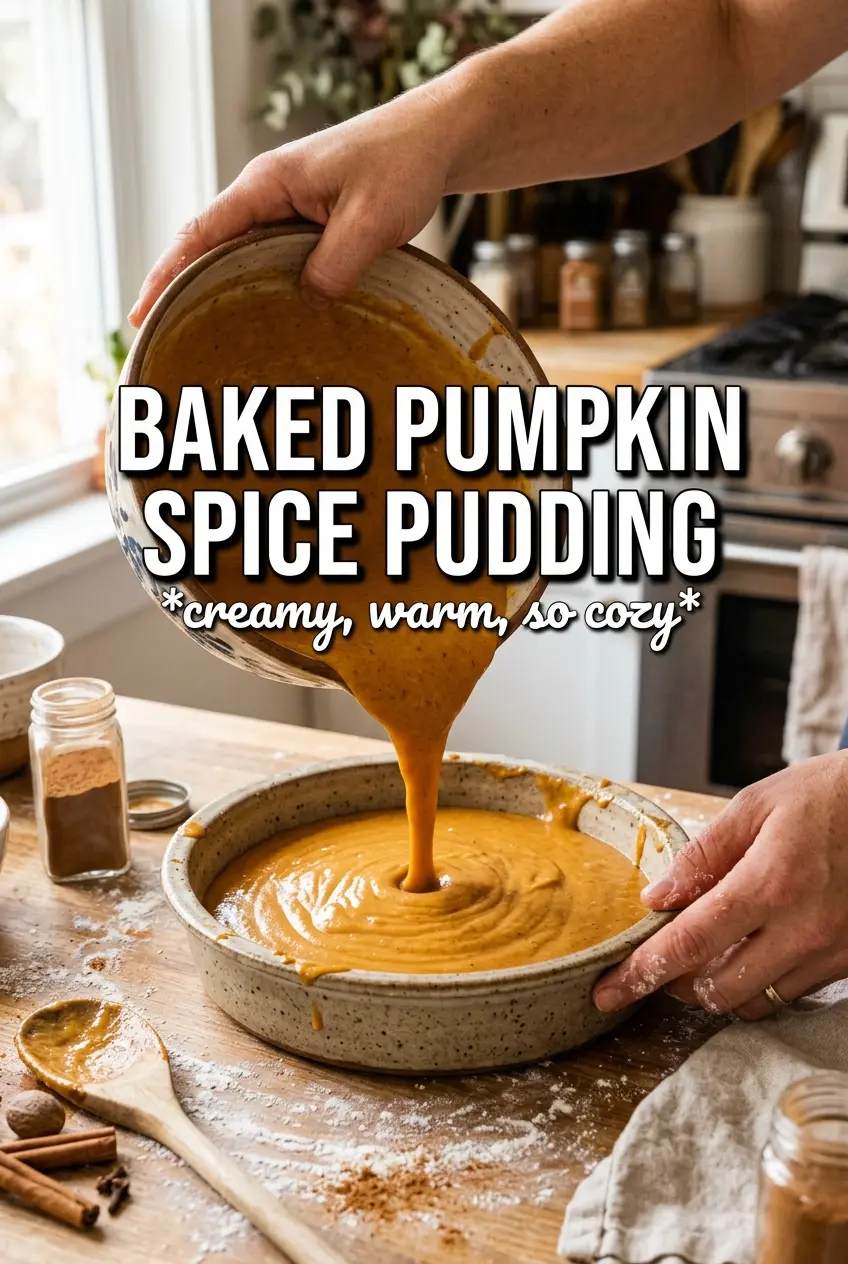
Baked Pumpkin Spice Pudding
Ingredients
Equipment
Method
- Preheat oven to 350F and butter a 9x9 baking dish so the pudding releases cleanly.
- Whisk pumpkin puree, whole milk, heavy cream, eggs, granulated sugar, and brown sugar until the mixture looks uniform.
- Whisk cornstarch, pumpkin pie spice, cinnamon, ginger, nutmeg, salt, and vanilla extract until completely smooth with no visible lumps.
- Pour the custard into the prepared dish and dot the top with unsalted butter for a richer surface.
- Bake 40-45 minutes at 350F until the edges are set and the center is just slightly wobbly, showing a gentle jiggle in the middle.
- Cool 20 minutes so the pudding thickens slightly and the top skin finishes forming.
- Serve warm or chilled with whipped cream, letting the dollop melt into the center for a soft, creamy finish.