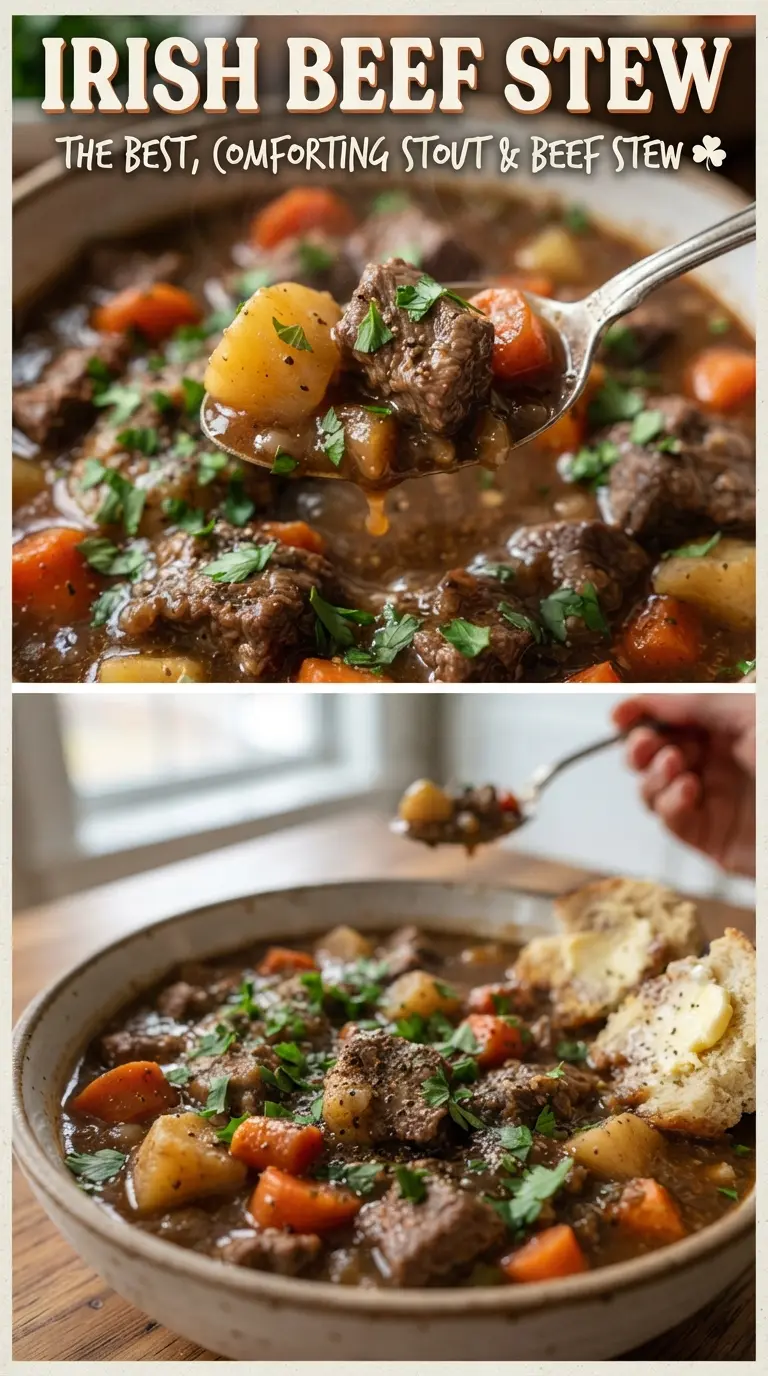
Irish beef stew lands on the table with spoon-coating gravy, tender chunks of beef, and vegetables that hold their shape instead of dissolving into the pot. The best bowls have that deep, savory comfort you can smell before you even sit down, and this version gets there without any gimmicks. It’s the kind of stew that tastes like it had all afternoon to build flavor, because it did.
The real difference comes from the order of operations. Browning the beef in batches gives the broth a darker base, and the tomato paste cooks just long enough to lose its raw edge before the stout goes in. That stout loosens the browned bits on the bottom of the pot, which is where a lot of the flavor lives, and the long simmer gives the chuck time to turn tender without rushing it.
Below, I’ve included the one timing detail that keeps the vegetables intact, plus the swaps that still preserve the rich, malty broth if you don’t have Irish stout on hand.
The beef got tender after the long simmer, and adding the potatoes and carrots later kept them from turning mushy. The gravy was thick and rich with that stout flavor I was hoping for.
Love the rich stout gravy and tender beef in this Irish Beef Stew? Save it to Pinterest for a slow-simmered dinner with potatoes, carrots, and serious comfort.
The Browning Stage Is Where the Stew Gets Its Depth
If the beef goes into the pot pale and crowded, the stew still tastes fine, but it misses that dark, rounded backbone that makes the gravy taste like it simmered all day. Browning in batches keeps the pan hot enough for a proper crust. That crust is flavor, and the flour on the beef helps that crust cling while later thickening the broth.
The other place people lose flavor is the bottom of the pot. Once the onion and tomato paste go in, the little browned bits loosen when the stout hits the pan, and that’s exactly what you want. If the pot looks dry, add a small splash more oil rather than stuffing in more beef at once. Crowding the pan steams the meat instead of searing it.
What the Stout, Broth, and Root Vegetables Are Each Doing
- Beef chuck — Chuck is the right cut here because it has enough connective tissue to turn tender over a long simmer. Lean stew meat can work, but it often dries out before the broth gets deep and rich. Cut the cubes large enough to survive the cook without falling apart.
- Irish stout — This adds malty bitterness and body that plain broth can’t replicate. If you don’t want alcohol, use a dark nonalcoholic stout or replace it with extra beef broth plus 1 teaspoon Worcestershire sauce for some of that same depth.
- Tomato paste — This doesn’t make the stew taste like tomato; it sharpens the savory base and helps the gravy color up. Cook it for the full minute so it loses that tinny raw edge. That tiny step changes the whole pot.
- Potatoes, carrots, and celery — These go in later because they need less time than the beef. Add them too early and they’ll break down before the meat is tender. Large chunks hold their shape best, especially if you plan to reheat leftovers.
Building the Stew in the Right Order So the Vegetables Stay Intact
Season and Brown the Beef
Toss the beef with salt, pepper, and flour until every piece looks lightly dusted. Brown it in batches in hot oil, leaving space between the pieces so the surface can actually sear. If the meat releases a lot of liquid and starts to gray, the pan is too crowded or not hot enough. Move the browned beef to a plate as you go.
Cook Down the Base
Add the onion to the pot and cook until it turns soft and translucent, scraping up some of the browned bits as it cooks. Stir in the garlic and tomato paste and cook just until the paste darkens slightly and smells less sharp. If the garlic goes in too early, it can burn before the onion softens. Burnt garlic will take the edge off the whole stew.
Deglaze and Simmer Low
Pour in the stout and scrape the bottom hard with a wooden spoon. Let it bubble for a minute, then add the broth, thyme, rosemary, bay leaves, and beef. Keep the heat low enough that the stew only blips at the surface. A hard boil can tighten the beef instead of relaxing it into tenderness.
Add the Vegetables at the End
After the beef has simmered for about 90 minutes, stir in the potatoes, carrots, and celery. They need just enough time to turn tender and soak up the broth without collapsing. Simmer until a fork slides into the potatoes and the gravy coats the back of a spoon. Pull the bay leaves before serving and finish with parsley for a clean, fresh note.
How to Adapt This Stew When the Pantry Changes
No Irish stout
Use extra beef broth plus 1 teaspoon Worcestershire sauce, or swap in a dark nonalcoholic stout if you want a closer match. You’ll lose a little of the beer’s malty edge without the stout, but the stew will still have a deep, savory base.
Gluten-free version
Skip the flour and use a gluten-free all-purpose blend that can brown well, or thicken the finished stew with a cornstarch slurry near the end. The stew will still be hearty, but the gravy may look a little lighter unless you reduce it a bit longer.
Extra vegetables
Turnips, parsnips, or mushrooms fit right in. Add mushrooms with the onions so they can cook off their moisture, and add the harder root vegetables at the same time as the potatoes. That keeps everything tender at the same time instead of one vegetable falling apart before the others are done.
Storage and Reheating
- Refrigerator: Store covered for up to 4 days. The flavor deepens overnight, and the gravy thickens as it chills.
- Freezer: It freezes well for up to 3 months. Cool it completely first, then freeze in portioned containers; the potatoes soften a little after thawing but still hold up.
- Reheating: Warm it gently on the stove over low heat with a splash of broth if needed. Don’t boil it hard or the beef can tighten and the potatoes can break apart.
Answers to the Questions Worth Asking
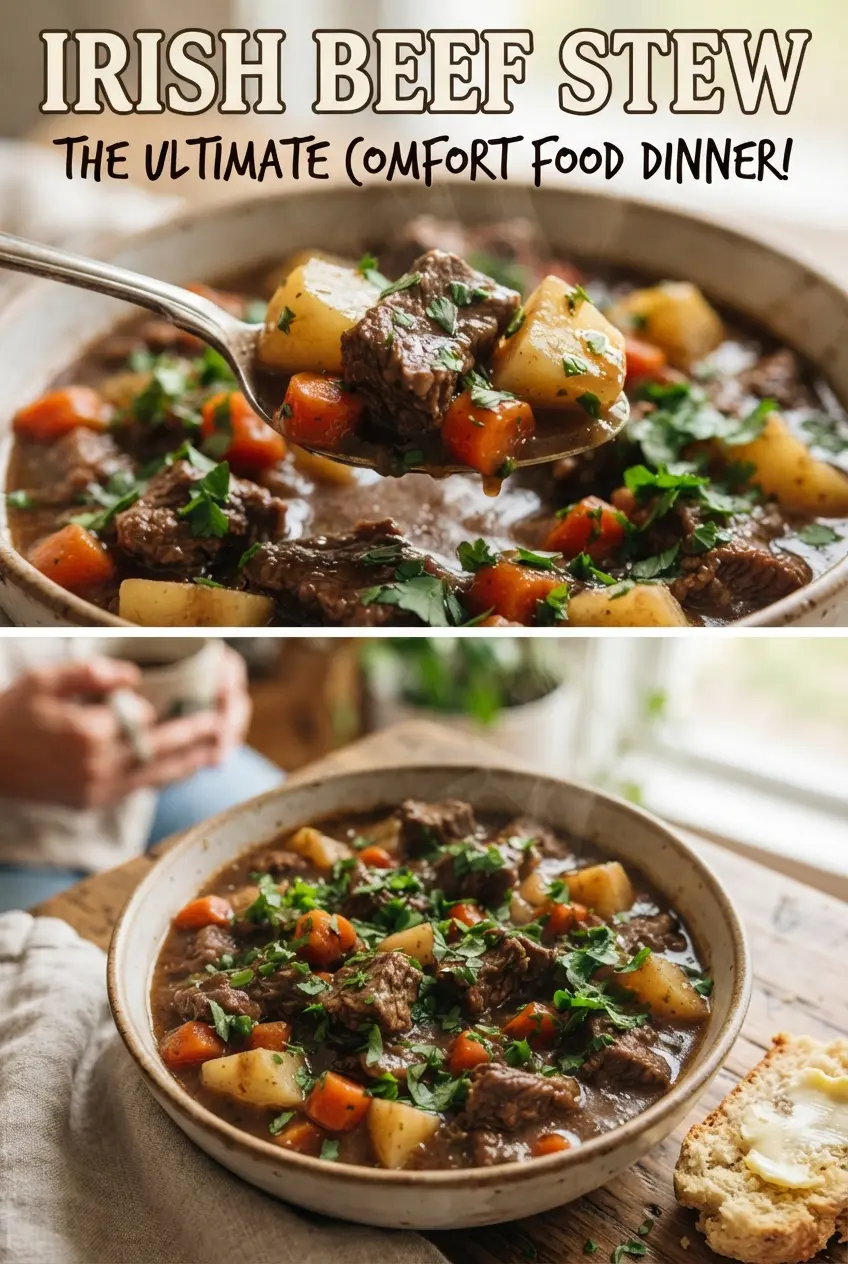
Irish Beef Stew
Ingredients
Equipment
Method
- Season the beef chuck cubes with salt and black pepper, then toss with all-purpose flour until coated.
- Heat the vegetable oil in a Dutch oven over medium-high heat, then brown the beef in batches until deeply browned, about 4-6 minutes per batch.
- Add the chopped onion to the Dutch oven and cook for 5 minutes, stirring until softened.
- Add the minced garlic and tomato paste and cook for 1 minute, stirring until fragrant.
- Pour in the Irish stout and scrape the bottom of the pot to loosen browned bits.
- Add the beef broth, dried thyme, dried rosemary, and bay leaves, and return the mixture to a simmer.
- Cover the Dutch oven and simmer at a steady, gentle simmer for 1 1/2 hours, stirring occasionally so it thickens.
- Add the potatoes, carrots, and celery to the pot.
- Simmer covered for 45-60 minutes, until the vegetables are tender and the gravy is thick.
- Remove the bay leaves and finish with the chopped fresh parsley before serving.