Zuppa Toscana gets even better when it’s turned into a casserole: creamy potatoes, savory sausage, ribbons of kale, and a bubbling cheese top that bakes into a real crust. It’s the kind of dish that comes out of the oven smelling like dinner is already handled, and every scoop gets a little of everything. The bacon or pancetta on top brings that salty crunch that keeps each bite from feeling heavy.
What makes this version work is the way the potatoes are cooked right in the broth and dairy until they’re barely tender, not falling apart. That keeps the casserole thick without turning the sauce gluey or greasy. Browning the sausage first also matters more than it looks like it should; those browned bits season the whole pan before it ever goes into the oven.
Below, you’ll find the timing that keeps the cream base smooth, plus the one step that keeps the kale from going limp and dull. If you’ve made soup-style Zuppa Toscana before, this baked version gives you all the same comfort with a more satisfying finish.
The potatoes stayed perfectly tender and the cream sauce baked up thick instead of runny. I added the bacon at the end like you said and it stayed crisp even after serving.
Like this creamy Zuppa Toscana casserole? Save it for the nights when you want sausage, potatoes, kale, and a golden cheese top in one pan.
The Potato Layer That Keeps This Casserole Creamy, Not Mushy
The mistake most baked potato casseroles make is leaving the slices too thick or cooking them all the way soft before they go into the oven. That gives you a dish that looks done in the center but eats like mashed potatoes under a cheese lid. Here, the potatoes simmer just until the slices give a little at the edge but still hold their shape, then they finish in the oven with the sauce around them.
Yukon gold potatoes are the right choice because they stay creamy without collapsing. Russets will work in a pinch, but they break down faster and make the sauce starchier, which can be useful if you want a thicker bake but not as neat a slice. The broth and dairy also need to stay at a gentle simmer once the potatoes go in. A hard boil can split the cream and rough up the texture before the casserole even hits the oven.
What Each Ingredient Is Actually Doing in This Dish
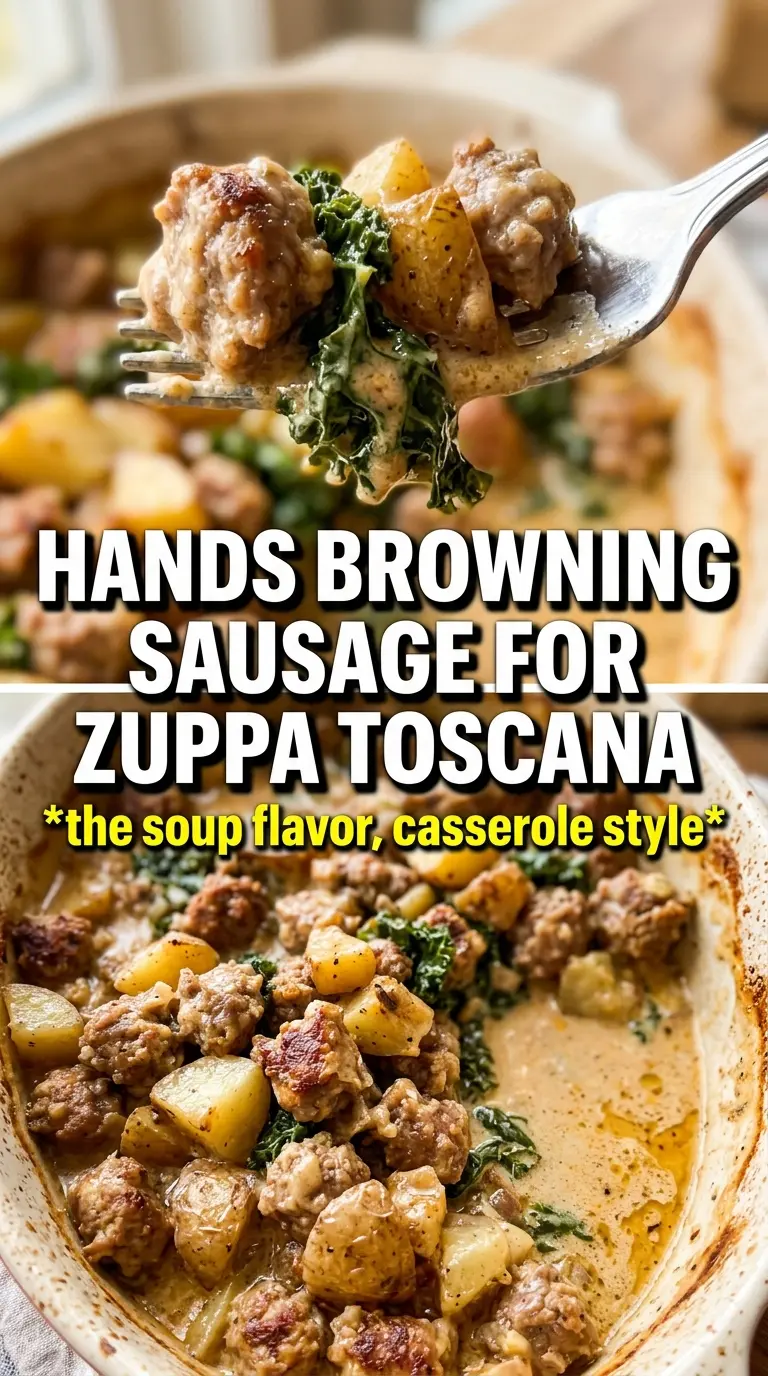
- Italian sausage — This is the backbone of the casserole. Mild sausage keeps the dish family-friendly, while hot sausage adds more heat without changing the method. If you use turkey sausage, add a little extra fat in the pan because lean sausage won’t leave the same savory drippings.
- Bacon or pancetta — This gives you the salty finish that makes the top taste intentional, not just cheesy. Bacon is easier to find and works well; pancetta is a little cleaner and meatier in flavor. Cook it separately so it stays crisp instead of softening into the sauce.
- Yukon gold potatoes — Thin slices are non-negotiable here. They cook through fast and keep their shape better than cubes, which helps the casserole layer neatly and scoop cleanly. A mandoline makes this much easier, but a sharp knife works if the slices are even.
- Kale — Kale adds structure and a little bitterness that balances the cream. Chop it fairly small so it softens in the sauce instead of sitting in big chewy pieces. If you use spinach, add it at the very end because it wilts much faster and won’t hold up the same way.
- Heavy cream and whole milk — The cream gives body, while the milk keeps the casserole from feeling too dense. Don’t swap both for lower-fat dairy unless you’re prepared for a thinner, less stable sauce. Half-and-half can work, but the final bake will be a touch looser.
Building the Base So the Sauce Stays Smooth in the Oven
Browning the Sausage and Bacon
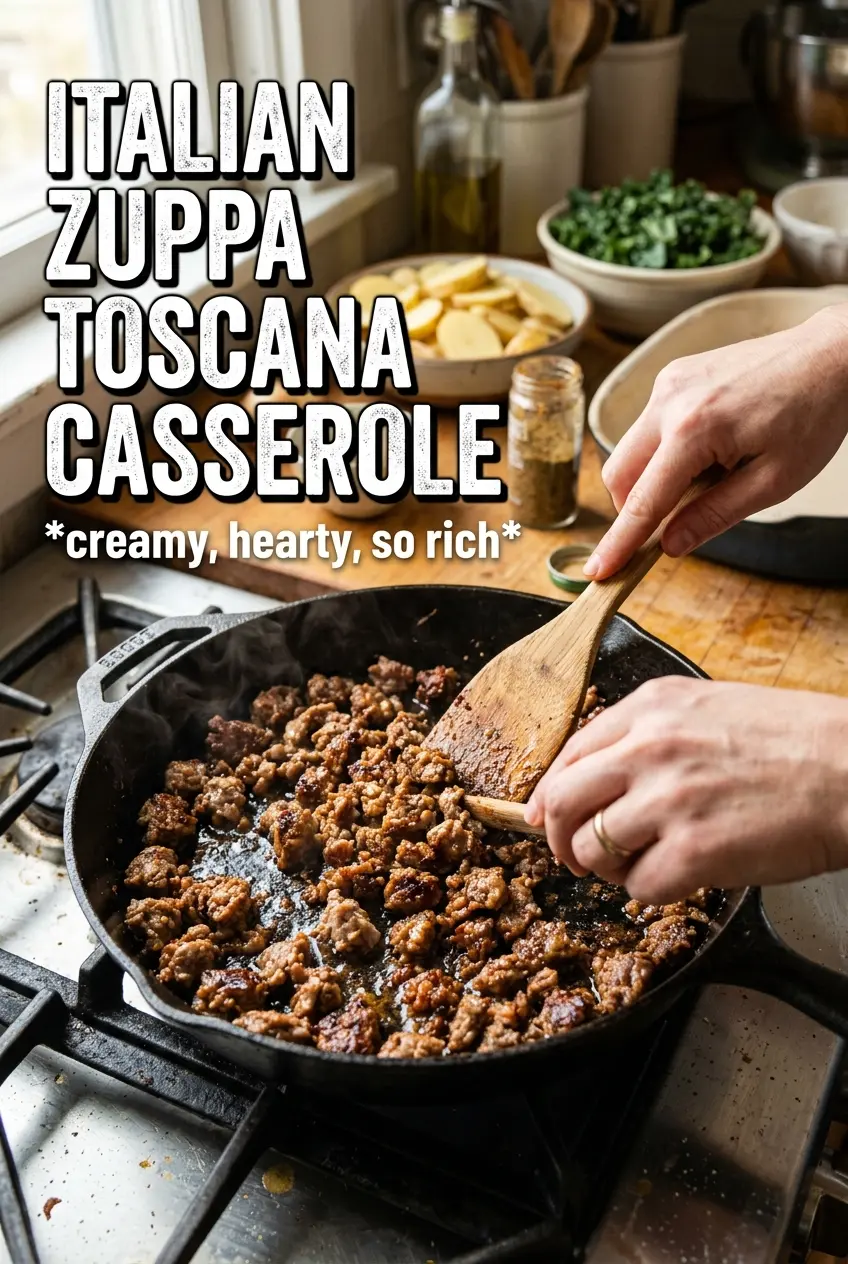
Cook the sausage first until it has some real color, then set it aside. Those browned bits in the pan carry a lot of the flavor in the finished casserole, so don’t wipe the skillet clean. The bacon or pancetta should get fully crisp before it comes out, because it softens a little under the cheese later. If you rush either meat, the whole dish tastes flatter.
Softening the Onion and Garlic in the Drippings
Let the onion cook in the rendered fat until it turns translucent and sweet, then add the garlic for the last minute so it stays fragrant instead of bitter. If the garlic browns hard, the whole sauce picks up a harsh edge. This is the point where the base starts tasting like dinner instead of just ingredients in a pan.
Simmering the Potatoes Until Just Tender
Once the broth, cream, milk, and red pepper flakes go in, bring the mixture to a gentle simmer and add the potatoes. You want them tender at the edges but still able to hold a slice when lifted with a spoon. If they’re fully soft here, they’ll collapse during baking and make the casserole heavy. If the sauce looks a little thin at this stage, that’s fine; the potatoes will thicken it as they cook.
Finishing with Kale, Cheese, and the Oven
Stir in the kale and sausage, season the filling, then transfer it to your baking dish if the skillet is too small. The kale should look darker and slightly wilted before the cheese goes on. Mozzarella gives you the stretchy top, and parmesan sharpens the flavor and helps the crust brown. Bake until the edges bubble and the top has a deep golden color with a few darker spots.
How to Adapt This Zuppa Toscana Casserole for Different Tables
Make it dairy-free without losing the creamy feel
Use full-fat canned coconut milk in place of the cream and milk, but expect a subtle coconut note and a slightly softer sauce. It still bakes up rich, especially with the sausage and cheese-like browned top, but it won’t taste exactly like the original. If you go this route, skip the parmesan and use a dairy-free shredded mozzarella that melts well.
Use spinach when you need a gentler green
Spinach works if kale isn’t your thing, but it should go in at the very end and only cook long enough to wilt. It gives the casserole a softer texture and a milder bite, though it won’t hold up as well for leftovers. I wouldn’t add extra spinach to replace the volume of kale unless you want the dish wetter.
Make it lower-carb with cauliflower
Replace the potatoes with cauliflower florets if you want the same creamy sausage-and-kale base without the starch. The texture gets softer and the sauce won’t thicken the same way, so reduce the broth a little and don’t overcook the cauliflower before baking. It’s a different casserole, but the flavor still lands in the same comfort-food lane.
Storage and Reheating
- Refrigerator: Store leftovers covered for up to 4 days. The potatoes will keep absorbing sauce, so the casserole gets thicker as it sits.
- Freezer: It freezes, but the cream sauce may separate a little on thawing and the potatoes can turn grainy. For best results, freeze in portions and reheat gently.
- Reheating: Warm it covered at 325F until hot in the center, or reheat single servings in the microwave at medium power. High heat is what breaks the sauce and dries out the potatoes first.
Questions I Get Asked About This Recipe
Italian Zuppa Toscana Casserole
Ingredients
Equipment
Method
- Preheat the oven to 375F. Brown the Italian sausage in a large oven-safe skillet until cooked through, then drain excess fat and set the sausage aside.
- Cook the bacon or pancetta until crispy. Remove and set aside so it can be topped on after baking.
- Sauté the onion and garlic in the reserved skillet fat for 4 minutes. Stir occasionally until softened and fragrant.
- Add the chicken broth, heavy cream, whole milk, and red pepper flakes to the skillet. Simmer briefly until the mixture is well combined and steaming.
- Add the sliced Yukon gold potatoes to the creamy liquid. Simmer for 12-15 minutes until the potatoes are just tender.
- Fold in the kale and the cooked sausage, then season with salt and pepper. Cook just until the kale wilts and the mixture is evenly coated.
- Transfer the mixture to a 9x13 baking dish if needed, then scatter the shredded mozzarella and grated parmesan over the top. Spread evenly so the cheese melts into a crust.
- Bake at 375F for 20-25 minutes until golden and bubbling. Top with the crispy bacon or pancetta right before serving.