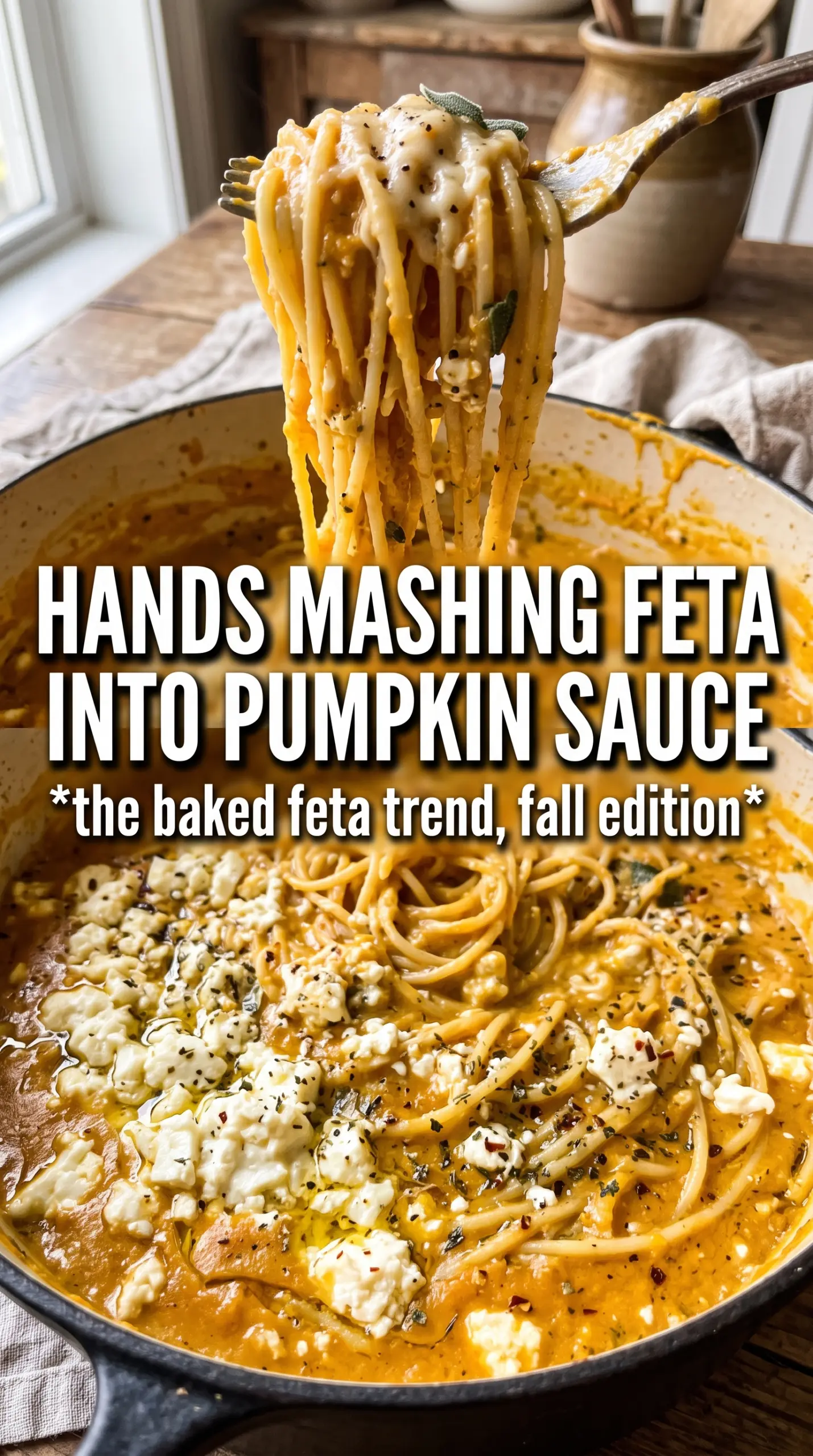
Pumpkin feta pasta lands in that sweet spot between cozy and bright: soft roasted pumpkin, salty feta, and garlic turned creamy in the oven, then loosened with starchy pasta water until the sauce clings to every ridge of pasta. The finish is rich without feeling heavy, and the red pepper flakes keep the whole dish from tasting flat.
What makes this version work is the roast. The feta doesn’t get stirred in raw; it bakes until the edges pick up a little color and the pumpkin breaks down enough to mash into the cheese. That heat does two jobs at once: it softens the feta into a sauce base and concentrates the pumpkin so the final dish tastes deeper, not watery. If you’re using fresh pumpkin instead of puree, cut it small so it roasts in the same window as the cheese.
Below, I’ve included the little details that matter most here: how to avoid a thin sauce, what to change if you only have canned pumpkin, and the one reheating trick that keeps the pasta from turning gluey the next day.
The feta melted into the pumpkin and made the creamiest sauce without any cream. I tossed in a splash of pasta water like you suggested and it coated the rigatoni perfectly.
Save this pumpkin feta pasta for the night you want a creamy roasted pasta with almost no cleanup.
The Roasting Step That Keeps the Sauce Silky Instead of Grainy
The sauce only turns silky if the feta and pumpkin have enough time in the oven to soften fully before you mash them together. If the pumpkin is still firm, the mixture stays chunky and the feta can’t emulsify into the starchy pasta water the way it should. The goal is a soft, spoonable base with browned edges on the cheese and a mashable center in the pumpkin.
Don’t rush the roast just because the feta looks soft on top. The pumpkin underneath needs to collapse when you press it with a spoon, and the garlic should be tender enough to disappear into the sauce. If the pan starts drying out before the vegetables are done, that usually means the pumpkin was cut too large or the oven ran hot; a small splash of water around the edges can help, but only if you’re using fresh pumpkin cubes.
What Each Ingredient Is Actually Doing in This Dish
- Pumpkin puree or fresh pumpkin — Purée gives you the fastest route to a smooth sauce, while fresh pumpkin brings a deeper roasted flavor and a slightly chunkier, more rustic texture. If you use cubes, cut them small so they soften in the same time as the feta.
- Block feta — Block feta melts and softens more predictably than crumbles. The briny edge balances the sweet pumpkin and keeps the sauce from tasting one-note.
- Olive oil — This helps the pumpkin roast instead of dry out and carries the garlic and thyme through the dish. Use a good-tasting oil here because it ends up in the final sauce.
- Pasta water — The starch in the water is what turns the mashed pumpkin and feta into a real sauce instead of a thick paste. Add it a splash at a time until the sauce loosens and clings to the pasta.
- Red pepper flakes and black pepper — Pumpkin and feta need heat to wake them up. The pepper flakes add a little burn, and the black pepper rounds out the savory side of the dish.
Getting the Sauce From the Oven to the Bowl Without Breaking It
Roasting the Pumpkin and Feta Together
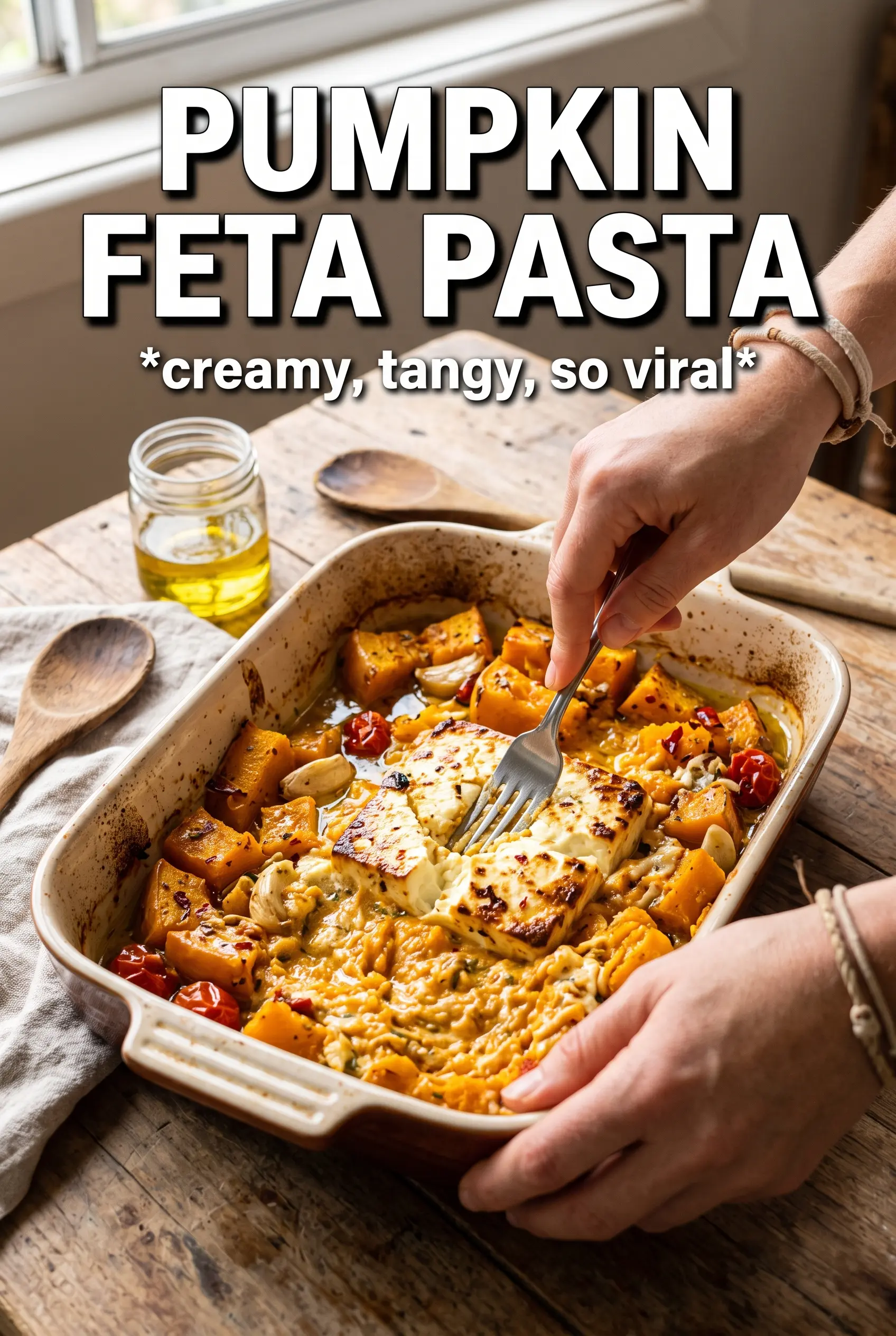
Put the pumpkin puree or cubed pumpkin in a baking dish and nestle the feta block in the center so the cheese gets full heat from the oven. Scatter the garlic around the dish and drizzle everything with olive oil before adding the thyme, black pepper, and red pepper flakes. Roast at 400F until the feta looks golden on top and the pumpkin is soft enough to smash without resistance, usually 35 to 40 minutes. If you’re using fresh pumpkin and it still feels firm in the middle, give it a few more minutes before moving on.
Cooking the Pasta to Match the Sauce
Cook the pasta while the baking dish is in the oven and stop at true al dente, with a little bite in the center. That matters because the pasta will keep softening once it hits the hot sauce. Scoop out at least 1/2 cup of pasta water before draining; if you forget this, the sauce can go from creamy to stubbornly thick in seconds.
Mashing and Loosening the Sauce
Use a fork or sturdy spoon to smash the roasted pumpkin, feta, and garlic together until the mixture looks creamy and streaked rather than fully smooth. Add pasta water a little at a time and stir until the sauce turns glossy and loose enough to coat pasta easily. If it looks greasy or separated, it needs more water and more stirring, not more heat. The sauce comes together best off the direct burner so the feta doesn’t tighten up.
Finishing the Pasta
Toss the cooked pasta into the baking dish and fold it through the sauce until every piece is coated. Taste before adding salt, because feta varies a lot and can already be plenty salty. Finish with fresh basil and extra red pepper flakes right before serving so the herbs stay bright and the heat sits on top instead of disappearing into the sauce.
How to Adapt This for Different Pantry Days
Use canned pumpkin for the smoothest sauce
Canned pumpkin gives you a smoother, faster sauce and takes less attention in the oven. Since it’s already soft, you’re mainly roasting the feta and garlic for flavor, so the bake time may be a little shorter. The tradeoff is less roasted depth, but the texture is more even.
Make it gluten-free with the right pasta shape
A sturdy gluten-free penne or rigatoni works best because the sauce needs grooves and tubes to cling to. Cook it just to al dente and drain it promptly; gluten-free pasta turns soft faster than wheat pasta once it sits in a hot sauce.
Swap in butternut squash for a sweeter edge
Butternut squash roasts beautifully and gives the sauce a slightly sweeter, smoother finish. Cut it into small cubes so it softens in the same time as the feta, and keep the red pepper flakes in place to balance the sweetness.
Storage and Reheating
- Refrigerator: Store leftovers in an airtight container for up to 4 days. The sauce thickens as it sits.
- Freezer: You can freeze it, but the texture is better if you freeze just the sauce and cook fresh pasta later. Pasta that’s already mixed in tends to turn soft after thawing.
- Reheating: Reheat gently on the stove or in the microwave with a splash of water to loosen the sauce. High heat can make the feta tighten and the pasta dry out, so warm it slowly and stir once or twice as it heats.
Questions I Get Asked About This Recipe
Pumpkin Feta Pasta
Ingredients
Equipment
Method
- Preheat the oven to 400F. Place pumpkin puree or cubed pumpkin in a baking dish and put the feta block in the center.
- Scatter the smashed garlic around and drizzle the olive oil over everything. The oil should coat the pumpkin and garlic so it roasts evenly.
- Sprinkle the red pepper flakes, dried thyme, and black pepper over the pumpkin and feta. Roast for 35-40 minutes, until the feta is golden and the pumpkin is soft, with a visibly caramelized top.
- Meanwhile, cook the pasta in salted water until al dente. Reserve 1/2 cup pasta cooking water before draining.
- Smash the roasted pumpkin, feta, and garlic in the baking dish into a creamy sauce. Add the reserved pasta cooking water a little at a time to reach your desired consistency.
- Toss in the cooked pasta and stir to coat well. Season with salt to taste for balanced flavor.
- Top with fresh basil and extra red pepper flakes. Serve hot, with flecks of pepper and herbs visible on the creamy sauce.