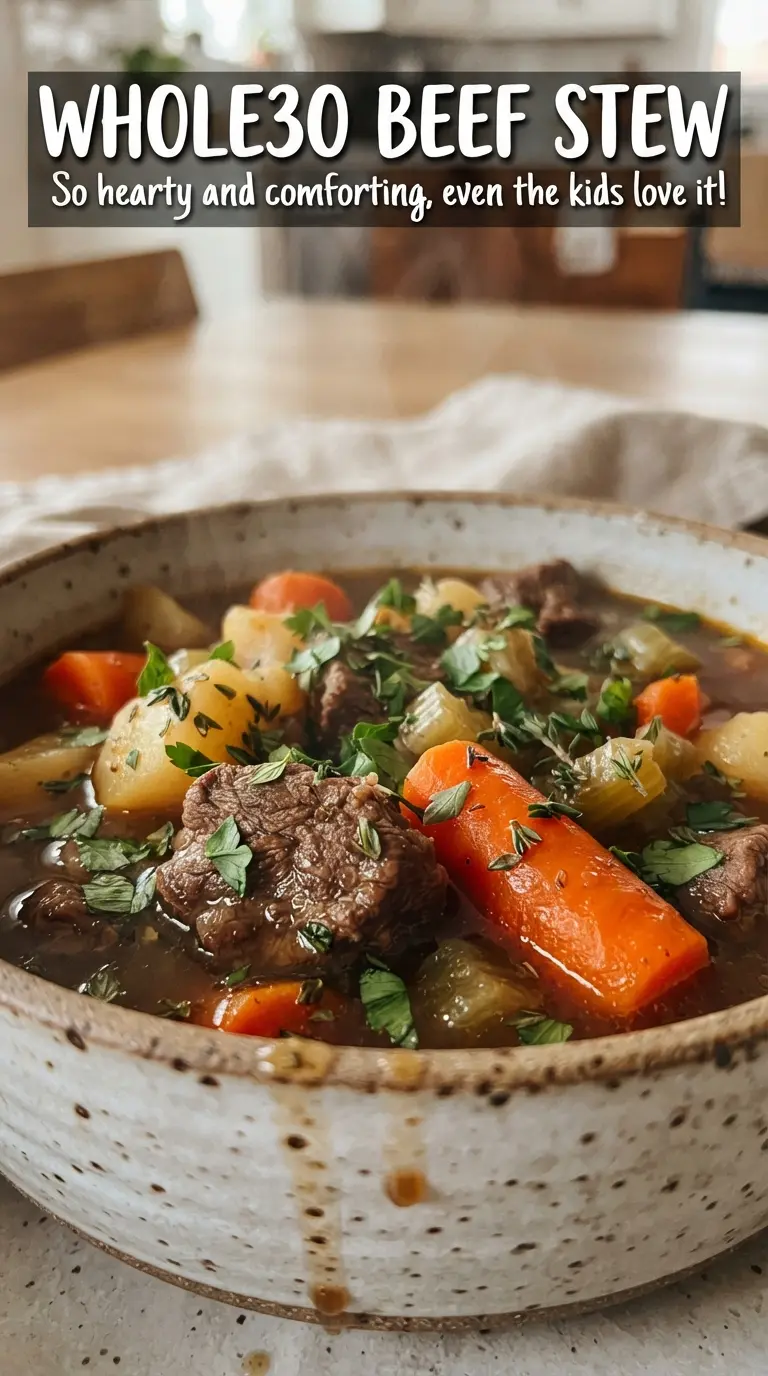
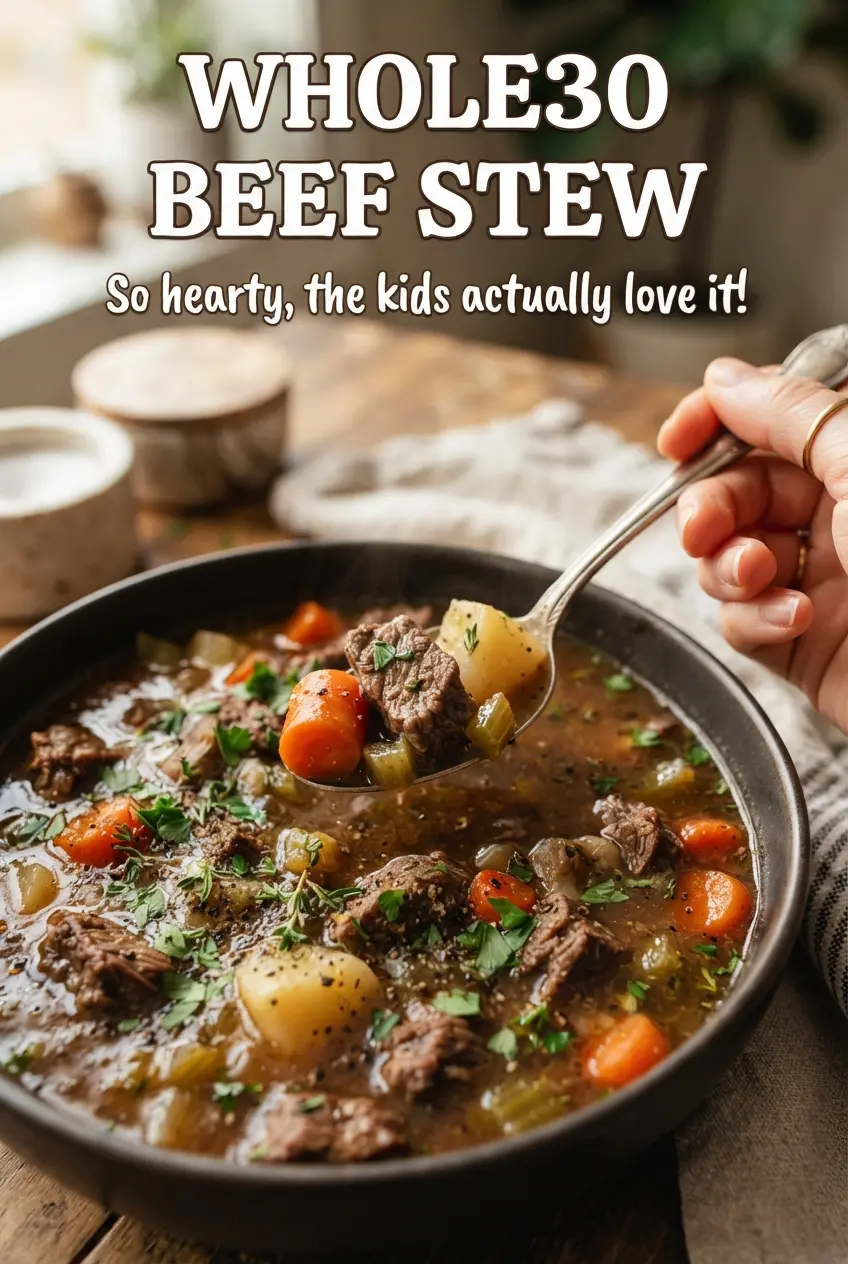
Rich beef stew earns its place in the rotation when the broth turns glossy, the beef goes spoon-tender, and the vegetables hold their shape instead of collapsing into mush. This Whole30 version gets there without flour, wine, or dairy, but it still tastes deep and slow-cooked because the flavor starts with a hard sear and builds in layers. The gravy ends up thick enough to cling to the meat and vegetables, with sweet potatoes, carrots, and mushrooms giving it just the right balance of sweetness and earthiness.
The trick is treating every stage like it matters. Browning the beef in batches leaves fond in the pot, and that fond becomes the backbone of the stew once the broth goes in. Tomato paste cooks briefly with the onions and garlic to take the edge off and add a round, savory base. Arrowroot goes in only at the end, after everything is tender, because adding it too early can mute the texture and turn the stew gluey.
If you’ve ever had a stew that tasted flat or ended up watery, the notes below will help you avoid both problems. I’ve also included the swaps that still keep this Whole30-friendly and the small timing details that keep the vegetables from falling apart.
The beef browned beautifully and the gravy thickened up right at the end without getting gummy. My husband kept going back for “just one more bowl,” and the sweet potatoes held their shape even after reheating.
Keep this Whole30 beef stew handy for nights when you want a thick, hearty one-pot dinner with tender beef and naturally reduced gravy.
The Step That Makes the Broth Taste Slow-Simmered
The first 20 minutes decide whether this stew tastes deep or just tastes cooked. Browning the beef in batches matters because crowded meat steams, and steamed meat won’t give you the dark bits that make the broth taste richer. Those browned bits dissolve into the liquid later and give the stew the kind of savoriness you can’t fake at the end.
The other place people lose flavor is rushing the tomato paste and aromatics. Tomato paste needs a minute in the hot pot with the onion and garlic so it loses its raw edge and turns brick-red and fragrant. That quick cook gives the broth a deeper color and a fuller finish without needing any flour, wine, or cream.
- Beef chuck — This cut is worth using because the connective tissue breaks down during the long simmer and gives you that silky, tender texture. Lean stew meat can work, but it usually cooks up drier.
- Bone broth — Use a broth you’d actually drink. A weak broth makes a weak stew, since this recipe doesn’t have dairy or roux to hide behind.
- Coconut aminos — This adds sweetness and salt depth in a way that fits Whole30. If you swap in plain salt alone, the stew tastes flatter.
- Arrowroot slurry — This thickens fast and stays compliant. Stir it in only at the end, because prolonged boiling can thin it back out and make the texture slippery.
- Sweet potato and carrots — These bring body and a subtle sweetness that balances the beef. Cut them large enough to survive the simmer without disappearing.
What Each Ingredient Is Actually Doing in This Recipe
- Primary ingredient (the star) — Quality matters most. Choose the best you can find.
- Cooking medium (oil, butter, or broth) — This carries flavors and prevents dryness.
- Seasonings (salt, pepper, spices, herbs) — Layer flavors so nothing overpowers. Build depth gradually.
- Aromatics (garlic, onion, herbs) — Cook with fat to bloom flavors. Become the foundation.
- Supporting ingredients — Complement the main ingredient without overpowering it.
- Sauce or liquid (if applicable) — Brings flavors together. Balance richness with acid.
- Acid (lemon, vinegar, wine, or other) — Brightens and prevents flat-tasting results.
- Final finish (garnish, glaze, or sauce) — Prevents one-dimensional taste and adds visual appeal.
Building the Pot in the Right Order
Getting the Sear on the Beef
Pat the beef dry and season it before it hits the hot oil. If the surface is wet, it won’t brown well, and you’ll lose that crust that gives the stew its backbone. Work in batches and leave space around each piece so the meat can sear instead of steam. You want a deep brown edge, not gray patches.
Softening the Onion and Toasting the Tomato Paste
Once the beef is out, cook the onion until it turns translucent and picks up a little color at the edges. Then add the garlic and tomato paste and stir constantly for about a minute, just until the paste darkens slightly and smells sweet instead of sharp. If the garlic starts to brown hard, the pot is too hot and the base will taste bitter.
Long Simmer, Then a Short Finish
After the broth goes in, bring everything to a gentle simmer and cover the pot. A hard boil will tighten the beef instead of tenderizing it, so keep the liquid at a steady bubble. Add the sweet potatoes, carrots, and mushrooms only after the beef has had time to soften, because they need less cooking and will hold their texture better. When the arrowroot slurry goes in at the end, let the stew bubble for just a couple of minutes until the gravy turns glossy and coats the back of a spoon.
How to Adapt This Stew Without Losing the Whole30 Feel
Swap the Sweet Potato for Yukon Gold Potatoes
If you don’t want the sweetness of sweet potato, Yukon golds hold their shape nicely and give the stew a more classic savory feel. Cut them into large chunks and add them at the same time as the sweet potato would go in. They won’t add the same color or sweetness, but they do make the broth feel a little more traditional.
Use Balsamic Instead of Compliant Worcestershire
Balsamic vinegar gives you acidity and a touch of sweetness if you don’t have a Whole30-friendly Worcestershire sauce. Start with the same amount, then taste the broth before salting again, because balsamic can read sweeter and brighter. The stew will still taste rich, just a little less savory and a little more rounded.
Make It Nightshade-Free
If tomato paste doesn’t work for you, leave it out and add an extra tablespoon of broth concentrate or a little more Worcestershire-style seasoning if it’s compliant. You’ll lose some depth and color, so let the onion cook a little longer to build more sweetness in the pot. The stew will still be hearty, just slightly less complex.
Storage and Reheating
- Refrigerator: Store covered for up to 4 days. The stew thickens as it chills, and the flavors deepen overnight.
- Freezer: It freezes well for up to 3 months. Cool it completely first, then pack it in airtight containers, leaving a little space for expansion.
- Reheating: Warm it gently on the stove over low heat, adding a splash of broth if needed. Don’t boil it hard after reheating, or the beef can tighten and the arrowroot-thickened gravy can turn slightly loose.
Answers to the Questions Worth Asking
Whole30 Beef Stew
Ingredients
Equipment
Method
- Season the beef chuck cubes with salt and black pepper, then brown in batches in hot avocado oil or ghee in a Dutch oven. Cook until well browned on the outside, using the remaining oil as needed.
- Cook the diced onion for 4 minutes. Add the minced garlic and tomato paste and cook for 1 minute, stirring to coat.
- Add the beef bone broth, coconut aminos, compliant Worcestershire sauce (or balsamic vinegar), dried thyme, and bay leaf, then return the browned beef. Cover and simmer for 1 1/2 hours until the meat is starting to get tender.
- Stir in the cubed sweet potato, sliced carrots, and quartered cremini mushrooms. Simmer for 40-45 minutes until the vegetables are tender and the stew looks thickening.
- Stir in the arrowroot powder slurry (arrowroot powder mixed with water) and simmer for 2 minutes to thicken. The gravy should look glossy and noticeably thicker, then you’re ready to serve.
- Remove the bay leaf and serve the stew. Plate while hot, with vegetables and beef coated in the thickened gravy.