Moist pumpkin bread with a crackly sugar top is one of those bakes that disappears faster than it cools. The crumb stays tender for days, the spices land without overpowering the pumpkin, and that little sugary crust gives each slice a delicate crunch that makes a plain loaf feel special. It’s the kind of bread that works for breakfast, an afternoon snack, or tucked into a lunchbox, and it slices cleanly once it has had a proper chance to cool.
The balance matters here. Pumpkin puree brings moisture, but oil keeps the loaf soft without making it heavy, and brown sugar adds a deeper, almost caramel note that granulated sugar alone can’t match. The batter comes together fast, but the mixing has to stay gentle. Overworking it turns the crumb tight and bready instead of plush and tender. A tablespoon of sugar on top looks small, but it bakes into that crackly finish that makes this loaf stand out.
Below, I’ve included the part that saves most pumpkin bread from turning dense or gummy, plus a few smart swaps if you need to adjust what’s in the pantry.
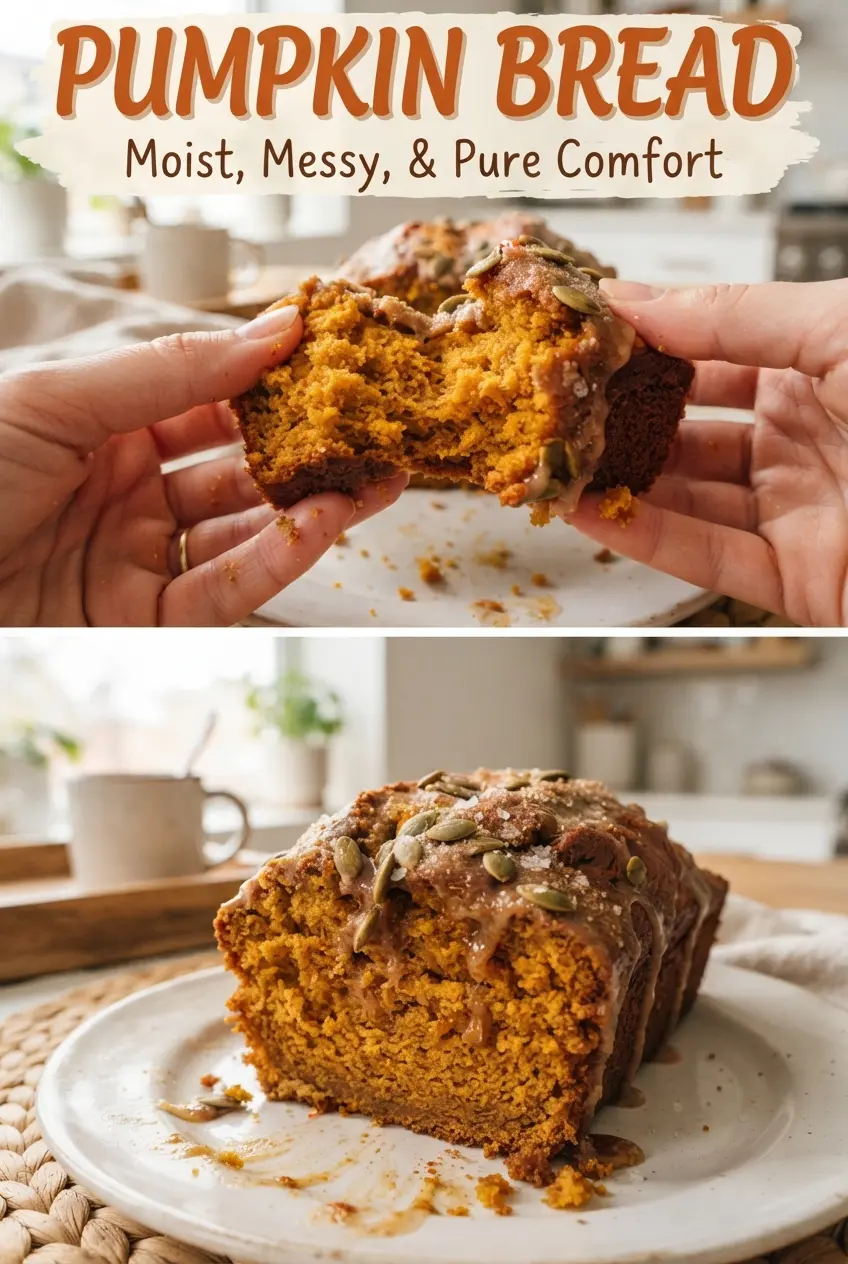
The loaf came out super moist with that crackly sugar top exactly like the photo, and it sliced cleanly after cooling. I used canned pumpkin and the spice amount was spot on.
Save this pumpkin bread for the loaf with the soft crumb and crackly sugar top that cools into perfect slices.
The Difference Between Tender Pumpkin Bread and a Dense Loaf
Pumpkin bread usually goes wrong in one of two places: it gets overmixed, or it gets overbaked. Both problems show up as a heavy slice with a gummy middle or a dry edge that crumbles when you cut it. The batter here is meant to be folded just until the flour disappears, because that keeps the gluten from tightening up and gives you the soft, even crumb people want from a quick bread.
The other thing that protects the texture is the fat choice. Oil stays liquid at room temperature, so the loaf stays moist long after it comes out of the oven. Butter can taste great, but it firms up as it cools, which can make pumpkin bread feel tighter the next day. The bake time matters, too: pull it when the tester comes out clean or with just a few moist crumbs, not when the top looks finished and the center still needs time.
What Each Ingredient Is Doing in This Loaf
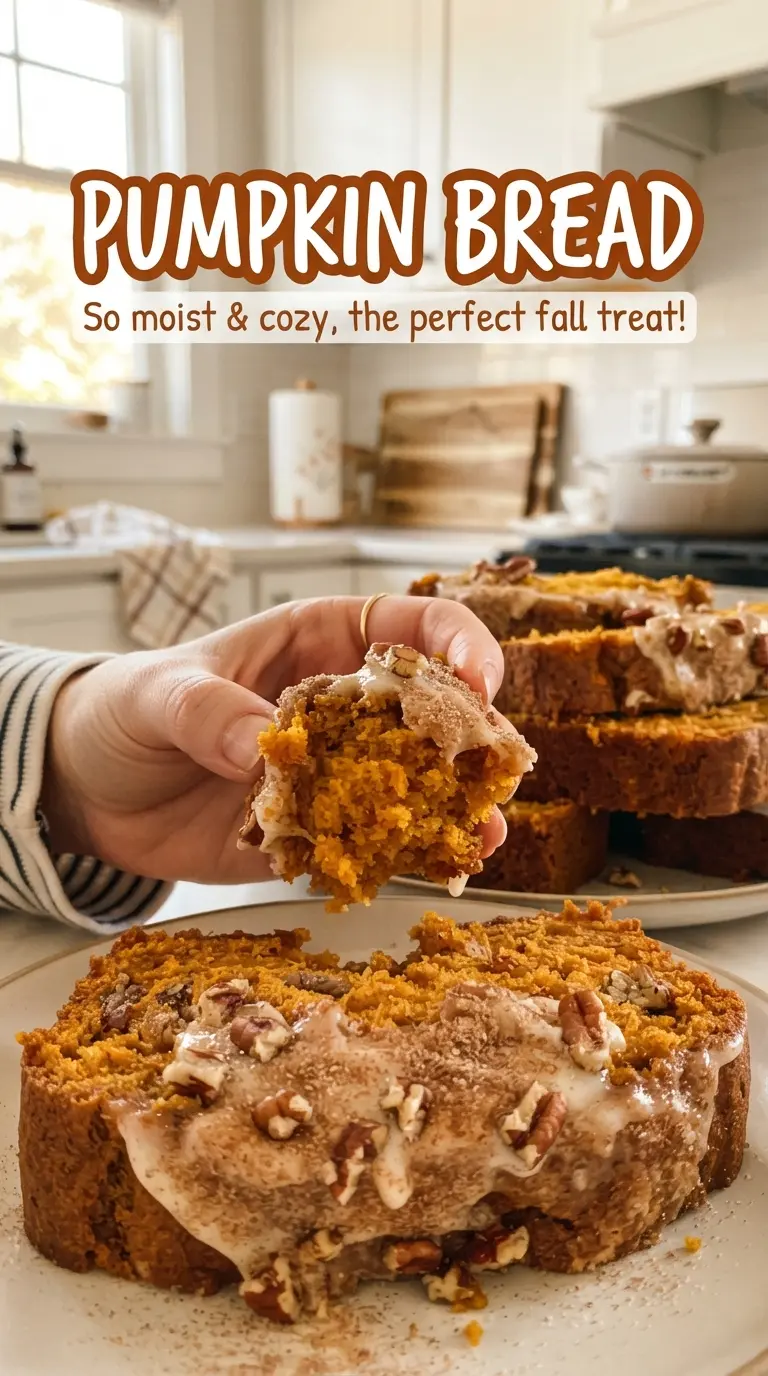
- Pumpkin puree — This gives the bread its color, moisture, and earthy pumpkin flavor. Use plain pumpkin puree, not pumpkin pie filling, or the sugar and spice balance will be off.
- Vegetable oil — Oil keeps the crumb soft for days. Melted butter can work, but the loaf won’t stay as tender and the texture will set up more firmly.
- Brown sugar — This adds moisture and a deeper sweetness that plays well with the spices. Packed brown sugar matters here because loose sugar changes the ratio and can make the batter drier.
- Granulated sugar — This keeps the sweetness clean and helps that sugared top turn crisp. The tablespoon on top is small, but it’s what gives the loaf its little crackly finish.
- Pumpkin pie spice and cinnamon — These do the heavy lifting for flavor. If you only have one or the other, the bread still works, but the blend gives it that fuller, warmer bakery-style taste.
- Milk — Just a quarter cup, but it loosens the batter enough to bake up tender instead of compact. Any dairy milk works, and an unsweetened plain non-dairy milk can step in without changing much.
How to Keep the Center Soft While the Top Sets
Mix the wet ingredients until they look smooth, not fluffy
Whisk the pumpkin, oil, eggs, sugars, milk, and vanilla until the mixture looks even and glossy. You’re dissolving the sugars and combining everything, not beating in air. Too much whisking here can make the loaf rise unevenly and crack in a way that looks impressive but bakes a little tougher inside.
Fold in the flour just until the streaks disappear
Add the dry ingredients and use a spatula to fold them in gently. Stop as soon as you no longer see dry flour, even if the batter looks a little lumpy. Those small lumps are better than a stirred-over batter, which can bake up with tunnels and a rubbery middle.
Bake until the tester meets the right kind of resistance
The loaf is done when the top is domed, the center no longer wobbles, and a toothpick comes out clean or with a few moist crumbs. If it comes out coated in wet batter, give it more time in 5-minute bursts. If the top browns too quickly before the center is done, tent it loosely with foil and keep baking.
Cool before slicing or the crumb will tear
Let the loaf sit in the pan for 15 minutes, then move it to a rack. Cutting too soon traps steam and makes the slices look underbaked even when they’re not. Once it cools, the crumb settles into neat, tender slices and the sugar top stays pleasantly crisp.
How to Adapt This Pumpkin Bread for Different Kitchens
Dairy-Free Pumpkin Bread
Swap the milk for an unsweetened non-dairy milk like almond, oat, or soy. The loaf stays just as moist, and the flavor change is minimal because the pumpkin and spices carry the recipe. Pick an unflavored milk so you don’t add coconut or vanilla notes that compete with the bread.
Extra-Spiced Version
Add another 1/2 teaspoon cinnamon or a pinch of cloves if you want a warmer, more aromatic loaf. The bread will taste a little more like a bakery-style spice loaf and a little less like straight pumpkin. Don’t go heavy with cloves, though, or they’ll take over fast.
Mini Loaves or Muffins
Divide the batter into smaller pans or a muffin tin if you want faster baking and more giftable portions. The texture stays the same, but the bake time drops a lot, so start checking early. Smaller bakes dry out if they go even a few minutes too long, so watch the centers closely.
Storage and Reheating
- Refrigerator: Store covered for up to 5 days. The crumb stays moist, though the sugar top softens after day one.
- Freezer: Freeze slices or the whole loaf tightly wrapped for up to 3 months. Thaw at room temperature while still wrapped so condensation doesn’t make the surface sticky.
- Reheating: Warm slices briefly in the microwave or toaster oven. The mistake to avoid is overheating, which dries out the edges before the center gets warm.
Questions I Get Asked About This Recipe
Pumpkin Bread
Ingredients
Equipment
Method
- Preheat the oven to 350°F, then grease and line a 9x5-inch loaf pan for easy release.
- Whisk all-purpose flour, baking soda, salt, pumpkin pie spice, and ground cinnamon until evenly combined and speckled.
- Whisk pumpkin puree, vegetable oil, eggs, brown sugar, granulated sugar, milk, and vanilla extract until smooth and glossy.
- Fold the dry ingredients into the wet just until no flour streaks remain, leaving the batter thick and smooth.
- Pour the batter into the pan, then sprinkle with 1 tablespoon granulated sugar to encourage a crackly top.
- Bake for 55-65 minutes, until a toothpick inserted in the center comes out clean.
- Cool the loaf in the pan for 15 minutes so it sets and releases more cleanly.
- Transfer to a rack and cool before slicing to keep the crumb tender.