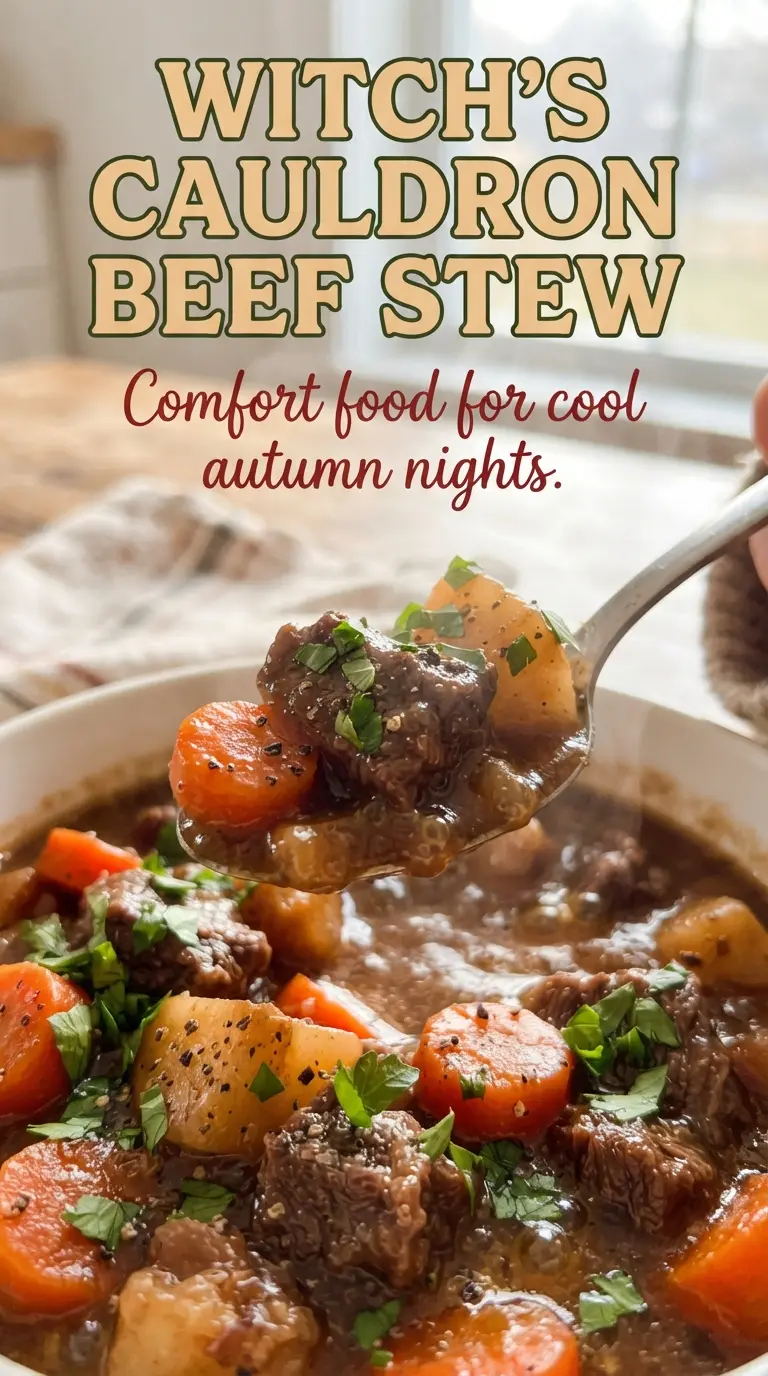
Witch’s Cauldron Beef Stew lands in the bowl dark, rich, and deeply savory, with beef that turns spoon-tender after a slow simmer and broth that tastes like it’s been building all afternoon. The stout gives it a malty backbone, the balsamic sharpens the edges, and the purple potatoes hold their shape without disappearing into the pot. It looks dramatic, but the flavor is grounded and hearty enough to make this more than a Halloween gimmick.
The key is browning the beef in batches and letting the tomato paste cook for a minute before the liquid goes in. That extra minute takes the raw edge off the paste and keeps the stew from tasting flat. The stout deglazes the pot and lifts every browned bit from the bottom, which is where a lot of the depth comes from.
Below, I’ve included the timing that keeps the vegetables from turning mushy, plus a few smart swaps if you want to adjust the beer, the beans, or the finish on the puff pastry bats.
The stew thickened up beautifully and the purple potatoes held their shape all the way through. I added the puff pastry bats at the end and my kids thought it was the best dinner all month.
Witch’s Cauldron Beef Stew with stout, purple potatoes, and puff pastry bats is the one to pin for a dramatic pot of cozy, rich dinner.
The Trick to Keeping the Stew Rich Instead of Thin
The biggest mistake with beef stew is rushing the front end. If the beef doesn’t brown in a hot pan, you lose the deep, roasted flavor that makes the broth taste full-bodied later. And if the tomato paste doesn’t cook briefly before the liquid goes in, it can leave the stew tasting sharp instead of round.
This recipe also avoids the usual muddies-the-bowl problem by adding the potatoes and carrots later in the simmer. That keeps the vegetables intact and gives the stew a cleaner texture. The black beans go in near the end, just long enough to heat through and lend body without turning the whole pot grainy.
What Each Ingredient Is Actually Doing in the Pot
- Beef chuck — This is the cut that turns tender during a long simmer without falling apart into strings. Leaner stew meat can work, but it dries out before it gets spoon-soft.
- Stout — The beer adds roasted malt flavor and helps deglaze the pan in a way broth alone can’t. If you don’t want to cook with beer, use more beef broth plus an extra teaspoon of balsamic, but the stew will be a little less deep.
- Purple potatoes — They hold their color better than regular potatoes and give the stew its signature look. Cut them into even pieces so they cook at the same rate; uneven chunks will leave you with some mush and some firmness.
- Black beans — They thicken the broth slightly and make the stew feel more substantial. Drain them well so they don’t muddy the broth.
- Puff pastry bats — These are for the finish, not the simmer. Bake them separately until fully golden so they stay crisp when they hit the hot stew.
Building the Cauldron in the Right Order
Browning the Beef in Batches
Season the beef, toss it in flour, and brown it in hot oil in batches. If you crowd the pan, the meat steams instead of searing and you lose the fond that gives the stew its backbone. The flour should look dusty, not pasty, and the beef should pick up a dark crust before you move it out. Leave the browned bits stuck to the pot; they’re about to become part of the sauce.
Cooking the Onion and Tomato Paste Together
Once the beef is out, cook the onion until it softens and the edges look glossy. Add the garlic and tomato paste and stir for about a minute until the paste darkens slightly and smells sweet instead of raw. If you skip this step, the finished stew can taste flat and a little tinny. That minute is what gives the broth a deeper, cooked-all-day character.
Letting the Liquid Do the Heavy Lifting
Pour in the stout and scrape the bottom of the pot until every browned bit loosens. Then add the broth, balsamic, paprika, thyme, and beef. Bring it up to a gentle simmer, not a hard boil; a rolling boil can tighten the meat and make the broth greasy. Cover and cook until the beef is tender enough to give easily when pressed with a spoon.
Finishing With Vegetables and Beans
Add the purple potatoes and carrots after the beef has already had time to soften. They need less time than the meat, and if they go in too early, they’ll collapse before the stew is ready. Stir in the black beans for the last 10 minutes so they warm through and thicken the broth without breaking apart.
How to Adapt This Stew Without Losing What Makes It Good
No-Beer Version
Use an extra cup of beef broth and add another teaspoon of balsamic vinegar. You’ll lose a little of the stout’s roasted bitterness, but the stew will still have good depth if you brown the beef well and keep the tomato paste step.
Gluten-Free Stew
Swap the all-purpose flour for a 1:1 gluten-free flour blend or leave it out entirely and simmer uncovered a little longer at the end. The stew won’t thicken quite as much with no flour, but the broth will still reduce into a rich, spoon-coating consistency.
Dairy-Free and Naturally Creamy Without Cream
This recipe is already dairy-free as written, and the body comes from the flour, potatoes, and beans instead of cream. If you want it thicker, mash a few potato cubes against the side of the pot near the end rather than adding anything rich or heavy.
Storage and Reheating
- Refrigerator: Keeps for 4 days. The broth thickens as it chills, and the potatoes soften a bit more by day two.
- Freezer: Freezes well for up to 3 months. Cool it completely first and leave a little headspace so the broth can expand.
- Reheating: Warm it gently on the stove over low heat with a splash of broth if needed. Don’t boil it hard or the beef can tighten and the potatoes can break down too much.
Questions I Get Asked About This Recipe
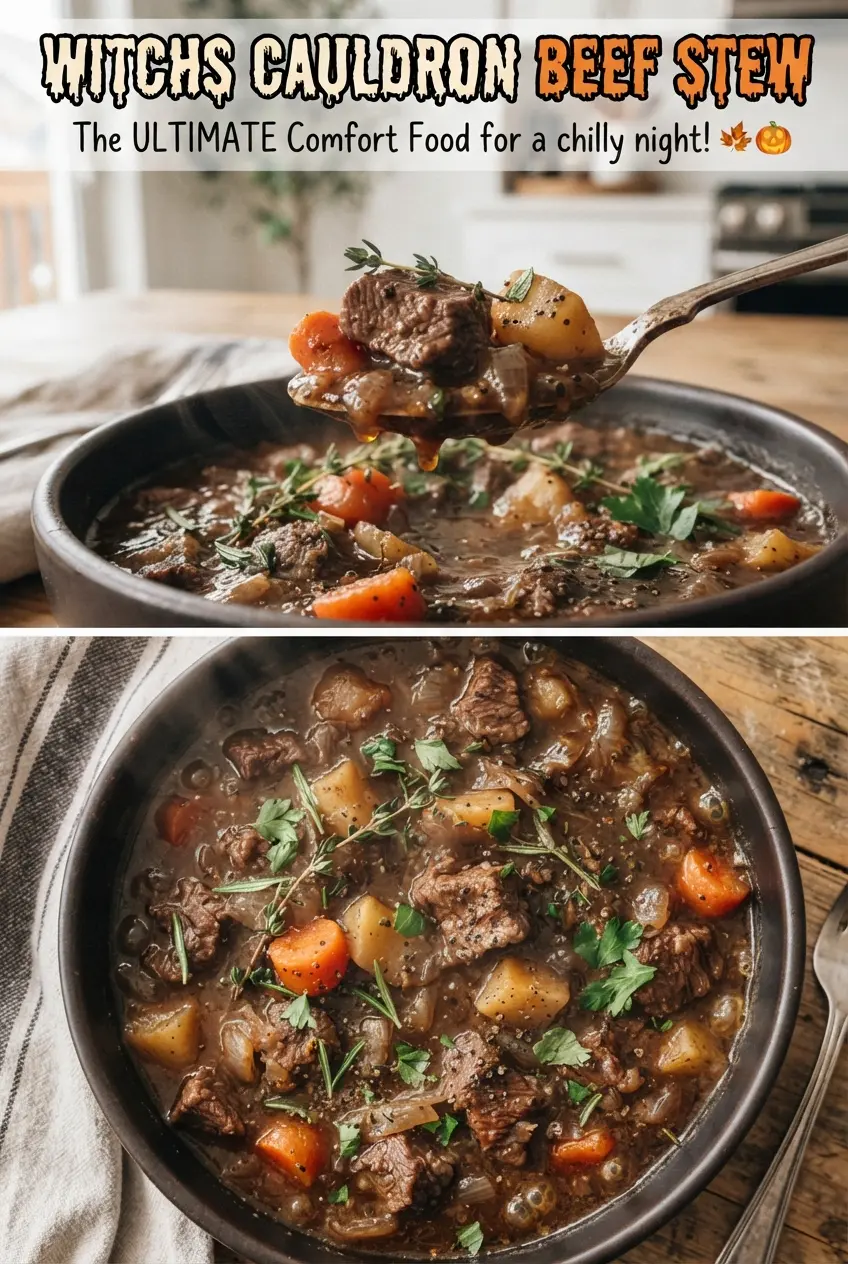
Witch’s Cauldron Beef Stew
Ingredients
Equipment
Method
- Season the beef chuck cubes with salt and black pepper, then toss with all-purpose flour until coated. Brown in batches in hot vegetable oil over medium-high heat for 2-4 minutes per batch, until deeply browned with visible crust.
- In the same pot, cook the chopped red onion for 5 minutes until softened. Add the minced garlic and tomato paste and cook for 1 minute, stirring until fragrant.
- Pour in the stout and scrape the bottom of the pot to lift the browned bits, cooking for 2-3 minutes. Add the beef broth, balsamic vinegar, smoked paprika, dried thyme, and the browned beef.
- Cover and simmer over low heat for 2 hours, keeping steady bubbling and dark color developing. Stir once near the halfway mark to prevent sticking.
- Add the cubed purple potatoes and sliced carrot rounds, then simmer for 45 minutes until the potatoes are tender. Keep the lid on with gentle bubbling.
- Stir in the drained black beans and simmer for 10 minutes to heat through. The stew should look thick, dark, and cohesive with evenly distributed beans.
- Bake the puff pastry bat shapes on a sheet pan at 400°F for 12-18 minutes until puffed and golden. Cool for 2-3 minutes so they hold their shape.
- Ladle the stew into bowls and float one puff pastry bat on each serving. Serve immediately while the bats are still crisp on top.