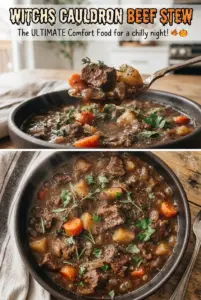
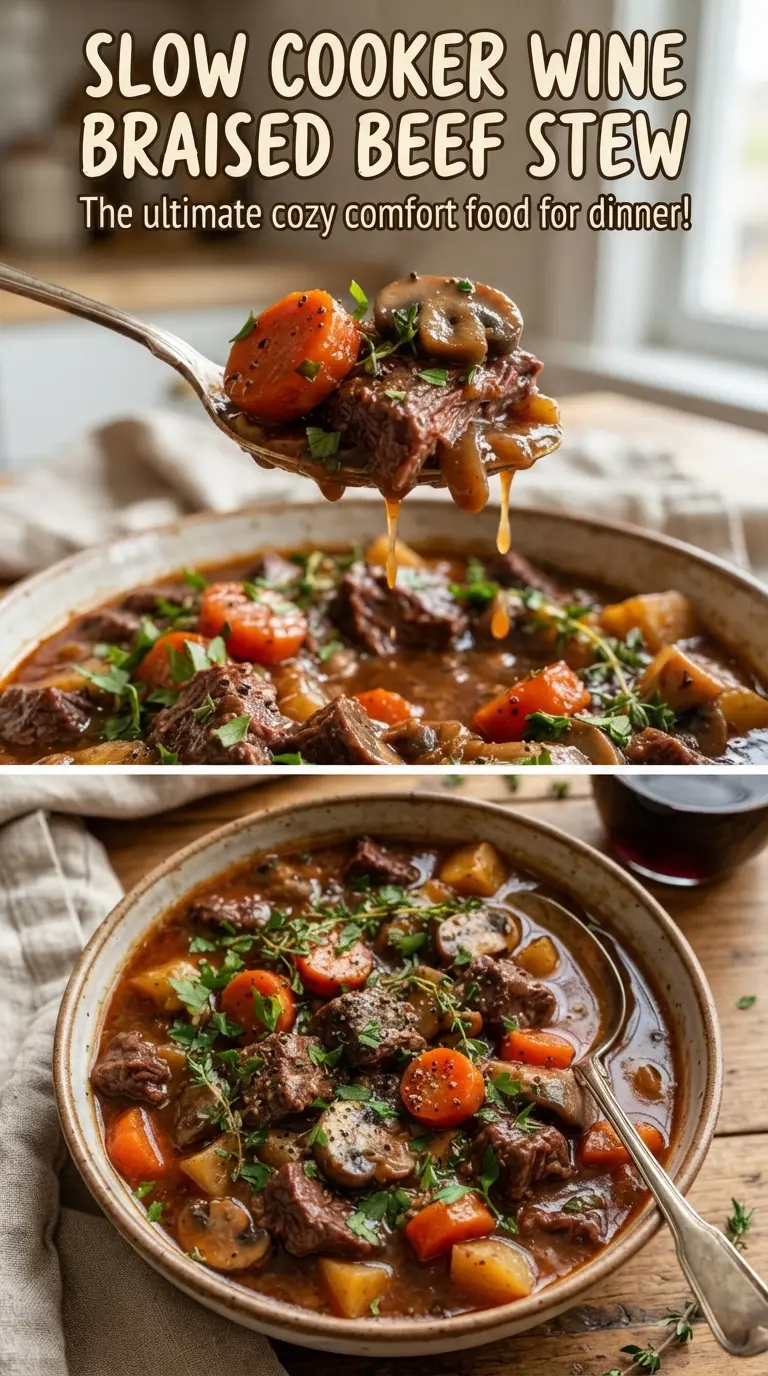
Slow cooker wine braised beef stew turns beef chuck into something silky and spoon-tender, with a deep savory broth that tastes like it simmered all afternoon on the stove. The wine doesn’t just add flavor; it gives the sauce a rounded, almost glossy finish that makes every bite feel richer than a standard beef stew. The carrots stay intact instead of turning to mush, and the pearl onions melt into the broth just enough to sweeten it.
The part that matters most is the browning. If you skip that step, the stew can still cook through, but it won’t have the same depth or that dark, beefy edge that makes people go back for another bowl. Tomato paste gets cooked in the pan long enough to lose its raw taste, and the wine is reduced a bit before it goes into the slow cooker so the stew tastes balanced instead of sharp. A splash of balsamic at the end pulls everything together without making the broth taste sweet.
Below, I’m breaking down the one step that keeps the sauce from tasting thin, plus a few smart swaps if you want to serve it over something besides polenta.
The beef was fall-apart tender and the sauce thickened beautifully in the slow cooker. I served it over mashed potatoes, and the wine-and-herb flavor tasted like something from a restaurant.
Slow cooker wine braised beef stew with fall-apart beef and a glossy red wine sauce
The Browning Step That Keeps This Stew from Tasting Flat
Beef stew can taste one-note if everything goes straight into the slow cooker raw. The slow cooker is excellent at tenderness, but it doesn’t build flavor on its own. That’s why the flour-dusted beef gets browned first and the tomato paste gets cooked in the pan before anything gets added to the crock.
Those browned bits at the bottom of the skillet are the base of the whole dish. When you pour in the wine and scrape them up, they dissolve into the sauce instead of staying stuck to the pan. That’s what gives the finished stew its darker color and deeper taste. If your stew ever comes out thin or bland, this is the part that usually went missing.
What Each Ingredient Is Doing in the Pot
- Beef chuck — This cut has enough connective tissue to turn silky during the long cook. Use chuck, not lean stew meat, or you’ll miss the rich texture that makes the stew feel luxurious instead of dry and stringy.
- All-purpose flour — The flour gives the beef a light coating that helps it brown and thickens the broth a bit as it cooks. You can use a gluten-free 1:1 blend here if needed; the stew will still thicken, just a little less aggressively.
- Dry red wine — Pick something you’d drink, but it doesn’t need to be expensive. A dry Cabernet, Merlot, or Syrah gives structure and depth; sweet wine will throw the balance off fast.
- Tomato paste — This adds concentration and a little acidity. Cooking it in the pan for a few minutes gets rid of the raw edge and keeps the stew tasting rich instead of tomato-forward.
- Balsamic vinegar — The balsamic doesn’t make the stew taste sour. It sharpens the broth at the end and makes the beef flavor pop.
- Rosemary and thyme — These herbs carry the French-inspired profile of the dish. Fresh is best because the slow cook softens their edges; dried herbs work in a pinch, but use less because they can get dusty and loud.
- Pearl onions and carrots — Pearl onions dissolve into the sauce just enough to add sweetness, and carrots hold their shape if they’re cut into hearty chunks. Thin carrot slices cook too fast and can turn mushy before the beef is done.
Building the Stew So the Sauce Turns Silky, Not Watery
Browning the Beef in Batches
Coat the beef with flour, salt, and pepper, then brown it in batches in hot oil. Give each side enough time to develop a dark crust before turning it; if the pan looks crowded, the meat will steam instead of sear. That crust is where the best flavor starts, and it also gives the slow cooker broth more body later on.
Cooking Down the Onion and Tomato Paste
Use the same pan and cook the onion, garlic, and tomato paste until the onion softens and the paste looks a shade darker. If the tomato paste stays bright red, it still tastes raw and tinny. A few minutes here changes the whole stew from flat to rounded.
Reducing the Wine Before It Goes In
Pour in the wine and scrape up every browned bit from the pan, then let it simmer for about three minutes. This step takes the sharp edge off the alcohol and concentrates the wine flavor so it tastes integrated instead of boozy. If you dump it straight into the slow cooker without reducing it, the final broth can taste thin and harsh.
Letting the Slow Cooker Finish the Job
Add the broth, balsamic, herbs, carrots, and pearl onions, then cook on LOW for 8 hours. The beef should yield easily when pressed with a spoon and almost fall apart when stirred. Don’t rush this by turning the heat to high; chuck needs time, not force, or it can tighten before it softens.
Make It Without Wine
Use an equal amount of extra beef broth plus 1 tablespoon red wine vinegar or balsamic vinegar for brightness. The stew will still be rich, but it won’t have the same rounded depth that the wine brings, so the herb notes will stand out a little more.
Gluten-Free Version
Swap the all-purpose flour for a gluten-free 1:1 flour blend or skip it and dust the beef lightly with cornstarch right before browning. The stew will still thicken from the reduction and the starch from the beef juices, but the sauce may be a little looser.
A Heartier Root-Vegetable Twist
Add parsnips, turnips, or chunks of celery root with the carrots for a more rustic stew. These vegetables hold up well over the long cook and give the broth a deeper, earthier edge without changing the method.
Storing Leftovers for Better Flavor Tomorrow
- Refrigerator: Store for up to 4 days. The broth thickens as it chills, and the flavor gets even deeper overnight.
- Freezer: Freeze for up to 3 months in airtight containers. Cool it completely first, and leave a little room at the top so the broth can expand.
- Reheating: Rewarm gently on the stove over low heat or in the slow cooker on warm. Don’t boil it hard, or the beef can dry out and the sauce can separate.
Answers to the Questions Worth Asking

Slow Cooker Wine Braised Beef Stew
Ingredients
Equipment
Method
- Toss the beef chuck with all-purpose flour, salt, and black pepper until evenly coated, then brown in batches in a hot skillet and transfer to the slow cooker.
- In the same skillet, cook the onion, garlic, and tomato paste for 3 minutes until fragrant, then scrape up any browned bits.
- Pour in the red wine and simmer for 3 minutes, scraping the bottom so the browned bits dissolve, then pour the mixture into the slow cooker.
- Add the beef broth, balsamic vinegar, rosemary, thyme, carrots, and frozen pearl onions to the slow cooker.
- Cover and cook on LOW for 8 hours, until the beef falls apart when pressed with a spoon.
- Remove the herb stems from the stew.
- Serve the wine-braised beef stew over creamy polenta or mashed potatoes.