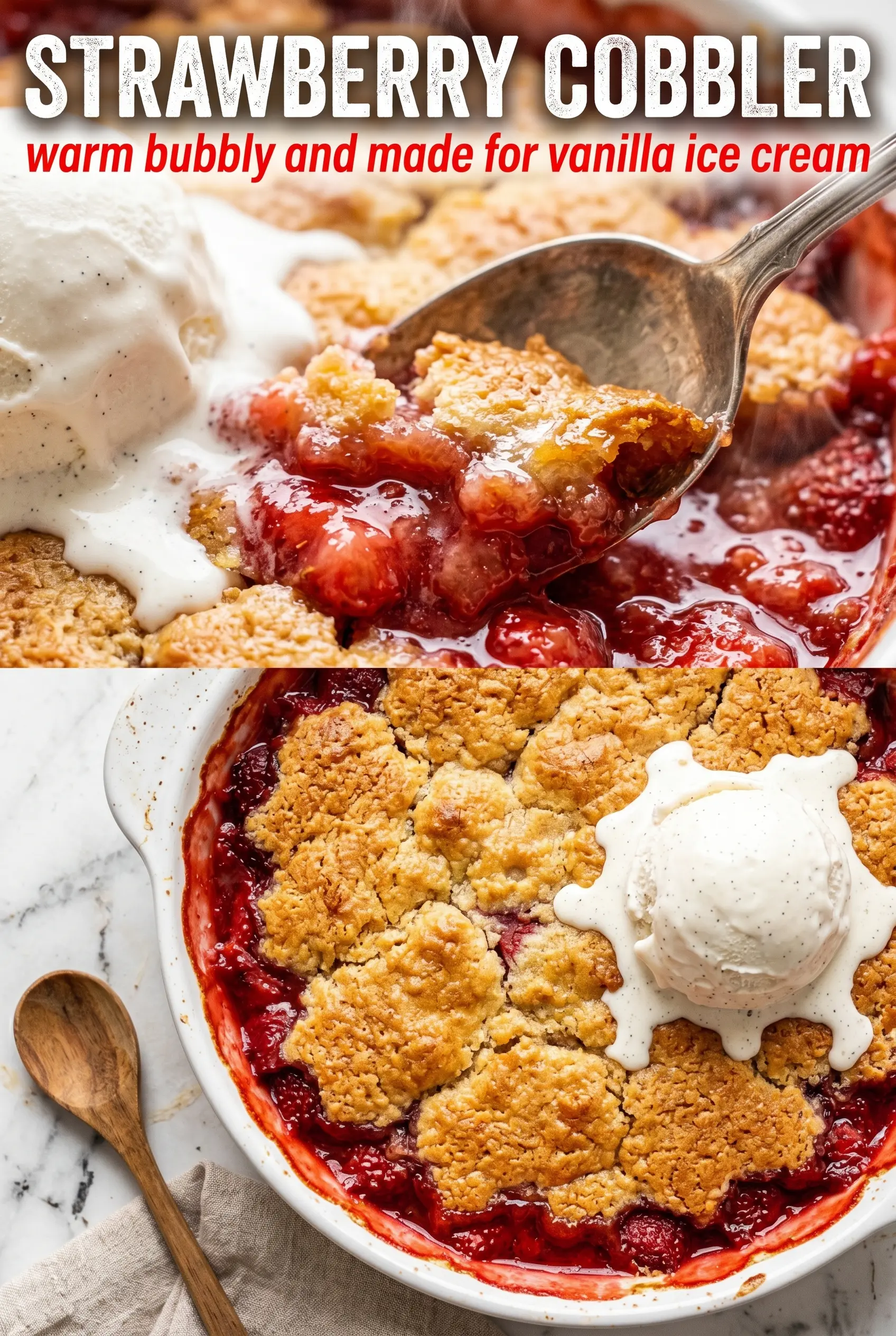
Juicy strawberries baked under a golden buttermilk biscuit topping make a cobbler that lands somewhere between rustic and irresistible. The fruit turns syrupy at the edges, the top bakes up tender in the middle with crisp, sugared peaks on top, and every spoonful gets a little of both. It’s the kind of dessert that disappears while it’s still warm, especially when the filling is bubbling up around the edges and the biscuits have that deep, buttery color.
What keeps this version from turning soggy is the balance of cornstarch, fruit, and heat. Fresh strawberries bring enough moisture on their own, so the cornstarch has to be measured, not guessed, or the filling will either run all over the plate or tighten up into a gummy layer. Cold butter and cold buttermilk matter just as much for the topping, because the biscuit dough needs little pockets of steam in the oven to bake up light instead of dense.
Below, you’ll find the small details that make the biggest difference: how to keep the strawberries from watering down the filling, how to drop the biscuit topping so it bakes through, and what to do if your berries are extra sweet or a little tart.
The filling bubbled up thick and glossy, and the biscuit topping stayed tender underneath instead of getting doughy. I used a little extra lemon because my berries were sweet, and it baked up perfectly.
Save this strawberry cobbler for the nights when you want bubbling fruit, a biscuit topping, and a scoop of vanilla ice cream on the side.
The Trick Is Keeping the Filling Thick, Not Soupy
Strawberry cobbler fails in one of two ways: the fruit turns watery, or the topping sinks into the filling before it has a chance to bake. Cornstarch is what keeps the juices in the fruit from running loose, but it only works if the berries are tossed well enough to coat every slice. If you dump everything into the pan without mixing thoroughly, you’ll get pockets of syrupy fruit and thin spots that never set right.
The other thing that matters is leaving some space between the spoonfuls of dough. The biscuit topping should sit on top of the fruit, not seal it in like a lid. Those open gaps let steam escape and let the filling bubble up in a few places, which is exactly what gives you that classic cobbler look and keeps the underside of the biscuits from going gummy.
What the Strawberries, Butter, and Buttermilk Are Each Doing
The strawberries are the main event, so use ripe fruit with good flavor. If they’re underwhelming, the cobbler will taste flat no matter how good the topping is. Fresh lemon juice sharpens the filling and keeps it from tasting one-note, while vanilla and cinnamon round out the berries without turning the dessert into pie filling.
- Fresh strawberries — Fresh berries hold their shape better than frozen ones and give you a filling with distinct pieces of fruit. Frozen strawberries can work in a pinch, but thaw them first and expect a looser filling.
- Cornstarch — This is what turns the strawberry juices glossy and spoonable. Flour won’t give you the same clean set here, and the filling will taste heavier.
- Cold butter — Cold cubes create little pockets in the biscuit dough as they melt. If the butter softens before it goes in the oven, the topping gets dense instead of tender.
- Buttermilk — It brings tang and helps the biscuits stay soft. Whole milk will work if that’s what you have, but the topping won’t have quite the same lift or flavor.
- Coarse sugar — This is for texture, not sweetness. It gives the biscuit topping a crisp, sparkly finish that contrasts with the soft fruit underneath.
Building the Cobbler So the Top Bakes and the Fruit Bubbles
Coating the Strawberries
Start by tossing the sliced strawberries with sugar, cornstarch, lemon juice, vanilla, and cinnamon until every berry looks lightly glazed. The mixture should look juicy almost immediately, but not watery. If you see dry cornstarch at the bottom of the bowl, keep tossing; those clumps turn into chalky spots in the baked filling.
Mixing the Biscuit Dough
Cut the butter into the flour mixture until it looks like coarse crumbs with a few pea-sized bits still visible. Those butter pieces are what create tenderness in the oven. When you stir in the buttermilk, stop as soon as the dough comes together; overmixing makes the biscuits tough and flat instead of soft and layered.
Dropping and Baking the Topping
Spoon the dough over the berries in uneven mounds and leave pockets of filling visible between them. That rustic look is part of the structure, not just the presentation. Bake until the biscuits are deeply golden and the strawberry filling is actively bubbling around the edges; if the top looks done but the center isn’t bubbling, the filling hasn’t thickened yet.
Letting It Rest Before Serving
Give the cobbler 10 minutes on the counter before serving. The filling finishes tightening as it cools slightly, and that short rest keeps the first serving from collapsing into fruit soup. Warm is the goal here, not piping hot.
How to Adjust This Cobbler for Different Kitchens and Different Berries
Gluten-Free Strawberry Cobbler
Use a 1:1 gluten-free flour blend in place of the all-purpose flour. The biscuit topping may bake a little more tender and less structured, but the fruit filling stays the same. Let the cobbler rest a few extra minutes before serving so the topping can set.
Dairy-Free Version
Swap the butter for a solid plant-based baking stick and use a plain unsweetened non-dairy milk with a teaspoon of lemon juice in place of the buttermilk. You’ll lose a little of the tang, but the topping still bakes up golden and crisp at the edges.
Using Frozen Strawberries
Frozen strawberries can stand in when fresh berries aren’t available, but thaw and drain them first. Otherwise, the extra liquid makes the filling too loose and you’ll need more baking time to get the same thickness.
A Slightly Less Sweet Cobbler
Drop the filling sugar by 2 to 3 tablespoons if your berries are very ripe and fragrant. The cobbler will taste more like fresh fruit and less like syrup, but don’t cut the sugar too aggressively or the filling can taste sharp and thin.
Storage and Reheating
- Refrigerator: Store covered for up to 4 days. The biscuit topping softens as it sits, but the flavor holds up well.
- Freezer: Freeze baked cobbler in portions for up to 2 months. Wrap tightly and thaw in the refrigerator before reheating; the topping won’t stay as crisp, but it still works.
- Reheating: Warm in a 325°F oven until the center is hot and the edges are bubbling again. Microwaving softens the biscuits too much and makes the filling separate instead of re-thicken.
Answers to the Questions Worth Asking
Strawberry Cobbler
Ingredients
Equipment
Method
- Preheat your oven to 375°F. Assemble a 9x13 inch baking dish and set it aside.
- In a large bowl, combine strawberries with granulated sugar, cornstarch, fresh lemon juice, vanilla extract, and cinnamon; toss gently until coated. Pour the strawberry mixture into the 9x13 inch baking dish.
- In a separate bowl, whisk all-purpose flour, baking powder, and salt. Cut in the cold butter until the mixture resembles coarse crumbs.
- Stir in buttermilk until just combined, keeping the dough slightly thick. Drop spoonfuls of biscuit dough over the strawberry mixture, leaving some filling visible, then sprinkle with coarse sugar.
- Bake at 375°F for 40-45 minutes until the top is golden brown and the filling is bubbly around edges. Watch for bubbling at the sides as a visual cue that the cornstarch has set.
- Let the cobbler rest for 10 minutes at room temperature before serving. This rest helps the filling thicken slightly and set.