Silky rhubarb curd has a bright pink color, a clean tart edge, and a buttery finish that makes it far more useful than a simple jam. It spreads smoothly over toast and scones, but it also does the job of a dessert sauce, a tart filling, or a spoonable treat straight from the jar. The texture is the part that keeps me making it again: thick enough to hold its shape, but soft enough to melt into whatever you serve it with.
This version works because the rhubarb is cooked down fully before it ever meets the eggs, then strained for a truly smooth base. That extra step matters. Rhubarb can turn stringy and fibrous if you rush it, and a curd needs a puree that starts out refined, not gritty. Cooking the curd over medium-low heat keeps the yolks from scrambling and gives the butter time to emulsify at the end instead of separating.
Below, I’ve included the small details that make the difference, from the right thickness cue to a few smart ways to use it once it’s chilled.
The curd thickened exactly when it should and strained out perfectly smooth. I spread it on warm scones and the tart rhubarb flavor with that buttery finish was spot on.
Save this rhubarb curd for scones, tarts, and anything that needs a bright, silky pink spread.
The Reason Rhubarb Curds Turn Grainy When They’re Rushed
The biggest mistake with rhubarb curd is treating it like jam. Jam can tolerate more chaos; curd can’t. Once the egg yolks go in, the heat has to stay gentle and the stirring has to stay constant, or the mixture tightens unevenly and picks up a slightly scrambled texture. The other common problem is skipping the strain. Rhubarb fibers don’t always break down evenly, and a curd should feel smooth all the way through.
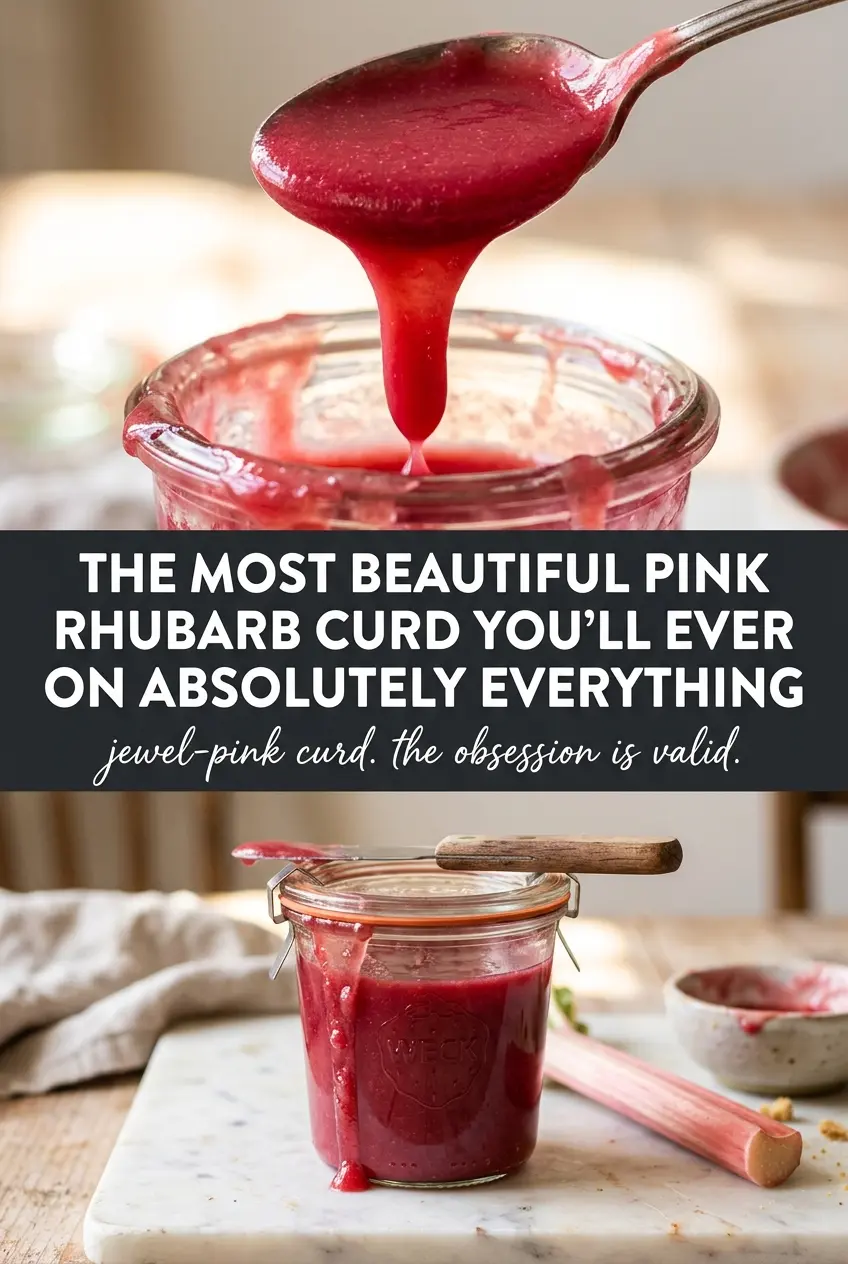
The trick is building the flavor in two stages. First, the rhubarb cooks with part of the sugar until it turns soft and collapses into a puree. Then the strained puree goes back to the pan with the yolks, where it thickens slowly enough to stay glossy. When it’s ready, it should coat the back of a spoon and leave a clean trail when you drag a finger through it.
What Each Ingredient Is Actually Doing in This Curds-and-Cream Texture
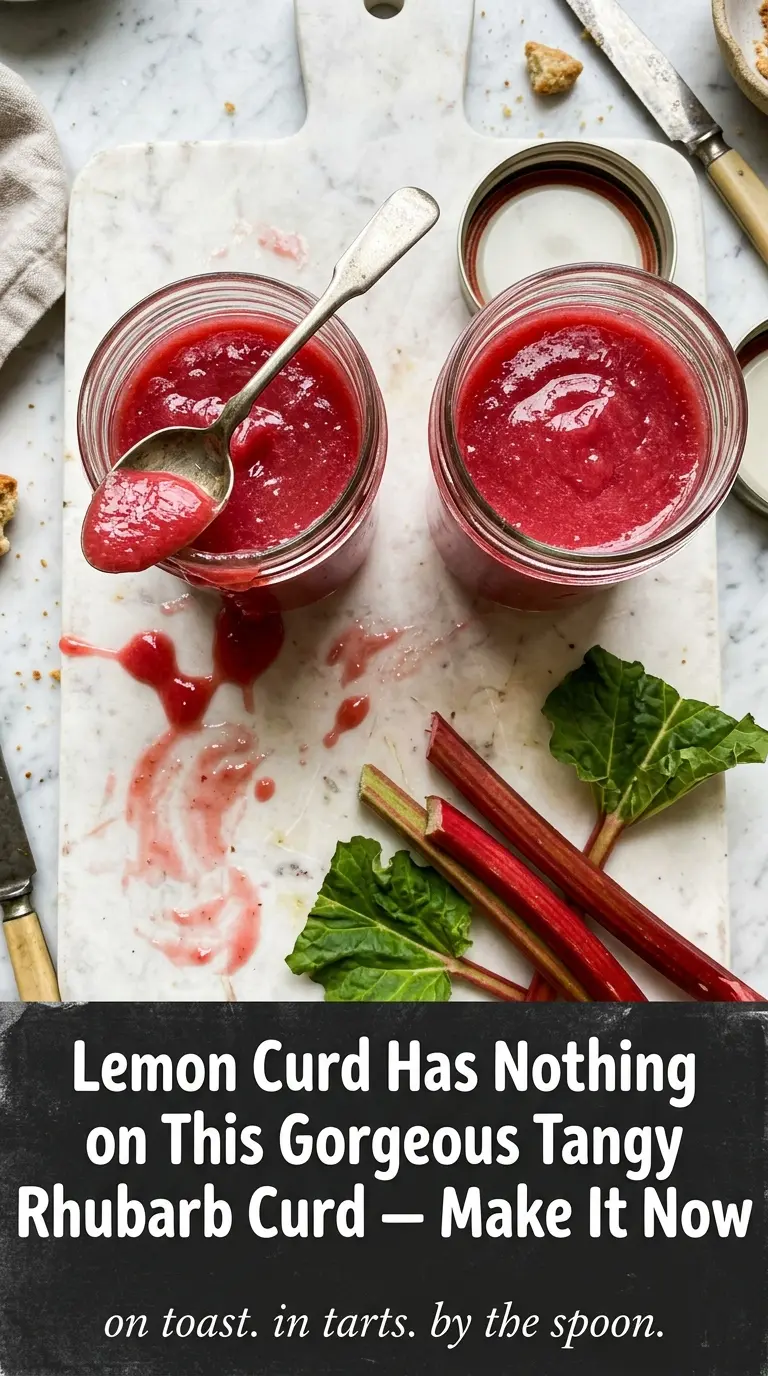
- Fresh rhubarb — This is the backbone of the curd. Fresh stalks give you the cleanest tart flavor and the best color; older rhubarb can go stringy and dull. Chop it evenly so it softens at the same pace, which helps the puree strain smoothly.
- Sugar — Sugar does more than sweeten here. It balances rhubarb’s sharp edge and helps the yolks thicken without curdling. You can reduce it a little, but too much reduction makes the finished curd taste harsh and less stable.
- Egg yolks — These are what give the curd its body and that rich, custardy texture. Whole eggs will work in a pinch, but the result won’t be as velvety or as deeply colored. Whisk them in well before the pan goes over heat so they disperse evenly.
- Butter — Butter is the finish. It softens the tartness and gives the curd its glossy, spoon-coating texture. Add it off the heat in cubes so it melts in smoothly instead of leaving a greasy layer on top.
- Fine salt — Just a pinch sharpens the fruit and keeps the curd from tasting flat. It won’t read as salty, but it makes the rhubarb taste brighter.
How to Cook It Until It Coats the Spoon, Not the Scrambled Egg
Softening the Rhubarb First
Cook the chopped rhubarb with half the sugar over medium heat until it breaks down completely and looks jammy, about 10 minutes. Stir often and scrape the bottom of the pan so nothing catches before the fruit collapses. If the fruit is still chunky at this stage, the finished curd will be uneven even after blending.
Blending and Straining for a Smooth Base
Puree the cooked rhubarb until it’s completely smooth, then push it through a fine-mesh sieve. This step removes fibers and any stubborn bits of skin, and it’s the difference between a polished curd and one that feels fuzzy on the tongue. Don’t rush the straining; press the puree through with a spoon and leave the dry pulp behind.
Thickening the Yolks Gently
Return the puree to the saucepan and whisk in the remaining sugar, egg yolks, and salt. Set the pan over medium-low heat and stir constantly with a whisk or heatproof spatula, making sure to reach the corners of the pan. The mixture should gradually thicken and start to cling to the utensil; if you see little eggy bits, the heat was too high and you need to pull the pan off the burner right away.
Finishing with Butter
Once the curd coats the back of a spoon, take it off the heat and whisk in the butter cubes until they disappear into a glossy finish. Adding butter on the burner is how curd turns greasy or separates, so this part needs residual heat only. Pour it into clean jars right away, then press plastic wrap directly onto the surface so a skin doesn’t form while it chills.
Three Good Ways to Adjust This Rhubarb Curd Without Losing the Point
Lemon-Rhubarb Curd
Add a little finely grated lemon zest with the sugar if you want the tartness to lean brighter and more fragrant. The result tastes sharper and more citrusy, which is especially nice on plain shortbread or pancakes.
Dairy-Free Version
Swap the butter for a neutral vegan butter that melts cleanly and has a high fat content. Coconut oil works, but it brings its own flavor and can make the curd feel softer once chilled. The texture will still be smooth, just a touch less rich.
Strawberry-Rhubarb Curd
Replace up to one cup of the rhubarb with chopped strawberries and cook them down together. The curd gets softer, sweeter, and a little less sharply tart, but it keeps that pink color and spreads beautifully.
Storage and Reheating
- Refrigerator: Store in clean jars in the fridge for up to 2 weeks. It may thicken a little more as it chills, which is exactly what you want.
- Freezer: Rhubarb curd freezes well for up to 3 months. Freeze in a sealed container with a little headspace, then thaw overnight in the refrigerator.
- Reheating: You usually don’t need to reheat it, but if it becomes too firm, set the jar in warm water for a few minutes and stir. Don’t microwave it hard, or the eggs can overcook and the texture may turn grainy.
Answers to the Questions Worth Asking
Rhubarb Curd
Ingredients
Equipment
Method
- In a saucepan over medium heat, cook the chopped fresh rhubarb with 1/2 cup sugar until very soft, about 10 minutes, stirring occasionally so it breaks down evenly.
- Puree the rhubarb mixture in a blender until smooth, then strain it through a fine mesh sieve to remove any fibers and leave a glossy texture.
- Return the strained rhubarb puree to the saucepan and whisk in the remaining sugar, egg yolks, and a pinch of salt until smooth.
- Cook over medium-low heat, stirring constantly, until thickened and it coats the back of a spoon, about 8-10 minutes.
- Remove from the heat and whisk in the cubed butter until fully melted and incorporated for a silky finish.
- Pour into clean jars, cover the surface with plastic wrap to prevent a skin, and refrigerate for at least 2 hours to set.
- Store in the refrigerator for up to 2 weeks.